
tunisia
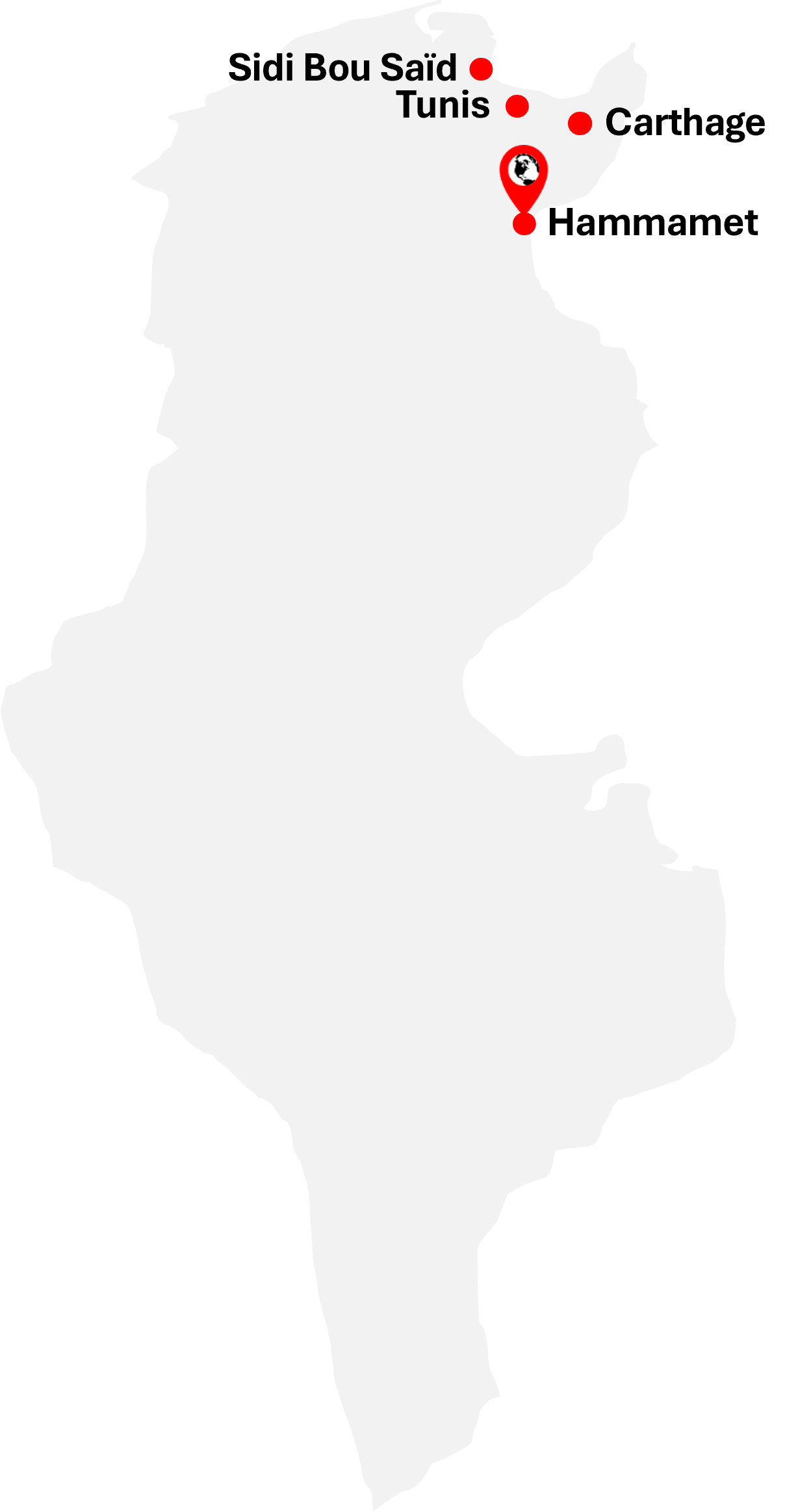
Where: Hammamet, Tunis, Sidi Bou Saïd & Carthage. Tunisia, Africa.
When: December 2025 -January 2026
What: Hammamet Kasbah, Hammamet Medina and Masjid Al Kabeer Mosque, Tunis Medina, Souk de Tunis, Cafe Panorama , Al-Zaytuna Mosque (Mosque of Olive), Sidi Youssef Mosque, Tunis Central Market, Hotel du Lac, Royal Mausoleum of Torbet el Bey, Madrasa Slimania, City of Culture tower, Kasbah Square, Hammouda Pacha Mosque, Cafe des Delices, street cats of Tunisia, Dar El Annabi, Palais Ennejma Ezzahra, Carthage sites at: Antoninus Baths, Punic Port, Salammbo Sacrificial Site, Byrsa Hill.
How: International flight, walking, taxis.
Country counter: No.100
Illnesses or mishaps: Our outgoing flight was delayed twice, first because of a medical emergency and then by a drunken passenger who had to be forcibly removed from the plane by police; facing off against a pack of wild dogs in Sidi Bou Saïd.
I found myself in the United Kingdom for Christmas. A chance scroll through the destination list of flights departing the airport local to where I was staying yielded the usual suspects, the like of which quickly had my eyes rolling: Amsterdam in the Netherlands, Malta, various cities in Spain, France of course... And then something called "Enfidha-Hammamet" caught my eye. I opened up another browser tab and promptly searched it up. Hammamet was a city in northeastern Tunisia. Tunisia! Not only was Tunisia a country I hadn't been to before, but it was also in Africa. Africa! Having been firmly ensconced on 99 countries for many months, not having stepped foot onto African soil since my epic journey around Southern Africa in 2018, and having been travelling around Oceania for my last few countries, this opportunity felt like it was made for me. Admittedly I'd not considered Tunisia as a destination for many years and so one could accuse me of being frivolous. However, travel is a costly endeavour and I have always grabbed at travel opportunities when they have arisen. Indeed, to some extent, where I travel is often shaped by economic considerations; in 2008 I flew to Ireland for £1, in 2018 I flew to Vietnam for £100 and in 2025 I flew to Tonga for £400. My return flight to Tunisia cost £200 - likely the price of an Australian domestic return fare from Sydney to Adelaide.
Like so many places, modern Tunisia, outside of its wonderful meandering medinas, is a largely uninspiring visual affair. Functional architecture jostles with rusted street furniture, litter, graffiti, broken sidewalks and all the signs of a country grappling with manifold problems. Tunisia is infamous for being the birthplace of the Arab Spring as well as a number of high-profile terrorist attacks in recent years which have directly targeted tourists. Indeed, my intentions to travel to Tunisia back in 2015 were shelved indefinitely following the Bardo Museum and Sousse attacks. Tunisia's currency, the Dinar, is a closed one. This serves to consolidate the notion that you have stepped into a rather thrilling and interesting country. This is a land where French and Arabic coexist, perhaps uncomfortably, where "salams" and "bonjours", "choukrans" and "mercis" are used almost interchangeably, and where shisha smoking rubs shoulders with croissants and patisseries. A trip to Tunisia was another welcome opportunity for me to resurrect my high school French and impose it on an unsuspecting Tunisian people.
The trans-continental flight, lasting no longer than two hours and forty minutes and taking me from Europe to Africa, was a momentous one indeed. As we departed London Southend Airport, crossed the Mediterranean Sea and began our descent into the Tunisian city of Hammamet, I achieved a very significant and personal travel milestone, the likes of which I humbly acknowledge will remain nothing more than a distant dream for so many. Tunisia: a land of towering minarets and beguiling mosques, of colourful mosaics and meandering medinas, of friendly moggies but also military tanks and machine gun-wielding soldiers stationed on street corners, became my centenary country. This was a nomadic number that had been 25 years in the making. Bonjour Tunisie - my 100th country.
It is something of a paradox that my 100th country should occur courtesy of a city that most, including me, have never heard of. It was in Hammamet where the momentous intersected with the innocuous. Hammamet sounds abstruse enough. It doesn't quite roll off the tongue nor is it likely to elicit a knowing response from those you may tell of your travel plans. Hammamet would also be the place where I'd say au revoir to a turbulent 2025 and bonjour to 2026.
We based ourselves in what turned out to be a near-empty hotel a short walk from the historic centre of Hammamet. December is shoulder season in Tunisia but the country's somewhat milder temperatures, when compared to those of an unforgiving English winter, mean it holds some appeal to frozen Brits even though temperatures in Tunisia's north are decidedly chilly in the shade. Our flight was delayed twice which meant that we entered into Hammamet in the dark and were welcomed by an extremely grumpy transfer driver ("I've been waiting three hours!") and an even grumpier hotelier who checked us into our room at such speed that it betrayed both his frustration and desperation to clock off. I awoke to my first morning in Tunisia - New Year's Eve - with nervous excitement. I always get this feeling when I arrive in an unfamiliar country: trepidation of what could happen, excitement at what I might see... Travel is one of the few things in life which consistently returns me to a child-like state of wonderment and anticipation.
Hammamet is a delightful and peaceful place in which to spend a couple of days sauntering, sight-seeing, sipping a Turkish coffee or sucking on an aromatic shisha. We defaulted to the city's ancient medina, a labyrinth of blue and white streets with a beguiling blend of mosaic tiles, cacti, overhanging balconies, enchanting doorways and photogenic, friendly cats. The oldest mosque in Hammamet, the Masjid Al Kabeer, is situated in the medina and, when the visceral Call to Prayer sounds, the medina's magic elevates. As the majority of locals empty the medina to attend prayers, you are left almost entirely on your own to savour the maze-like streets with only the soundtrack of "Allah Akbar" for company. At dusk, this experience borders on the supernatural and transcendental.
A short walk to the highest point of Hammamet's Kasbah, its ancient fort, presents you with a beautiful panorama of the city, one characterised by one or two-storey dwellings washed in white which, in the sunshine, look not unlike glistening sugar cubes, and with only the occasional modest minaret puncturing the horizon; Hammamet is where the African continent kisses the bouncing blues of the Mediterranean. We interspersed our sightseeing with regular stops at Café Sidi Bou Hdid on the edge of the medina. Not only did it come with views of the Mediterranean but served a wonderful Thé à la menthe (peppermint tea) and chocolate crêpes that were unsurpassed.
Hammamet was a tame and gentle start to our journey around the northeastern tip of Tunisia but, after nearly two days, it was time to embrace the gritty intensity of the Tunisian capital Tunis...
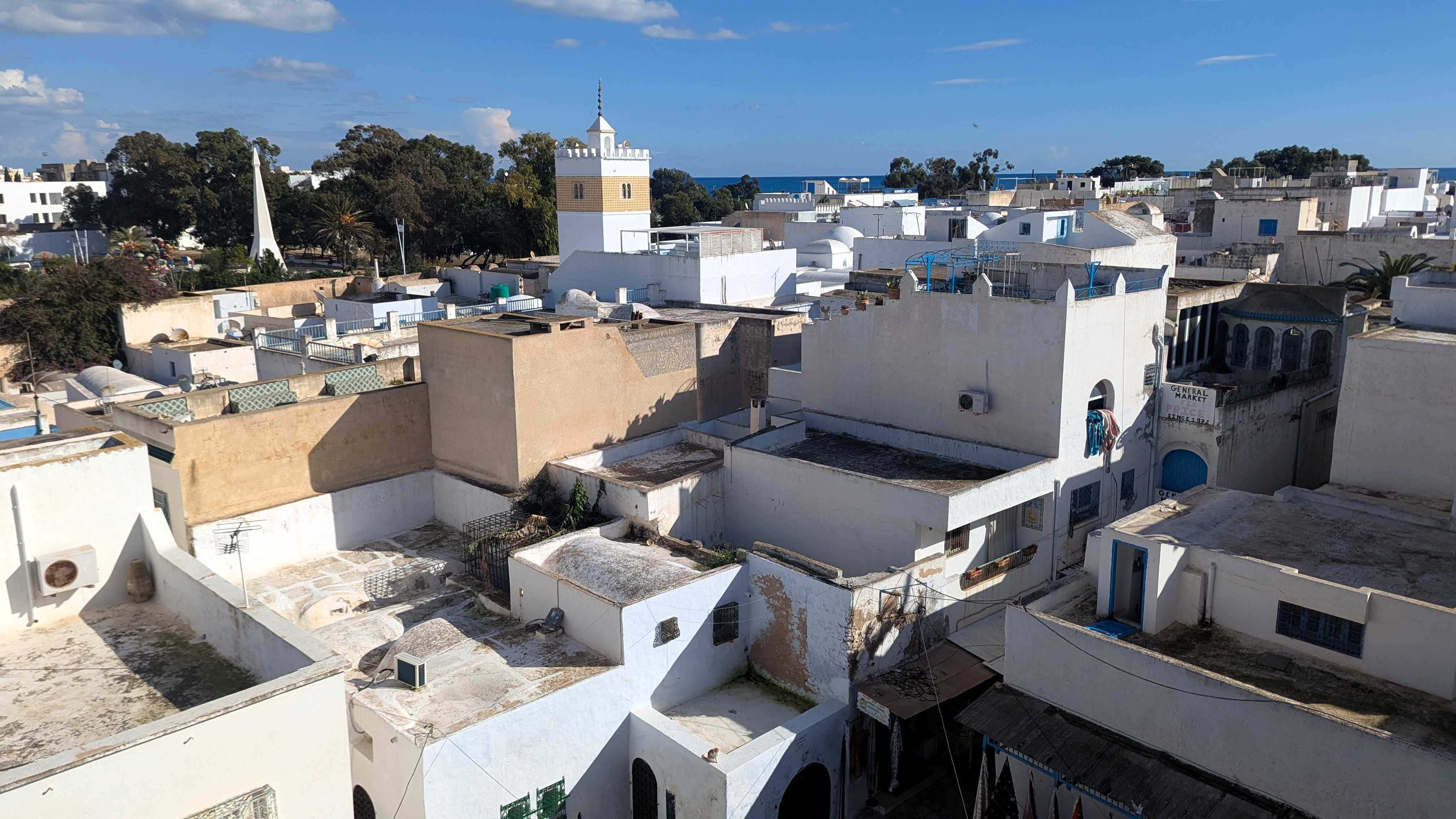
The enchanting Hammamet skyline seen from the kasbah.
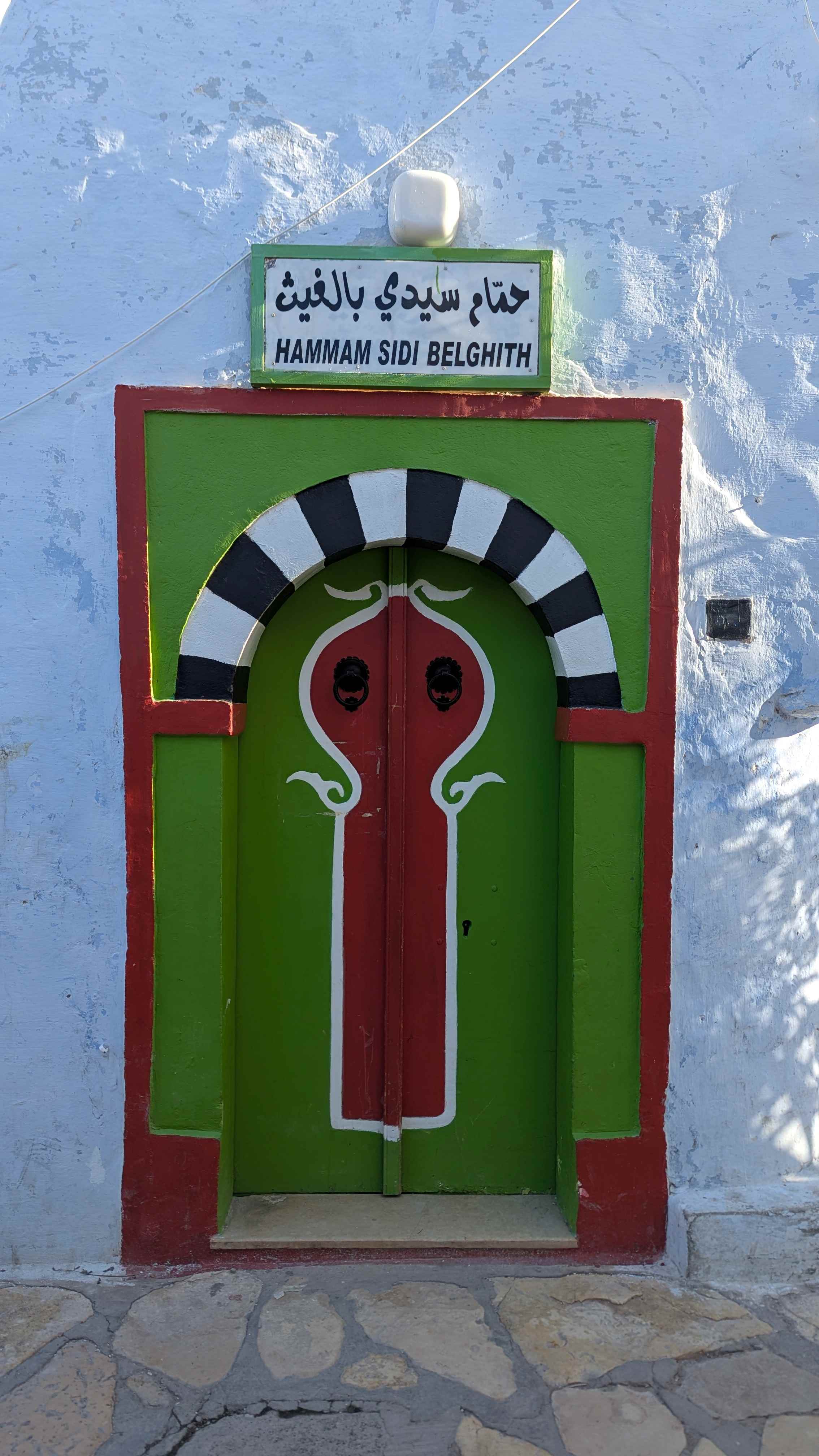
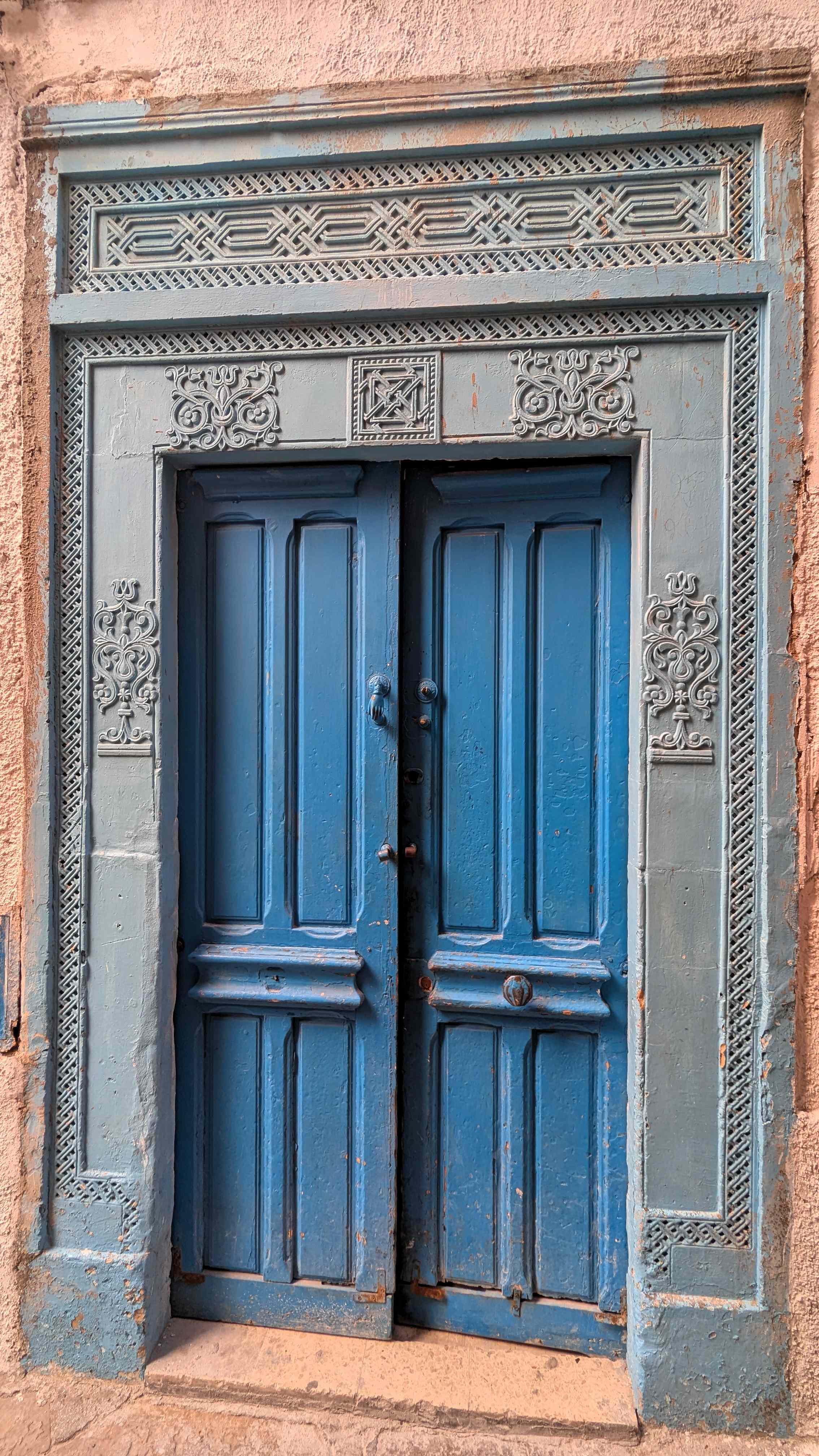
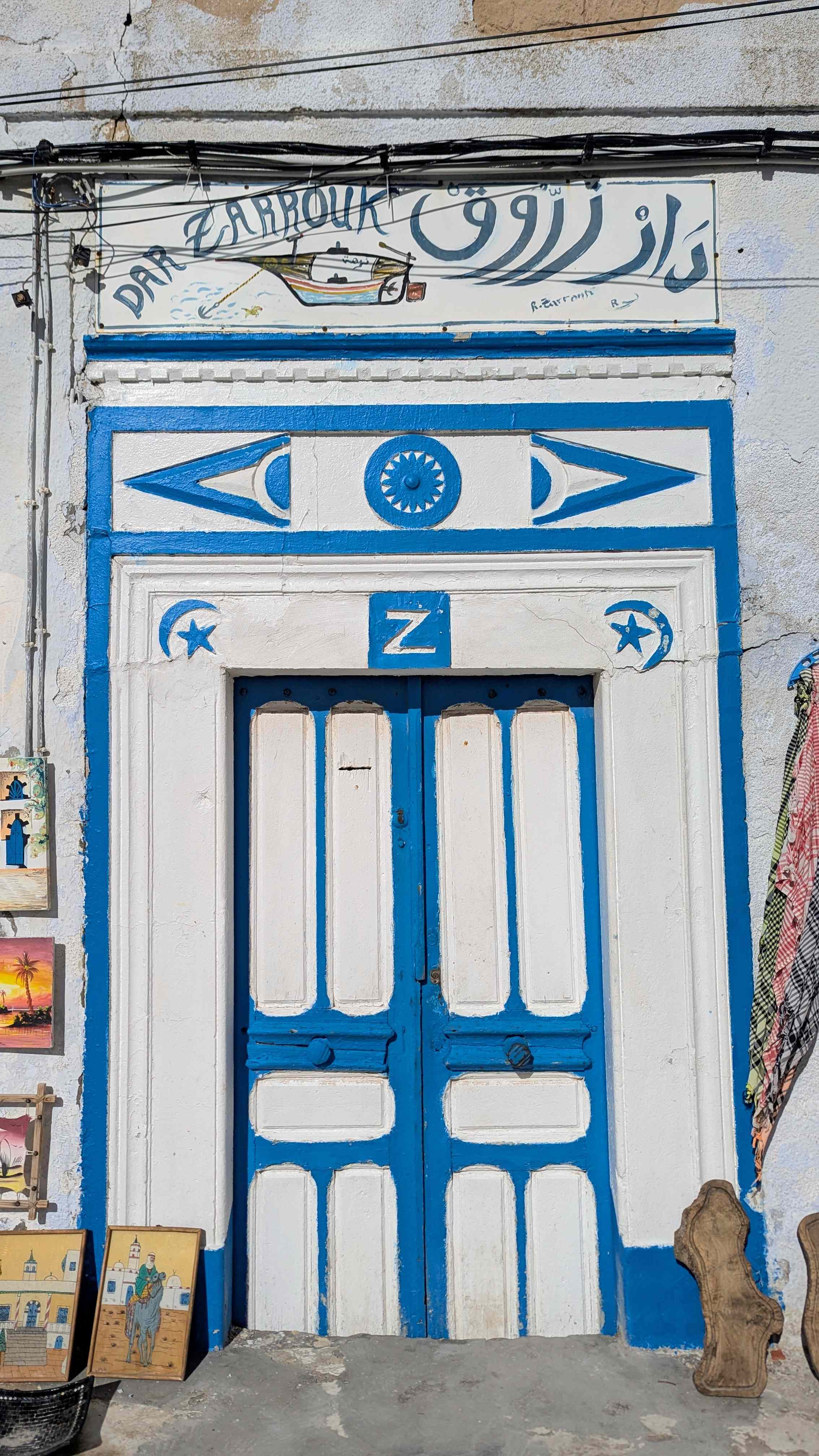
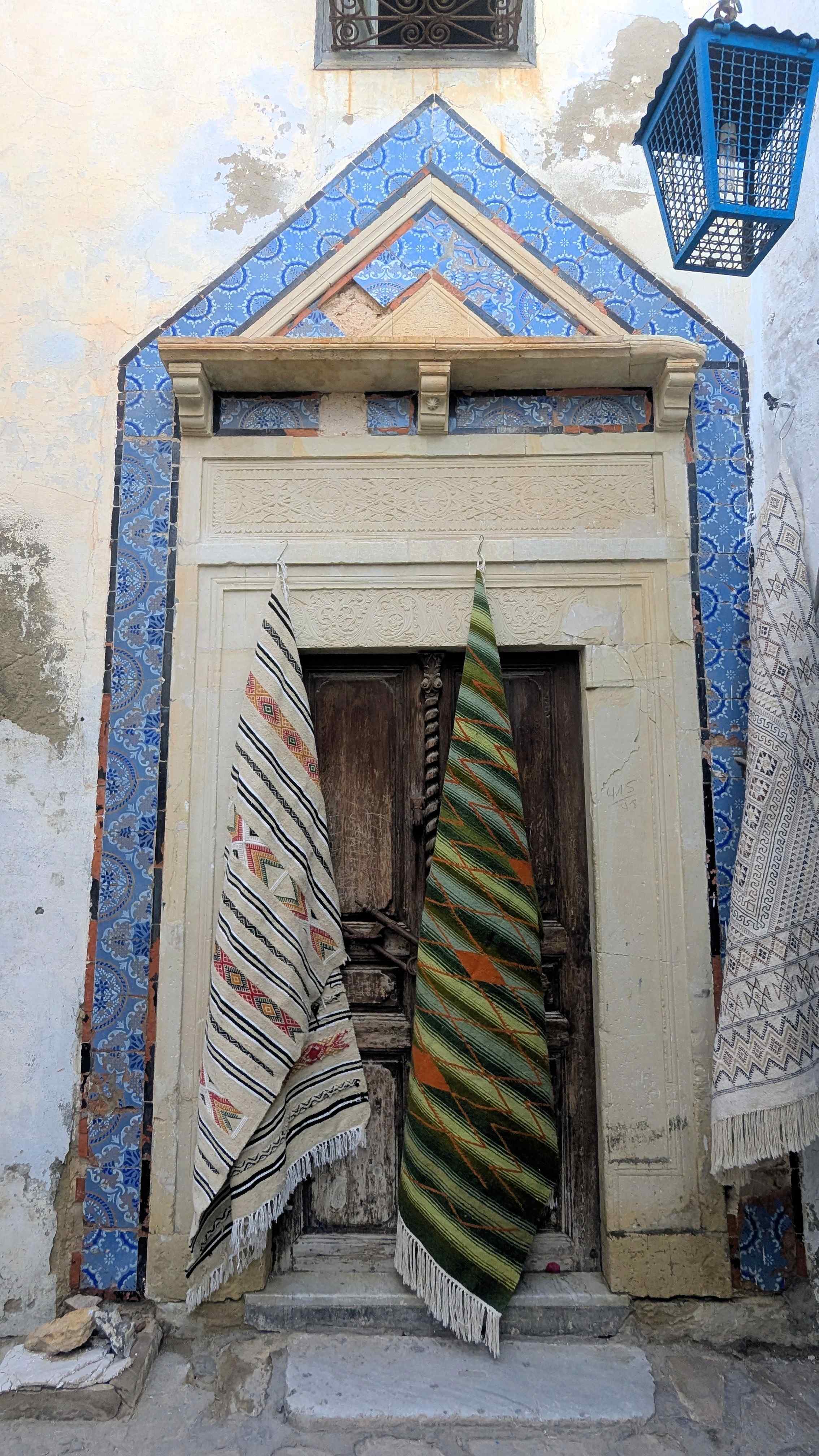
Beholding Hammamet's enchanting doorways was one of my favourite pastimes when meandering through the medina.
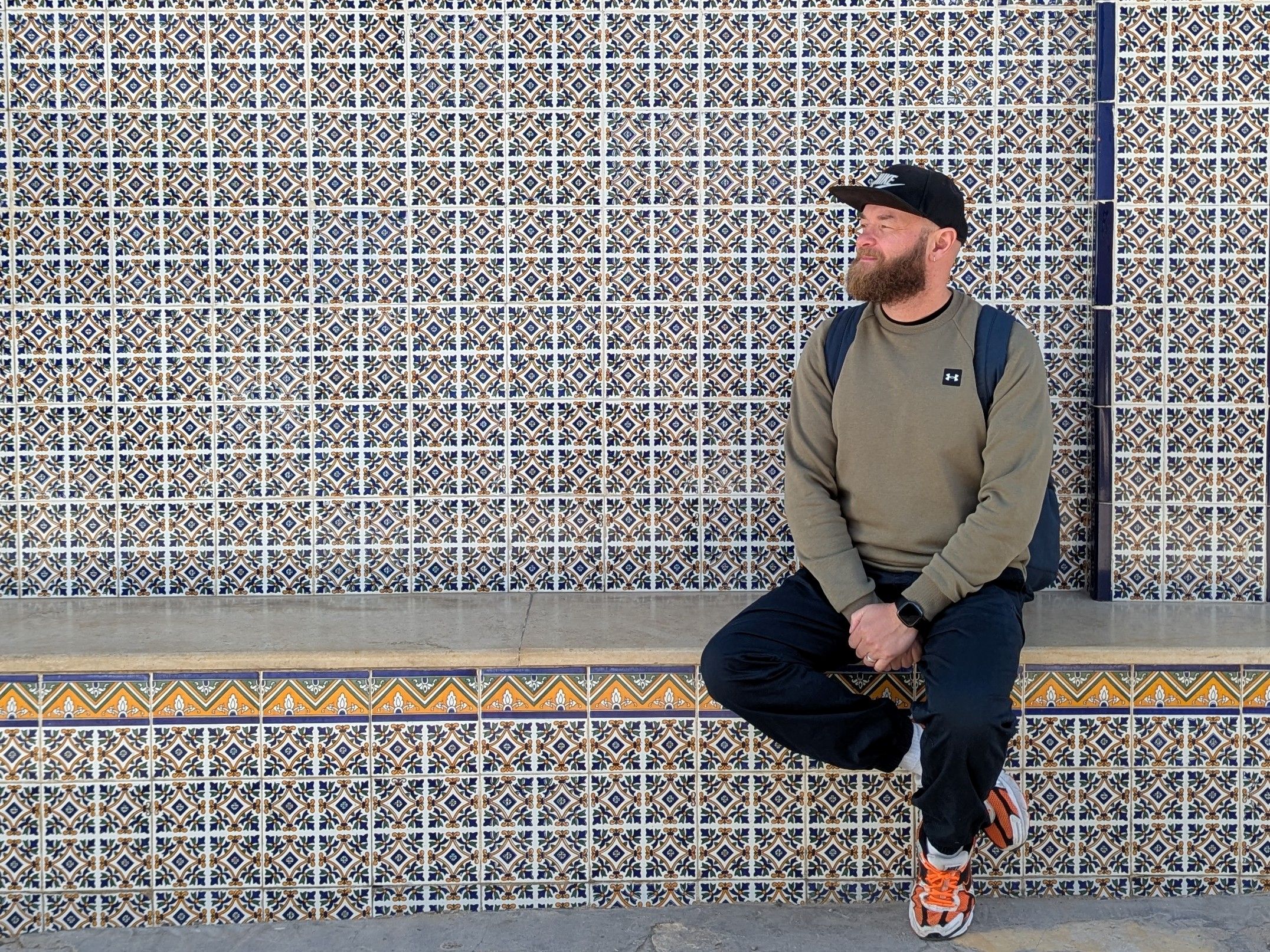
I'm in love with Tunisia's patterned tiles.
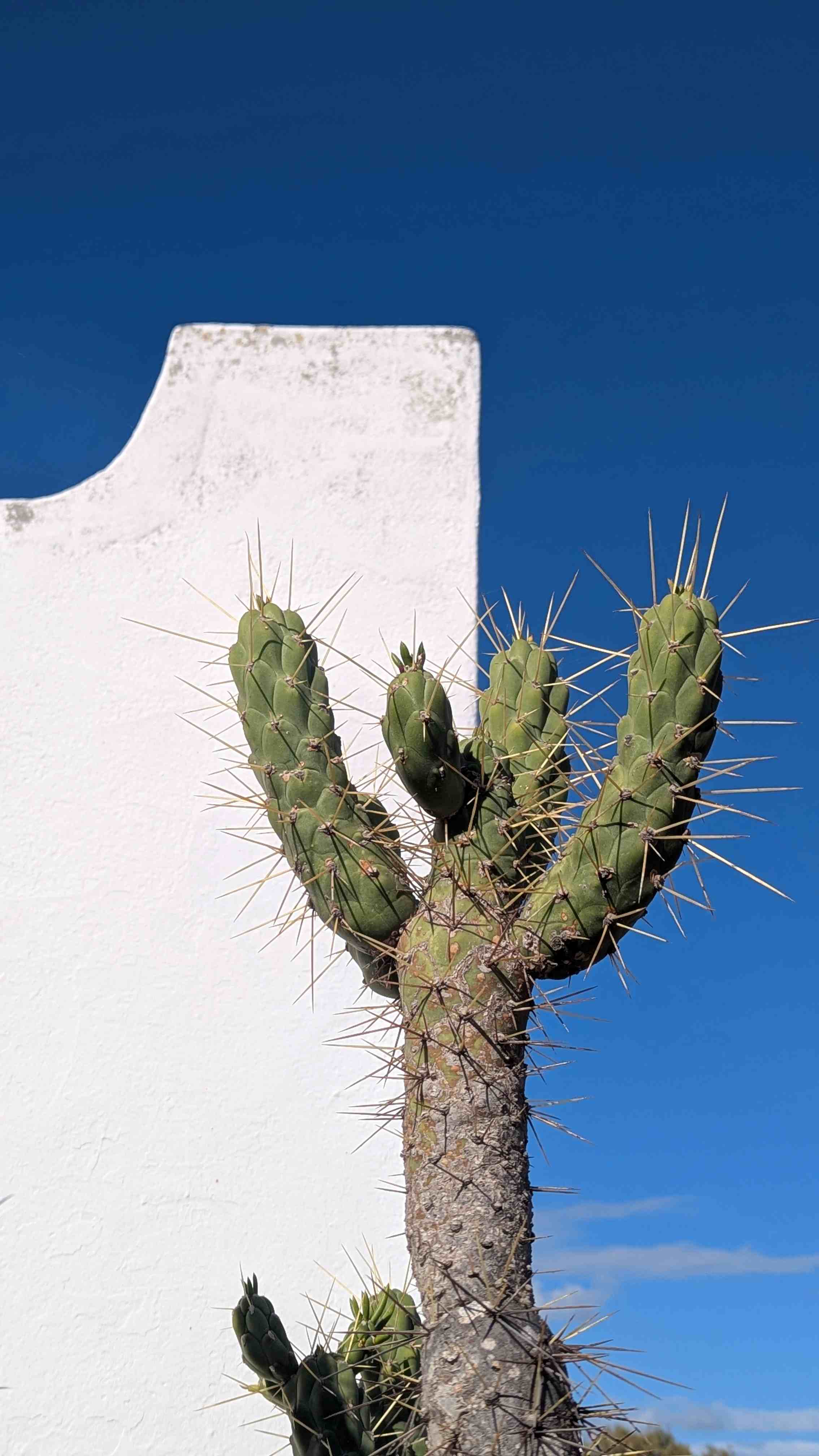
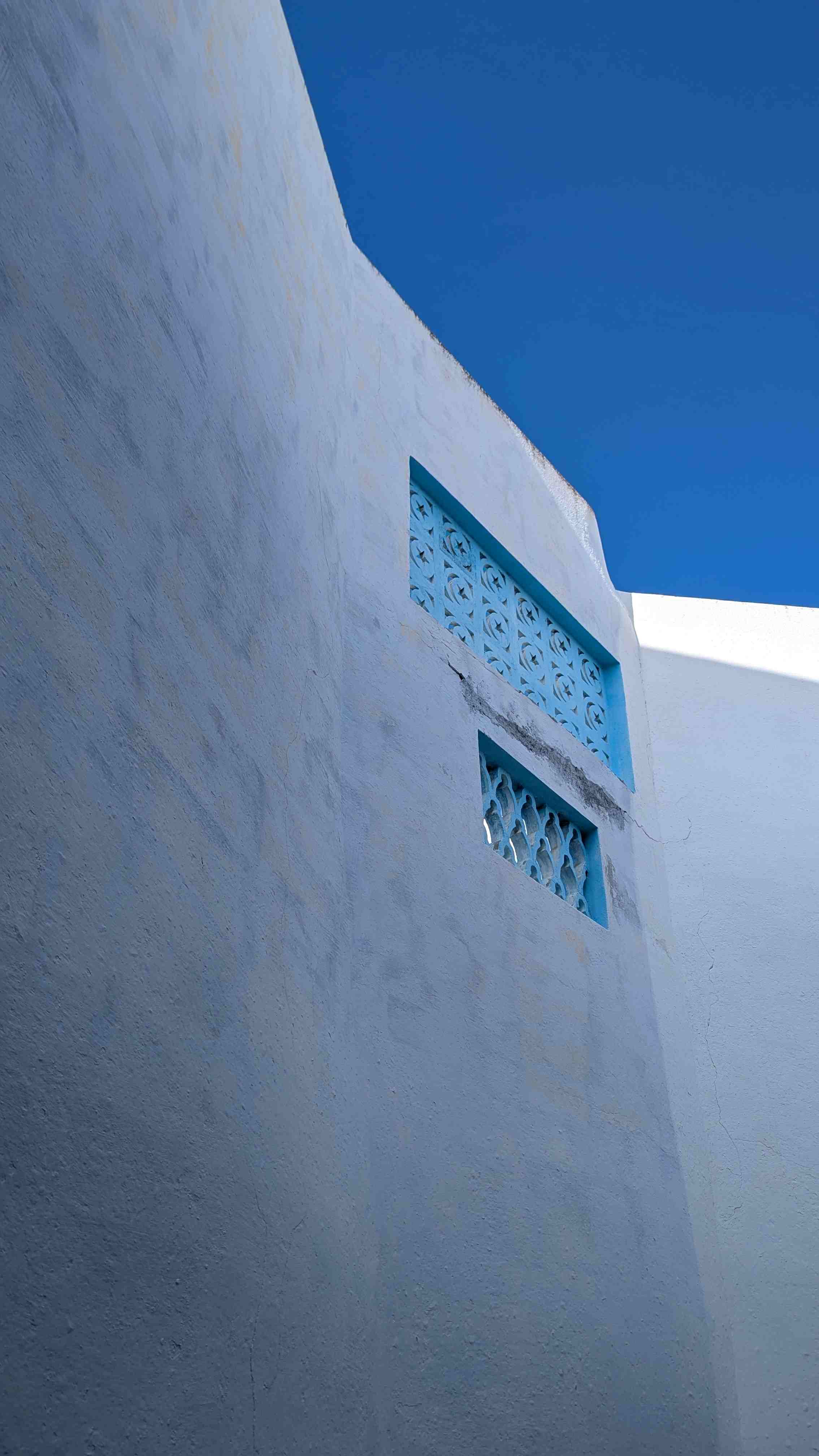
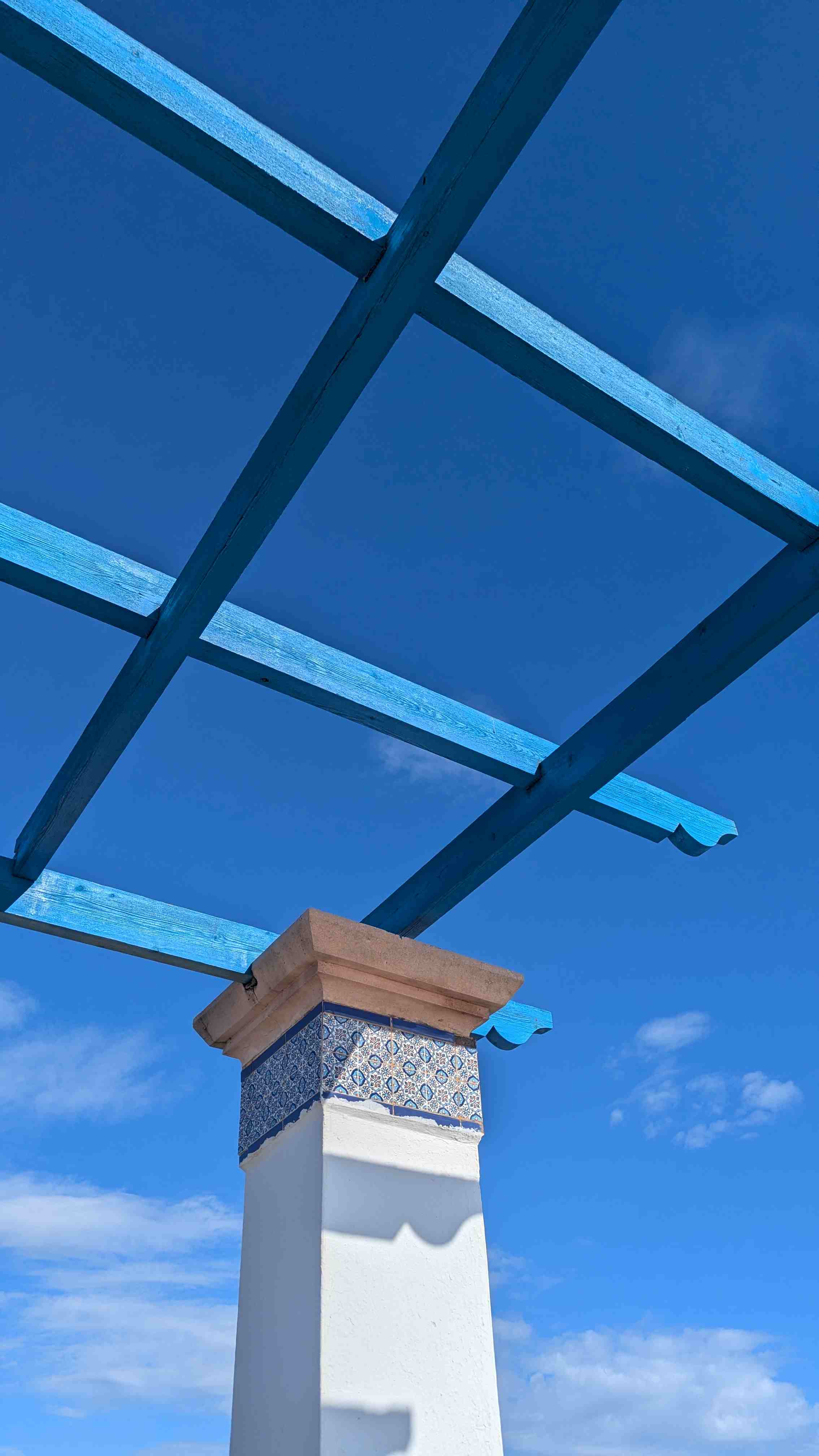
Hammamet's cool blues and whites.
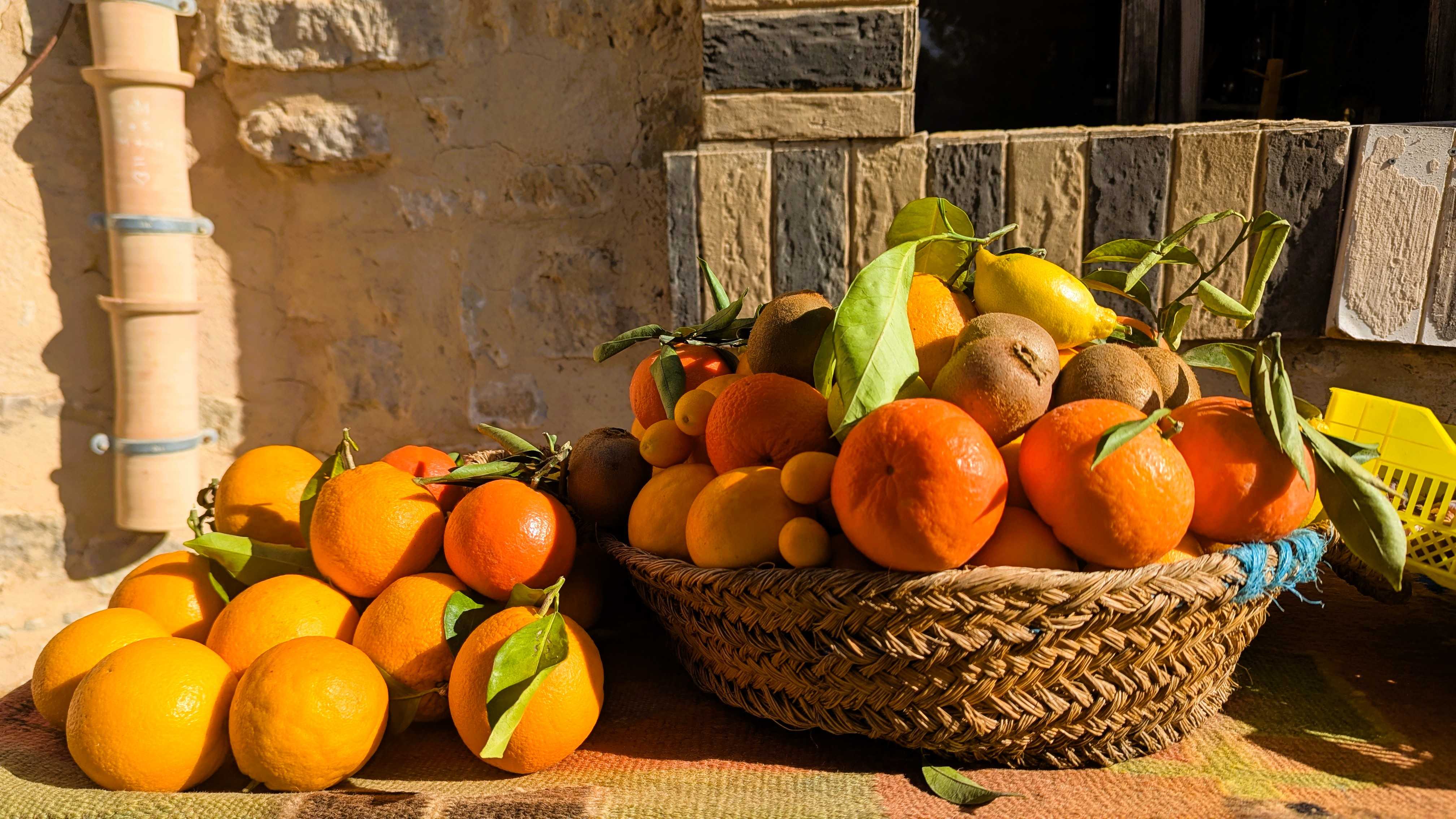
Tunisians possess an incredible ability to make the everyday a work of art.
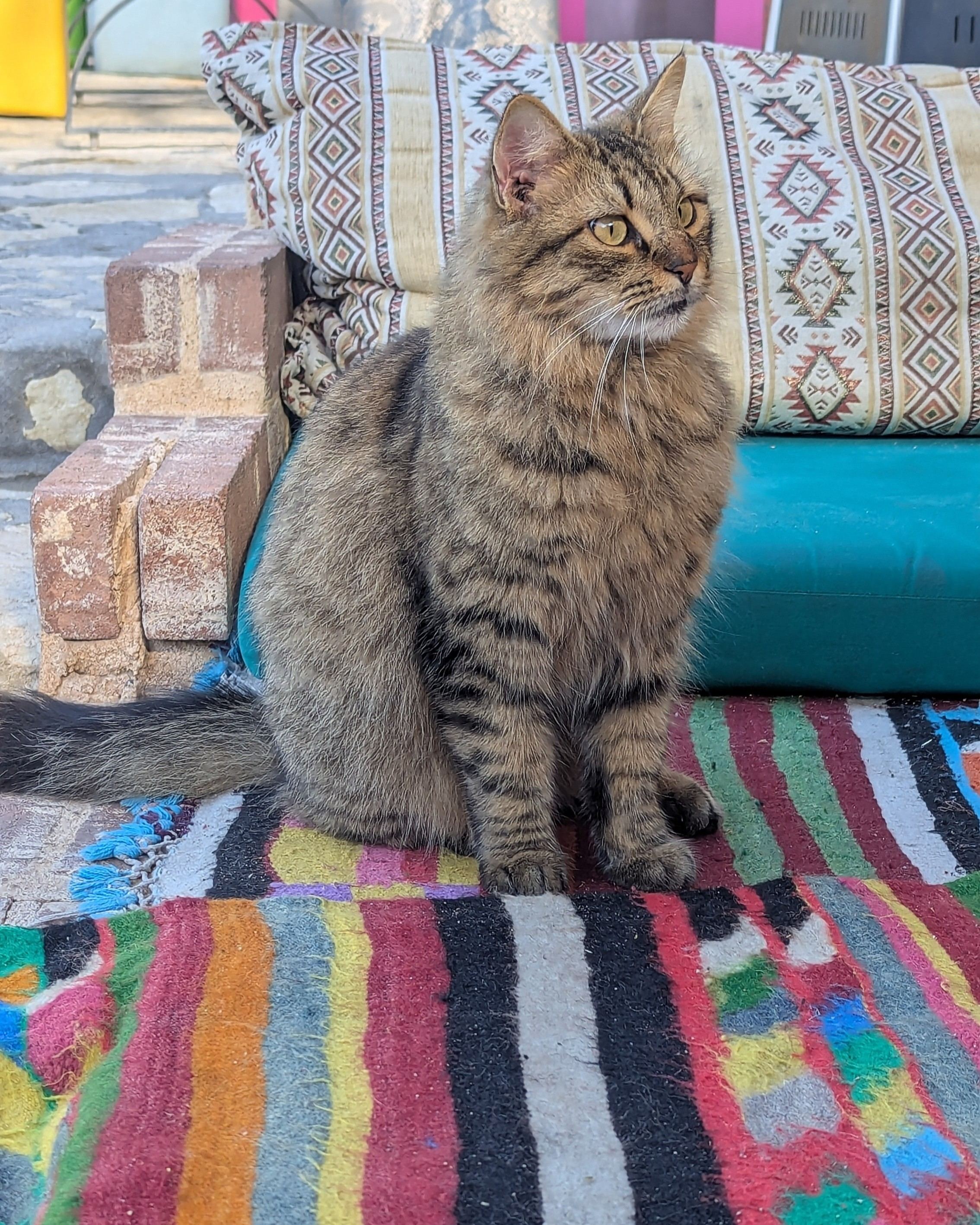
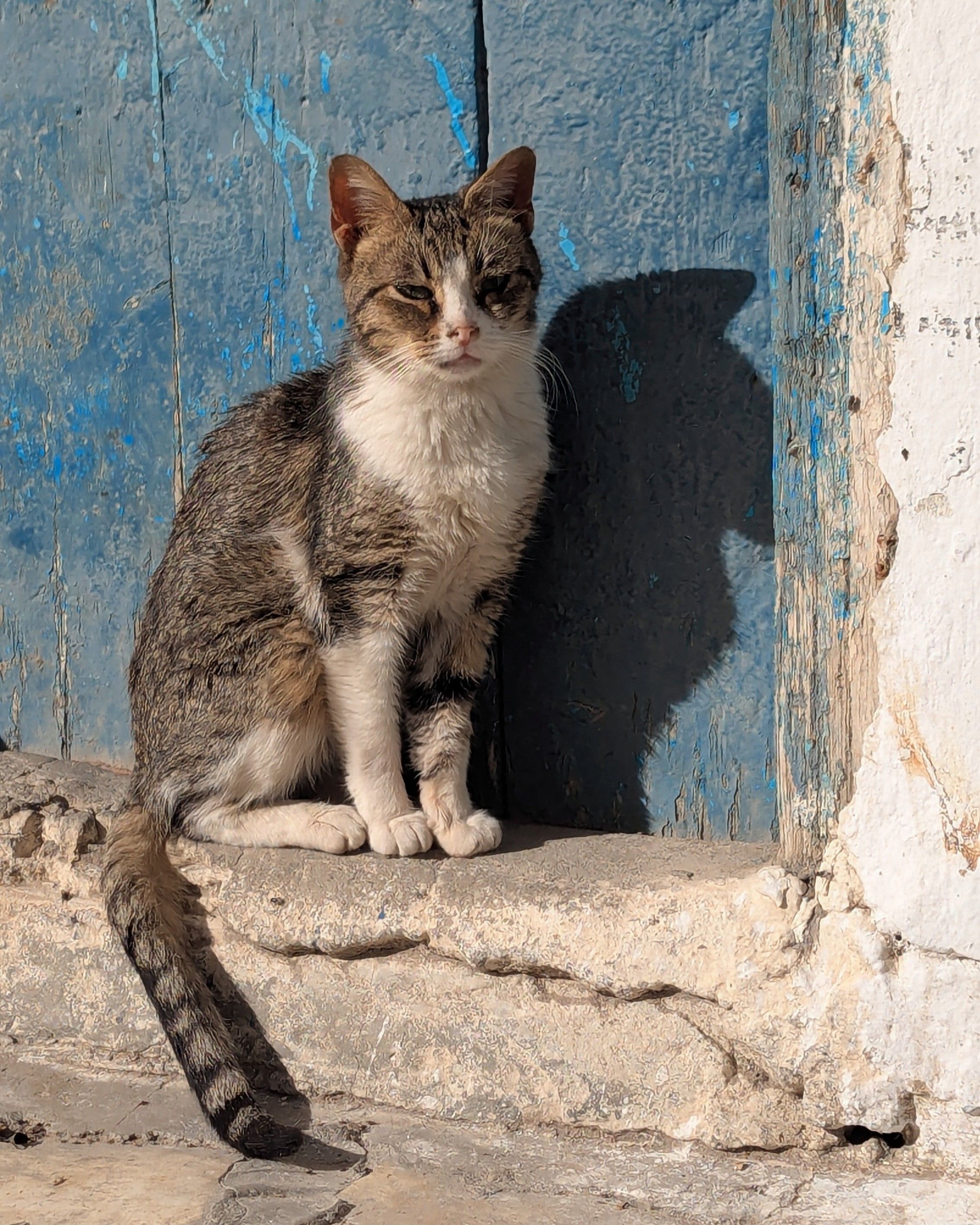
There's a special place in my heart for Tunisia's street cats.
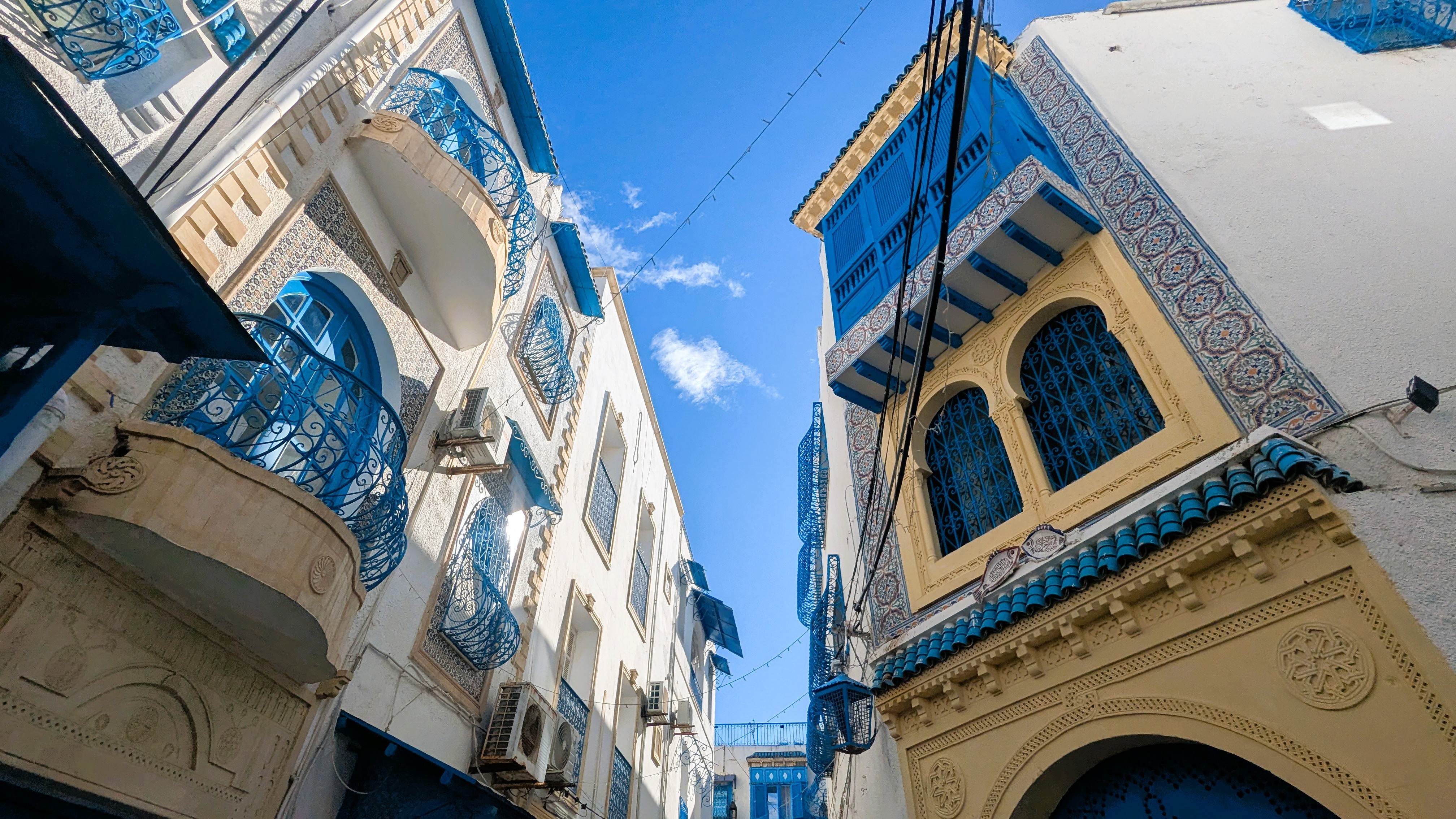
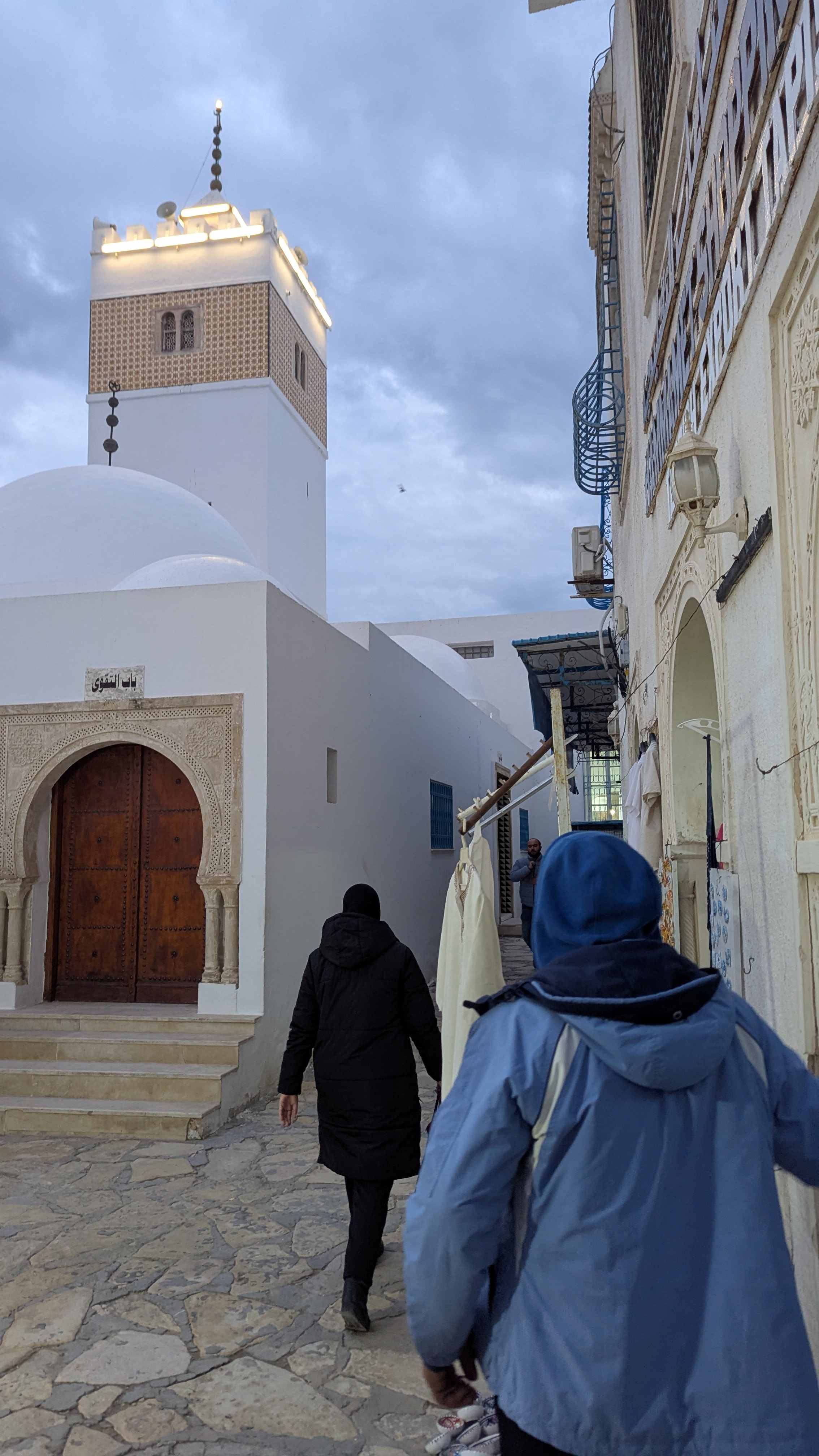
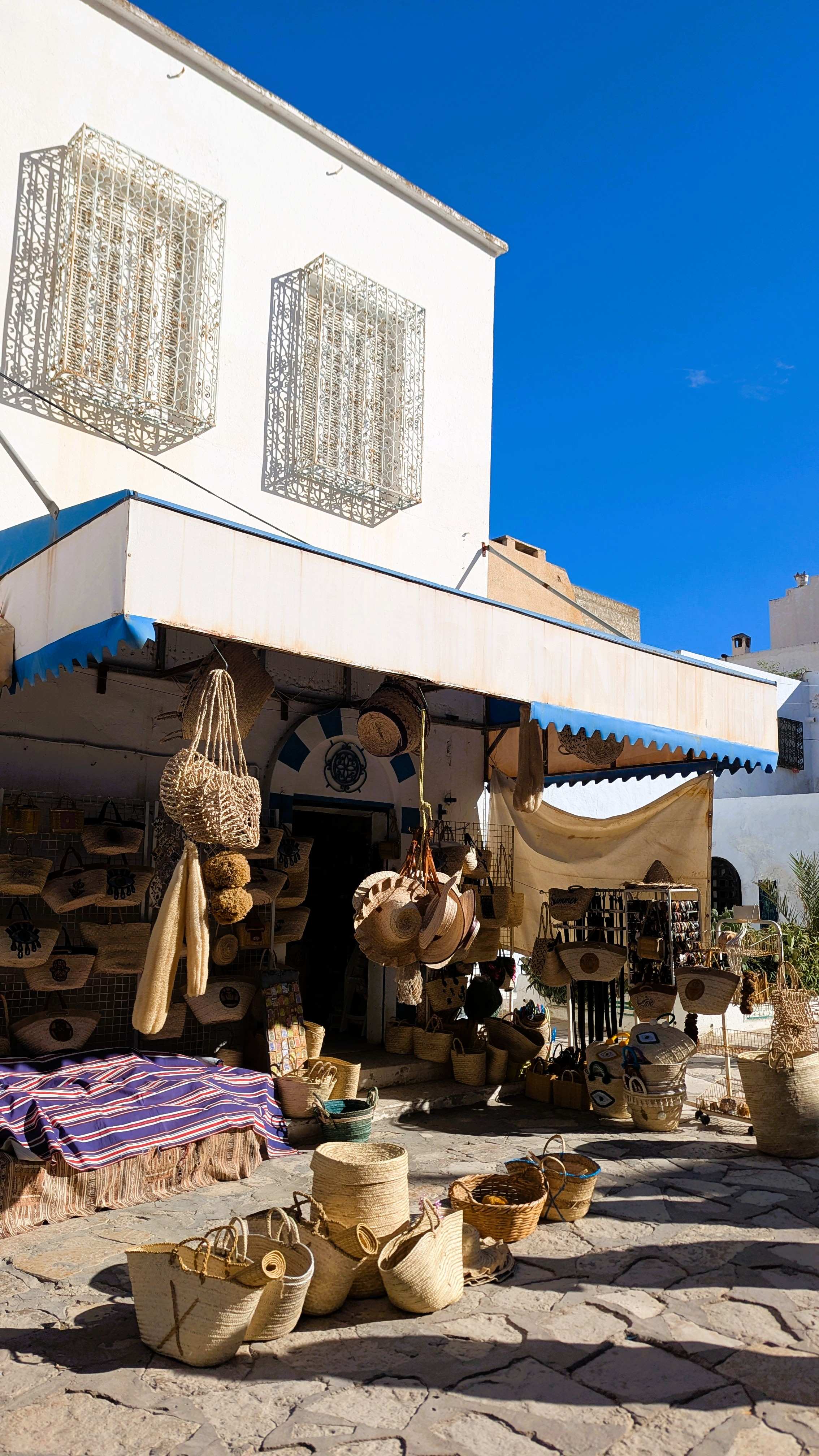
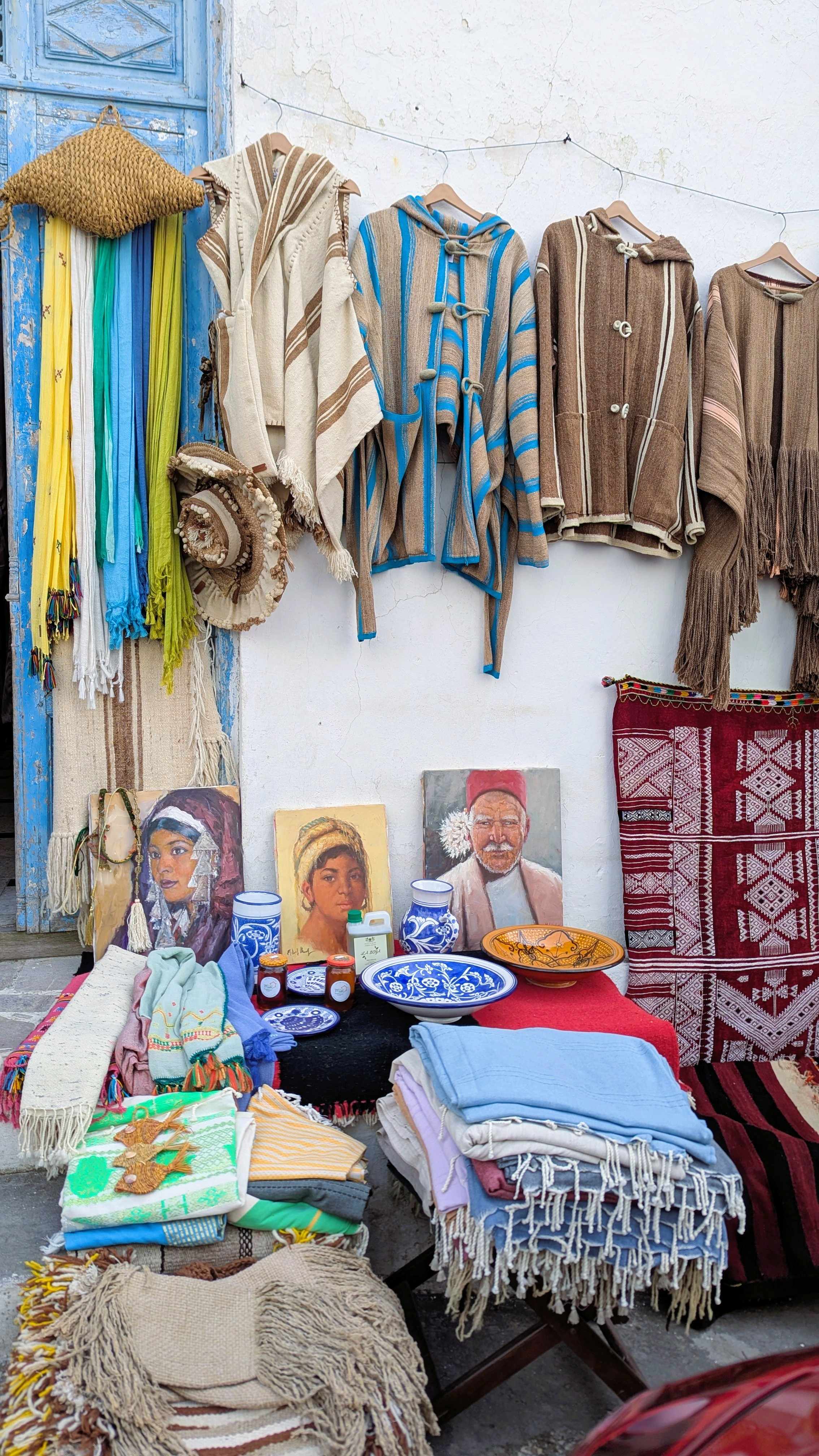
Medina street scenes: the medina's overhanging balconies; people make their way to the mosque during the Call to Prayer; a shop sells jute and wicker crafts.
Tunis is hectic, frenetic and smelly. It's the kind of place I like to travel in; it feels authentic, with none of the choreography and sanitisation that seems to characterise so many travel destinations nowadays. Tunis feels edgy and energetic with a distinct frisson of danger. In Hammamet we had stayed in a hotel outside of the ancient medina but in Tunis we were in the beating heart of the medina quarter, a UNESCO World Heritage site, and a short meandering walk to the mesmerising Souk de Tunis and the towering minaret of the Al-Zaytuna Mosque (the Mosque of Olive). Indeed, a wander through the thronging souk is a multi-sensory assault: gaudy goods of questionable quality sparkle under dangling light bulbs, the smell of frankincense wafts up your nostrils and mystically fogs the air, your body is squeezed and squashed against others', you attract the shouts and heckles of shop owners who appeal to you in a panoply of European languages. It is not uncommon to espy locals leading rams through the warren of streets, to see people huddled around small tables decorated with flower motifs collectively sucking on hookah pipes, and men sporting the iconic fez hat (I love the fez; nothing speaks of North Africa more than the fez). All of this plays out against a backdrop of riotous patterns and mosaics which, to my foreign eyes, has a somewhat disorienting, migraine-inducing effect. It's like trying to view a magic eye picture through a kaleidoscope. In short, the medina is a riotous, fabulous space. I could have wandered around this place for hours admiring its beauty, its colour, its cobbles and its culture. In fact, I did!
It is easy to miss, but Cafe Panorama lies at the top of a staircase deep inside the souk. A walk through a shop and up to the roof elevates you out of the claustrophobic chaos and onto a surprisingly peaceful terrace with an unrivalled view of the capital featuring the minaret of the Al-Zaytuna Mosque framed beautifully by a hotch-potch of faded tiles with exquisite, colourful patterns. It is an incredible place in which to enjoy a Caffe Türk or a Thé à la menthe avec amandes. Tunis' skyline is special because it has avoided, perhaps through the reality of the country's difficult economic circumstances, the scourge of the modern capital city: the glass skyscraper. Instead, Tunis' vast skyline is beautiful in both its modesty and the fact that it has retained much of its traditional character. Despite its popularity among travellers, Cafe Panorama still feels like a neighbourhood cafe for local people - like the city itself it has held onto its heart and soul; a man with a worn money belt, broken English, dented tray and distinct lack of deference is the server; threadbare and tired Turkish rugs line the concrete seating; a mishmash of weathered tables and chairs wobble and creak under their use. There is no menu either - simply say what you would like in your best broken French and something akin to what you desired will probably arrive sometime during the day.
Other riches lying within the walls of the medina include the Royal Mausoleum of Torbet el Bey, a fascinating place where male tombs are topped with strange marble renditions of their cultural head wear, specifically a turban or fez. These stone hats are mounted onto a cylindrical marble shaft which rises from the head of the tomb itself. Indeed, when set against the patterned tiles adorning every centimetre of the mausoleum's walls, the tombs with their shafts and hats look positively otherworldly. Sights from the Ottoman era also populate the medina, including the old Madrasa Slimania which houses a number of impressive faience panels on its walls.
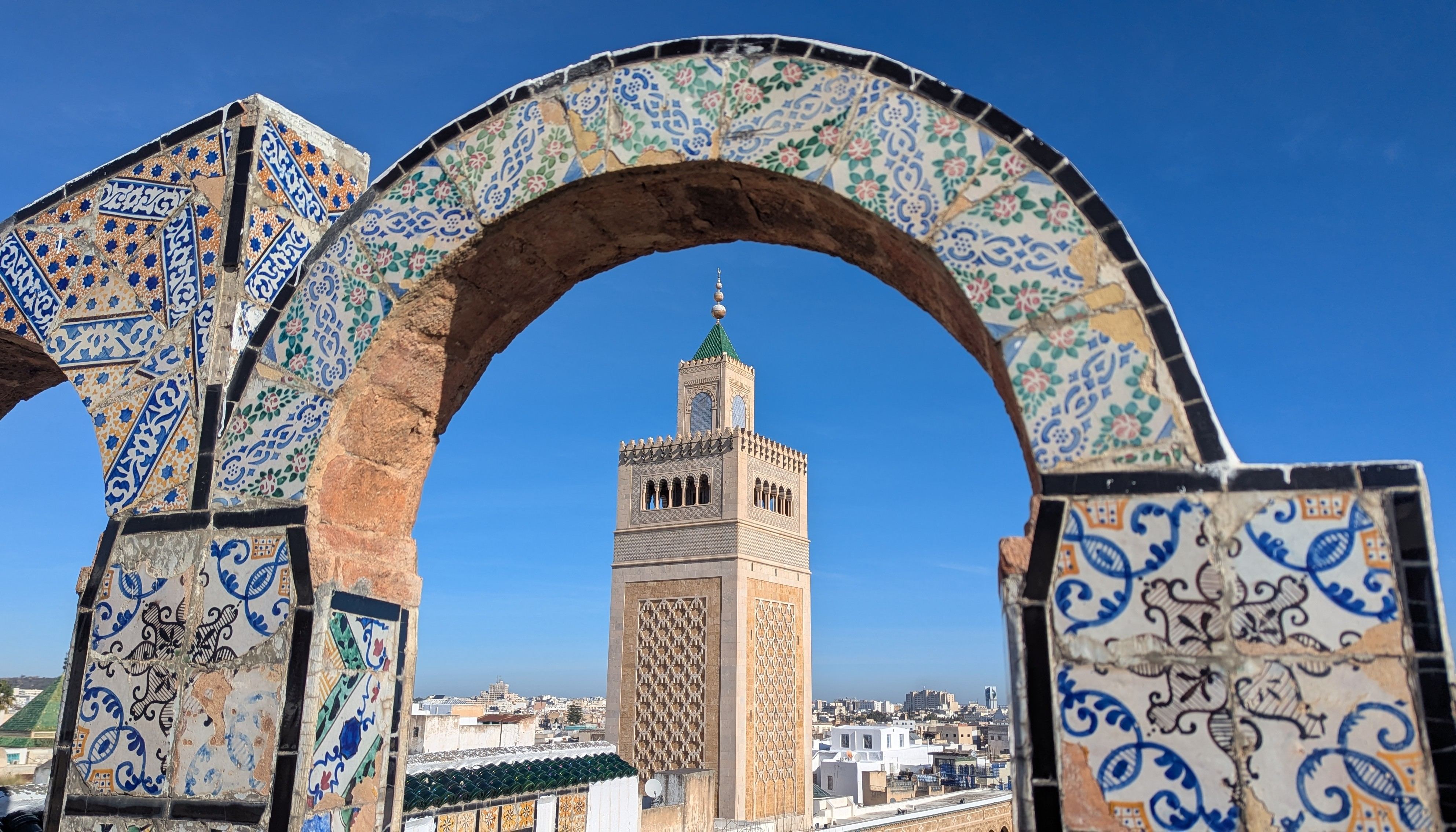
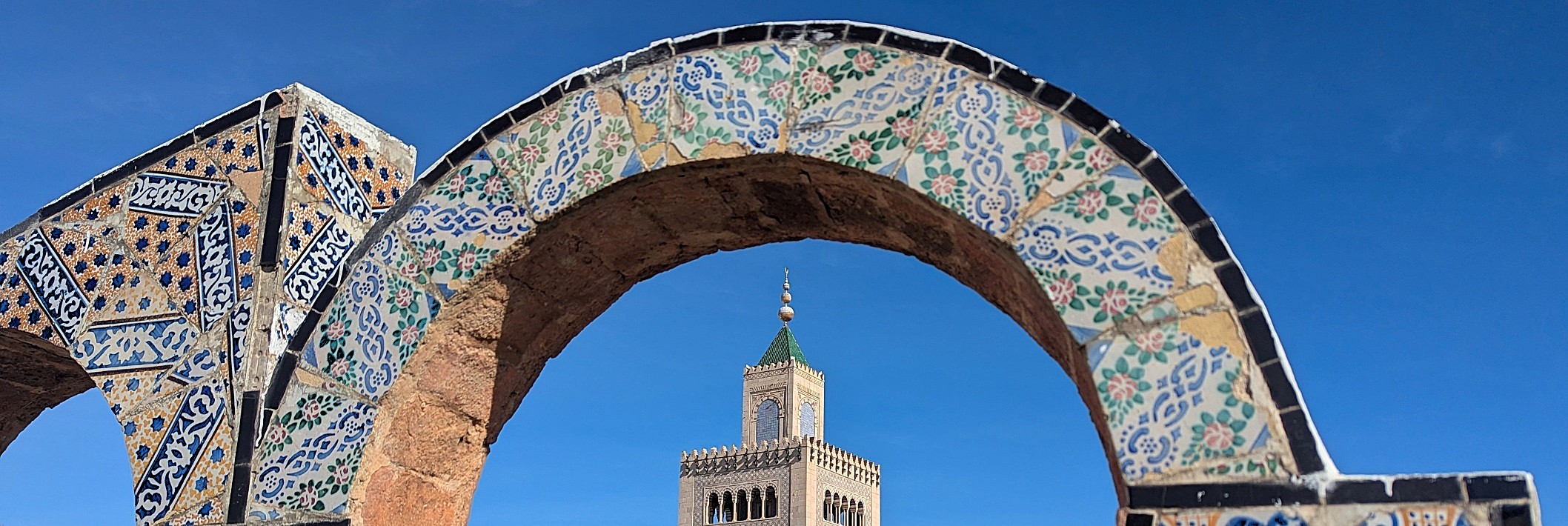
The minaret of the Al-Zaytuna Mosque (Mosque of Olive) seen through the ramshackle tiled arches of Cafe Panorama.
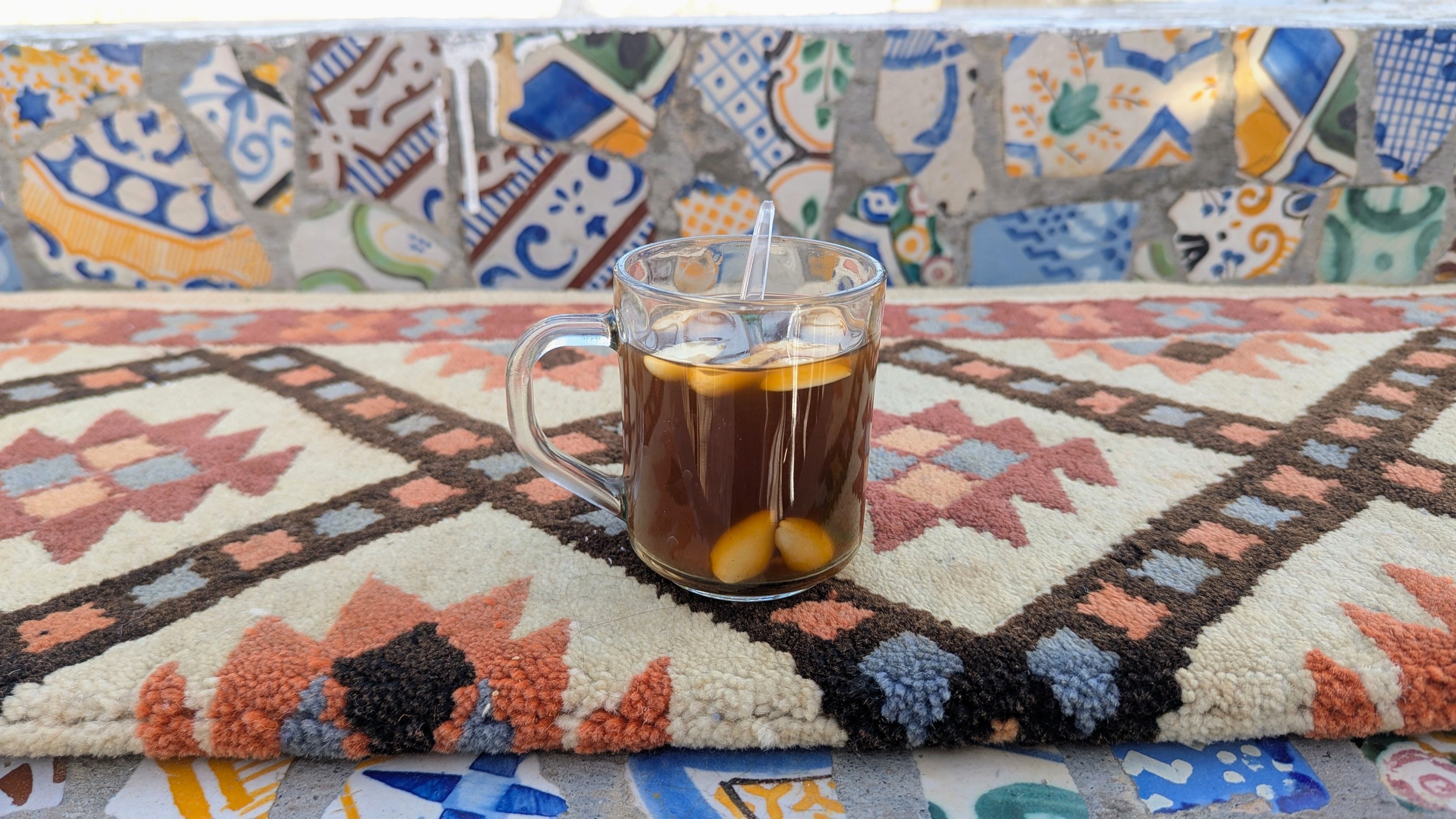
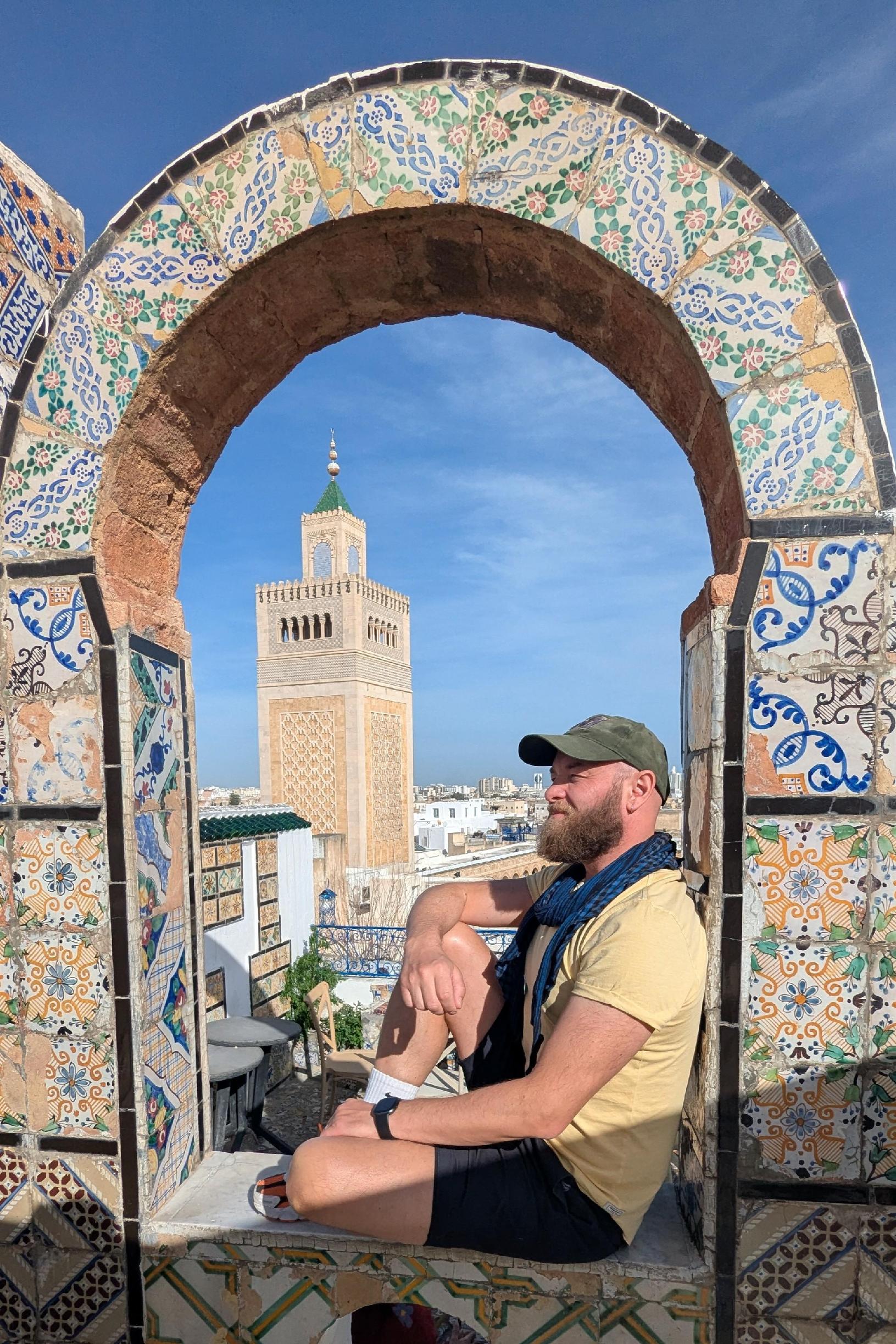
Enjoying a Thé à la menthe avec amandes at Cafe Panorama.
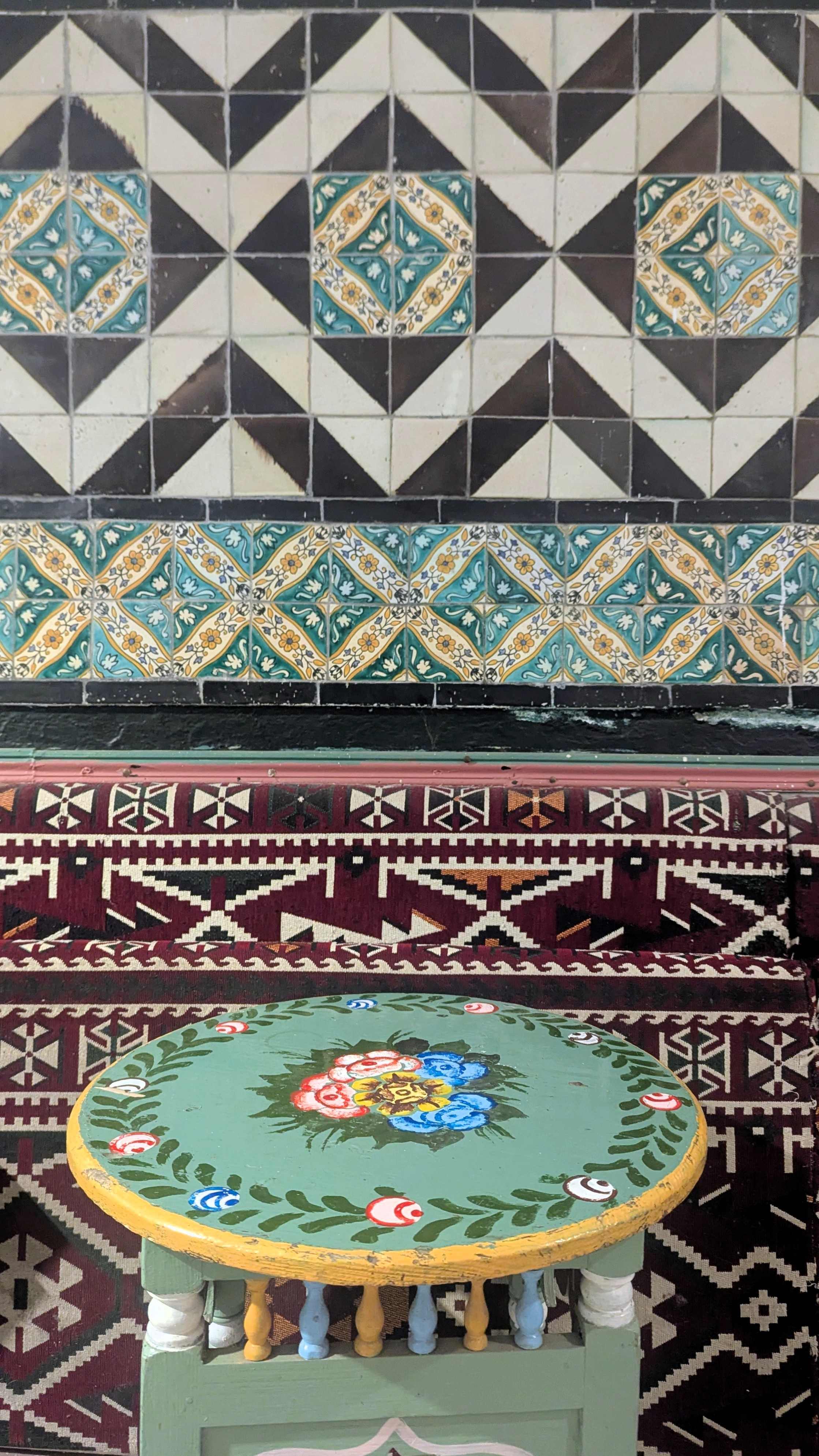
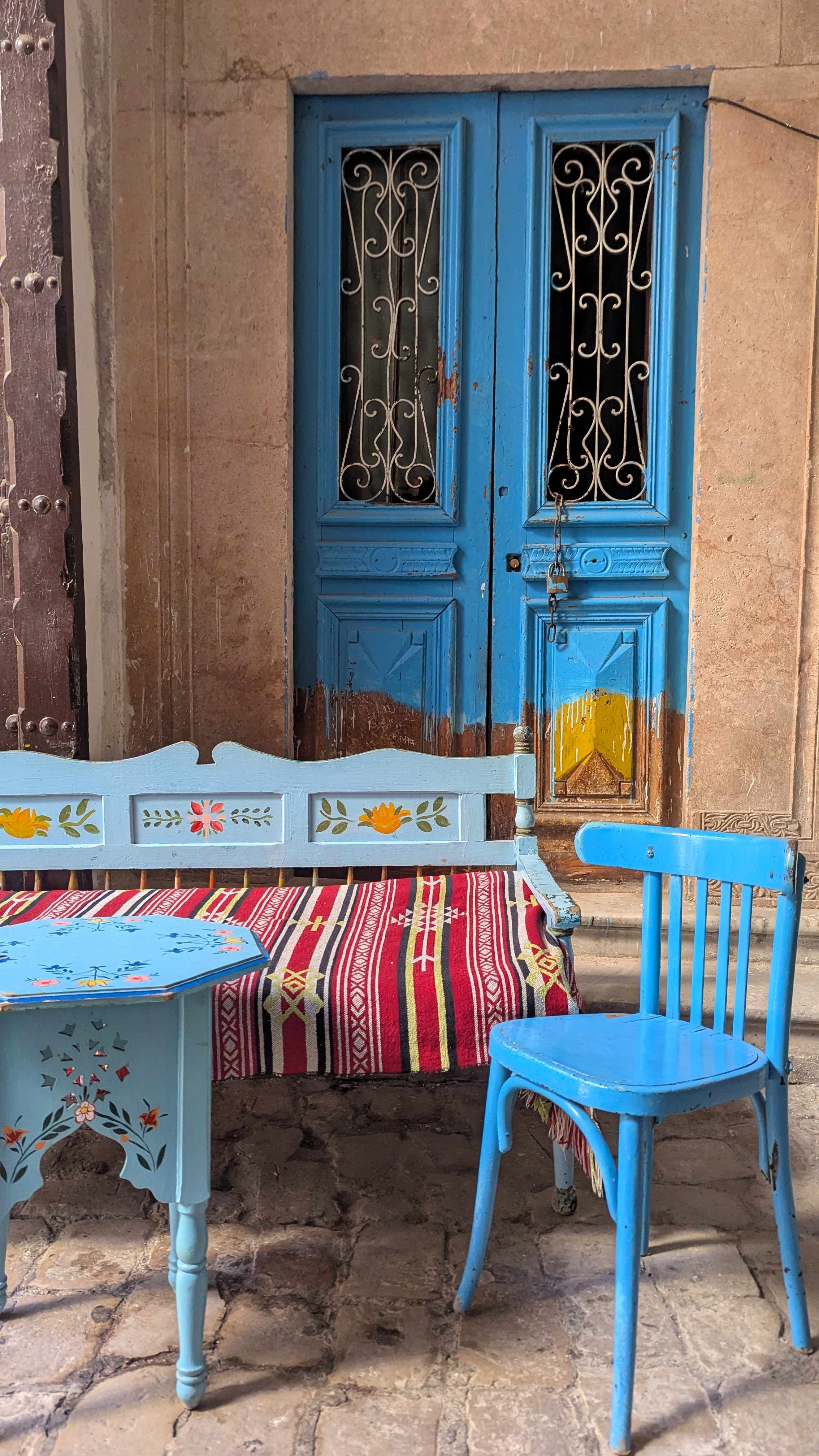
Tunis' kaleidoscopic cultural colour.
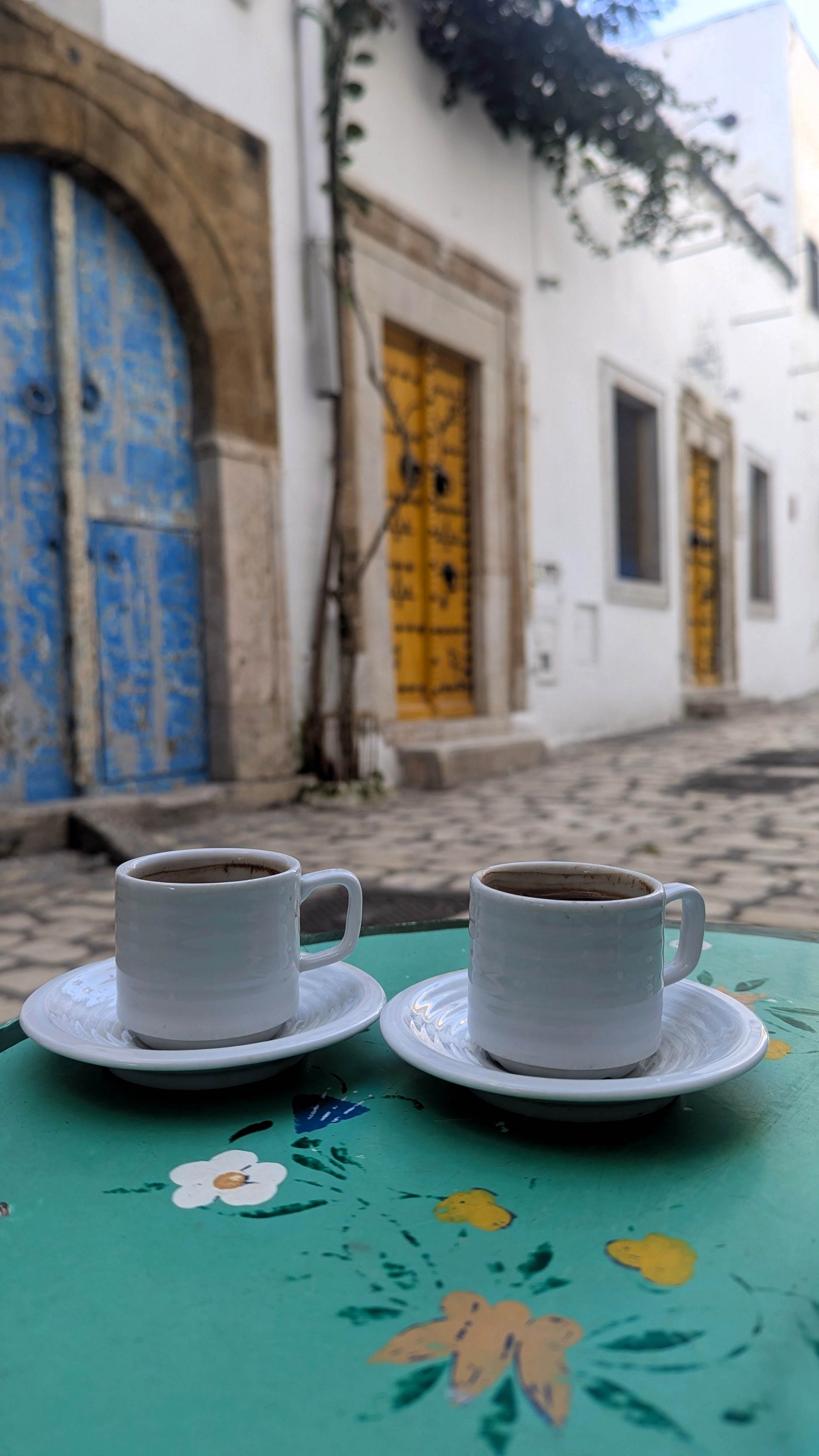
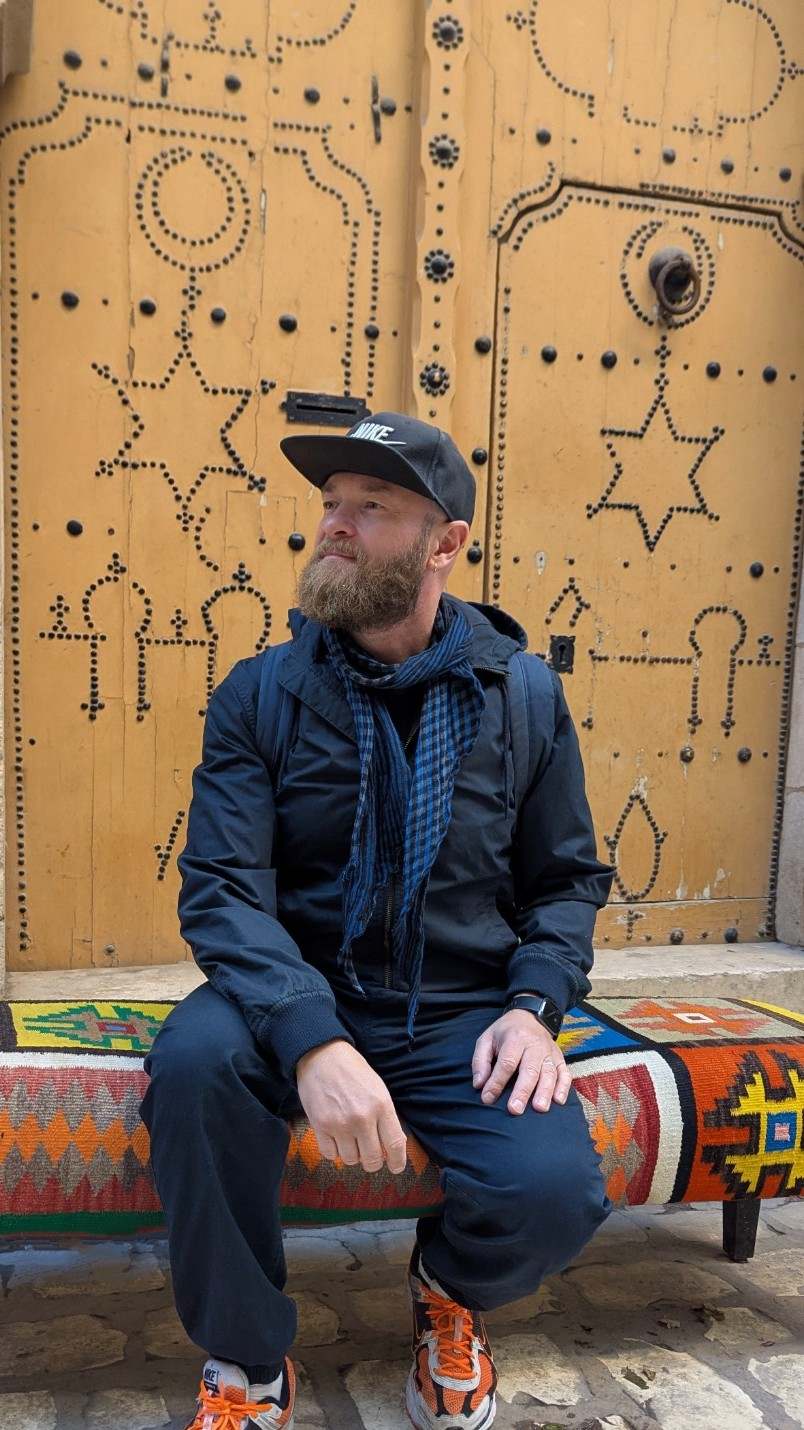
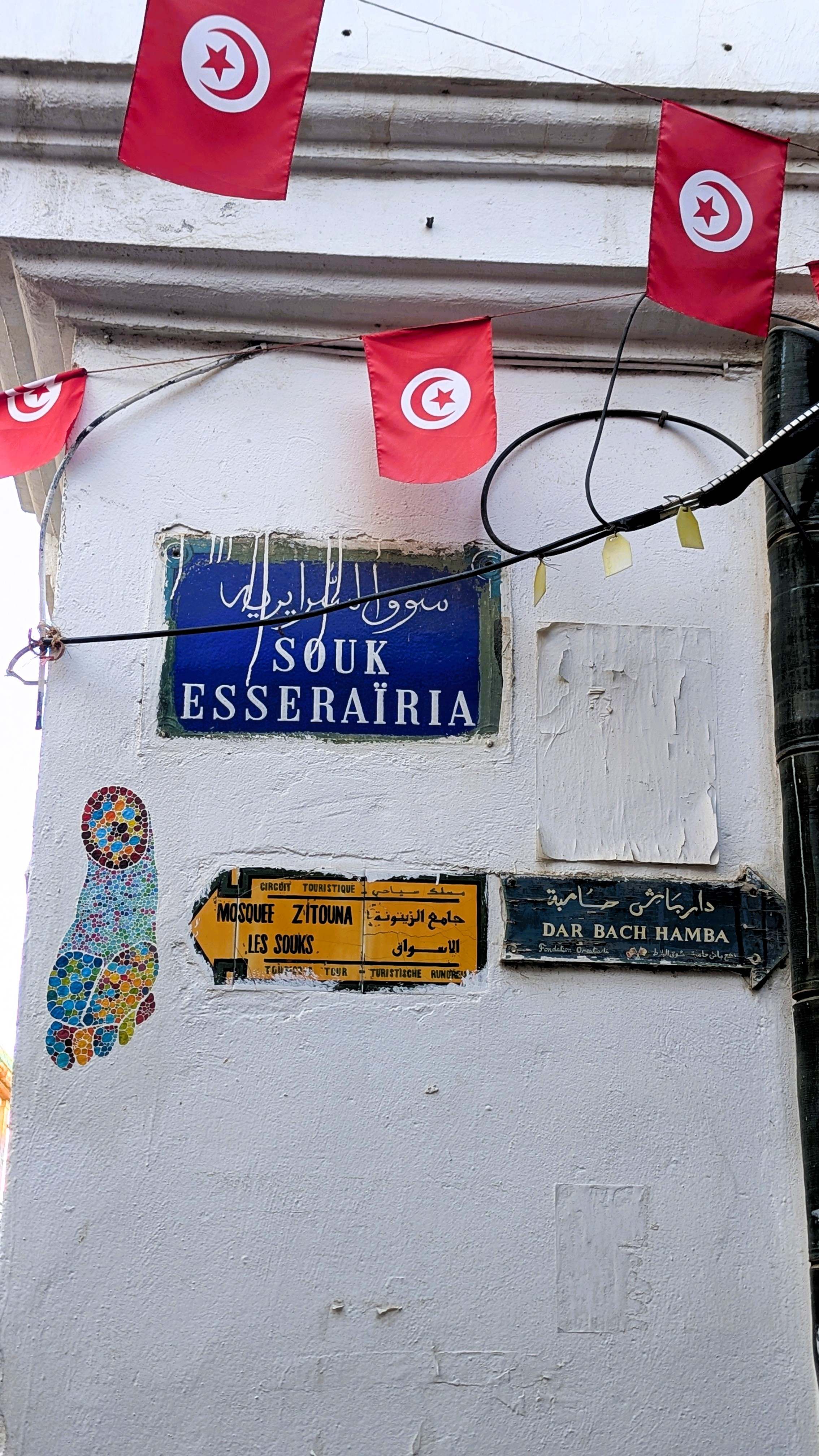
Medina street scenes.
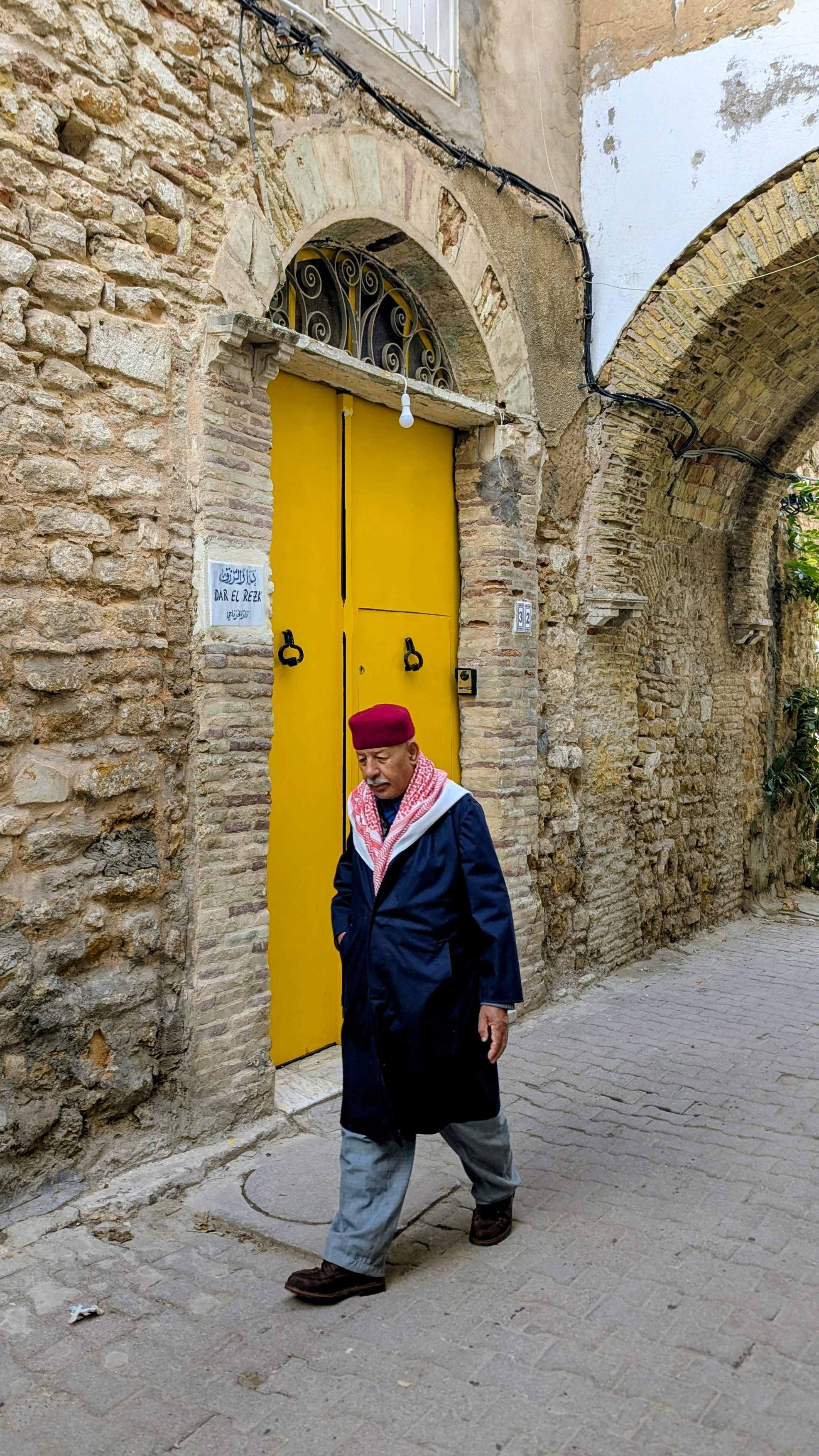
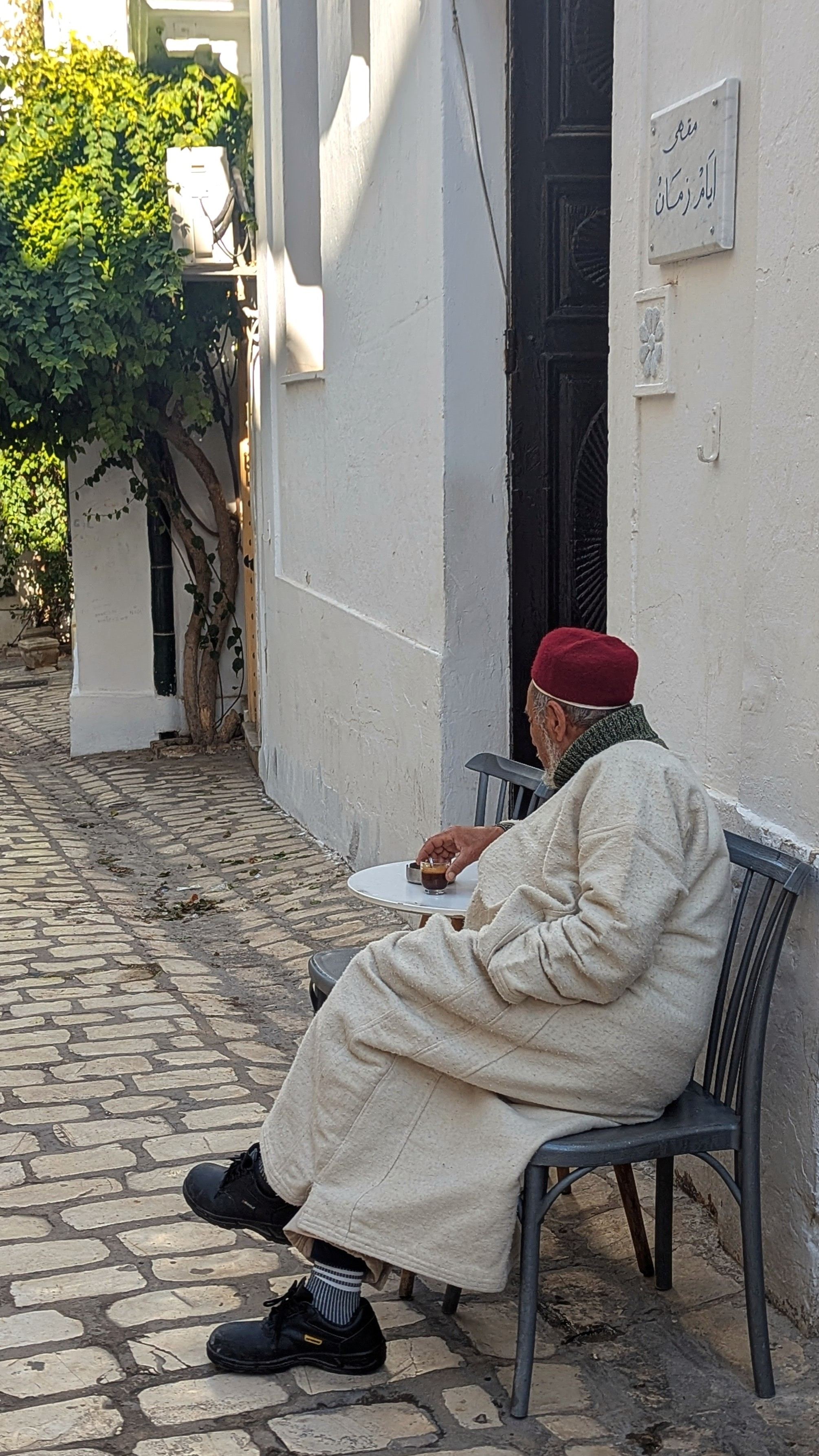
Northing says North Africa more than the red felt hat known as the Fez!
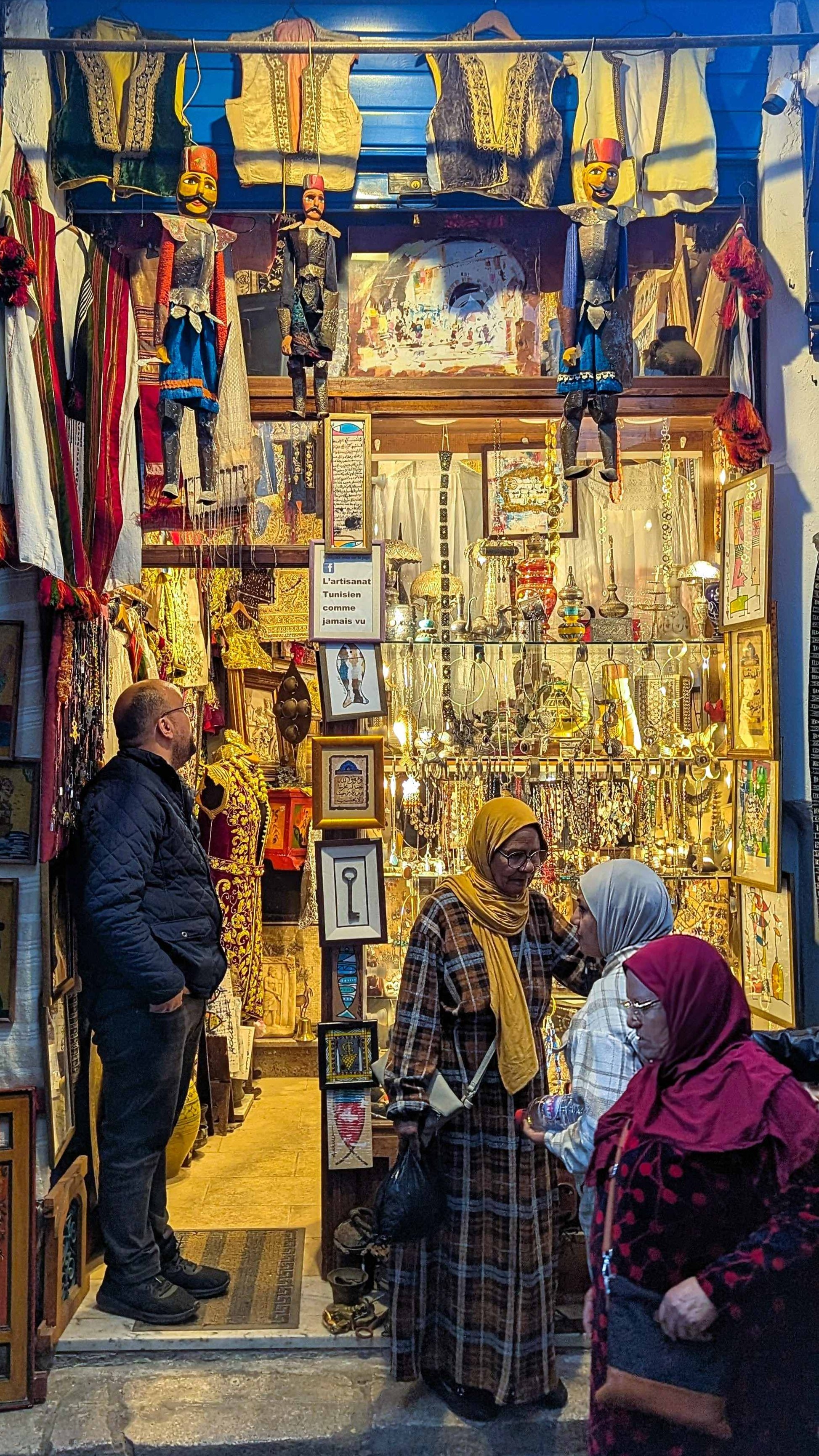
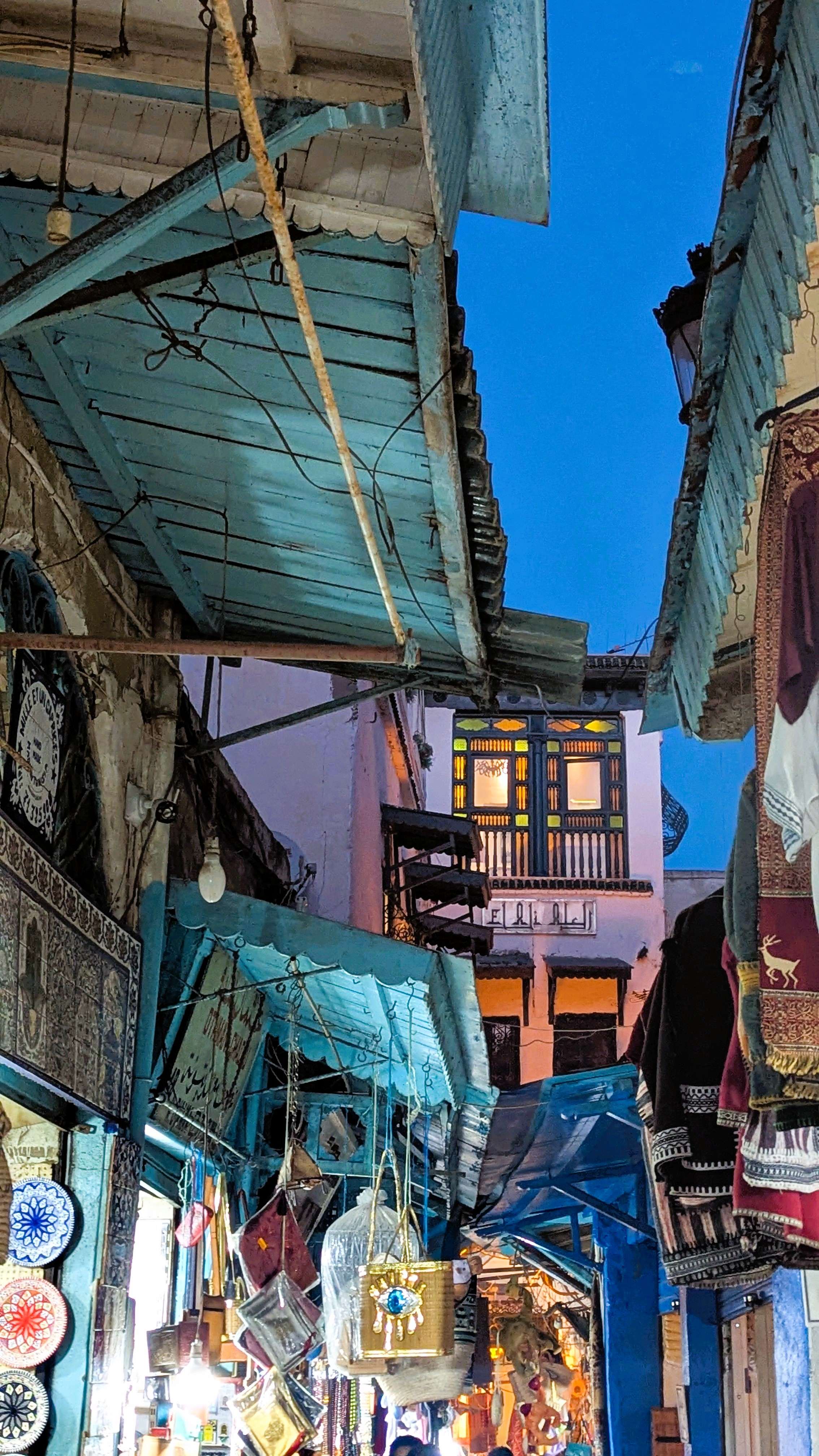
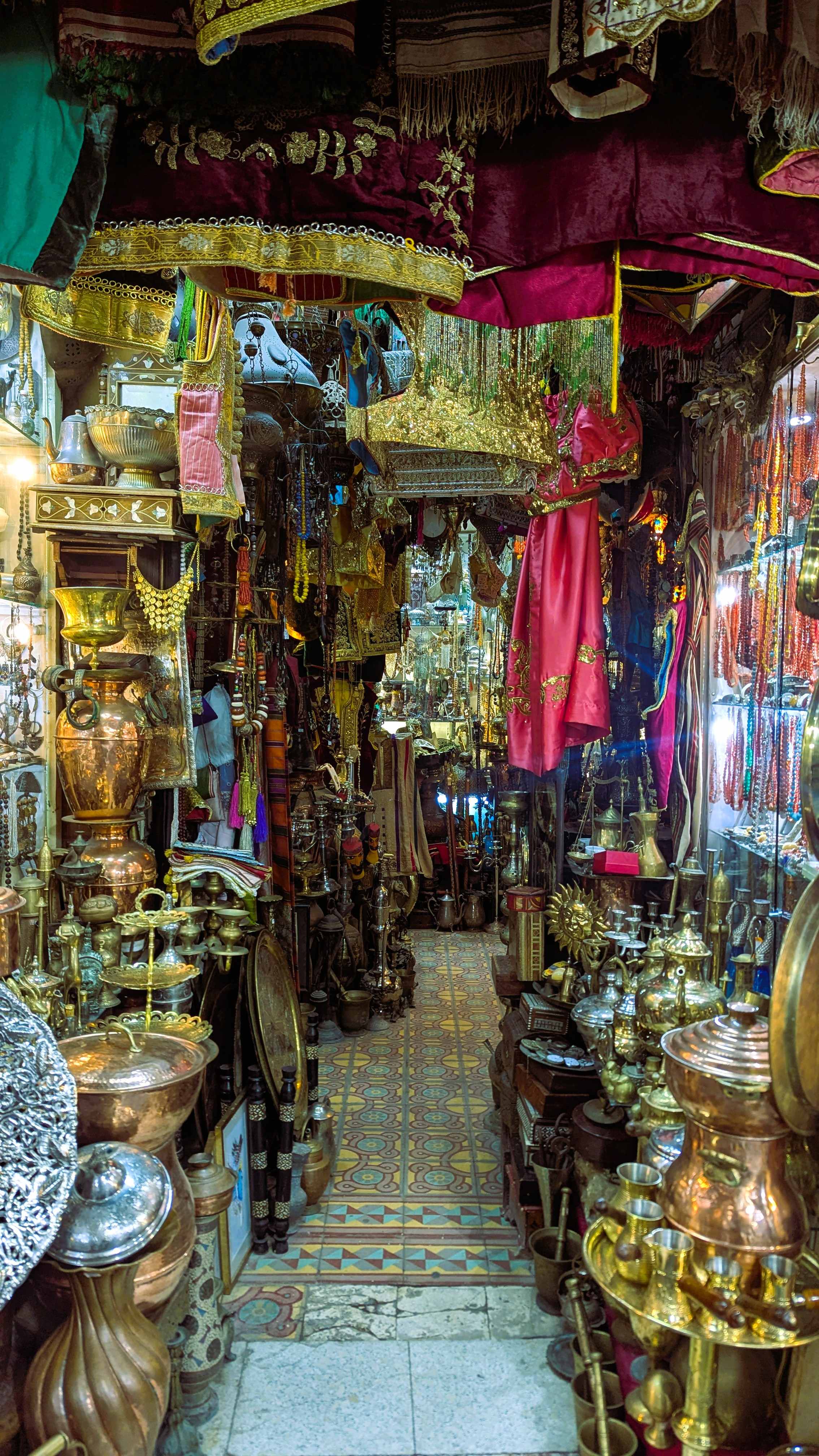
Vibrant, technicolour scenes from the Souk de Tunis.
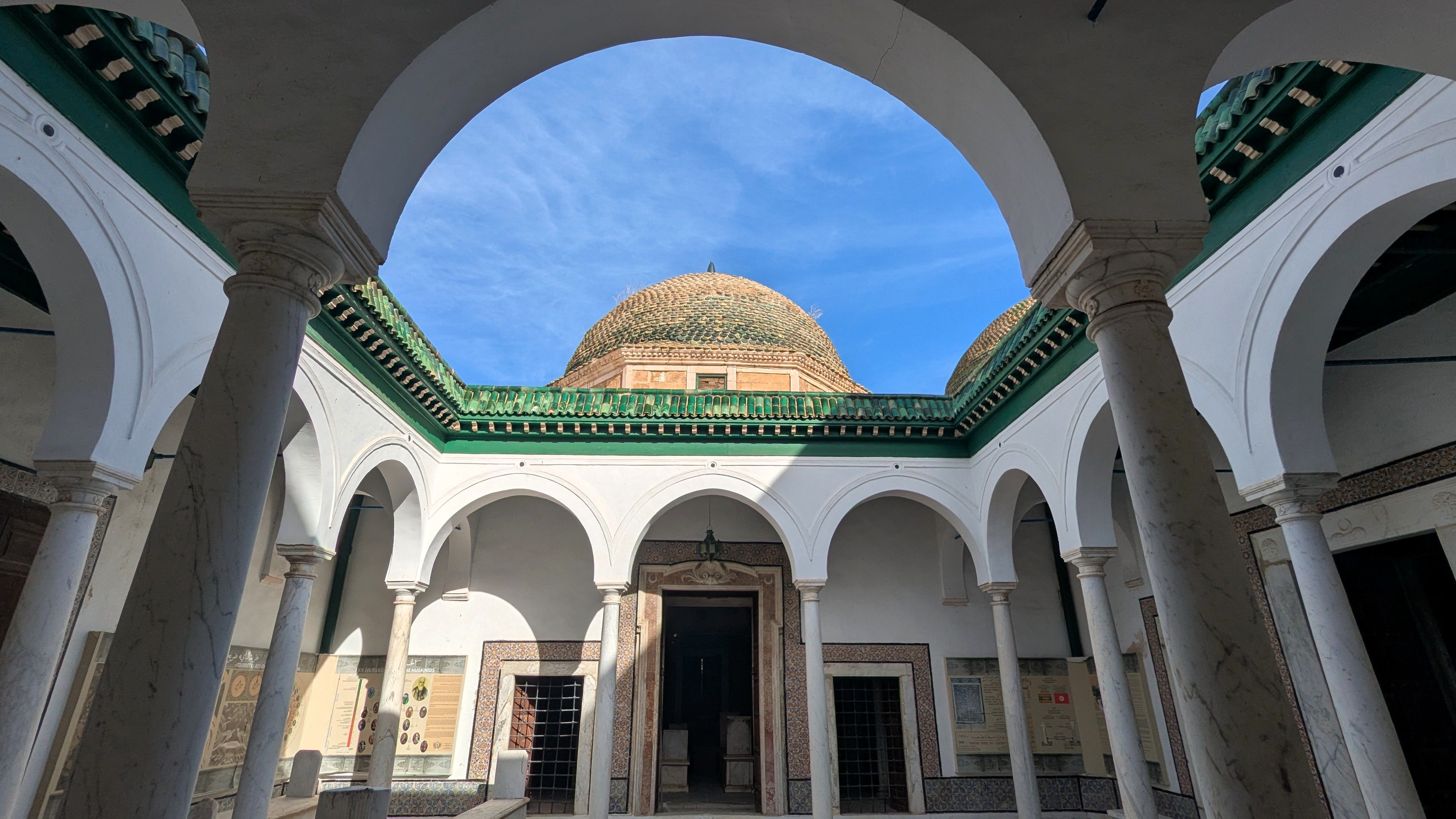
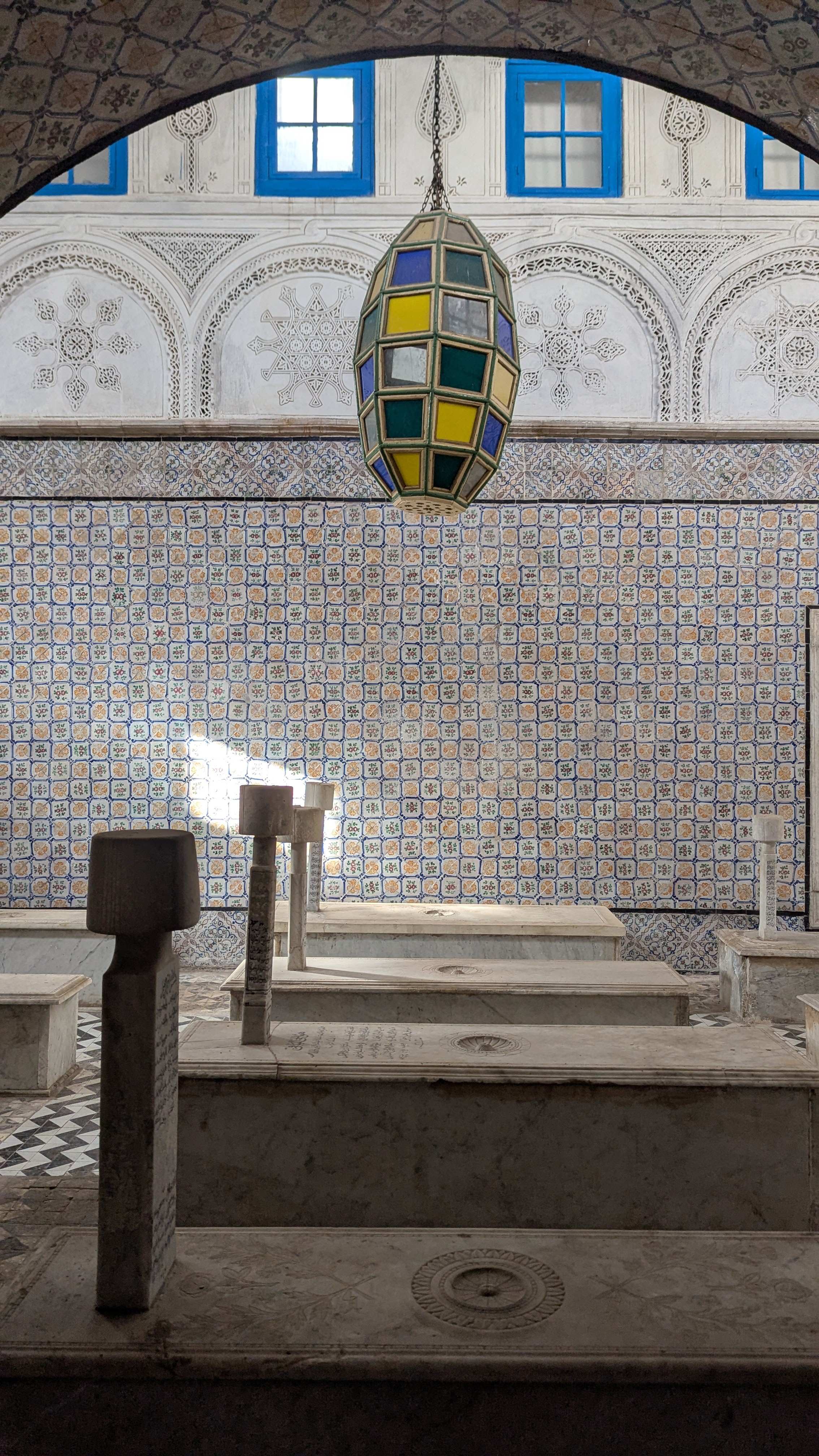
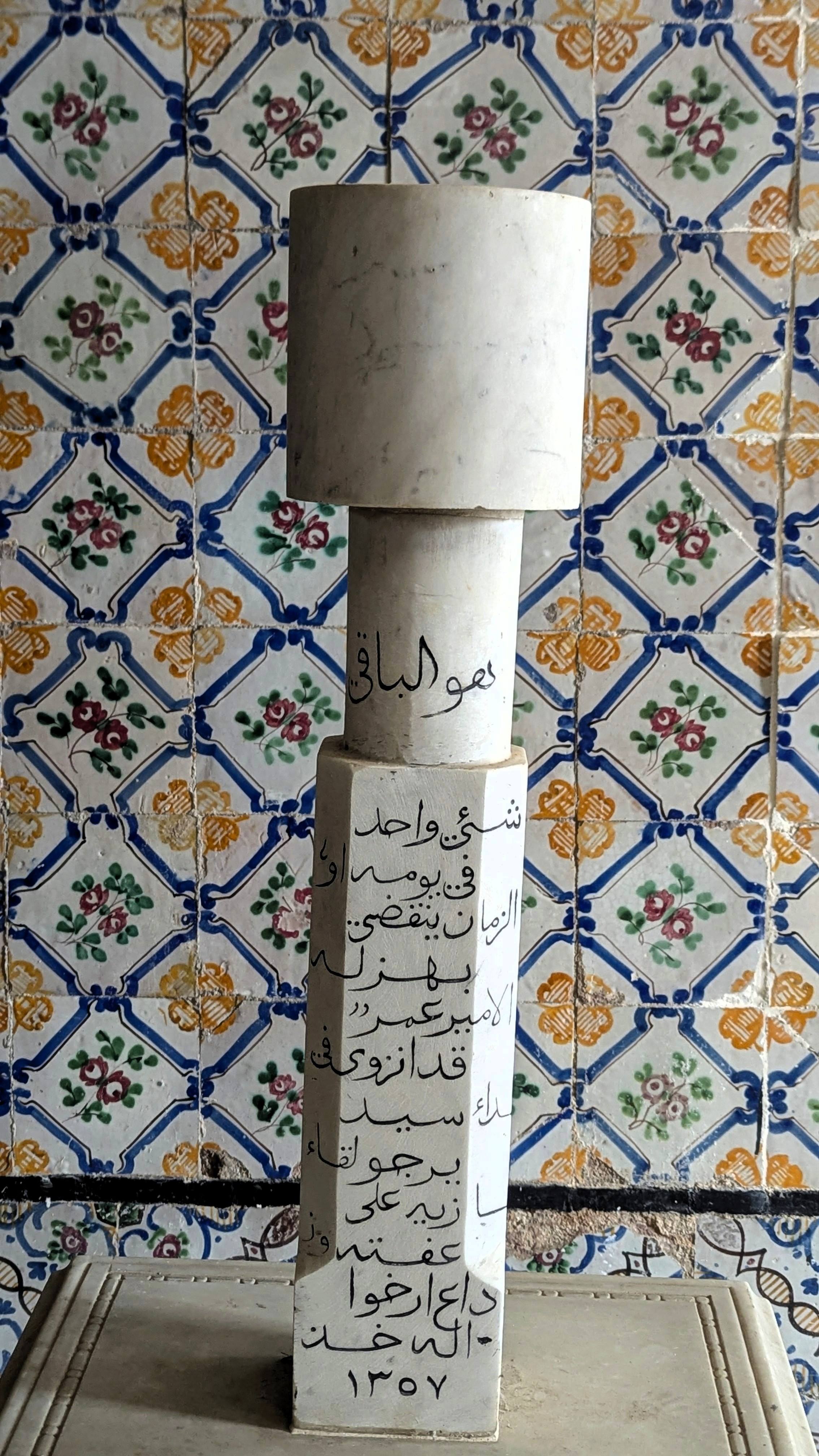
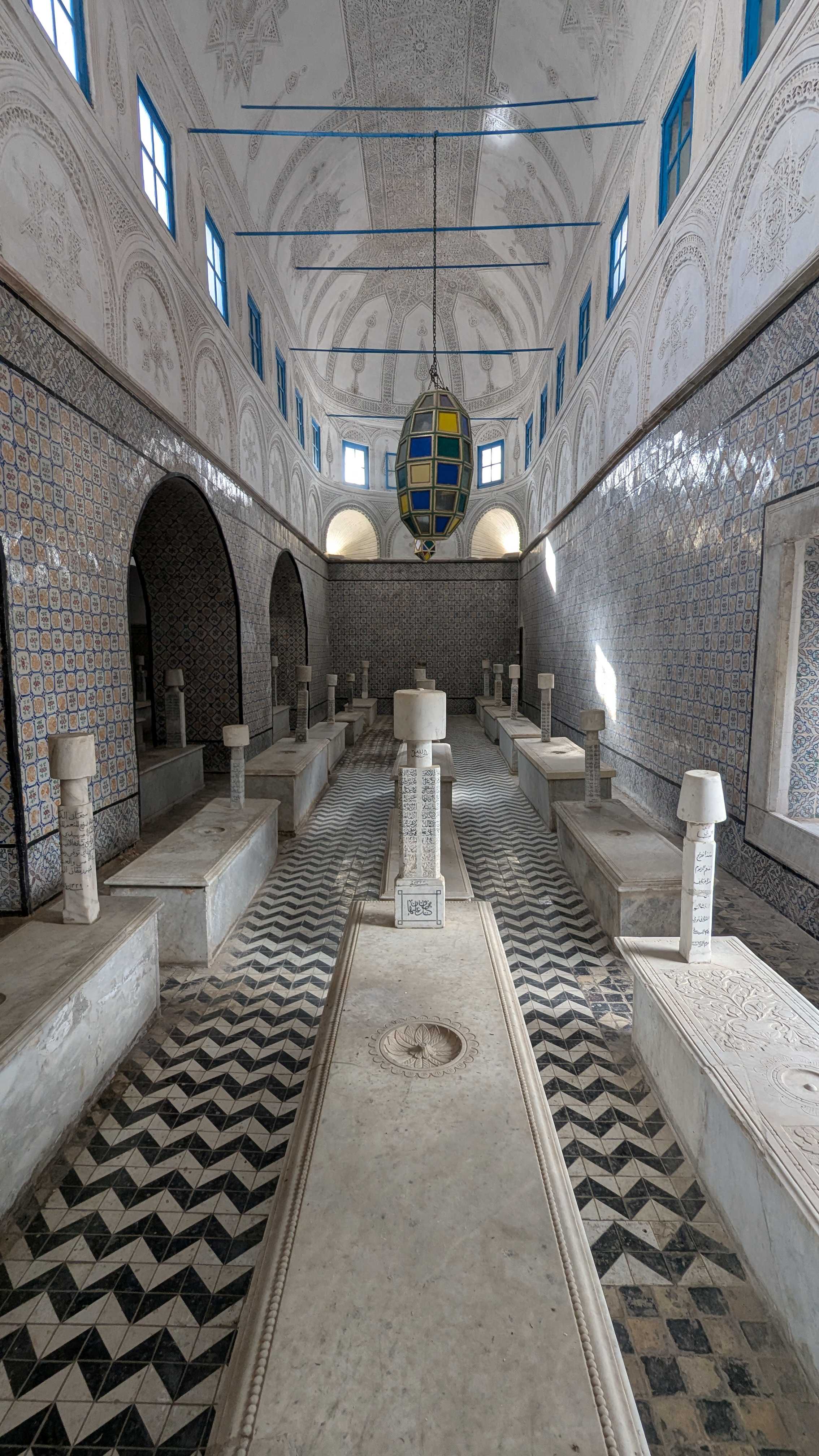
The otherworldly Royal Mausoleum of Torbet el Bey. Male tombs are topped with strange marble renditions of turbans or fez.
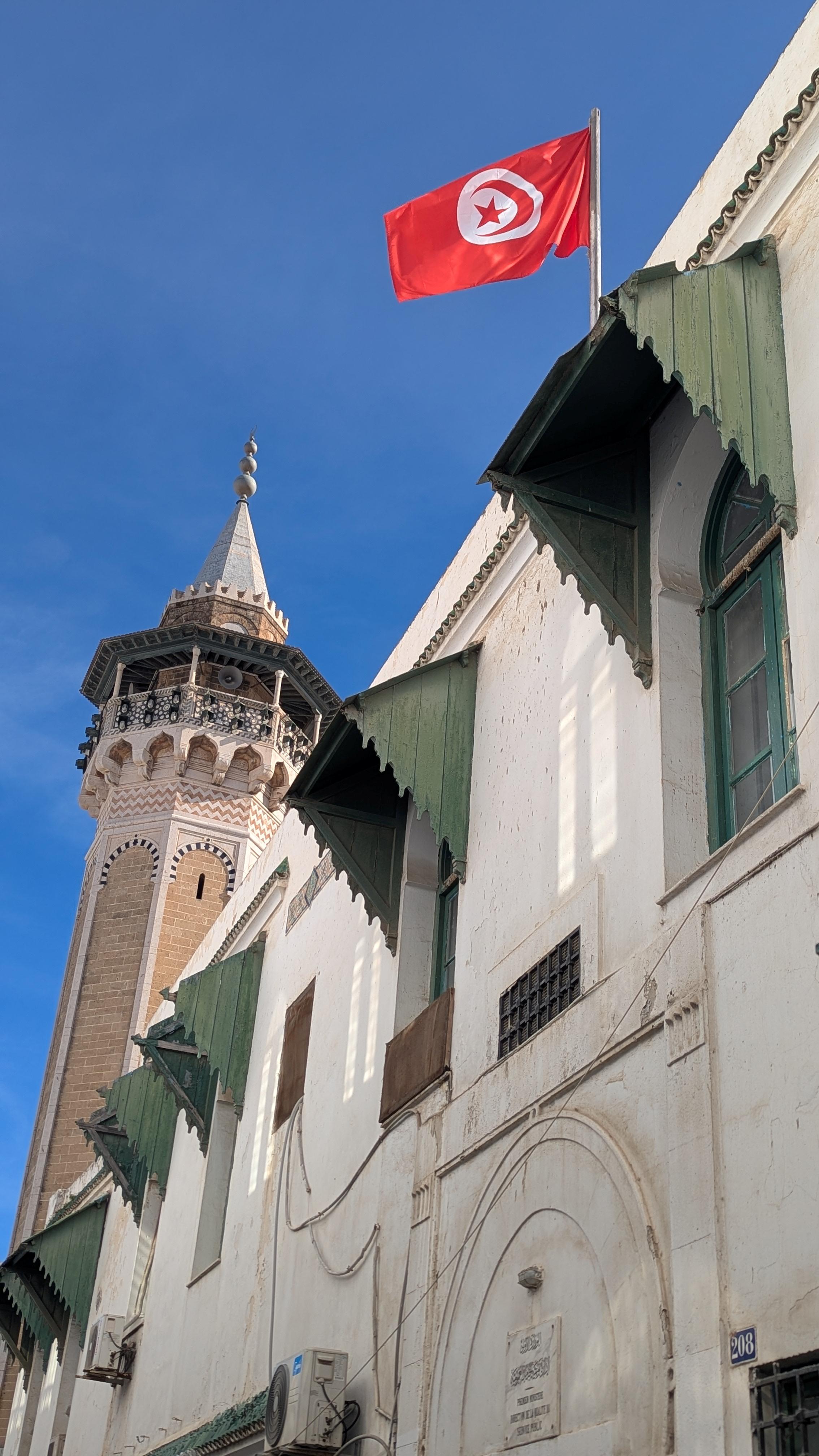
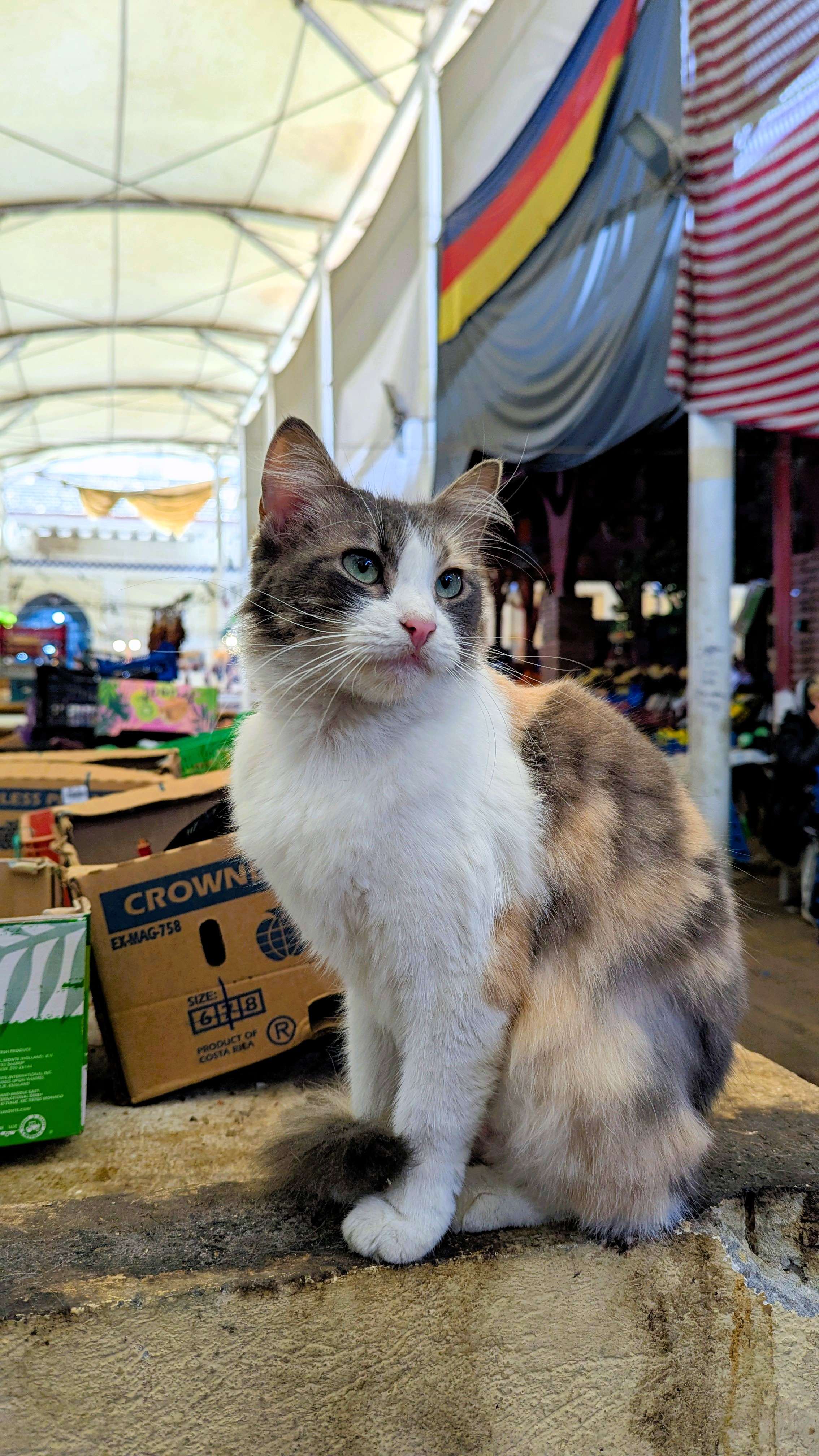
The minaret of the Sidi Youssef Mosque foregrounded by traditional medina buildings. Right, a friendly street cat poses in Tunis' Central Market.
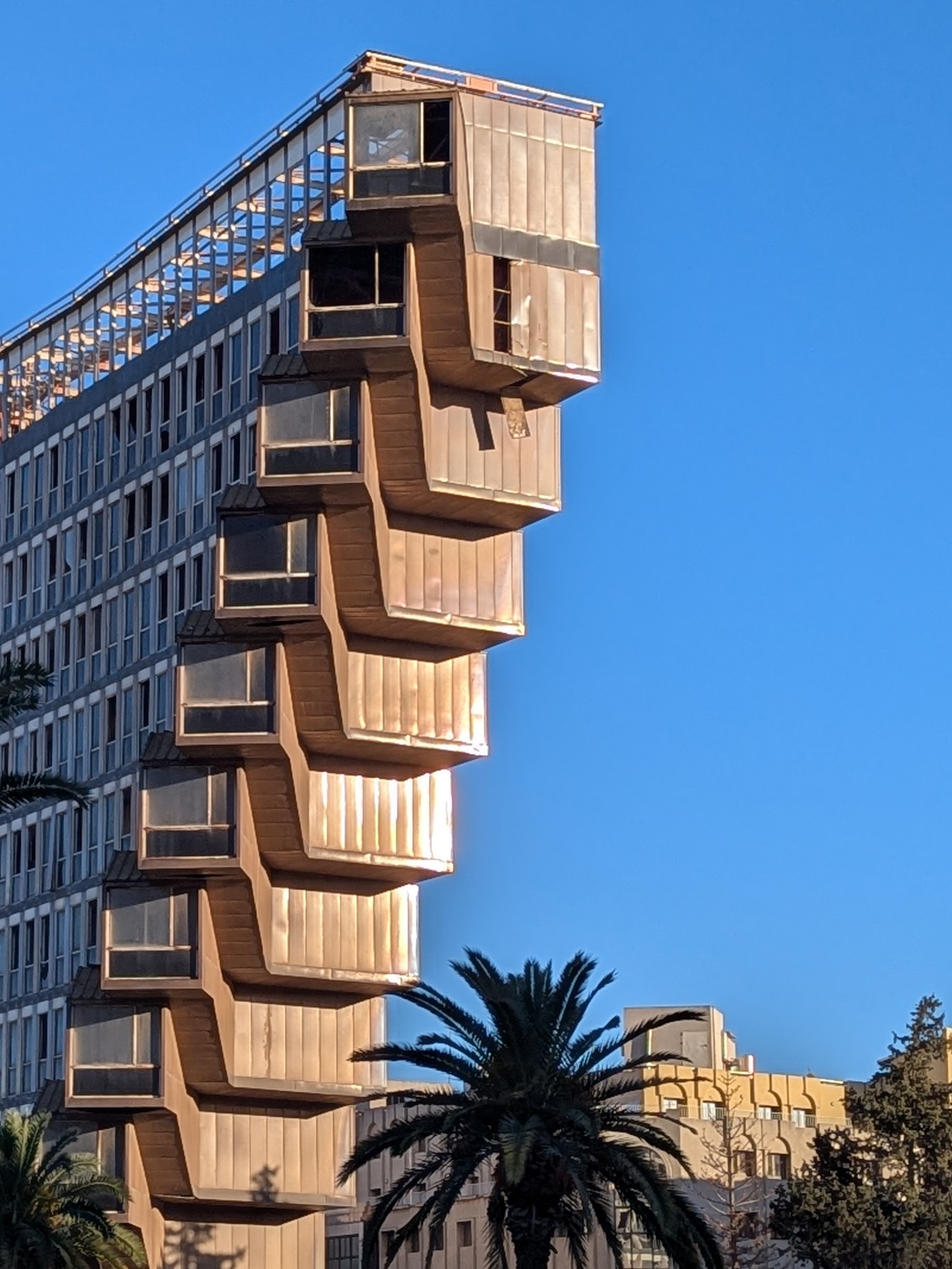
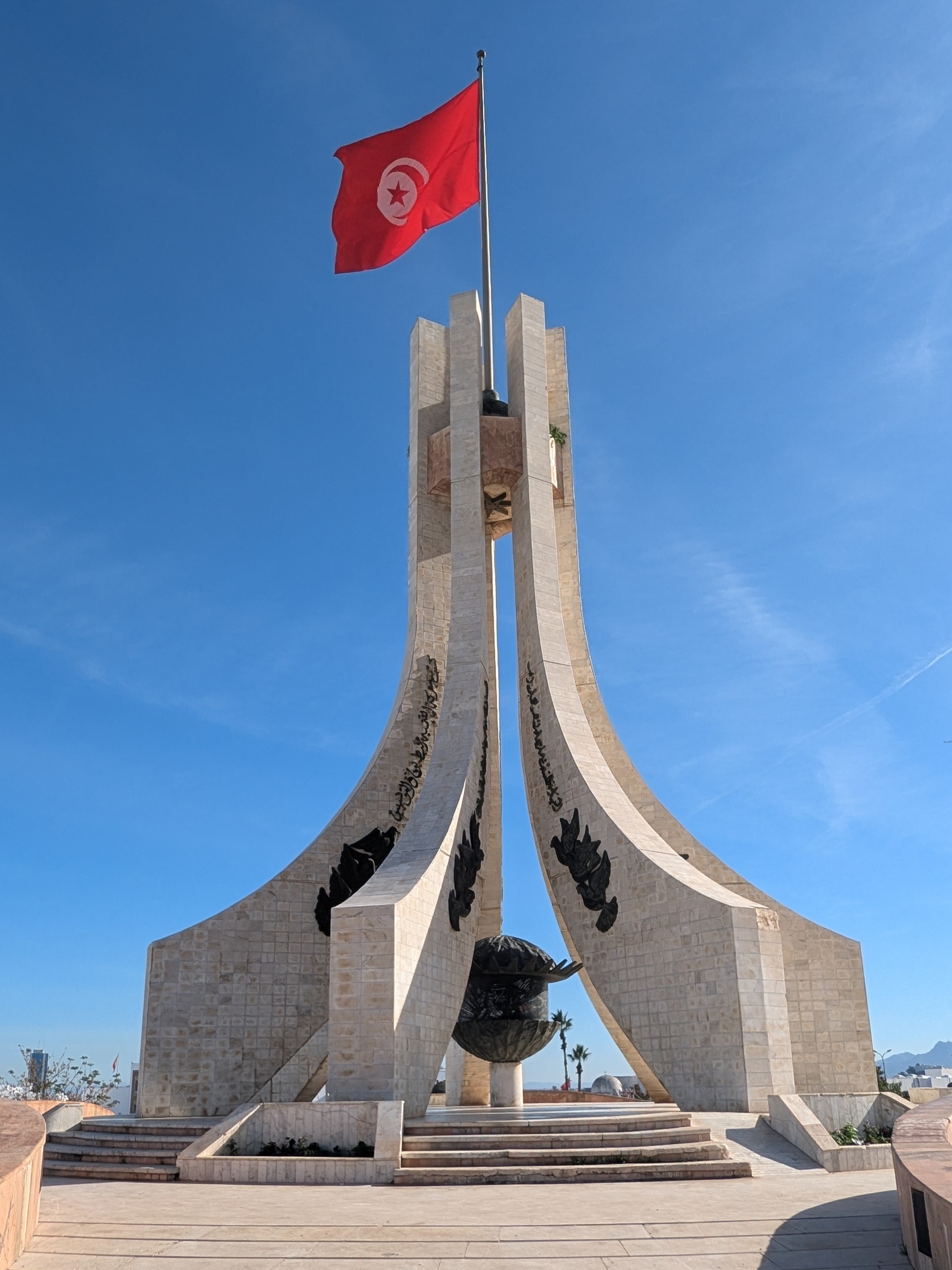
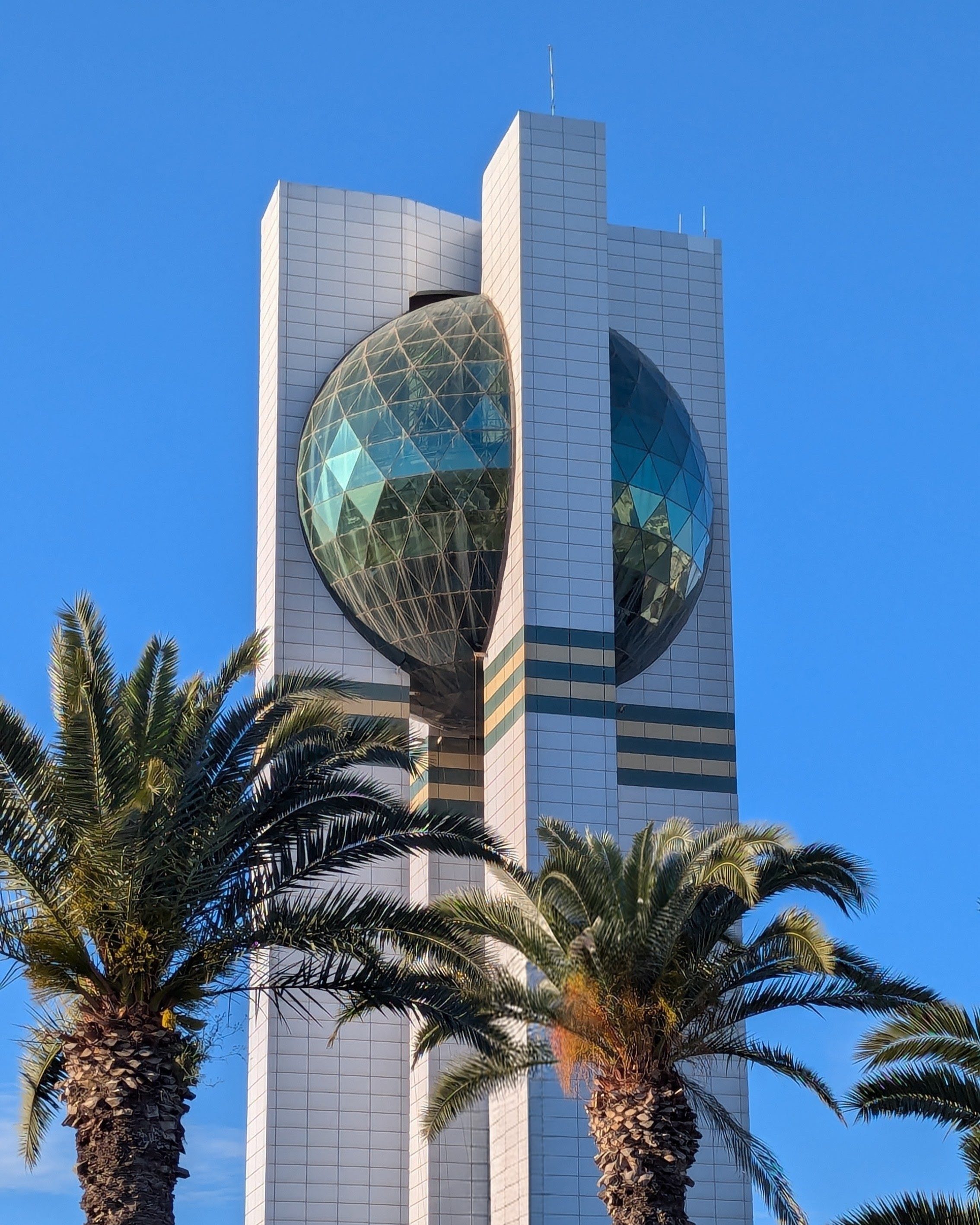
Contemporary Tunis: the Hotel du Lac, the National Monument of the Kasbah, City of Culture tower.
Sidi Bou Saïd lies around 20 kilometres from Tunis. It is not part of the capital but may soon well become enveloped by the ever-growing Tunis. We stayed in a boutique hotel a few blocks away from the main tourist area of Sidi Bou Saïd, an uninspiring ten-minute walk through streets characterised by white-washed apartment buildings and frustrating sidewalks that would come to an end abruptly, forcing us onto the road. The hotel's modern and immaculate interior did nothing to protect us from the pack of wild dogs howling and fighting at night. On the first evening, the same pack of dogs became territorial as we turned the corner and approached the hotel, causing us to retreat and wait patiently for the dogs to retire before we tiptoed to the gated safety of the hotel. This was, without doubt, the scariest encounter I have had with wild dogs whilst travelling abroad.
Sidi Bou Saïd is a relatively pretty village perched on a hill which looks out across the Gulf of Tunis. This is a photogenic place washed in white and accented in blue, frequently epitheted to "The Village of Artists" or "The Pearl of the Mediterranean" in characteristic travel writing hyperbole or, more functionally and underwhelmingly, "The Blue and White Town". Its simple beauty has attracted thinkers and artists to once call this place their home, among them the French philosopher Michel Foucault whose texts on human sexuality and imprisonment formed part of my undergraduate library and subsequent dissertation. Sidi Bou Saïd is pretty enough but, after a short while, its seemingly restrictive blue and white colour palette soon feels staged and monotonous. Moreover, almost every space seems to have been carefully designed with social media algorithmic success in mind: a carefully draped ivy here, a display of colourful painted plates there, the deliberate arranging of three cacti in pots all lined up thoughtfully over there. Sidi Bou Saïd is what happens when a town sells its soul to the tourist. As a traveller who gravitates towards authentic places, Sidi Bou Saïd's choreographed prettiness is the exact opposite.
Fortunately, something deeper and more historical brought us to this hilltop village in northeastern Tunisia - the ancient Mediterranean city that was once a rival to Rome: Carthage! The most impressive archaeological remnants of Carthage are dotted around four kilometres of a modern suburb. Over several hours, and starting our self-guided walking tour at the Thermes D'Antonin, arguably the most impressive of Carthage's ruins, we included Tophet de Salambo, Ports Puniques and Byrsa Hill. The remains of Carthage are, admittedly, scant, and thus require a degree of imagination. Having visited the magnificent Petra in Jordan and Giza in Egypt, I must admit that Carthage was a little pale in comparison. Nevertheless, a wander around Carthage's principal archaeological sites acted as foil to the contrivance of Sidi Bou Saïd itself and so, when taken together, went some way to making the journey from Tunis worthwhile.
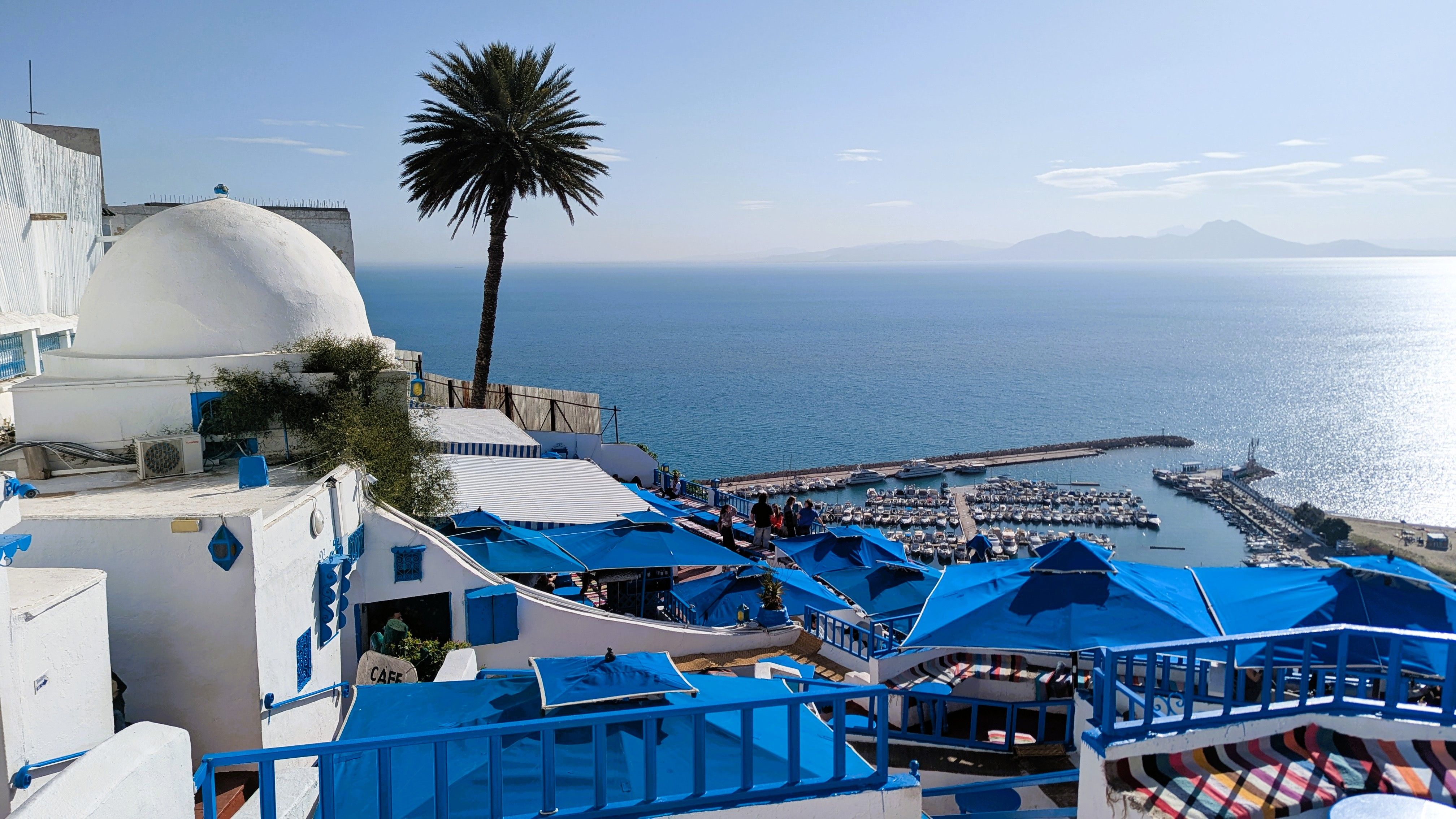
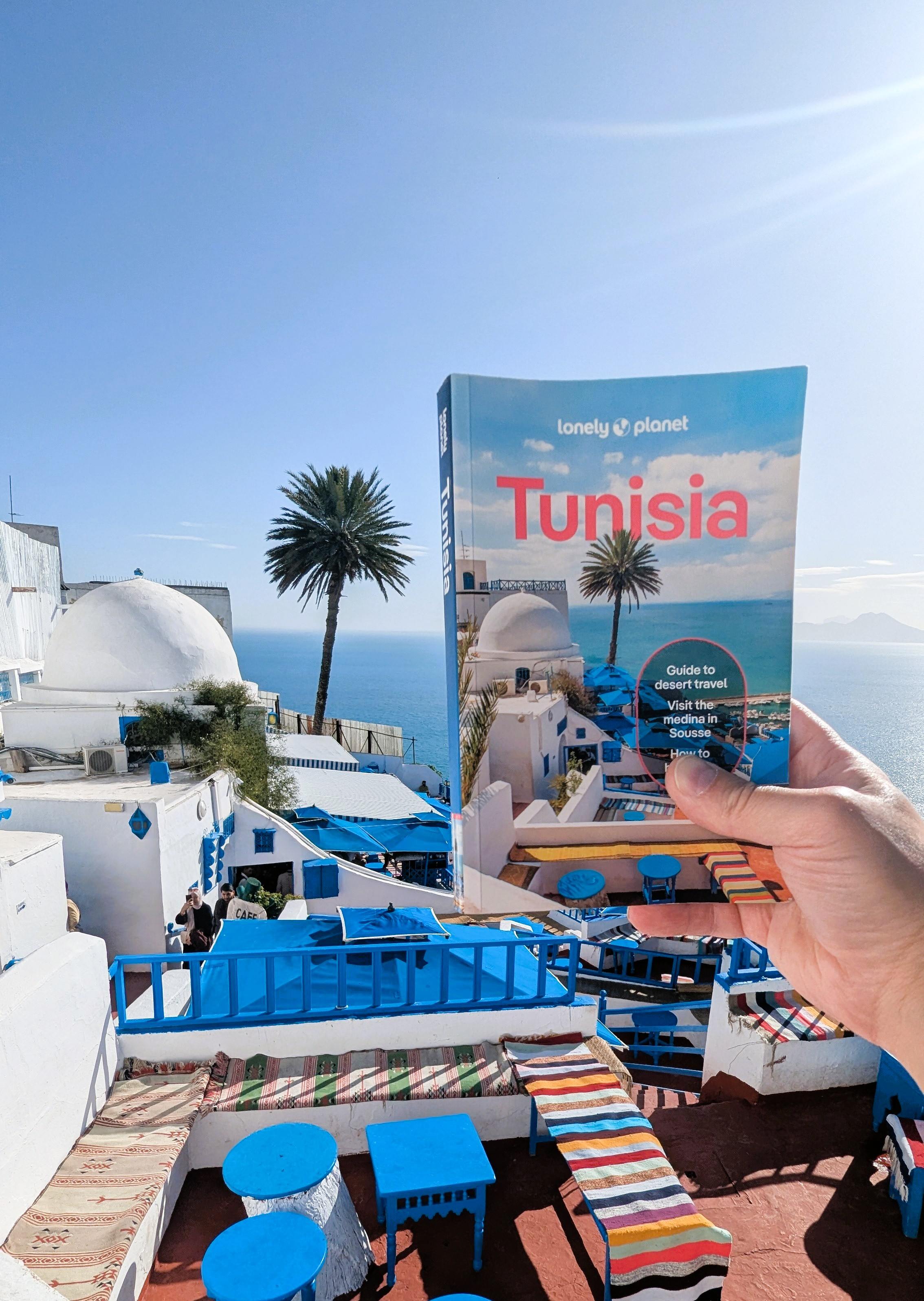
The view of the Gulf of Carthage seen from Cafe des Delices and the front cover on my Lonely Planet Guide to Tunisia!
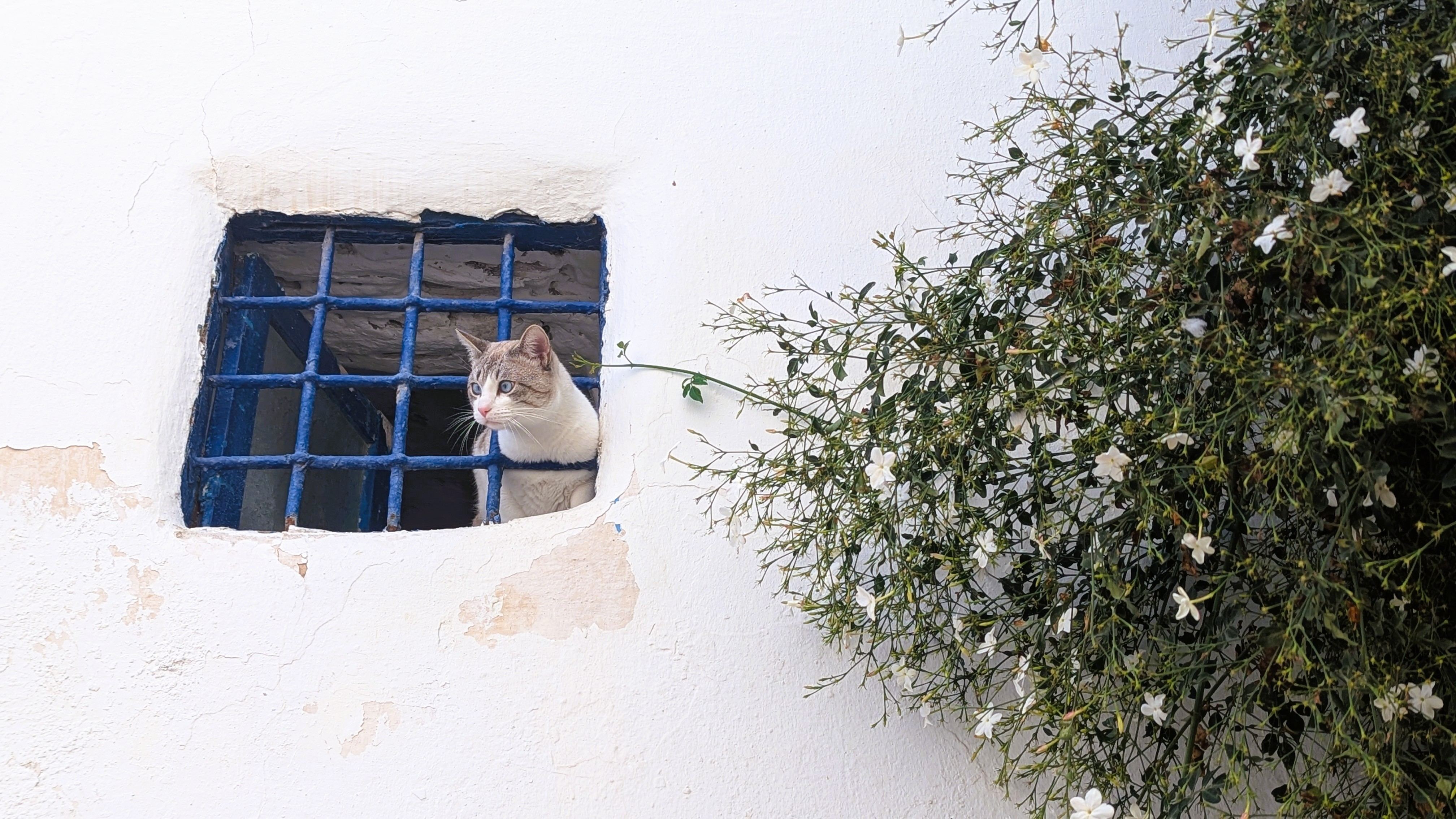
A cat meows loudly from a Sidi Bou Saïd window.
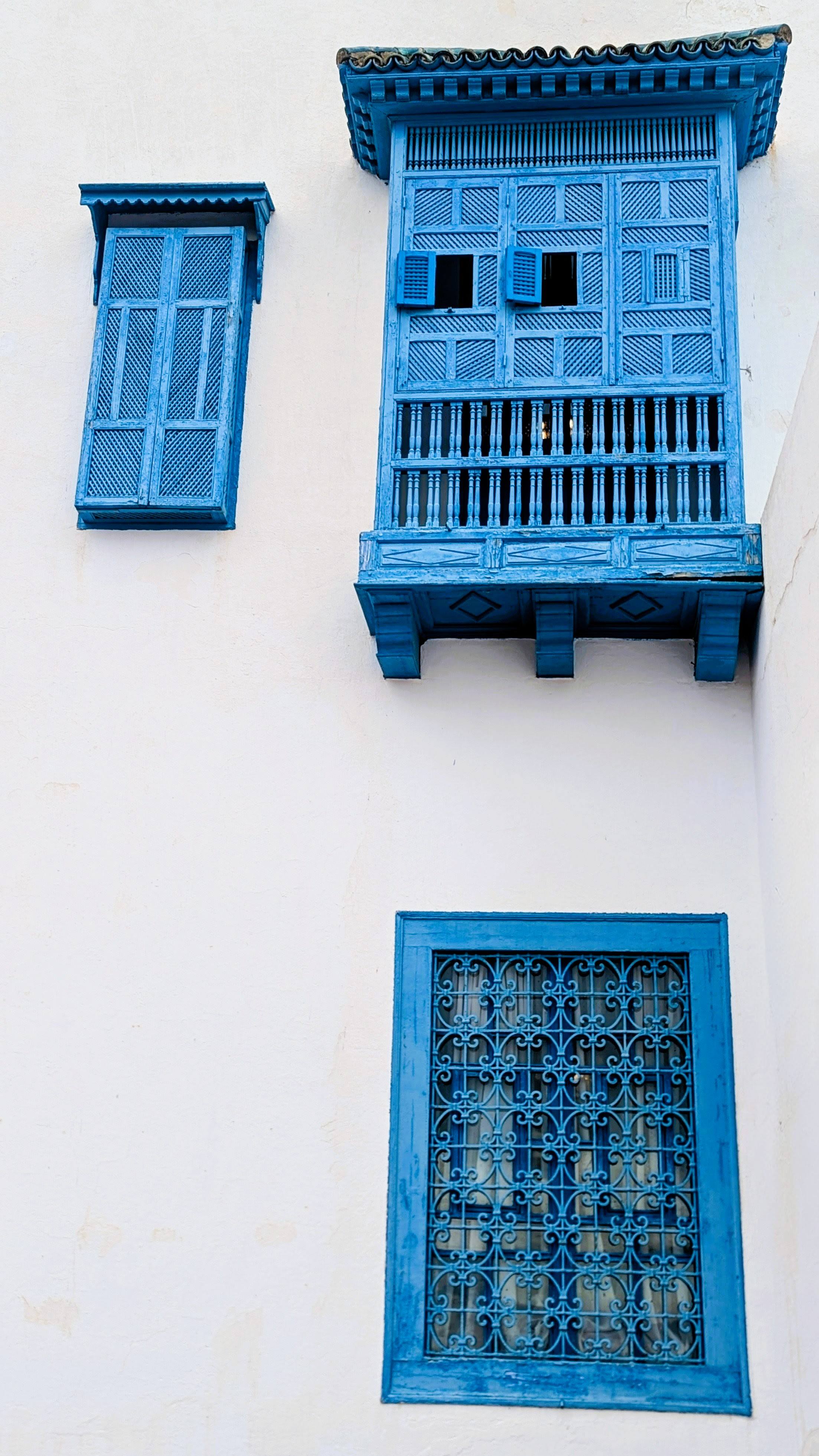
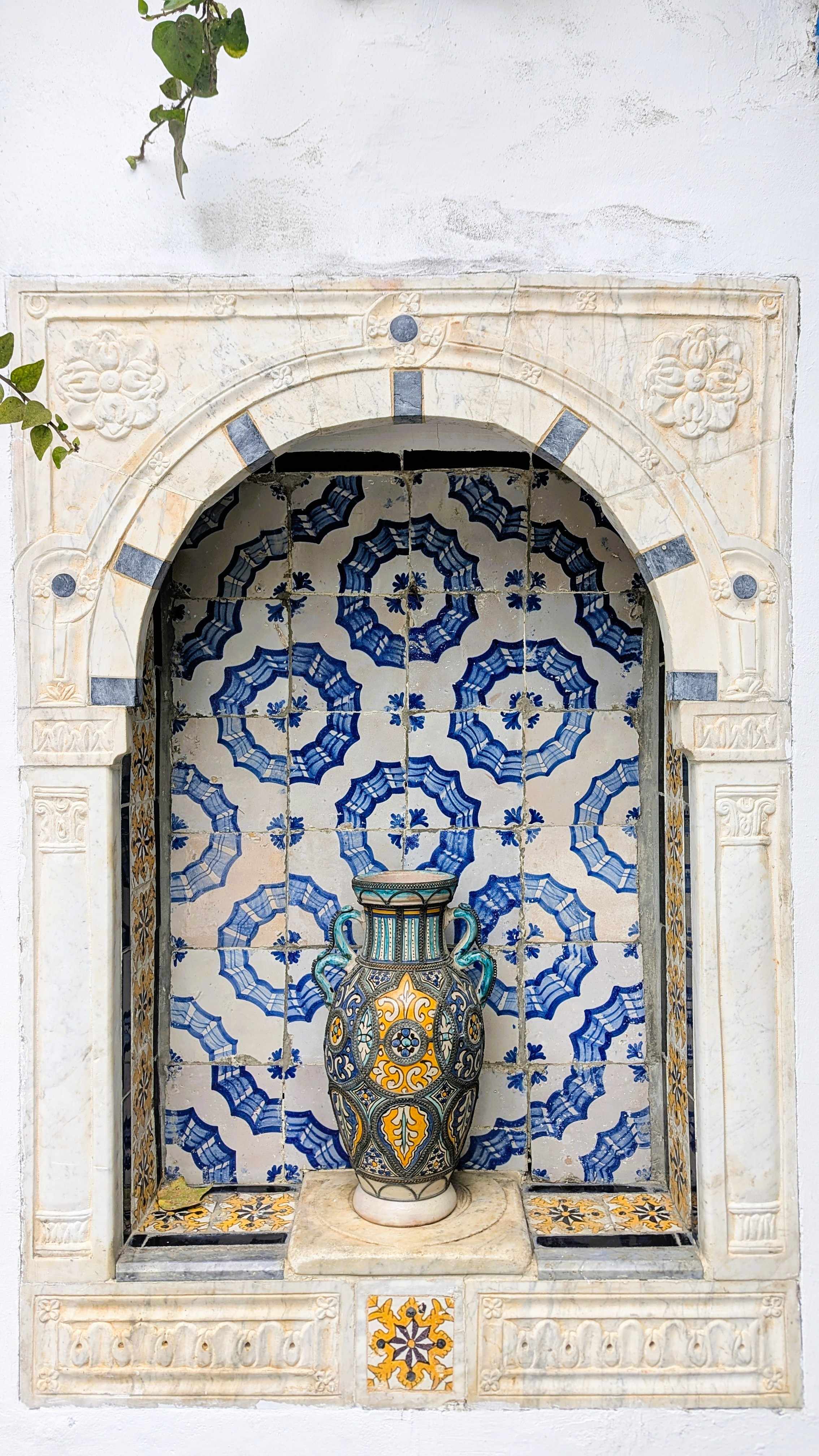
Sidi Bou Saïd's charming street scenes.
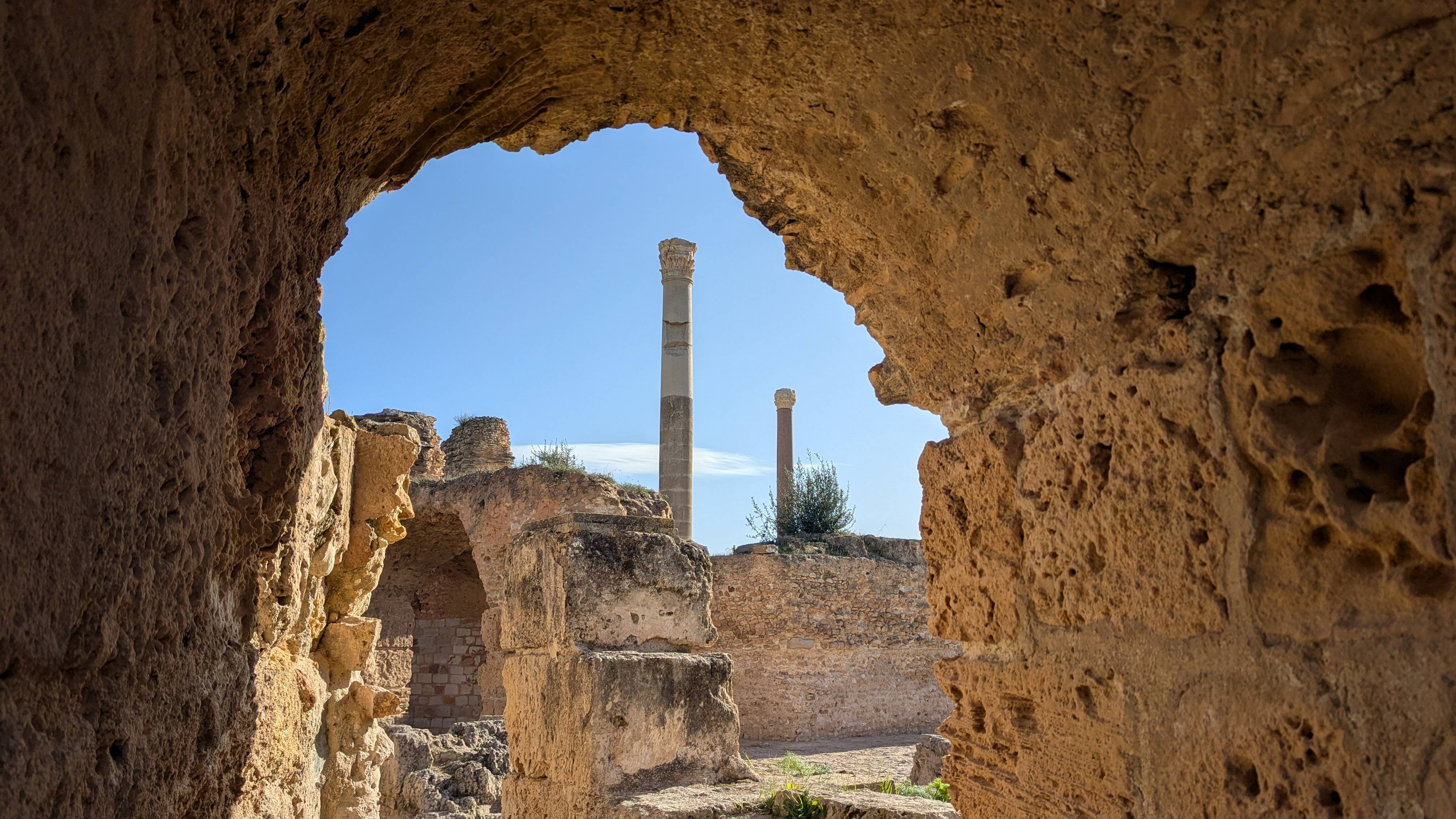
The Thermes D'Antonin, a highlight of a tour around the ancient city of Carthage.
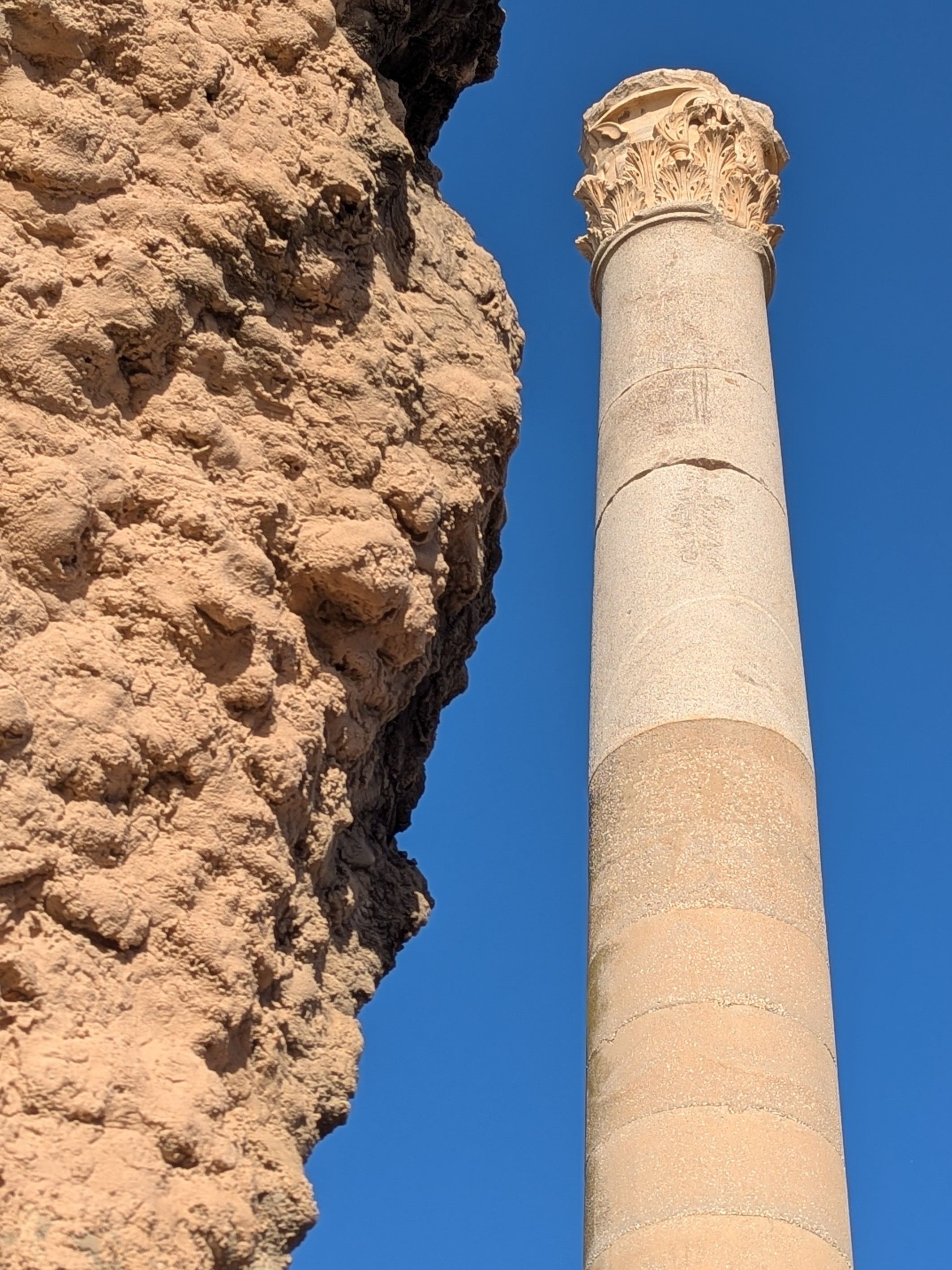
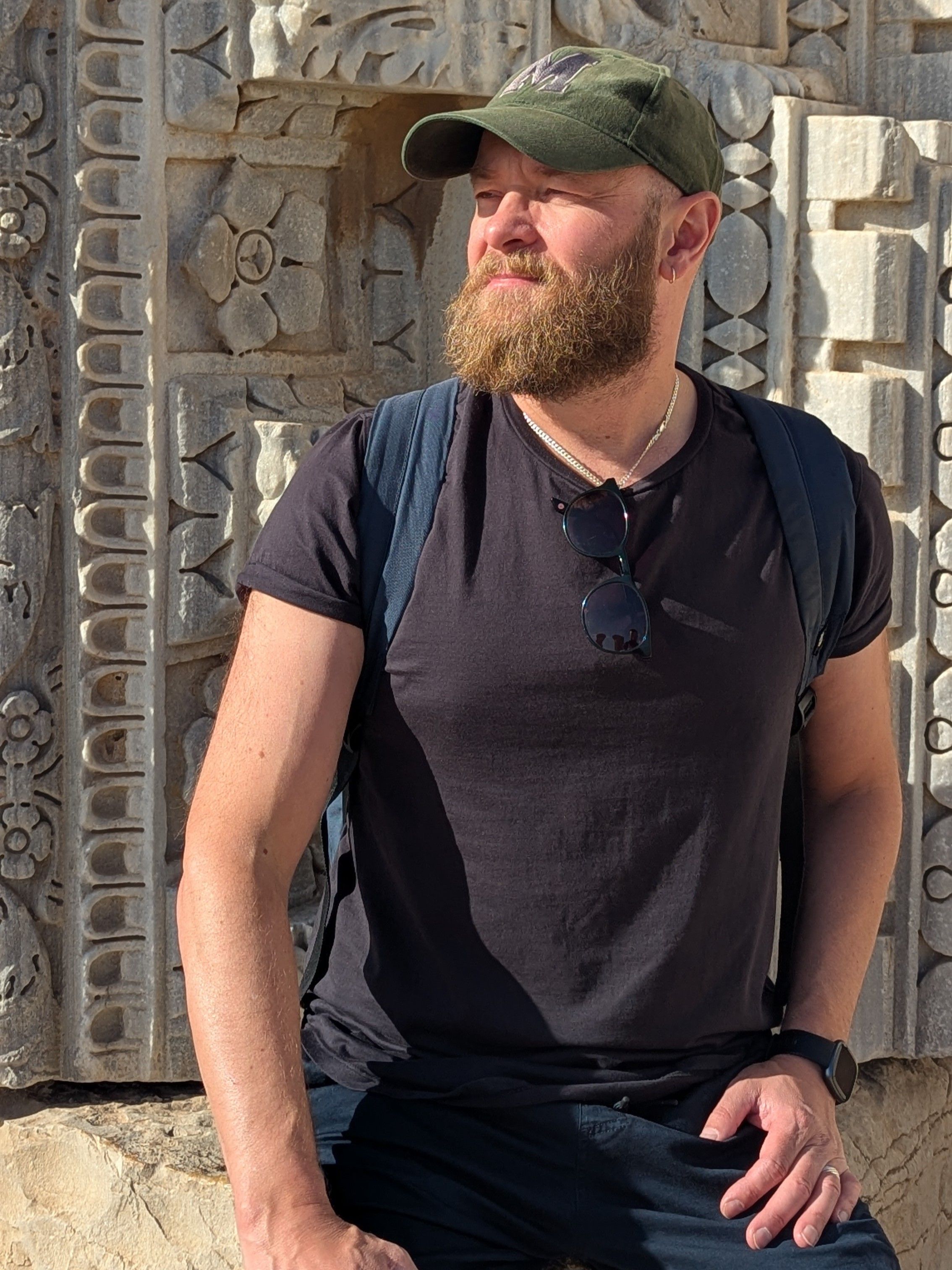
Carthage: a self-guided walking tour around the remnants of a world existing 814 BCE. There isn't much remaining, so you'll have to use your imagination.
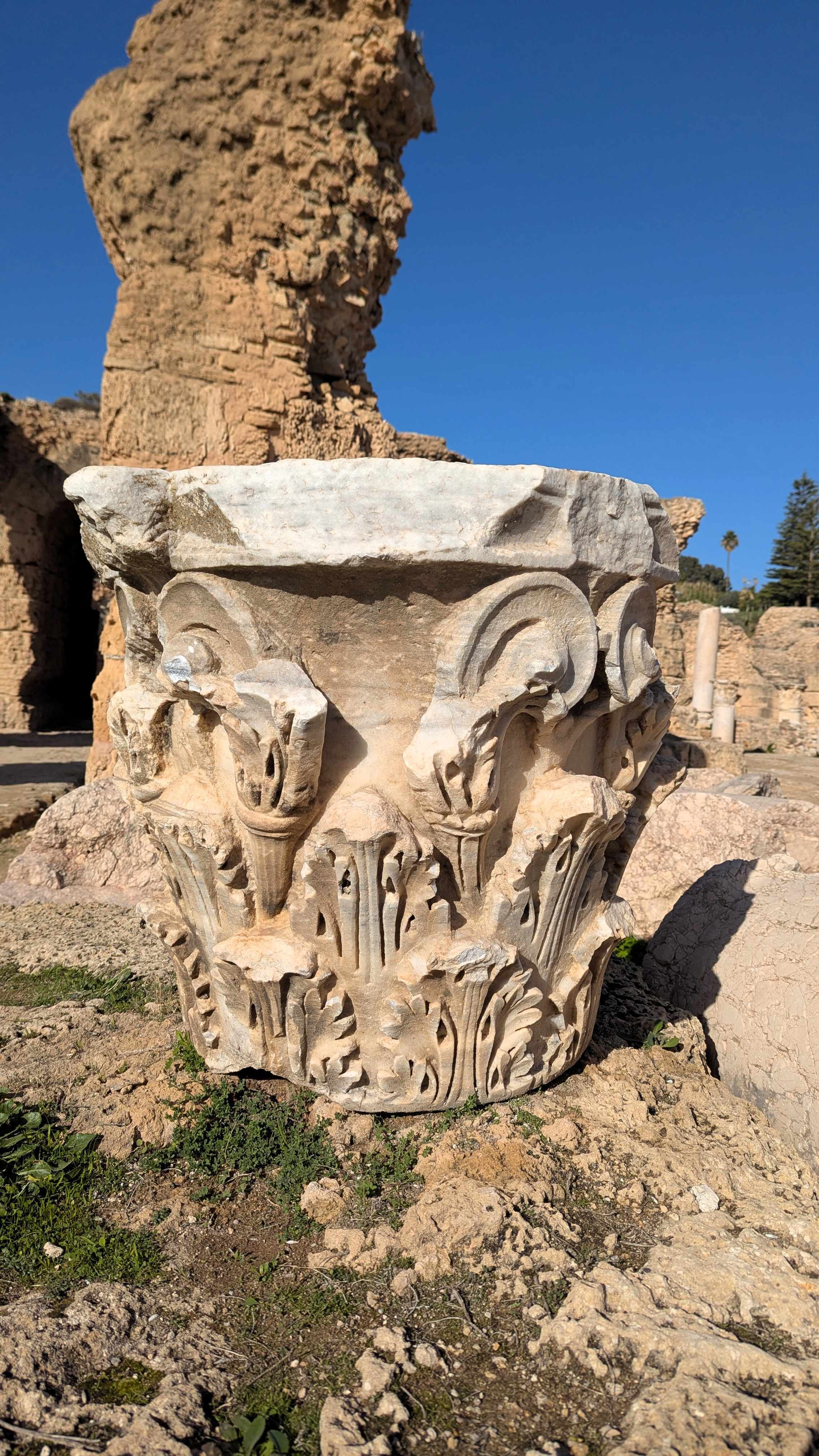
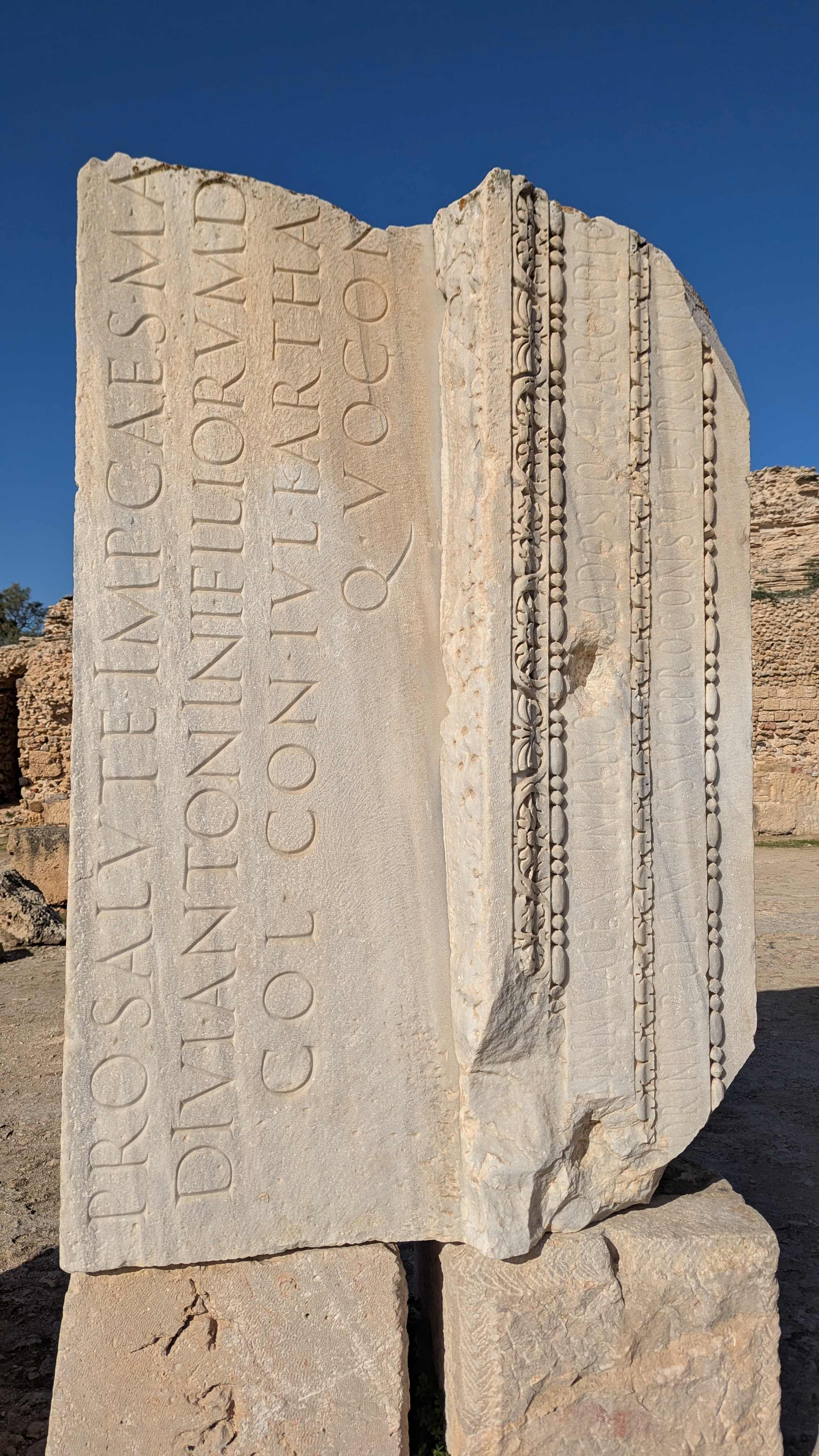
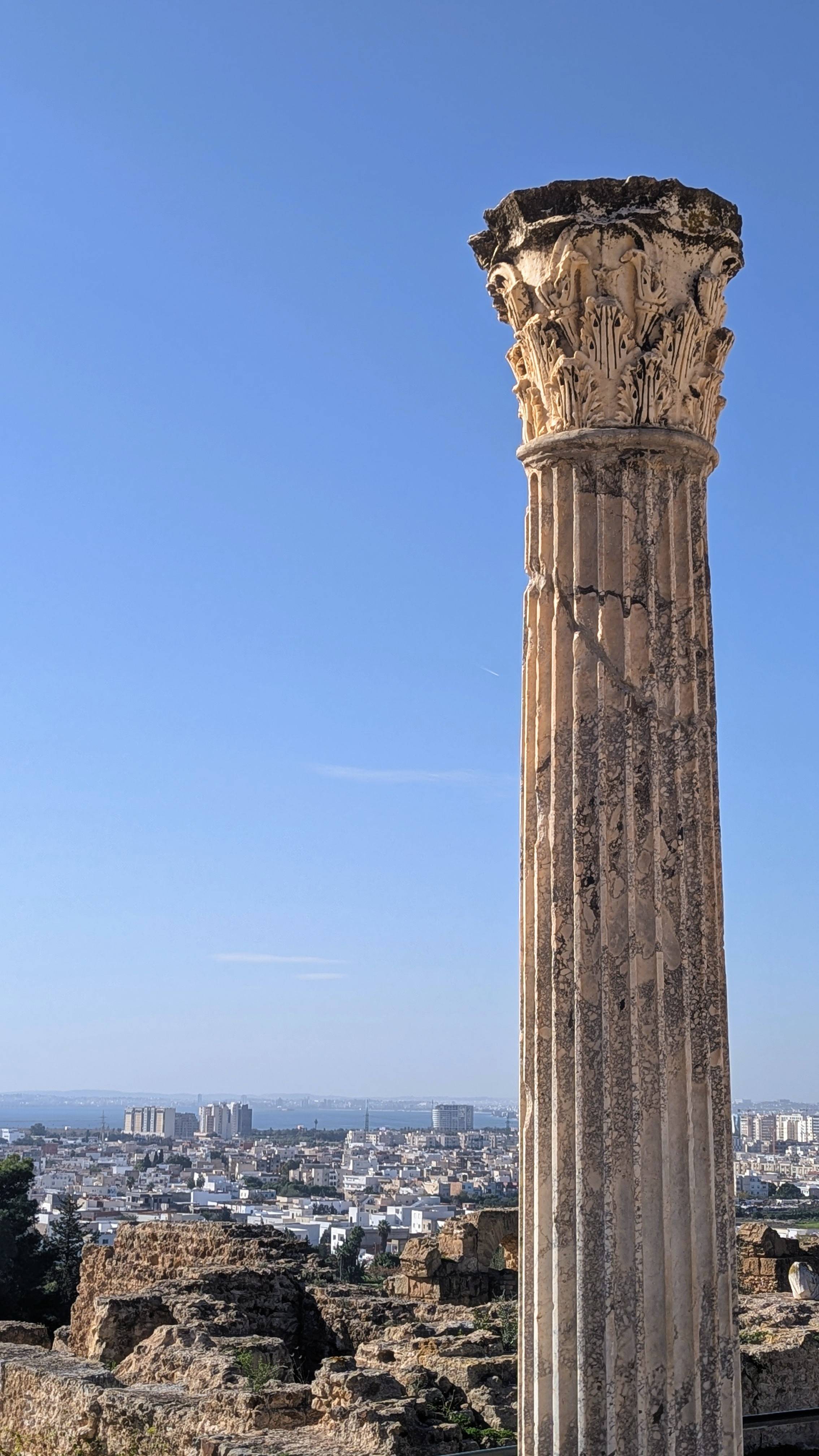
A column top, a remnant of a marble beam with inscriptions and a well-preserved Roman column at Byrsa Hill looks out towards Carthage village.
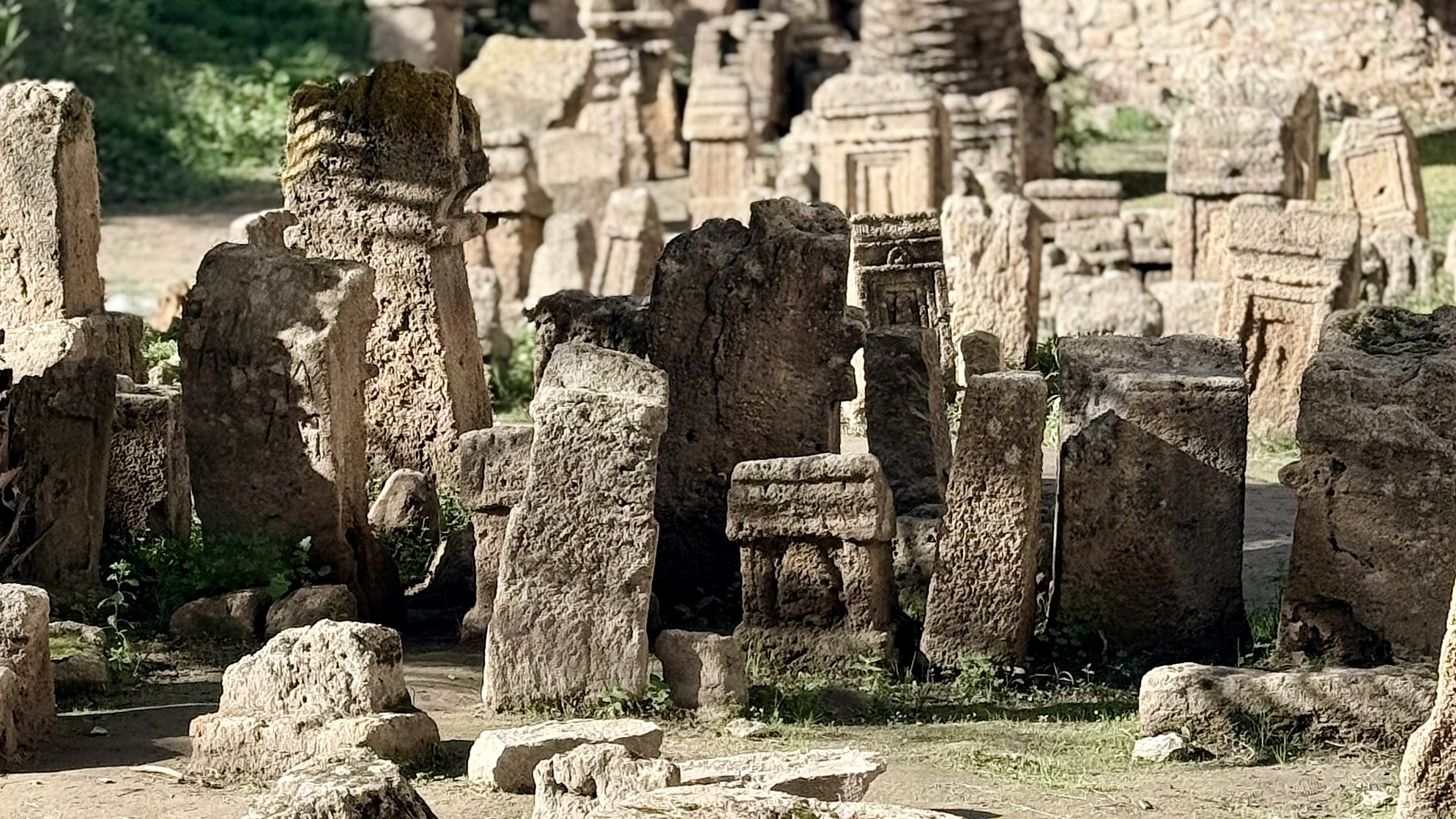
The Salammbo Sacrificial Site.
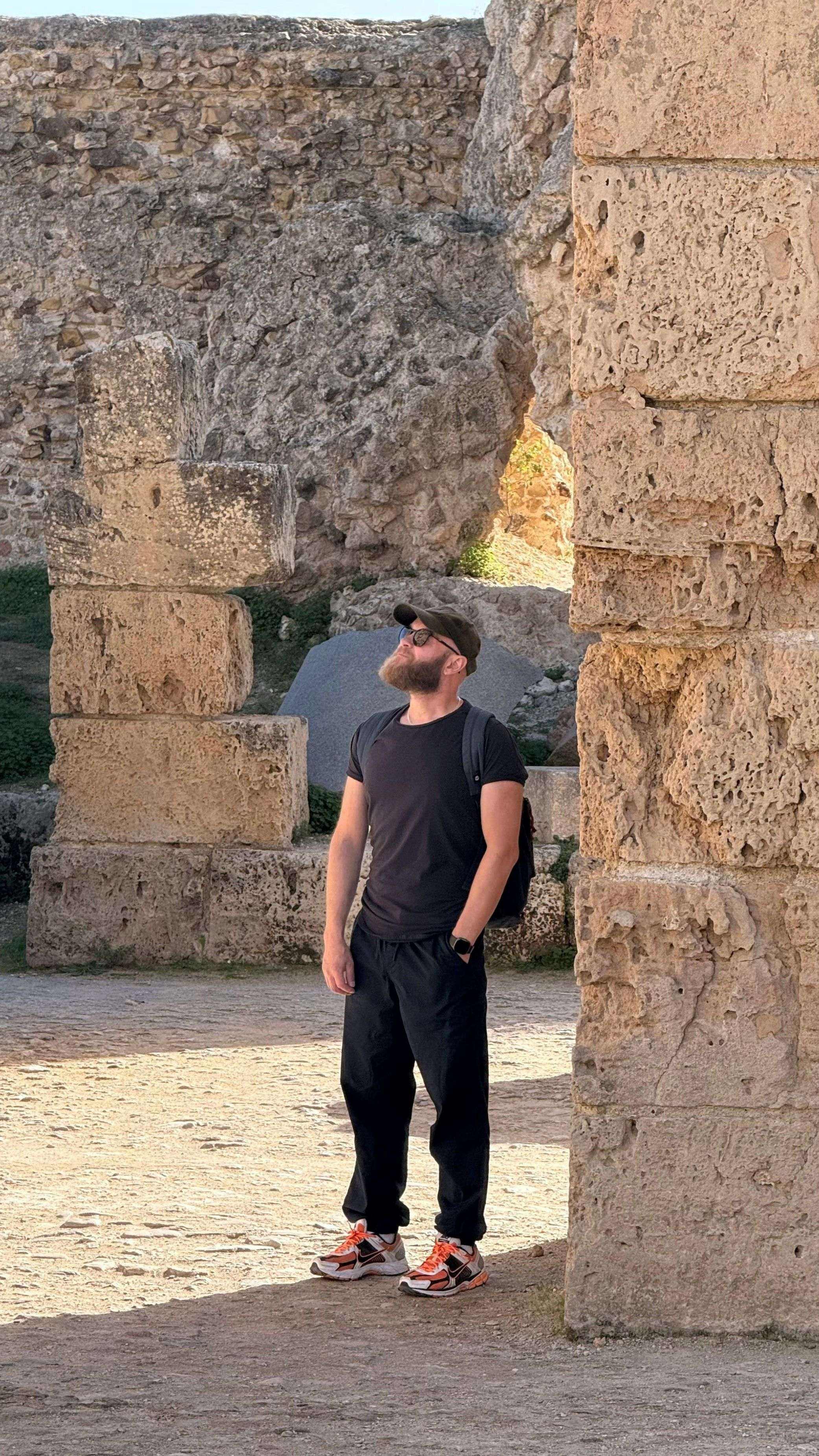
Looking up at The Thermes D'Antonin.
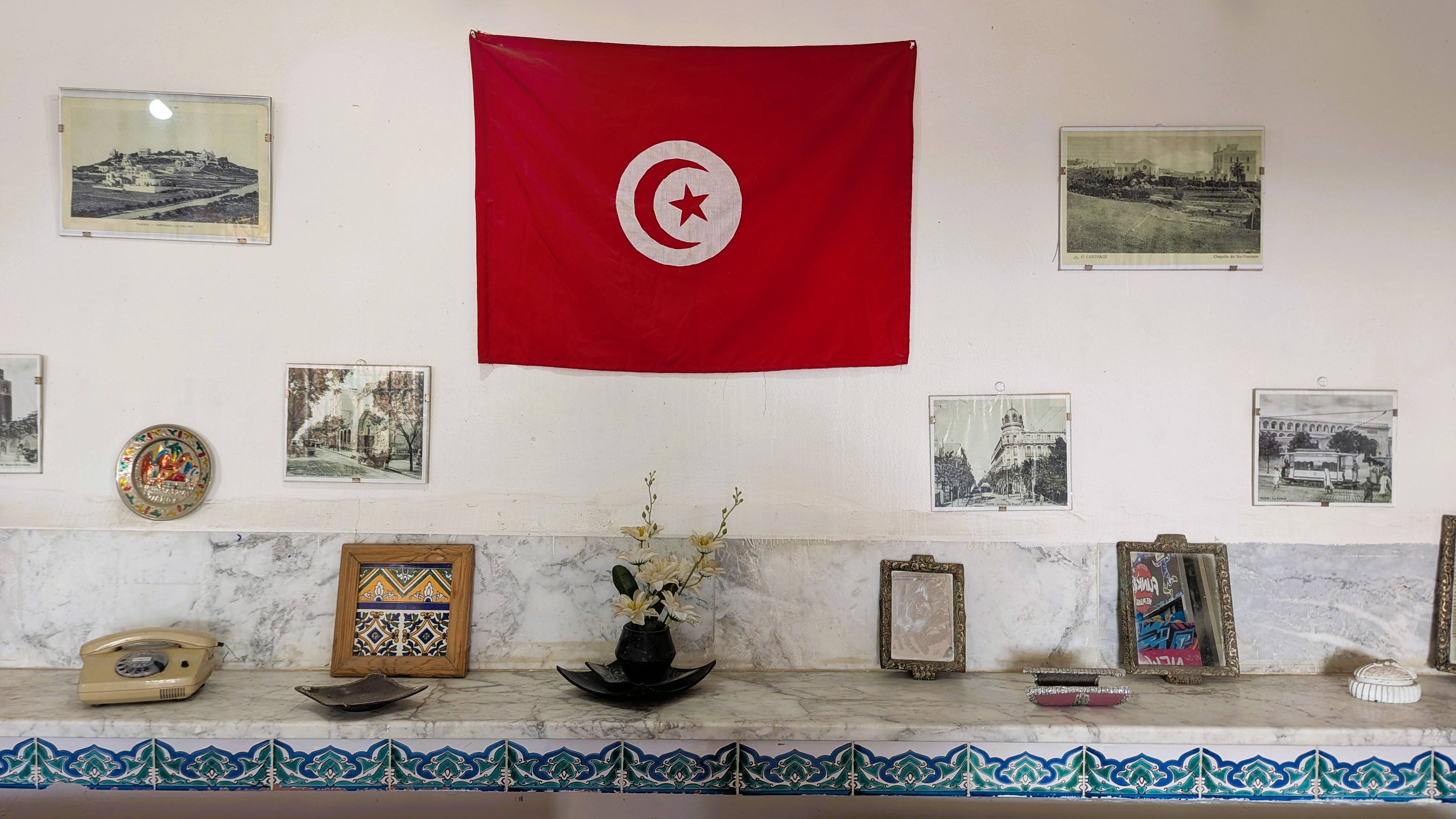
A shelf in a local cafe at Thermes D'Antonin puts on a characterful display as well as serving a decent cappuccino.
travel tips, links & resources
- Tunisia is a very conservative country where same-sex relationships are not recognised and where sex between men is illegal. Check out the Equaldex website here for a more comprehensive summary.
- Rabies is endemic in North Africa. Any bite or scratch from a mammal should result in the immediate seeking of medical attention.
- When in Tunisia, try the country's take on tea (similar to other North African countries) which comes in the form of an intensely sweet tea with peppermint leaves called Thé à la menthe. Another variation to this is the addition of almonds or pine nuts. Both are joyful. Also worth trying is caffe Türk. Whilst Turkish coffee is sometimes a battle against the sludge and quite bitter, I like to dabble with one or two cups simply because it speaks so much of North Africa.
- Service at eateries and cafes is slow in Tunisia, even in the capital Tunis. Order a coffee and it's not unusual to wait twenty minutes - whether the cafe be busy or deserted. Pack some patience along with your clothes or spend your trip feeling eternally frustrated.
- A recurring issue I experienced whilst in Tunisia was the serving of food and drink, which should've been hot, as only slightly heated. On numerous occasions I sent drinks and food back. The recurrence of this issue could just be down to bad luck but could also point to a wider concern with regards to cooking practices. Either way, eating under-cooked or poorly-heated food and drink could absolutely ruin your trip. I'd recommend checking your food before eating.
- Tunisia is a "dry country". There are significant and wide-ranging restrictions on the purchase and consumption of alcohol which will affect how, where and when you are able to buy it. In short, they'll be no cocktails at sunset during your romantic Tunisian getaway.
- Tap water is billed as safe to drink in Tunisia but even the country's poorest drink bottled water. On several occasions, we boiled water and then used purification tablets with no subsequent issues.
- The Tunisian Dinar is a closed currency which means that it is illegal to take the currency in or out of Tunisia. You will be asked as part of the airport's departure process if you have any Dinars on you. If you do, as I did, it will be confiscated and you'll be the recipient of a hand-written IOU redeemable during your next visit. At time of travel, even changing your Dinars back into your chosen currency at the airport necessitates you providing the receipts from the time that you initially converted them into Dinars. In summary, head to the airport with only a few Dinars left in your wallet and spend what you have in the airport departures lounge before proceeding through security. You will not be able to change them back at home either: the Tunisian Dinar becomes worthless when you leave the country because no one will handle the currency outside of Tunisia.
- Smoking is ubiquitous in Tunisia. The concept of non-smoking areas is a relative novelty and so be prepared to tolerate cigarette smoke in most places you will go including taxis, cafes and restaurants. Higher class establishments are less likely to accommodate smoking. Our taxi driver had the courtesy to ask if he could smoke during our journey. I told him he couldn't. He therefore spent the trip sucking on an unlit cigarette.
- Terrorism is a realistic threat in Tunisia. Indeed, checking the list of terrorist incidents in Tunisia over time (here) shows that a serious incident involving loss of life has occurred almost annually since 2010. You will see men dressed in black with dark sunglasses standing on street corners with walkie talkies and machine guns on their hip. Don't be surprised by the presence of army tanks on the streets either, particularly outside religious buildings. There are heightened sensitivities around official buildings and foreign embassies.
- Before committing to your Tunisia trip, I'd advise keeping abreast of your government's travel advice. I check the travel advice of both the UK and Australian Governments. Their travel advice for Tunisia can be found here and here respectively.
- Transport options are relatively limited in Tunisia. While train services are available from Hammamet to Tunis and from Tunis to Sidi Bou Saïd, it was far more convenient for us to travel by taxi - especially as there was little difference in trip duration and, when shared by two people, very little difference in price too. Getting a taxi as opposed to a train service also meant a door-to-door service. If, for you, the journey is the destination, then take the train. If the destination is your focus, then take a taxi.
you may also like