
 Journey origin
long way east
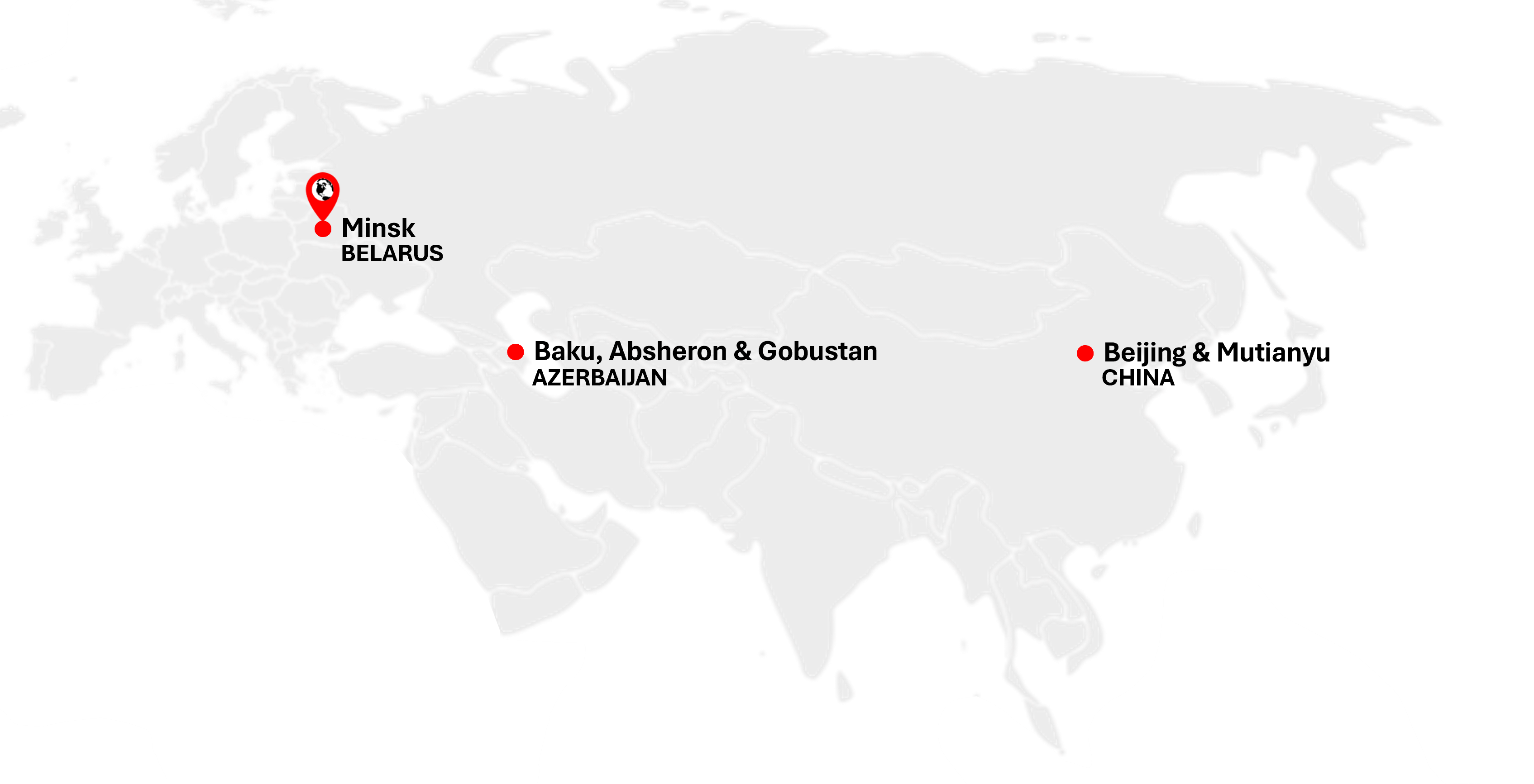
Where: Minsk. Belarus, Eastern Europe. Baku, Gobustan & Absheron. Azerbaijan, Western Asia. Beijing, Mutianyu. China, East Asia.
When: December 2017 into January 2018
What: Stalinist architecture, Minsk Metro, Soviet symbolism, National Library of Belarus, Minsk City Gates, October Square, Island of Tears, Cold War-era bomb shelters, Lenin busts, Cosmic Brutalist architecture, Mound of Glory, Church of St Simon and Helena, National Exhibition Centre, Lee Harvey Oswald's former apartment, Flame Towers, Aliyev Design Centre, Carpet Museum, Nodding oil derricks, Lada adventure to the famous Mud Volcanoes, Flame Mountain (Yanar Dag), Fire Temple, Baku Television Tower, Baku Old City, Ancient Petroglyphs, The Forbidden City, Tiananmen Square and Gate of Heavenly Peace, Lama Buddhist Temple, Summer Palace, CCTV Trouser Tower, CCTV Broadcast Tower, Temple of Heaven, Wangfujing Street, Scorpion snacks, Walking along the Great Wall of China at Mutianyu, Qianmen Street, National Museum of China, Bell and Drum Towers.
How: International flight, taxi, walking, tour guide, Minsk Metro, Lada, Baku Metro.
Country counter: No.77, No.78 & No.79.
Illnesses or mishaps: Layering up to keep Minsk's sub-zero temperatures out; developing Soviet-era paranoia about my hotel room being bugged and emails being monitored; innocently photographing the KGB's headquarters in central Minsk; Getting a touch of 'Baku belly' which took a couple of days to shift; Sightseeing in the biting cold of a Chinese winter and unable to procure the services of taxis; dealing with an unpalatable level of security; contending with the Great Firewall of China.
This was an unconventional journey. The route we took was no usual, well-trodden passage. This was a three-country adventure to Belarus, Azerbaijan and China but one which began in London, England with a transit in Amsterdam, Netherlands and which ended in Sydney, Australia. It was a 17,000 kilometre transcontinental adventure eastwards across the globe through full-blown dictatorships, authoritarian states and communist lands. We stitched together our route using a variety of airlines, including Belavia, the Belarussian carrier, and AZAL, the Azerbaijani airline. This was a challenging and unforgettable journey made even more memorable by the Soviet-era cosmic architecture, by the bugged hotel rooms, by the otherworldly spluttering mud volcanoes, by the obedient nodding oil donkeys, by the technicolour Buddhist temples and by the wondrous Great Wall of China - all wrapped up in the bitingly cold sub-zero temperatures of a northern hemisphere winter. As we traversed the globe from Eastern Europe through Western Asia and into East Asia, I added three incredible countries to my travel count.
belarus
Celebrating New Year in Europe's Last Dictatorship
Belarus has been on my must-see list for years, remaining there longer than I would have liked simply because of the country's punitive visa entry requirements which included the component dreaded by many travellers: the "LoI" or Letter of Invitation. In February 2017 all of that changed and Belarus began accepting entrants from eighty countries without the need for a visa, providing they entered through Minsk's National Airport and limited their stay to no more than five days. The changes were swift and implemented, quite literally, overnight. Frustratingly, this major shift in policy occurred after I had left Europe, with Belarus being one of only two countries I had left to see on the entire continent (the other is Monaco). One of Europe's most secretive and repressive countries was opening up - and I was now ten thousand miles away. The race was on to see Belarus before Mr Lukashenko, the country's first and only president, changed his mind. A Christmas visit to England offered the perfect opportunity to see the Belarusian capital Minsk.
Belarus is most famous for being "the last dictatorship in Europe" and has been dubbed the "North Korea of Europe" by some journalists. Political dissent is crushed and hotel rooms used by foreign visitors are, it is widely reported, routinely bugged. There are laws which make insulting the president punishable by up to five years in prison, and another which makes criticising Belarus abroad punishable by up to two. I prefer to write the majority of my Travel Chronicles whilst travelling; I feel this gives them an authenticity and accuracy they may not otherwise have. However, I opted to write nothing about Belarus whilst travelling in the country itself. This Chronicle, therefore, has been written retrospectively.
With no direct flights from London, Minsk was a little tricky to get to, requiring, as it did, a flight through Amsterdam in the Netherlands and then another on the Belarusian national carrier Belavia. But Minsk is a destination which will pay such frustrations back with bonus interest. There's no getting away from it: Minsk is wacky, weird, wonderful - and authentic. It isn't travel hyperbole to say that Minsk is one big open air Soviet museum. Hammer and sickles remain in tact on the frontages of buildings (unlike in Bulgaria where they've been chiselled off), Lenin statues in squares and busts on the Metro system remain reverently in place (unlike in Albania where they were torn down in the dead of night and put into hiding) and incredible cosmic-style concrete buildings, an architectural style so characteristic of former Soviet countries, are still in one piece and fully operational (unlike in Georgia where buildings of this style are being demolished). Minsk is a city on a grand scale: giant boulevards, ornately decorated neoclassical buildings and, it must be said, it's a city which does Christmas kitsch better than anywhere. At night, downtown Minsk transforms into a Santa's grotto. Even the transmitter of Belarusian Television joins in the festivities with its skeletal mast twinkling and its UFO-style disk changing colour. It cuts a remarkable, and fantastically alien sight on the city's skyline. Indeed, I wasn't sure if it was just transmitting or preparing for lift off.
We rested our heads in the 'upmarket' and imaginatively named Hotel Minsk. It had all of the usual trimmings of a hotel stuck in a bygone era and a Soviet mindset of 'you get what you're given and put up with it'. It had obscene chandeliers, the reception desk was a closed area placed strategically high up in the lobby which meant you had to look up, literally and metaphorically, to the rather unhelpful staff who were quite happy to make you wait at check-in whilst they process you at a positively glacial speed - with, of course, a pronounced sneer included into the bargain. A further case in point was the cold soup served to me in the hotel's restaurant later that evening. It's a small incident but, I would argue, very revealing of the mindset with which you are likely to have to contend if you visit a country such as this. When asked by the very strange, and slightly creepy, waiter how my food was I attested that it was "not good" and was "cold" (as always, I default to simplistic English words when abroad). The five-foot waiter grabbed the bowl with his unedifyingly large hands, muttered something in his local tongue, shrugged his shoulders and walked off robotically with my dish. No replacement. No apology. Nothing. My soup was gone. And I paid for it. Welcome to Belarus.
We had, in hindsight, booked a hotel which, in terms of a Russian spy thriller film, could have been straight out of central casting. I couldn't help but notice that the hotel's email address had a '.gov' stem to it. Moreover, the free Wi-Fi could only be accessed by providing your mobile phone number to which I would be sent a text message with a code. This then had to be entered into the interface displayed on my screen. My paranoia began to work overtime. Was this a means of getting my mobile number which could then be used to track my movements around the city? Who knows. Not that I was up to anything I shouldn't be, you understand, but I switched my phone to flight mode nonetheless - if only to save on battery power. All I do know is that never before have I had to hand over my mobile number in order to access Wi-Fi. A café a few blocks away, where we stopped for a well-earned hot drink away from the bitter Minsk winter, used precisely the same system. It seemed that all internet access in Minsk was centrally routed in this way. I therefore ensured I kept all of my social media posts about the country indisputably positive. Moreover, I couldn't help but notice that emails sent to our tour guide took an abnormally long time to arrive at their destination. Were our communications being monitored, too? Vladimir, our guide, advised us to switch to the encrypted WhatsApp to ensure we were able to communicate without this rather strange and unsettling time lag. Perhaps all of these incidents were mere coincidence. Then again, perhaps they weren't. After all, we were in the land of a dictator which has no police force to speak of, just "Militia", so what did I expect? Disbanded or at the very least renamed in other former Soviet republics, the KGB is still very much alive and kicking in Belarus in its original incarnation. Indeed, unbeknown to me, the imposing beige neoclassical building along Nezalezhnastsi Prospekt whose steps I was drawn to climb, tempted, as I was, to photograph the Soviet emblem on its giant wooden door was, I later discovered, none other than the KGB's headquarters. Oops.
Having done our best to navigate Minsk on foot in the sub-zero temperatures (I noticed that my beard had developed icicles on it during the previous day's sight-seeing) we relented and procured the services of Vladimir who, for 230 Belarusian Rubles (around £80), whizzed us around some of the sights in the greater Minsk area. With limited time, and increasingly thickening freezing fog, this was the safest and most efficient option. We were now engaged in a race against time to complete our must-see list before the fog swallowed the city altogether. Vladimir was knowledgeable, passionate and spoke perfect English, oh and he was a former military commander with the United Nations. He was somewhat surprised by the kinds of buildings we were interested in photographing, unable to appreciate, perhaps, the popularity of these weird Soviet constructions abroad. Thus, his default list of neoclassical buildings featuring statues and Corinthian columns were replaced by our list of cosmic-Brutalist pieces, cinema buildings he'd never even noticed before and anything which spoke of the Soviet age. It was rather nice for him to admit that he was beginning to see Minsk through "new eyes" because of us.
In an increasingly homogenous European city break market, Minsk offers something unusual and different. It is a place rather unused to foreign visitors; this is clearly etched on the faces of locals who pass you in the street. It is also a city of very few smiles. "Why are you going there?", "Are you crazy?" and "Why do you go to these bloody places" are frequent questions I'm asked. But my answer is always the same: these places are real. Belarus' stares are real. Its culture is real. Its whiff of 1975 is real. What's more, the number of British tourists visiting Belarus annually is minuscule. And this is another one of its key appeals: in many cases you're likely to have the city to yourself, a valuable opportunity to immerse yourself in a place and culture different to your own; not too many people from the free world want to spend their precious leisure time visiting a dictatorship and this is a distinct advantage. Indeed, Lonely Planet does not publish a separate guide for Belarus, so small is the demand for a travel guide to this most untrodden corner of the continent. It does, however, give Belarus a paltry 27 pages in its Guide to Eastern Europe. But don't let this dearth of travel publications deter you; I've found on a few occasions now that some of the world's most interesting countries have, ironically, the least written about them (see my journey to Moldova - the least visited country in Europe) and this is certainly true of Minsk. The fact is, Minsk is the reason I travel. It has an authenticity which only other capital cities, beset by zillions of tourists, over-development and an advanced tourism industry which has airbrushed all imperfections from sight, could only dream of. The Belarusian capital is, in all key respects, the very opposite of the well-trodden city break to be found elsewhere on the continent (boring/safe/predictable - delete as applicable). Lisbon, Barcelona or Paris this isn't. Welcome to Minsk, a capital city populated by haughty Babushka women whose approach to customer service is "Nyet" not "of course Sir, no problem". It is a city with a seemingly bemused population intent on staring at the strange-looking travellers from an alien place struggling with their backpacks and complaining about the sub-zero temperatures. It is also a city renowned for making you feel like you're being watched. Indeed, a visit to Minsk wouldn't be complete without a special side order of Soviet-sanctioned paranoia.
'Celebrating' the 2018 New Year in the depths of the European winter in a country with an authoritarian dictator and an unsettling feeling of being spied upon means that my city break to the Belarusian capital ranks as one of my most unusual and offbeat travel experiences to date. So much more interesting than a run-of-the-mill European city break, don't you think? Belarus was my 77th country and, as this Chronicle attests, a truly fascinating place to spend time in. I will remember my New Year in Dictatorland for a long time to come.
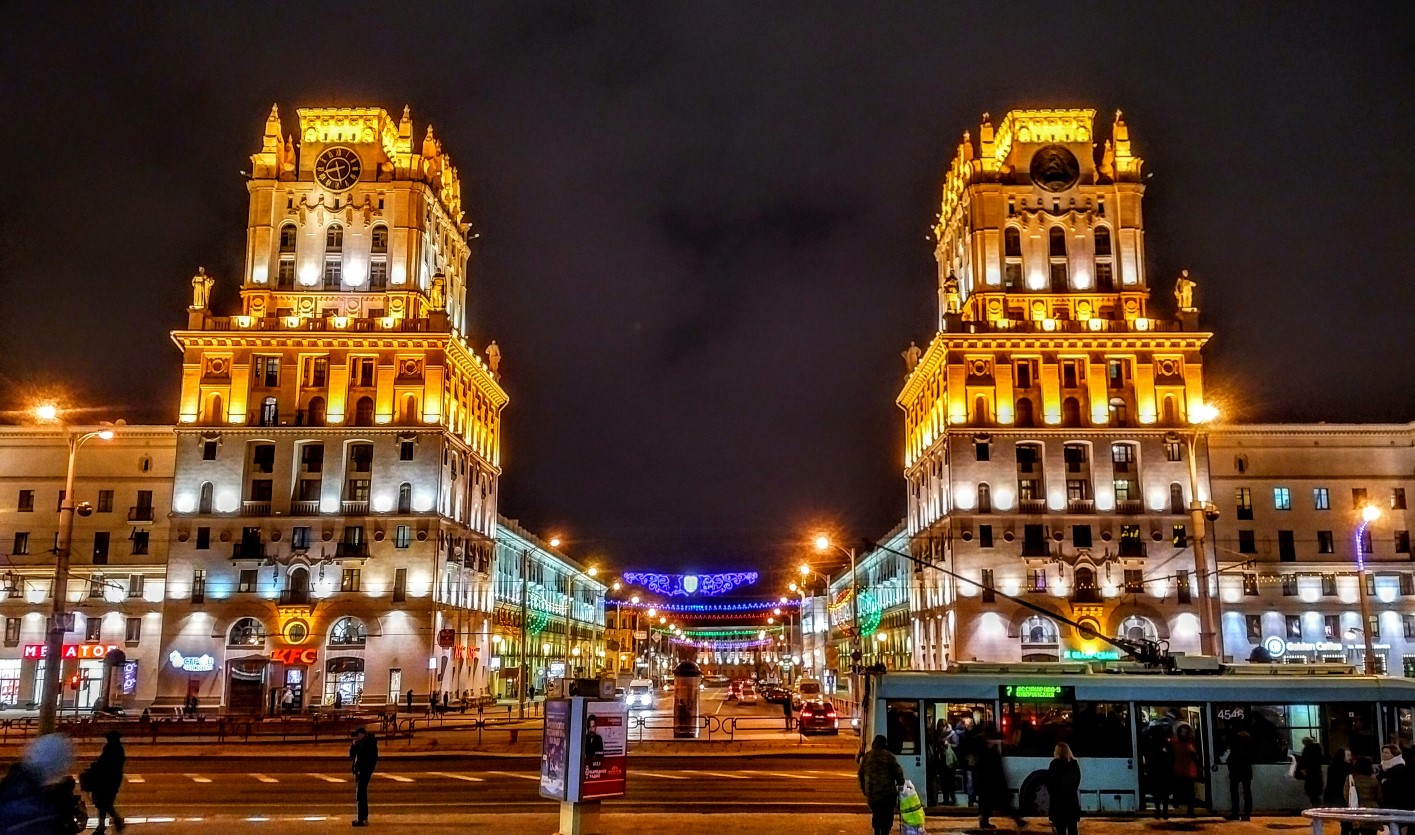
Minsk's impressive City Gates echo many of the architectural features of the Stalin Palace.
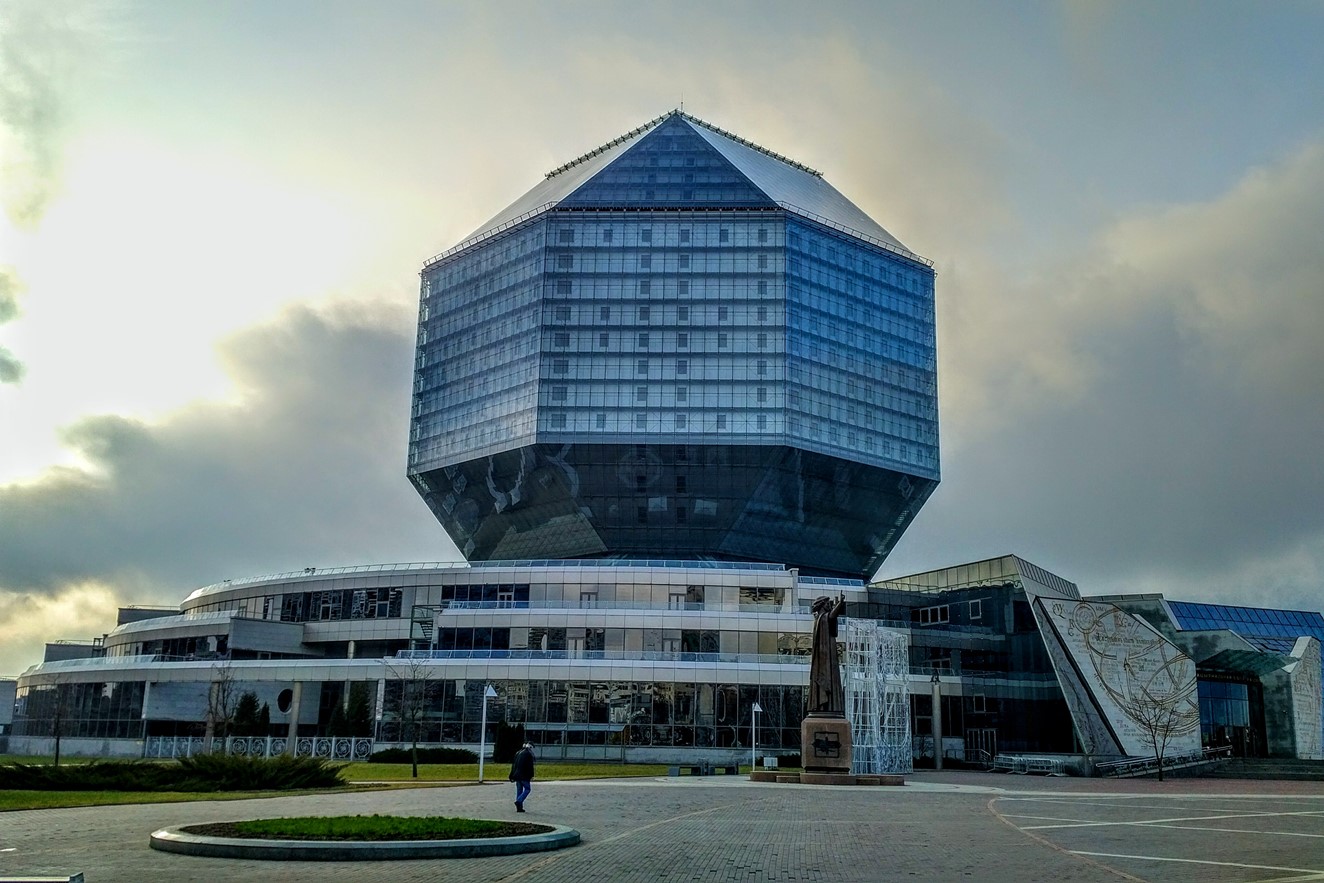
The National Library of Minsk - a grand architectural gesture in the shape of a rhombicuboctahedron seen by some locals as national vanity project.
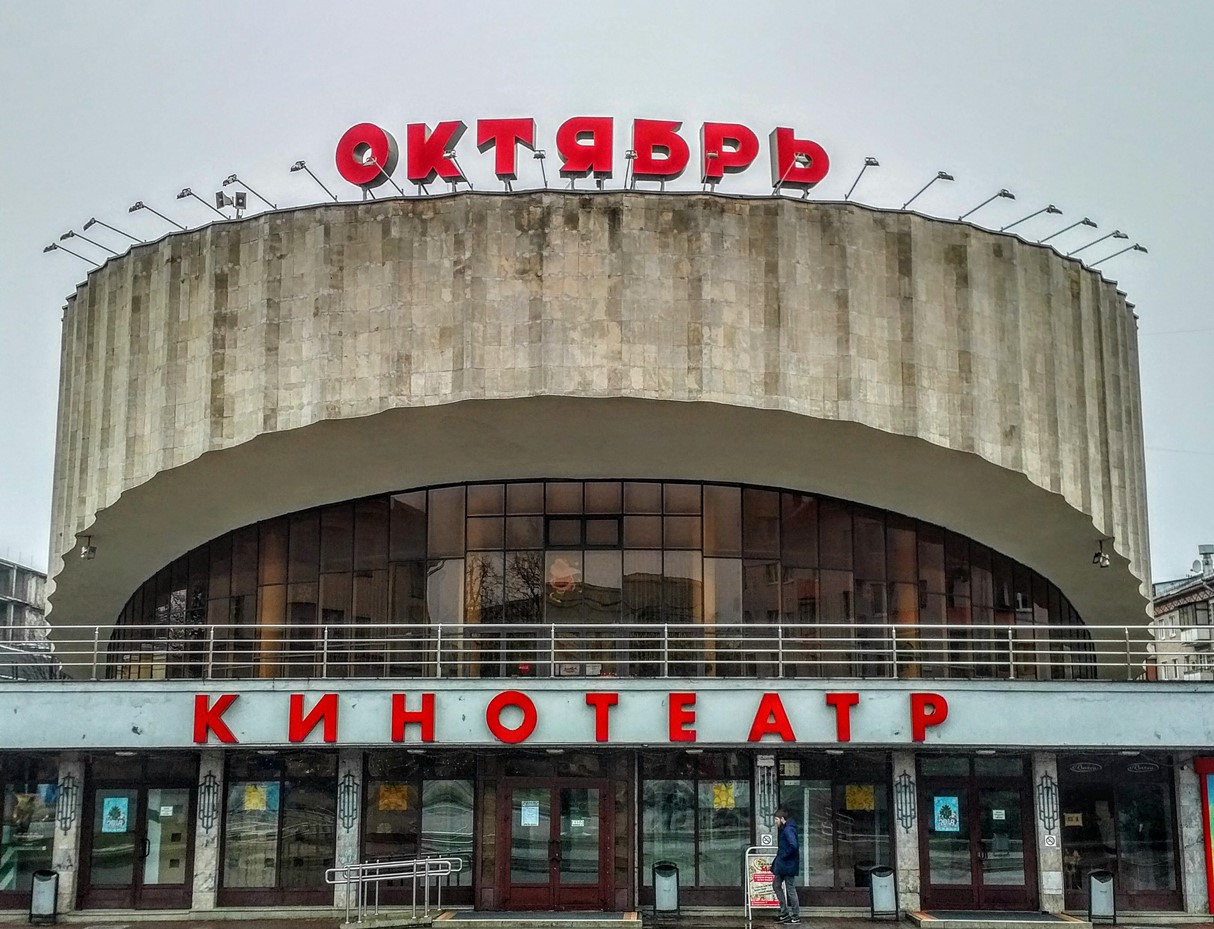
Minsk's cosmic style of architecture so characteristic of former Soviet countries. This is the October Cinema complete with red Cyrillic lettering.
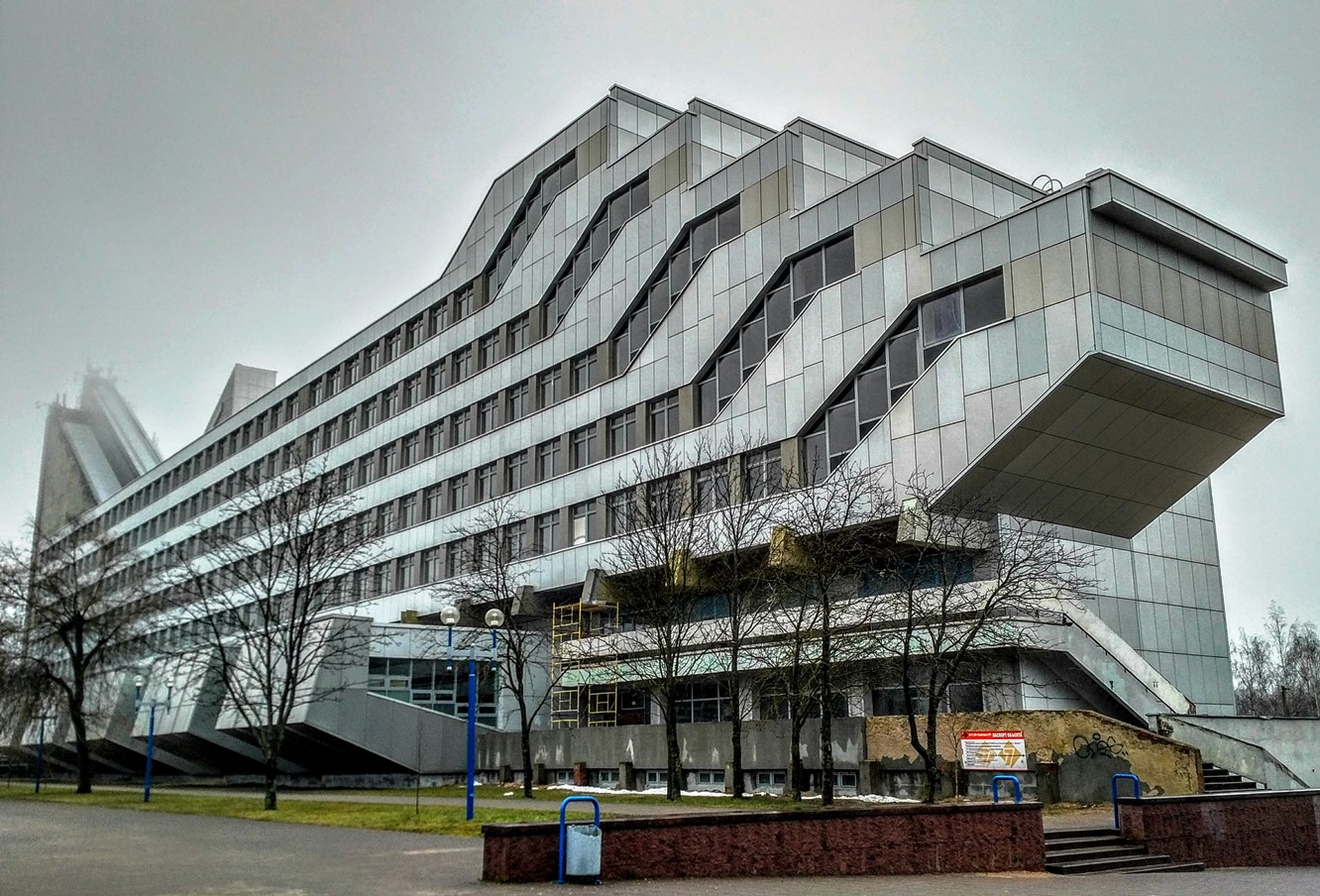
The student halls of the Polytechnic University: a stunning example of Minsk's cosmic architecture. This building features in the fantastic 'Cosmic Communist Constructions Photographed' book. I never thought I'd ever see it in person. Check out the fog in the distance top left.
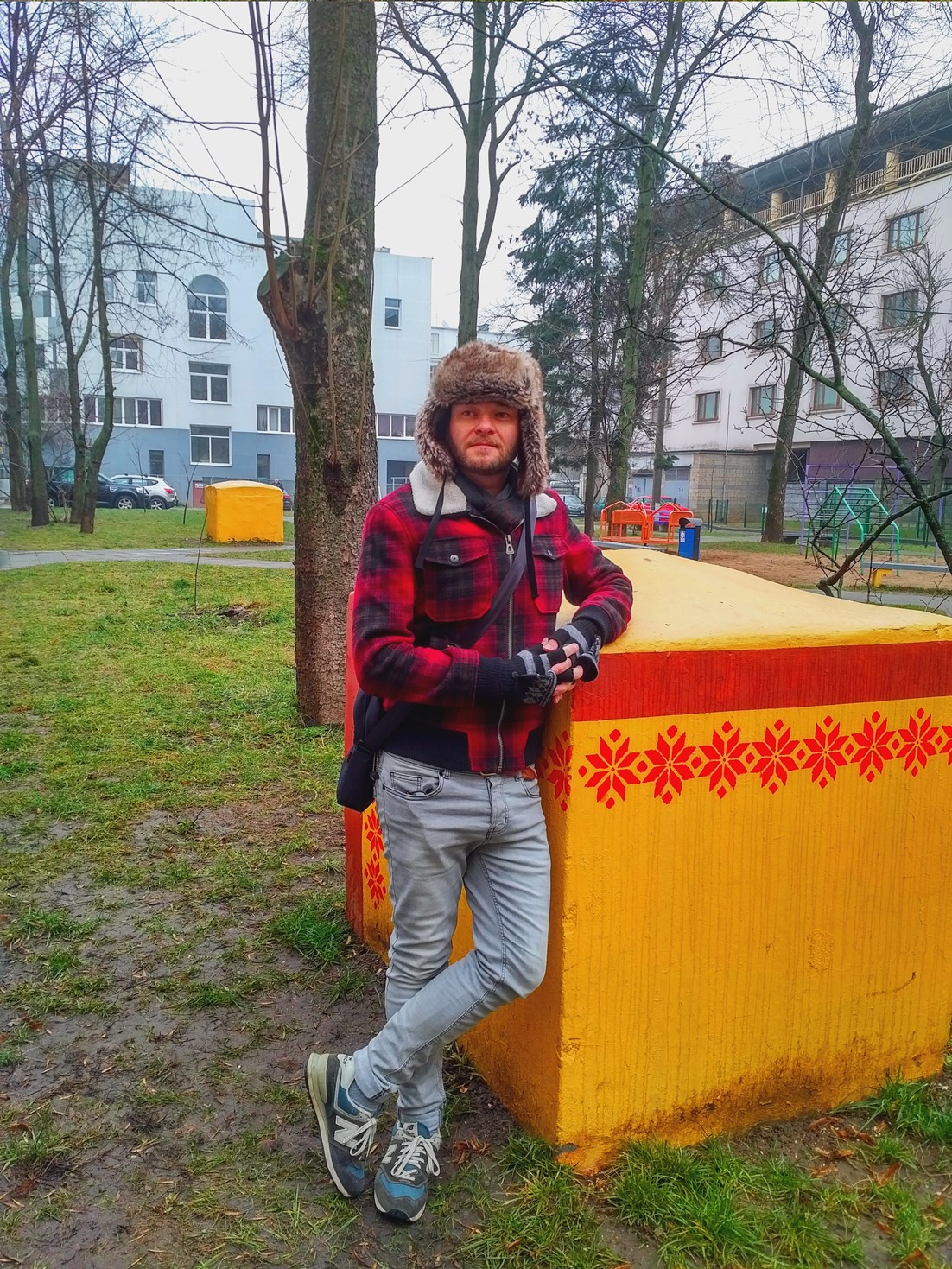
The yellow concrete cubes in this children's playground are large vents for underground air raid shelters dating back to the Cold War. This one has been decorated with a Belarusian design.
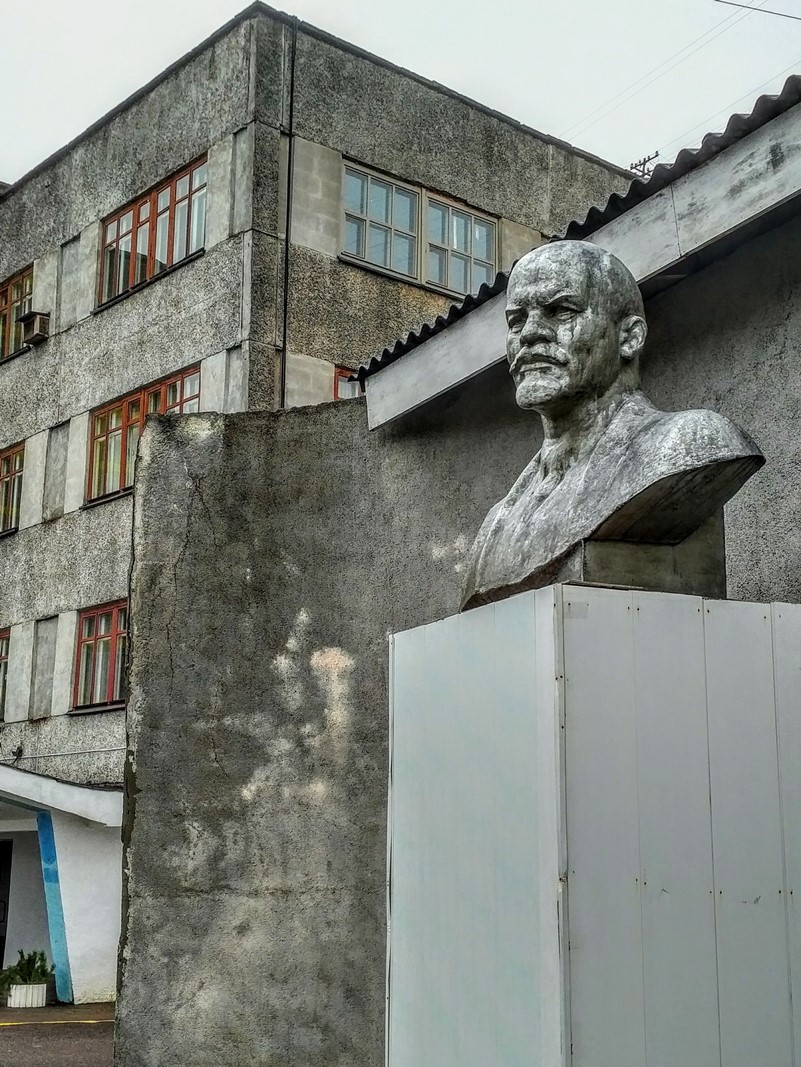
A bust of Lenin still stands outside an old USSR factory along Brazillian Street which is about to be wound down and the area redeveloped.
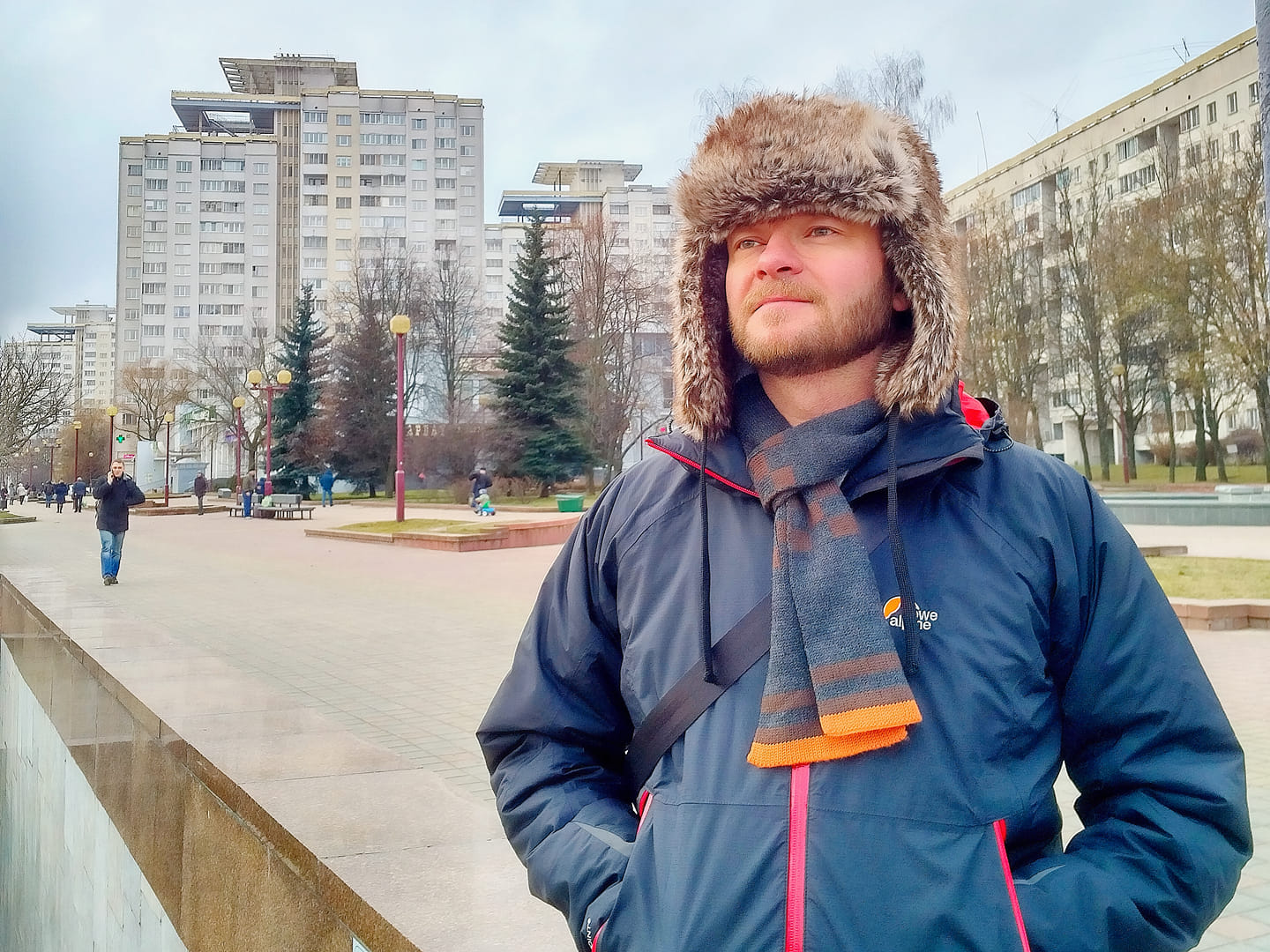
Minsk's Soviet town planning: anonymous apartment blocks, cosmic street furniture, ubiquitous beige marble and symmetrical alignment.
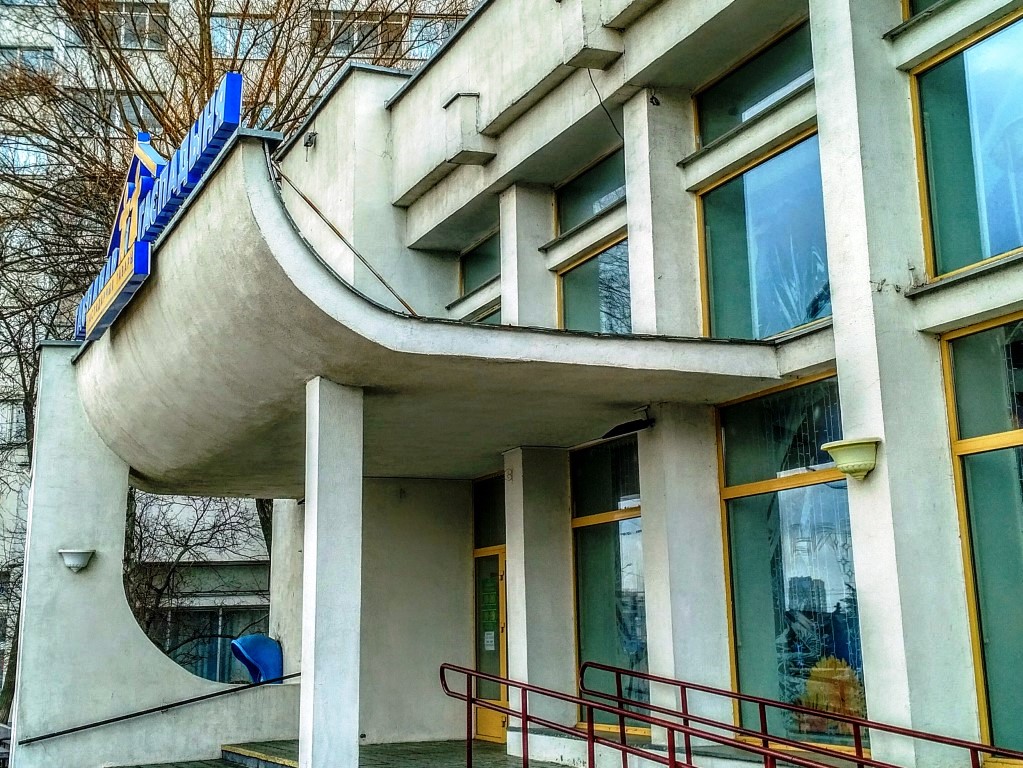
Architects working across the USSR drew inspiration from the Union's success in sending the first man into space. Buildings became an outward expression of this technological prowess.
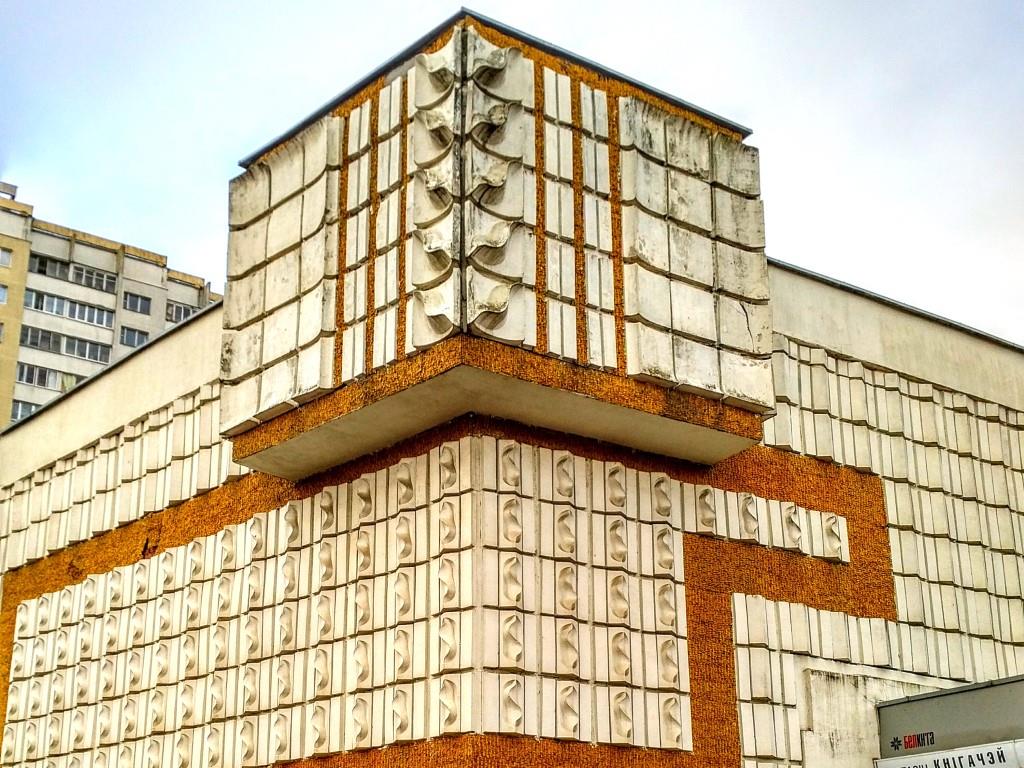
Inspiration from the space race gave birth to a vast array of creative cosmic concrete designs. Fascinatingly ugly.
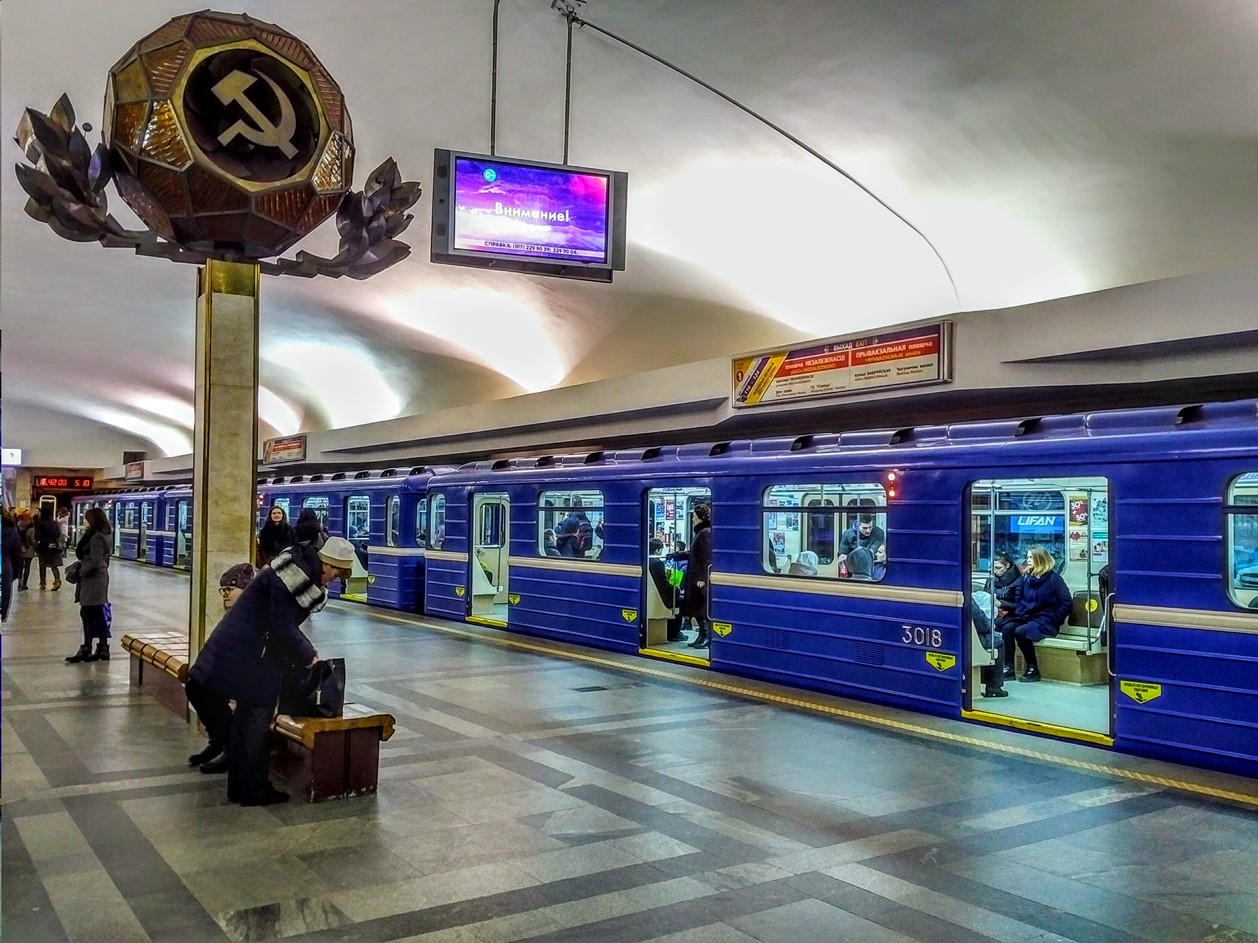
Going back in time: the hammer and sickle dominates a platform of the atmospheric Minsk Metro.
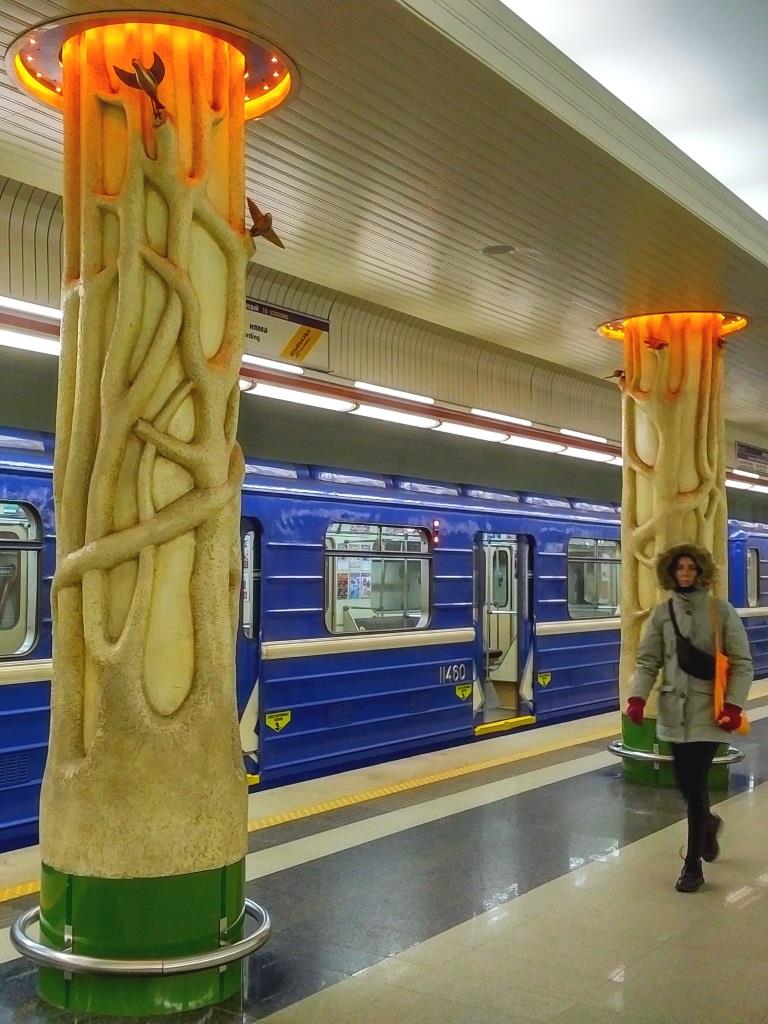
Minsk Metro designs: organic.
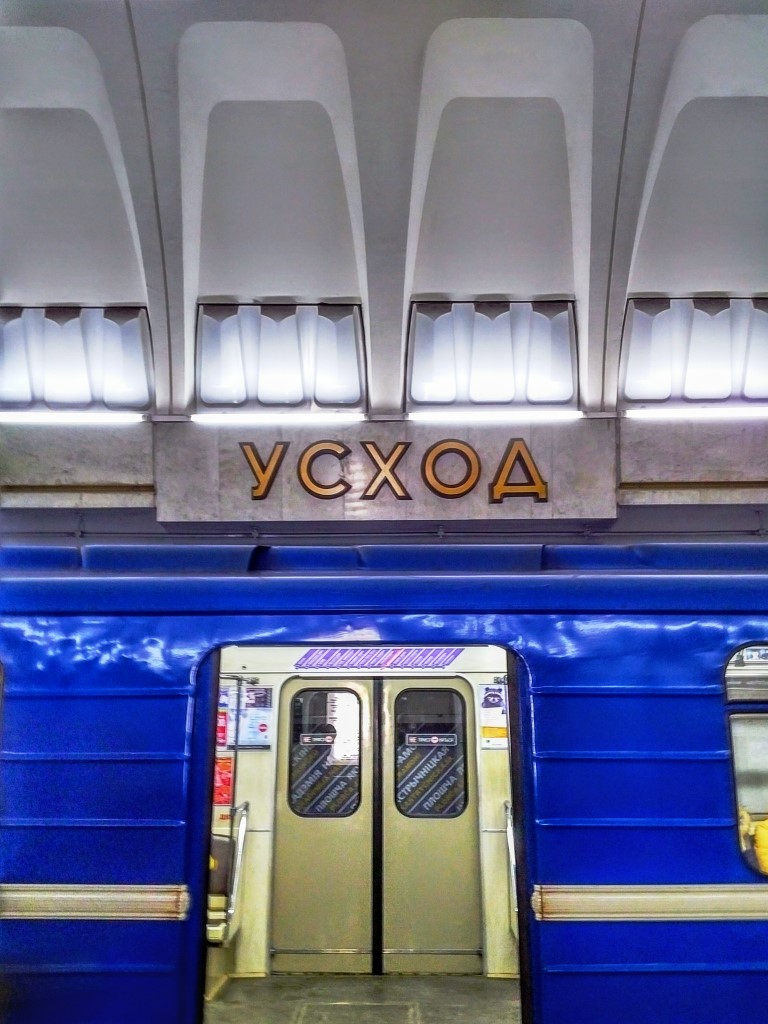
Minsk Metro designs: geometric.
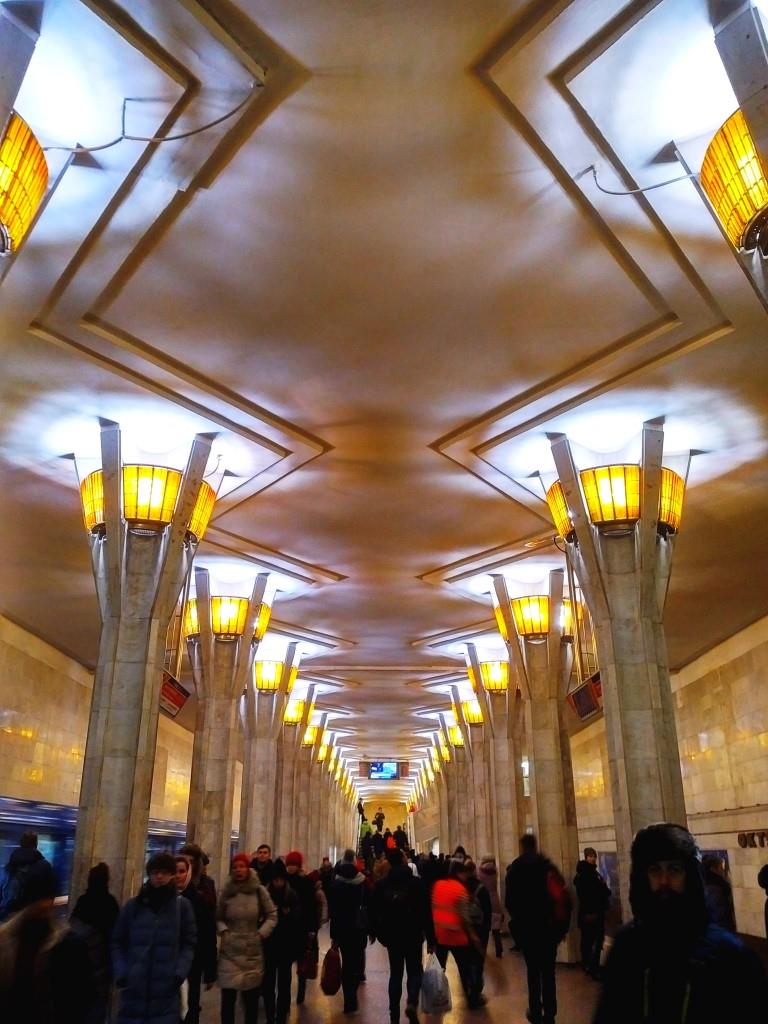
Minsk Metro designs: Corinthian columns.
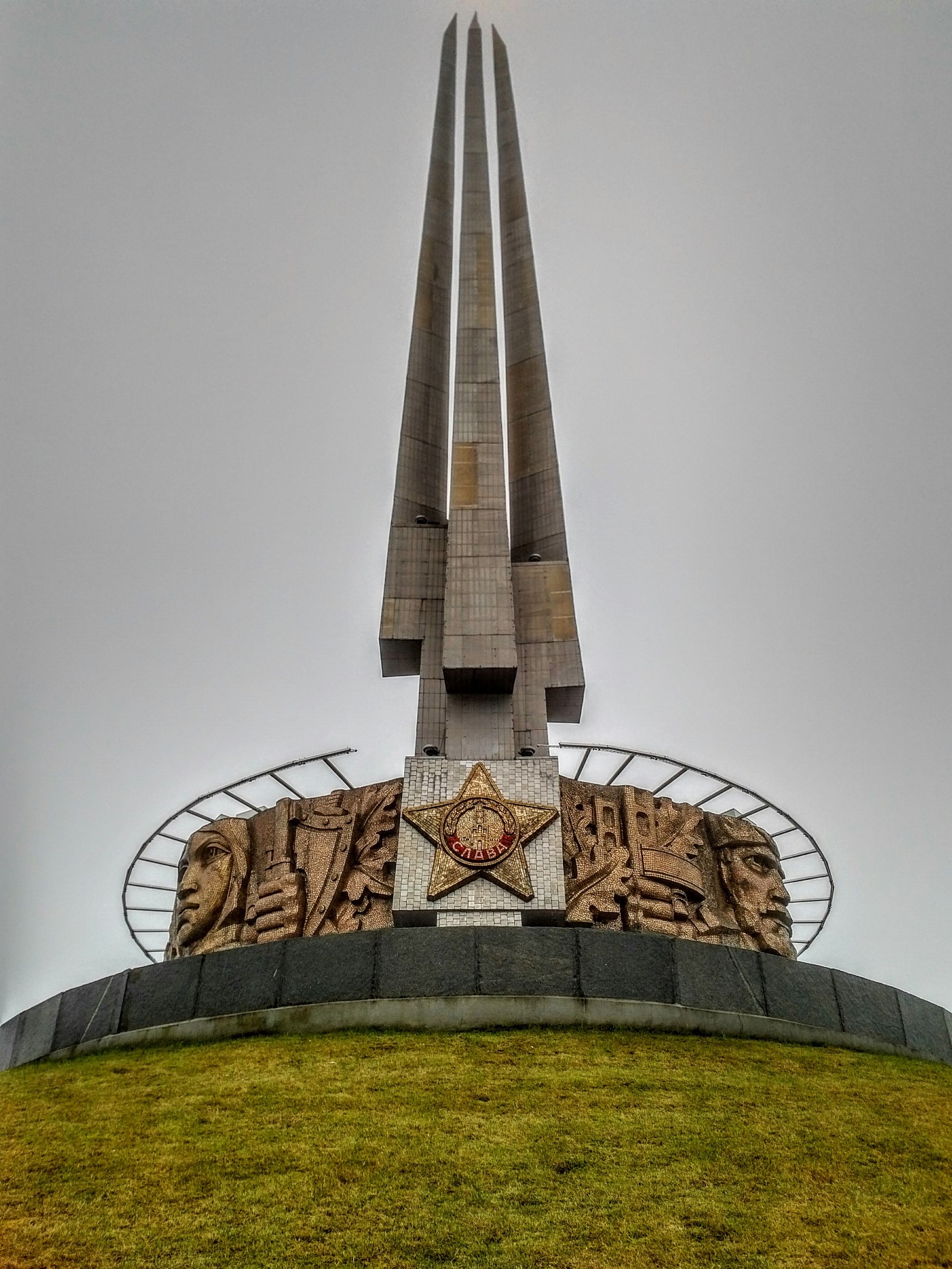
The Mound if Glory on the outskirts of Minsk.
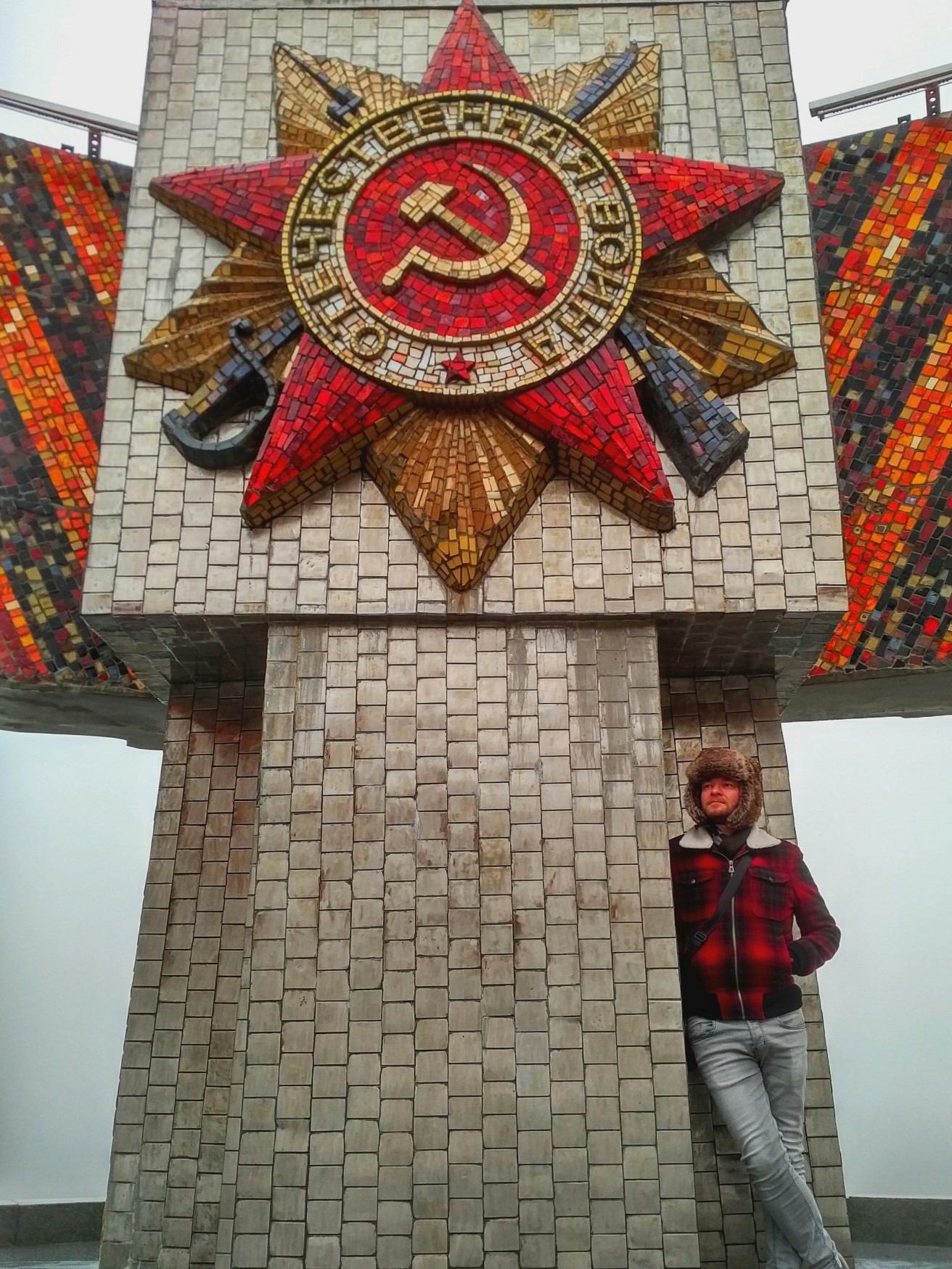
Inside the Mound of Glory. It was bitterly cold.
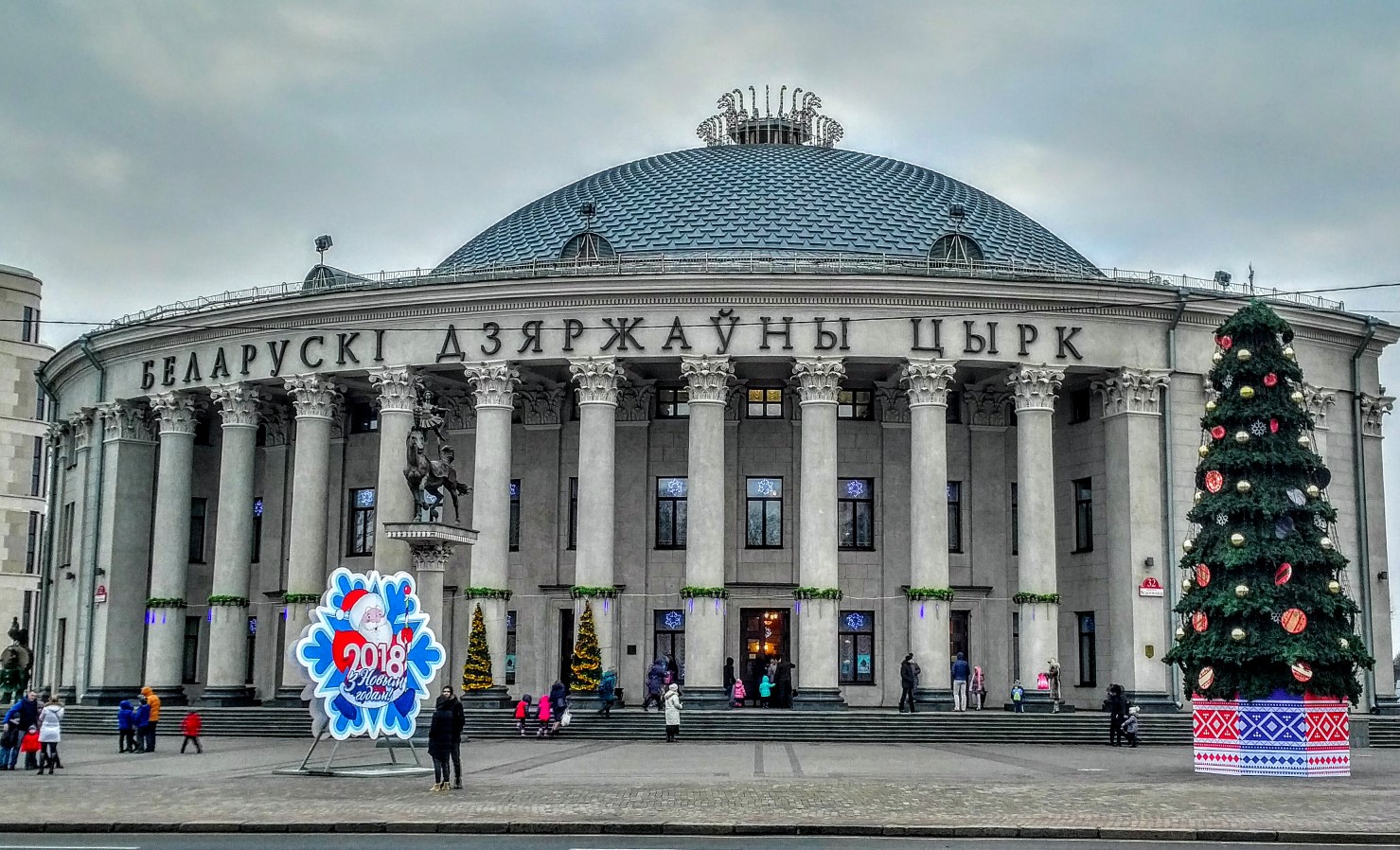
The round Belarusian State Circus building. There is a circus performance here each evening. The Soviets had a bit of a thing for circuses.
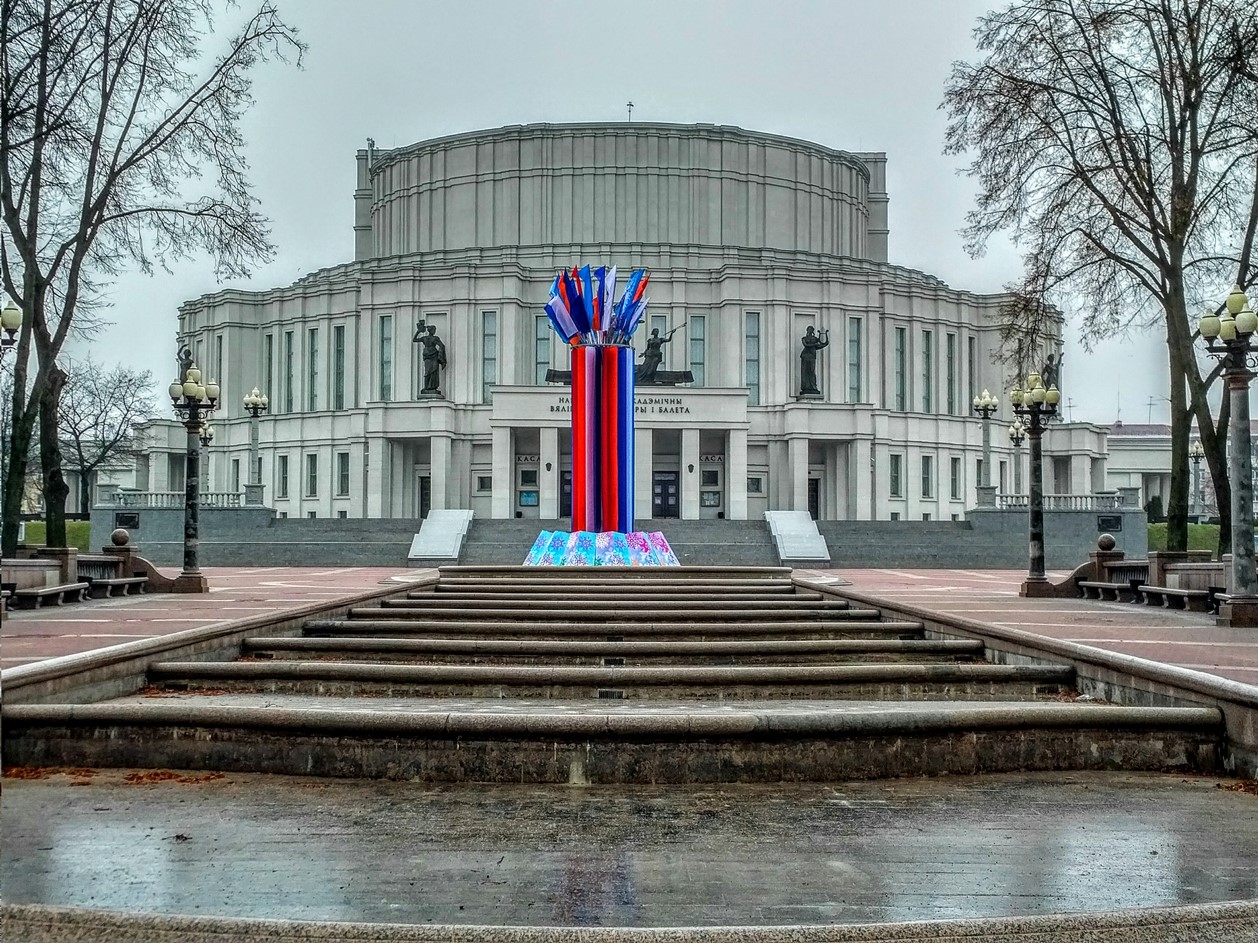
The National Academic Grand Opera and Ballet Theatre of the Republic of Belarus, to give it its full title. Elegant yet mournful at the same time.
azerbaijan
Otherworldly Travel in the Authoritarian Land of Fire
Azerbaijan is one of three countries making up the Caucasus region, one which straddles the extremities of Eastern Europe and Western Asia and one sandwiched between the powerful forces of Turkey to the west, Russia to the north and Iran to the south. This goes some way to explaining fractious relationship the Caucasus trio have with each other; it is a region bedeviled with tension and appears to be one which is uniquely predisposed to fragmentation, with regions and scraps of land breaking away from each other and declaring their independence - triggering wars and stoking tensions further. Indeed, my Chronicle map above gives a flavour of this complexity, showing Azerbaijan with both a break away patch of land to the west (landlocked by Armenia) and a contested region within its own borders (Ngorno-Karabakh). Technically Armenia and Azerbaijan remain at war and, therefore, the border between both is closed. Indeed, the British Foreign and Commonwealth Office advises travellers to avoid "all but essential travel to these areas", often playing host, as they do, to regular outbreaks of violence between Armenian and Azeri forces. However, providing you steer clear from its trouble spots, the frozen nature of the tensions in this region mean it is relatively safe for travellers.
I came tantalisingly close to Azerbaijan back in 2012 when travelling around the two other countries which make up the fractious Caucasus region: Georgia and Armenia. Back then gaining an Azeri visa was a labyrinthine process which also required the component most dreaded by travellers eager to see the world's more unusual and off-the-beaten-track places: the Letter of Invitation. However, in January 2017 all of that changed and rules were relaxed, allowing travellers to secure, for a nominal fee, an online e-visa in three simple steps through Azerbaijan's new ASAN Visa system. Our visas arrived by email a few days later. Five years after last visiting the region, Azerbaijan became my 78th country.
Baku in January is bitterly cold: wearing two hats, two coats (on top of a tee shirt and jumper) and a pair of thermals under my trousers managed to stave off the cold just long enough for short bursts of sightseeing during the day. Winter also meant that, apart from a few Russians (who visit places like Azerbaijan because they are deemed 'friendly' countries by the Russian Federation) we appeared to be the only tourists in the city. It certainly felt like this anyway. Our Russian-style fur hats drew the attention of locals who sniggered at our attempts to keep the sub-zero Azeri winter out.
The Azeri capital hugs the curved shoreline of the Caspian Sea. It's a city on development steroids as the Azeri government builds itself a capital city of international renown in a petroleum-fuelled frenzy. The Baku skyline is dotted with fantastical and creative buildings set amongst carefully maintained gardens and other visual offerings designed with the tourist explicitly in mind: a large Azerbaijan flag; a miniature version of Venice where you can take a ride on a plastic Gondola; a giant chess board; a carpet museum in the shape of...a carpet. Whilst impressive it does, at best, feel contrived and at worst like an Azeri Disneyland. But Baku's most recognisable landmark is indisputably the Flame Towers, three fire-shaped skyscrapers which come to life at night with computer choreographed lights in the shape of fire and fluttering Azerbaijan flags. These were the towers which featured so prominently during Azerbaijan's hosting of the Eurovision Song Contest in 2012, an event which, for many, put the country on the map for the first time. What you initially perceive as an unusual and interesting light show comes dangerously close to the kitsch and tasteless when an animation of silhouetted men waving the national flag appear. However, on closer inspection it is clear that, even years after they were built, the Flame Towers are predominantly empty and that this fantastical light display is, in fact, projected from buildings which, commercially at least, are struggling to attract tenants. And this underscores another aspect to Baku: things aren't always what they appear in this glitzy Caspian city - much of which seems to be concerned with outward appearances. Baku is dressed to impress.
The fact is that Baku is a postmodern, Magpie-like city which has appropriated and borrowed icons from all around the world in a bid to decorate its nest. It is a heady assortment of things from elsewhere: the aforementioned Venetian gondolas, red telephone boxes from London housing banking machines and traditional Hackney carriage-style taxicabs, also from London but with a chequed tape running down their side (taken from the New York taxi?), decorative street kiosks which look positively Parisian and a new building along the shoreline which looks suspiciously like the Sydney Opera House. In fact, depending on where you look in Baku you could be in Egypt, Turkey, France, Iran, Russia or a Gulf state like the UAE. It is often travel writing hyperbole to claim that a particular country is a cultural crossroads or a melting pot of influences. It's a phrase that is bandied about all too readily but, in the case of Azerbaijan, it is truer than any other place I have been. It is a destination that defies simple categorisation and for this reason alone Baku, and Azerbaijan more generally, will keep you guessing until the very end. Sometimes in travel it's nice to go somewhere where you have no idea what to expect.
Away from all the glass modernity lies Baku's Old City, a UNESCO listed labyrinthine warren of streets with romantic overhanging balconies, cobbled paths, modest mosques and little souvenir shops. Some shopkeepers have clearly taken great care in staging their wares, making them a particularly wonderful photographic opportunity for travellers like me; they are exquisite little works of art in their own right. Indeed, the range of items for sale lays bare, perhaps more clearly and succinctly than anywhere else, the diverse cultural and political influences which all converge in Azerbaijan: Turkish rugs, 'Telpak' hats worn by men in Turkmenistan (which is on the other side of the Caspian Sea), Soviet badges and busts of Lenin, and trinkets with Persian designs.
In sharp contrast to the Old City, and at the far end of Baku Bay, is the communist-era Television Tower. Perched high up on a hill its crude concrete mass now overlooks a very modern and aspirational Baku. Aside from a single hammer and sickle motif I espied on one of Baku's older buildings, the tower seems to be one of the few reminders of Azerbaijan's Soviet past, so dramatic has the city's transformation been in recent years. No trip to a country of the former Soviet Union would be complete without a journey to the top of a concrete cosmic relic such as this. Soviet television towers were a by-product of the Space Race with the West; such constructions a physical representation of communism's technological prowess. They are completely absurd, ugly and, I believe, rather wonderful things, acting like a touchstone to a bygone mindset which, possibly with the exception of a visit to Belarus, you can now only read about in history books rather than experience first hand. Like so many I have experienced before, the tower's restaurant floor revolves slowly, allowing you to enjoy your coffee and see the city in full 360° without having to leave the comfort of your seat, the occasional mechanical sounds and indelicate lurches forward completing this most Soviet of dining experiences.
Whilst the Azeri TV Tower alludes to the past, the Heydar Aliyev Centre, named after Azerbaijan's former president (along with the international airport), points firmly to the country's future and is a symbol of Baku's newly-chosen direction of travel. Designed by Iraqi-British architect Zaha Hadid, its white liquid-like shapes and rounded curves aim to show Baku as a confident, stylish and sophisticated city with international aspirations. A building of such architectural complexity and minimalist style is a statement piece you might more readily associate with a city like Dubai. But it's in Baku, the capital city of a country most people have never heard of and, if they have, it's probably only because of Eurovision. So, is it Paris, London, New York and...Baku? Not quite. Well, not quite yet anyway. But give Baku time.
Whilst Baku's ambitions are honourable, the tourist experience as far as I was concerned was far from what you might expect from a great international city: bad coffee (everywhere), even worse hotels and over-priced food. Infrastructure was also problematic; to experience one of Azerbaijan's greatest sights, the Mud Volcanoes, we had to scale up a slippery mountainside in a Lada driven by a friend of a taxi driver (more of that in my Gobustan section below). I digress. Like many Gulf States, to which Azerbaijan has more than one parallel, Baku markets itself as the latest culinary destination but, having eaten there for the best part of a week, I'd say it has a fair way to go in order to realise such lofty gustatory ambitions.
But that's okay. I didn't go to Azerbaijan for any of this: I went solely to see and experience a place many will only ever hear of, if indeed they hear of it at all. I like my countries to be off the beaten track, unusual and interesting. And Azerbaijan is all of these things. Azerbaijan was also a chance to experience another place yet to be warped by mass tourism. I liked the fact that we received quizzical looks from locals; the fact that everything wasn't easy; the fact that our tour guide for a day was someone's dad who didn't speak a word of English; the fact that we had to take that crazy journey up a mountainside in a creaking Lada. That's travel. Azerbaijan, therefore, is a chance to experience something increasingly rare in travel: authenticity. Indeed, Azerbaijan has so few international visitors (comparatively speaking) that following my visit a government department sent me an electronic questionnaire asking for feedback on my experience in their country! What a nice touch, one that served to endear me to Azerbaijan even further. I loved Baku. And I loved Azerbaijan.
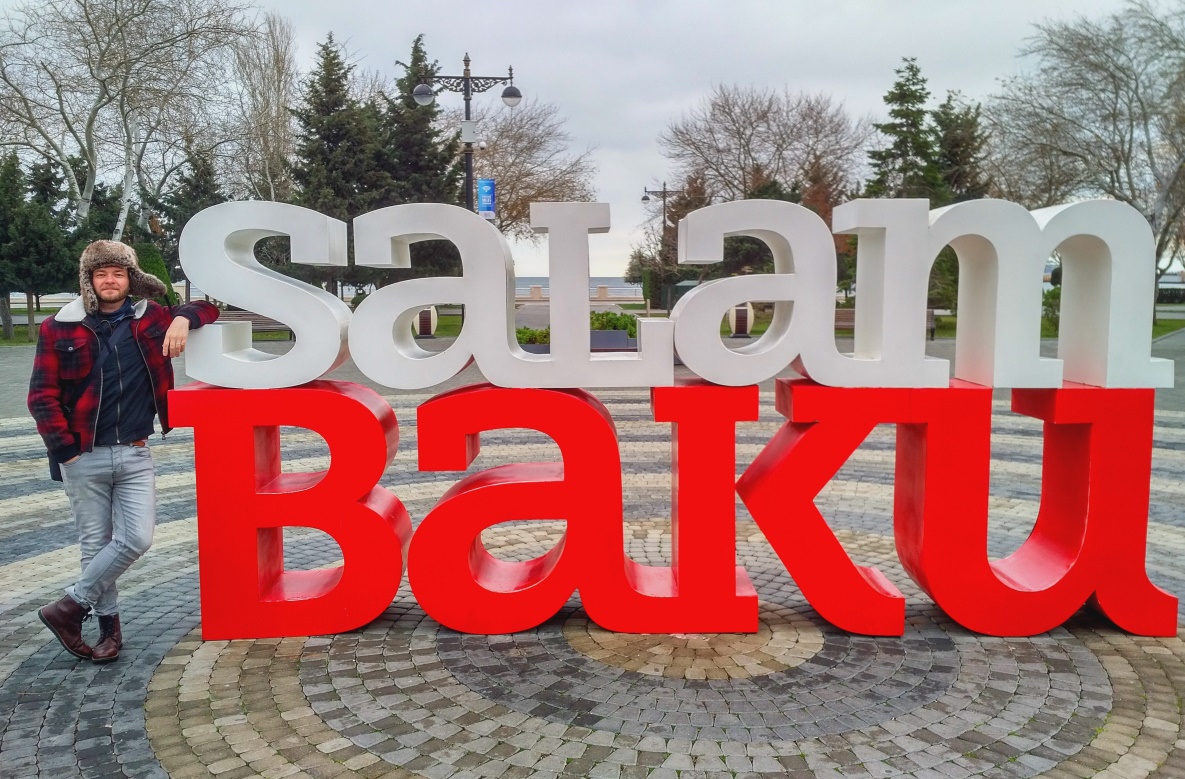
Baku knows how to target tourists: large 3D letters say "Hello Baku". Sorry, I couldn't resist - I'm a tourist at heart.
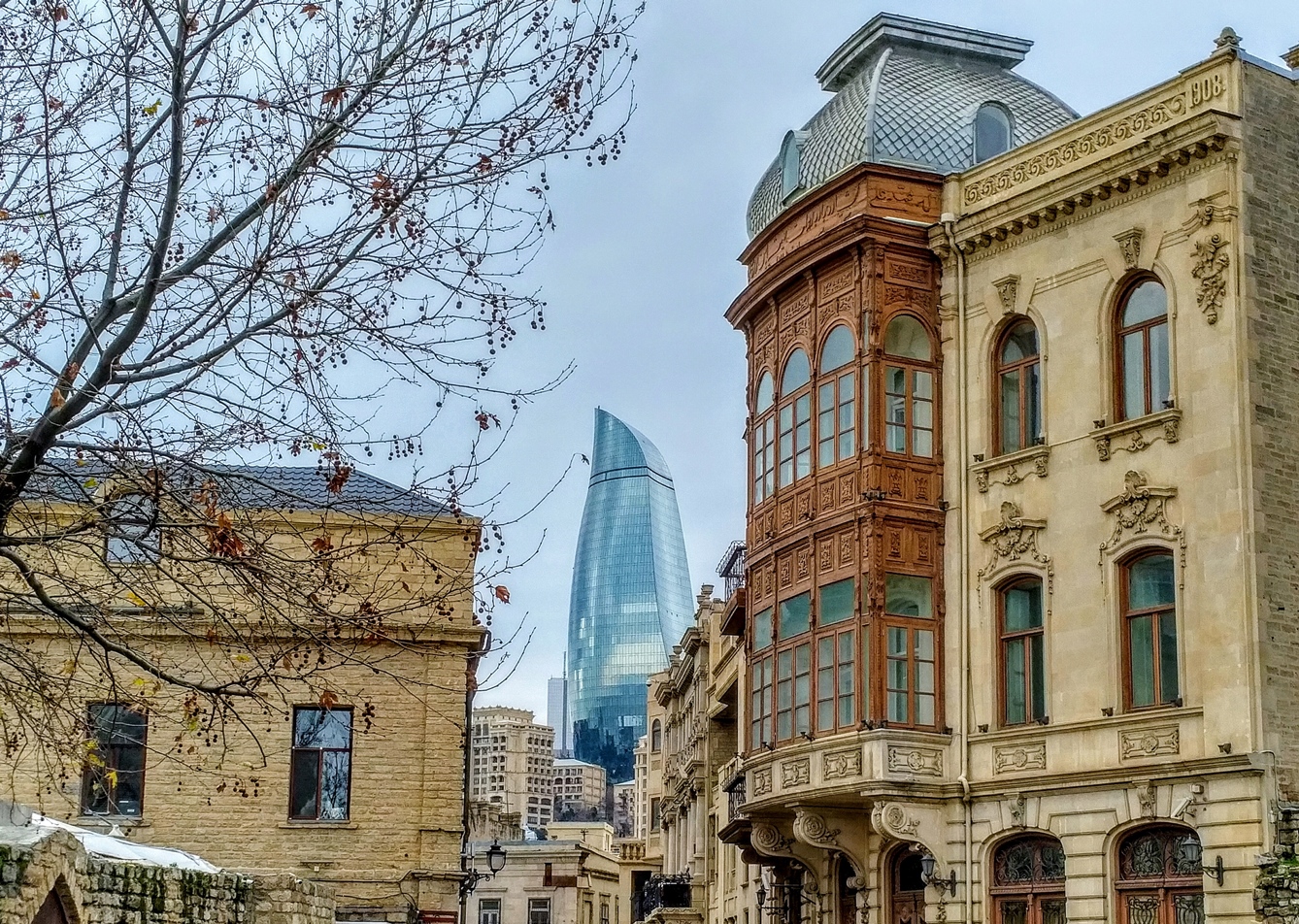
One of the three Flame Towers peaks between the rambling streets of Baku's Old City district.
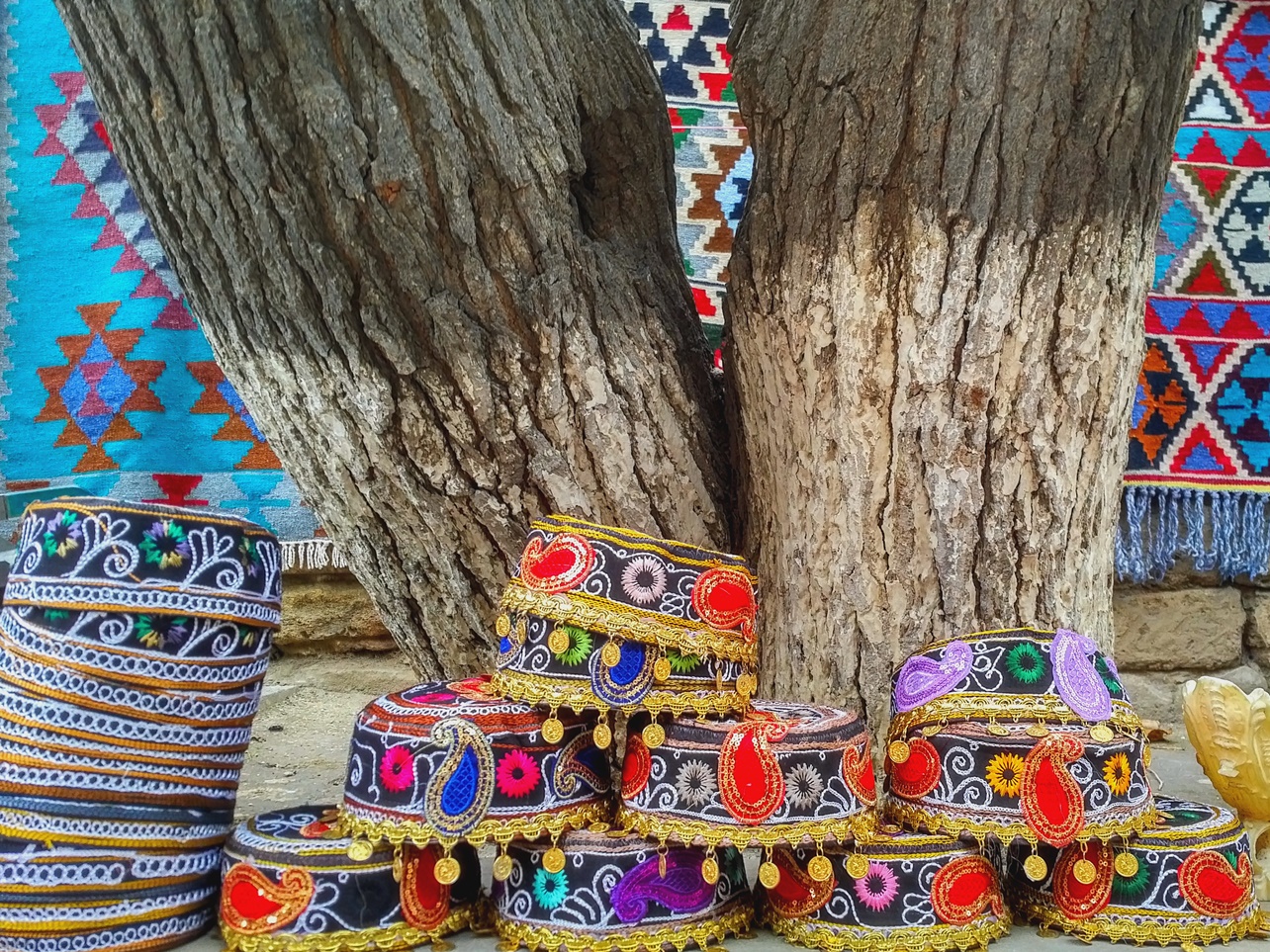
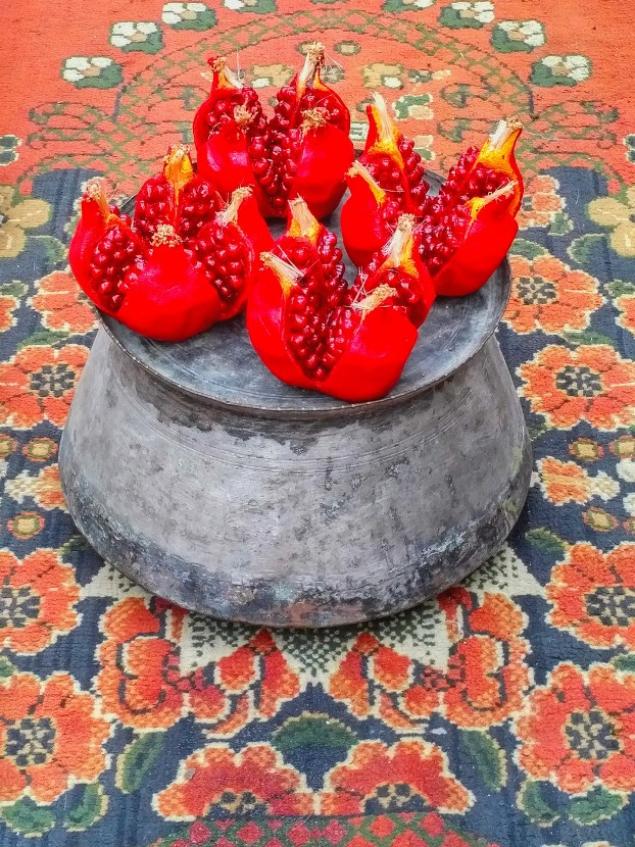
Cultural hats for sale in Baku's Old City. Shopkeepers create particularly exquisite displays here. Right: pomegranates upstage a Turkish rug.
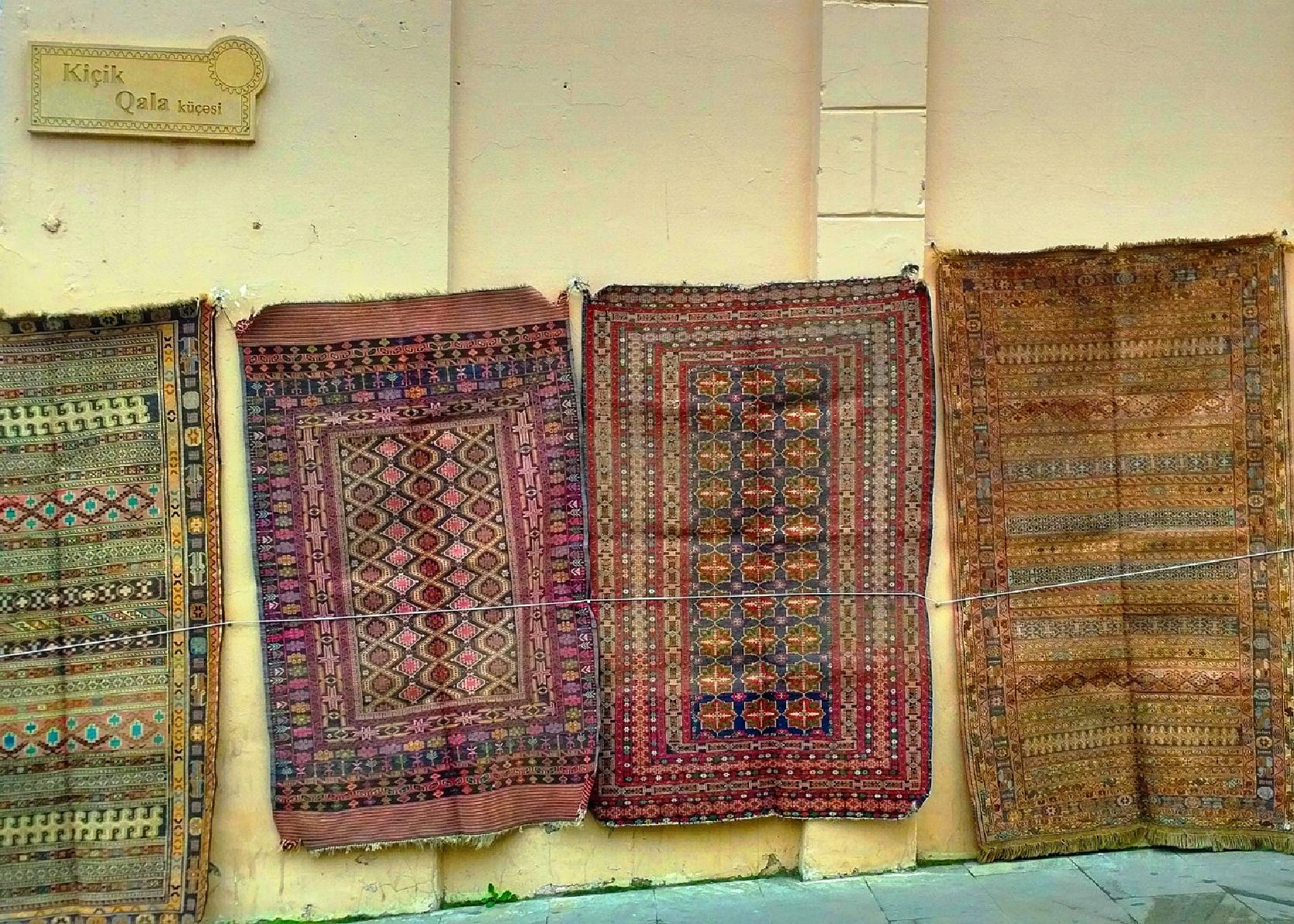
Faded Turkish/Azeri rugs adorn a wall in Baku's Old City.
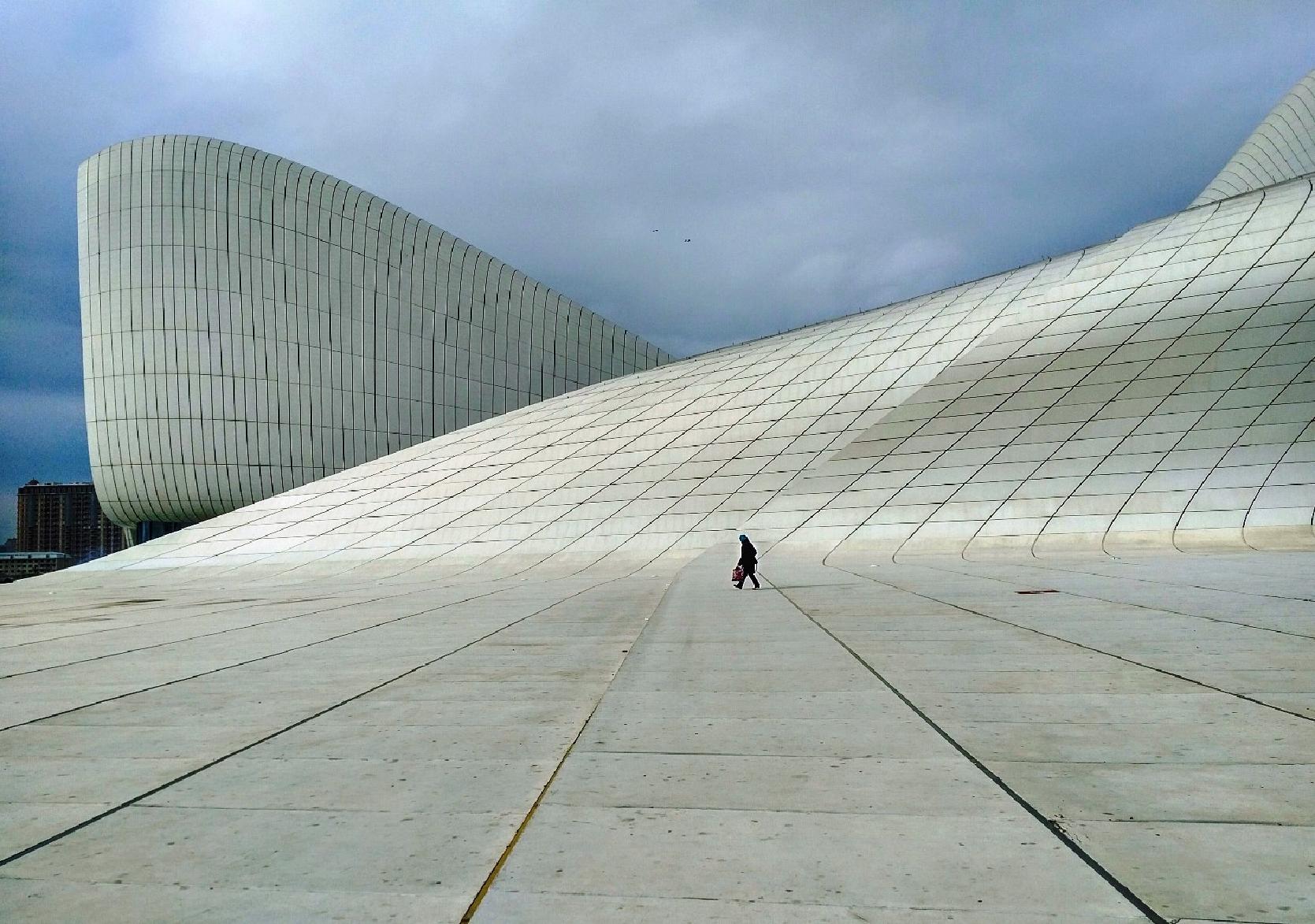
The Heydar Aliyev Centre aims to show Baku as a confident, stylish and sophisticated city with international aspirations.
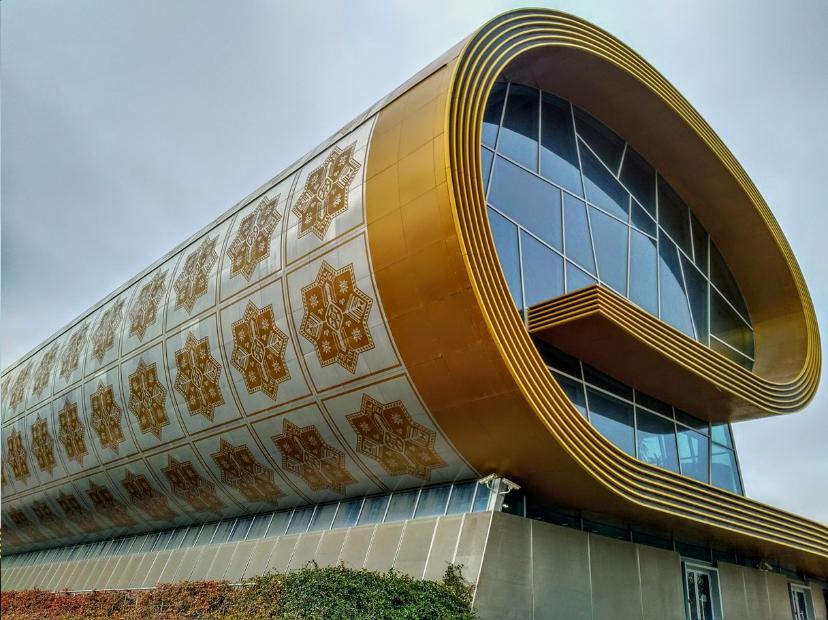
Baku's Carpet Museum along the shore of the Caspian Sea imitates the shape of a rolled carpet and features an Azeri pattern.
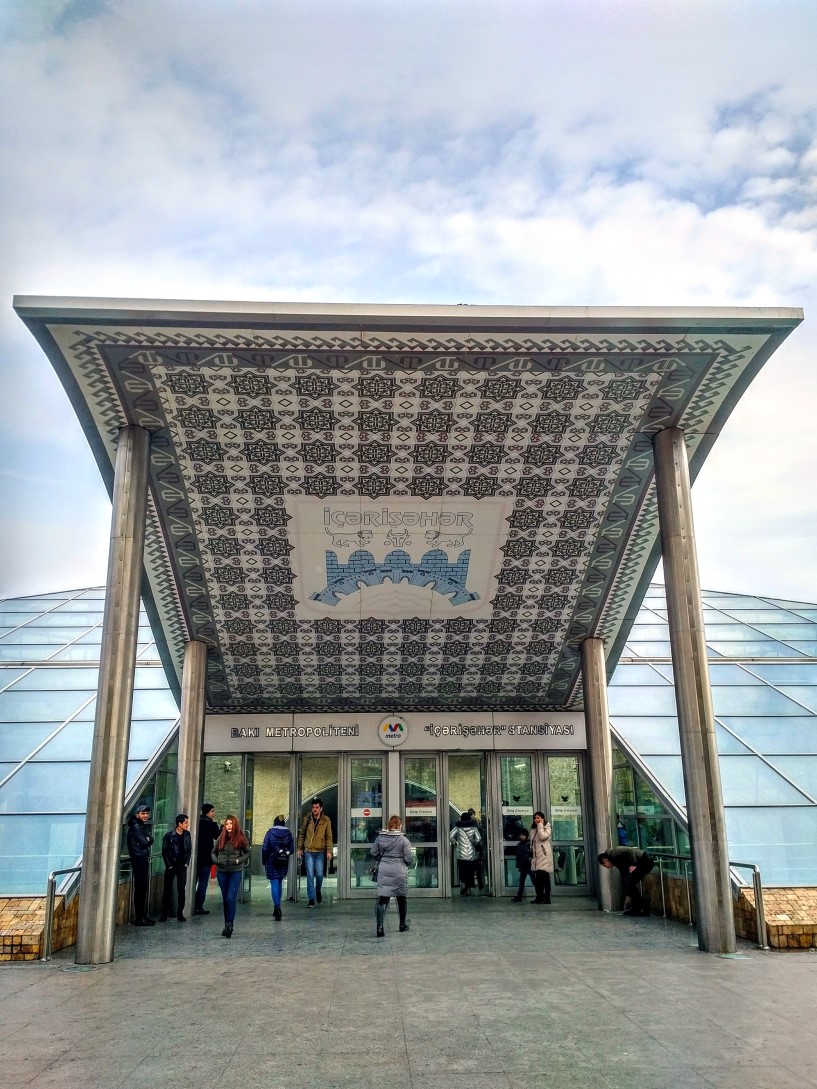
The grand entrance to Baku's underground Metro system.
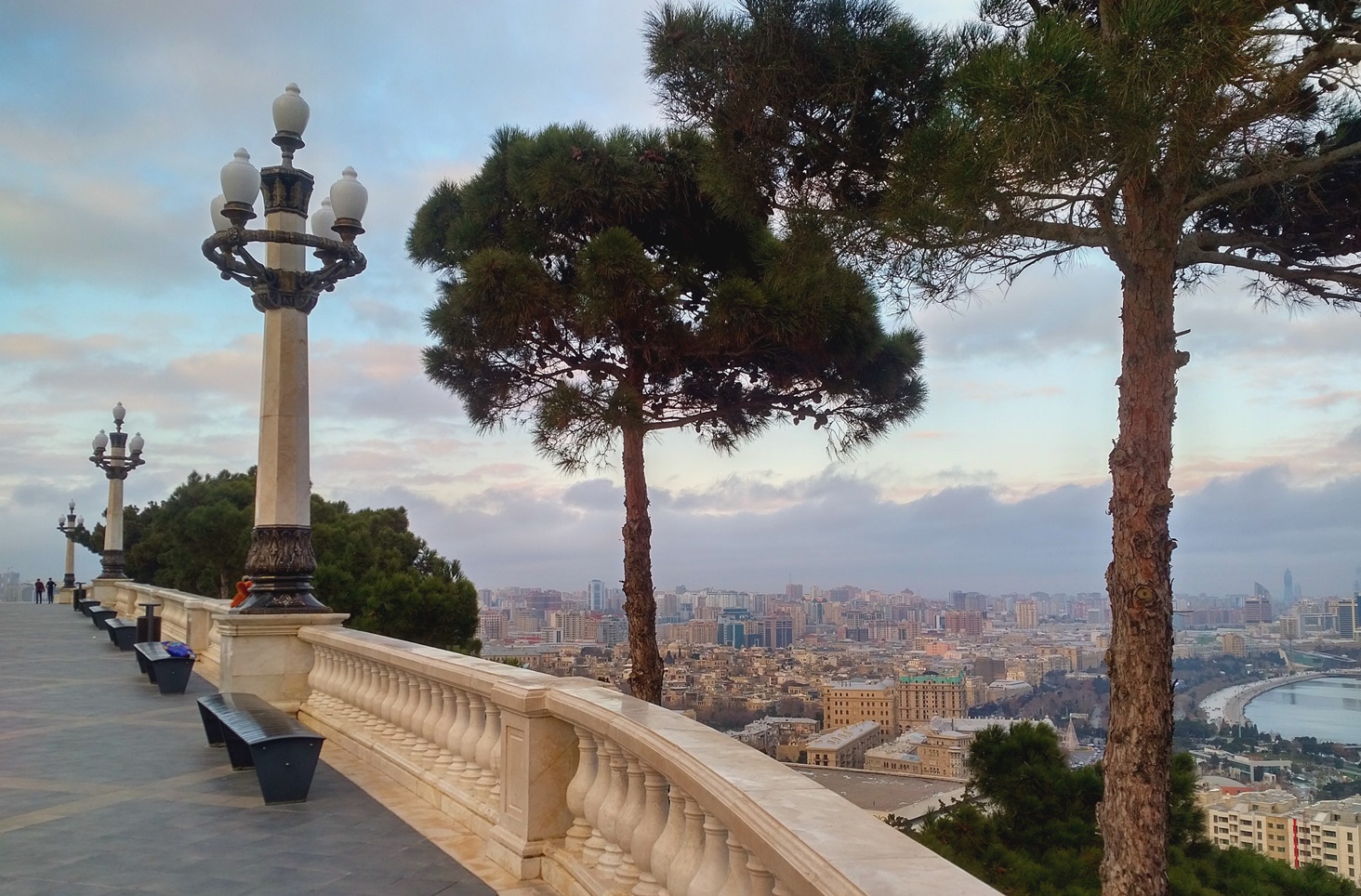
Evocative view of Baku at dusk.
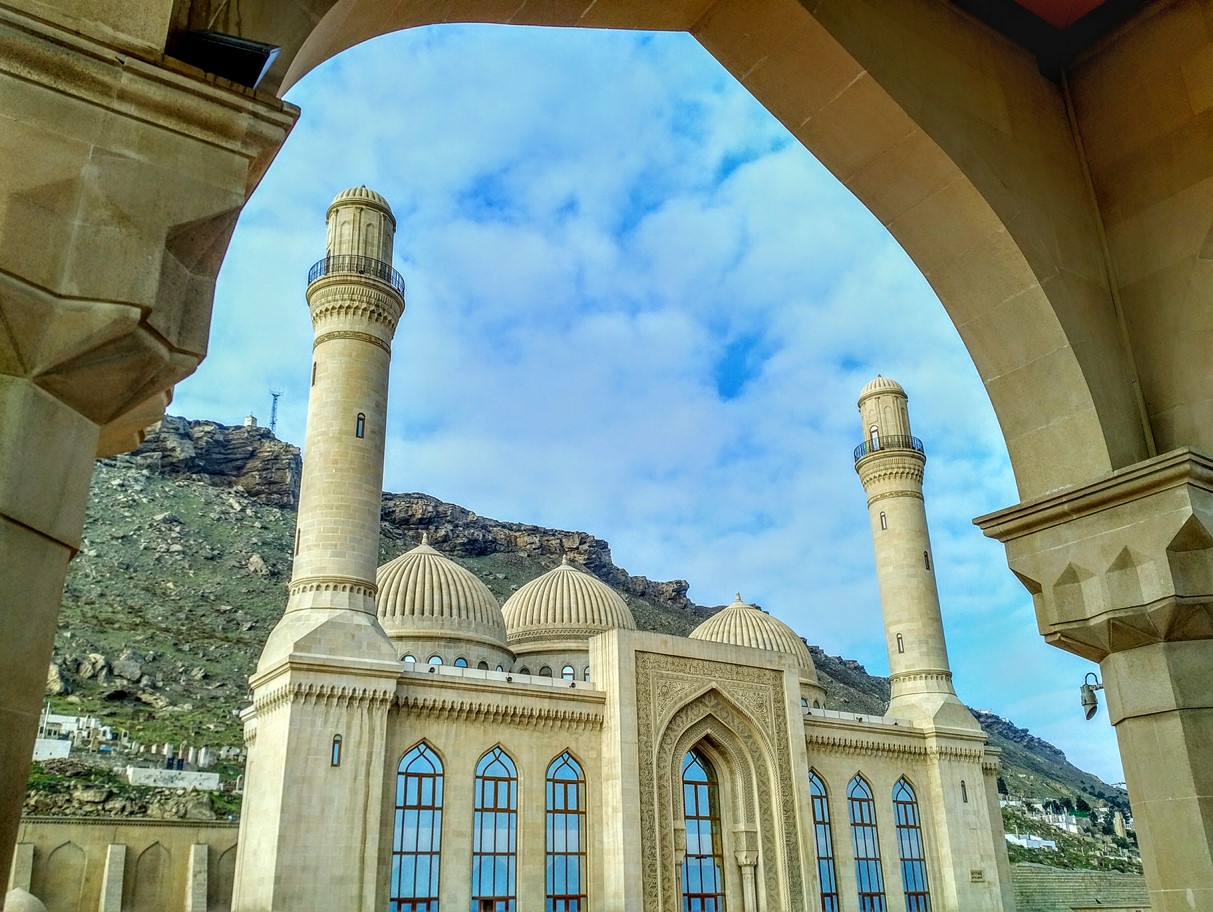
The Bibi Heybat Mosque, on the outskirts of Baku, seen here framed by a nearby Islamic arch.
The amount of time we had in Baku was dictated by the limited number of scheduled departures to China on the national carrier Azerbaijan Airlines. Whilst initially a little frustrating, this was a blessing in disguise because it allowed what was to be a mere city break to extend beyond the glitzy, sequin-covered capital of Baku - and, as we were to find, Azerbaijan has some incredible sights which are within easy reach of the city.
Our hotel's (only) driver was reluctant to drive us out to the fantastically weird cluster of Mud Volcanoes at Gobustan, claiming the ground had been made impassable by recent wet weather. But, in travel, if at first you don't succeed, keep trying. After all, we were only going to be in Azerbaijan once. So we did what every traveller does when their cheapo hotel lets them down: we headed to the nearest five star hotel for advice. We fell upon the services of a kindly concierge who was happy to translate our wishes to a waiting taxi driver. For a bargain price of 20 Manats per hour (about £10), he would drive us out to Gobustan. We weren't to know it at the time but our trip southward to Gobustan was to make our visit to Azerbaijan a truly unforgettable one.
Stop one was the Gobustan Petroglyph Reserve, a part of the boulder-tastic national park wherein which engravings of frog-like human figures and reed boats made by hunter gatherers date back 12,000 years to the Stone Age. Impressive. But the best was yet to come. Setting off further south from the Petroglyphs our taxi driver, driving one of Baku's boxy Hackney carriage taxis, pulled over at the side of the motorway where we swapped vehicles. We were handed over to a giant of a man whose tiny white Lada was to be our chariot along the dangerous quagmire of a mud track and up the mountainside to the volcanoes themselves. Driver Number One also joined us in the Lada, sitting in the passenger seat whilst we squeezed in the back. We had previously been told that a 4WD was the only vehicle capable of tackling the treacherous route. So why were we sat in a Lada? Answer: because locals know that only a Lada is small, light and nimble enough to make it through the mud and up the slippery mountain. The laws of gravity dictate that the heavier the vehicle, the quicker they'll sink. Indeed, some unfortunate souls we passed along the route had done just that, including a group of Russians who were forced to abandon their car and instead head up the mountainside on foot (one man choosing to walk barefoot rather than ruin a perfectly decent pair of shoes). Our Gentle Giant Lada driver was superb at handling the car, thrusting its wheel left, right, left again to avoid getting bogged down in the mud. The car skidded and bounced and, at a number of points, I thought that perhaps we should have heeded the warnings voiced back in Baku; I had visions of having to get out of the car to help dig it out. But he knew what he was doing and any fears I had about being in a car I'd initially deemed completely inappropriate soon evaporated. Expert driving, combined with the trusty machinery of a Soviet-era tin can on wheels, meant that after a few touch-and-go moments we had made it along the makeshift track and onto the mountain plateau, home to one of the strangest sights I have ever clapped eyes on: a collection of conical shapes, some meters high, bubbling and coughing their thick grey liquid and shooting the odd flame up into the air. The volcanoes were all rather astonishing in themselves but set amid an eerie lunar landscape, encircled by a 360° mountain range, and topped with a deep blue sky, was truly unbelievable. It was one of those moments when you pause and think to yourself, "aren't I lucky to be seeing this?"
I was hopelessly ill-prepared for the challenges this fantastically muddy landscape posed: the thick mud sucked and pulled on my trainers at every step. I tightened the laces as much as I could, preventing them from being completely left behind in the deep, inevitable squelch of my next step. It didn't matter that my trainers were ruined - the Mud Volcanoes were truly worth the sacrifice. Bizarrely, Driver Number One, the most ill-equipped of us all, joined us among the bubbling volcanoes wearing his formal black leather shoes, seemingly having been overcome with as much excitement as our own, leaving the dignified safety of where the car was parked and taking to scrambling over the mud cones along with the rest of us. We were all reduced to children that day. Standing on top of a gurgling mud volcano I surveyed this most Science Fiction of landscapes, one which was, rather incongruously, disrupted by the presence of three white Ladas parked in the mud below and positioned at disconcerting angles. We were a million light years away from Baku. And it was great.
The journey back down the mountain and along the mud track was equally as touch and go as the journey up. Other drivers, with eager tourists in tow, slowed down to ask us if the route was passable. In their bulky cars I didn't fancy their chances. I translated for a French couple who understood English but not Azerbaijani. Who knows if they made it or not. On arrival back at the main road I tried to tip the Gentle Giant who had been so kind, whose little white car was now anything but white, splattered, as it was, with mud and who had personally got down at my feet and helped scoop mud from my ruined trainers with a carrier bag he had fetched from his boot - only for his tip to be intercepted by Driver Number One's nimble finger work. I was devastated when I realised what had happened. Our Gentle Giant had driven awesomely, given his car some serious wear and tear (the smell of burning wafted past my nose on at least two occasions) during the two-hour expedition and he now had a major clean-up job on his hands - and all for 5 Manats (£2.50). Sometimes in travel you see, experience and are even unwittingly part of things you do not like or agree with. They act as powerful reminders of just how lucky some of us are. The Gentle Giant vanished into the distance seemingly happy with his level of remuneration and I, a little humbled by the experience, headed back in the direction of the Azerbaijan show capital - a capital of which he was clearly not a part.
The following day we headed out to the Absheron Peninsula to tick off two remaining sights: the Atesgah Mebedi, or Flame Temple, and the remarkable Yanar Dag, or Fire Mountain. Yanar Dag is a mountainside which, because of its location above natural gas deposits, has been shooting flames ever since a shepherd discarded a cigarette there back in the 1950s. For the second time in twenty-four hours, Azerbaijan had surprised and stunned me with something straight out of Science Fiction. And the entrance fee for beholding such an incredible, once-in-a-lifetime sight? Two Manats (around £1). Our journey back from Yanar Dag was punctuated by the nodding donkey heads of oil derricks; whilst understated and sculptural individually, when clustered together in their hundreds, they cut an awesome, melancholy sight on the horizon.
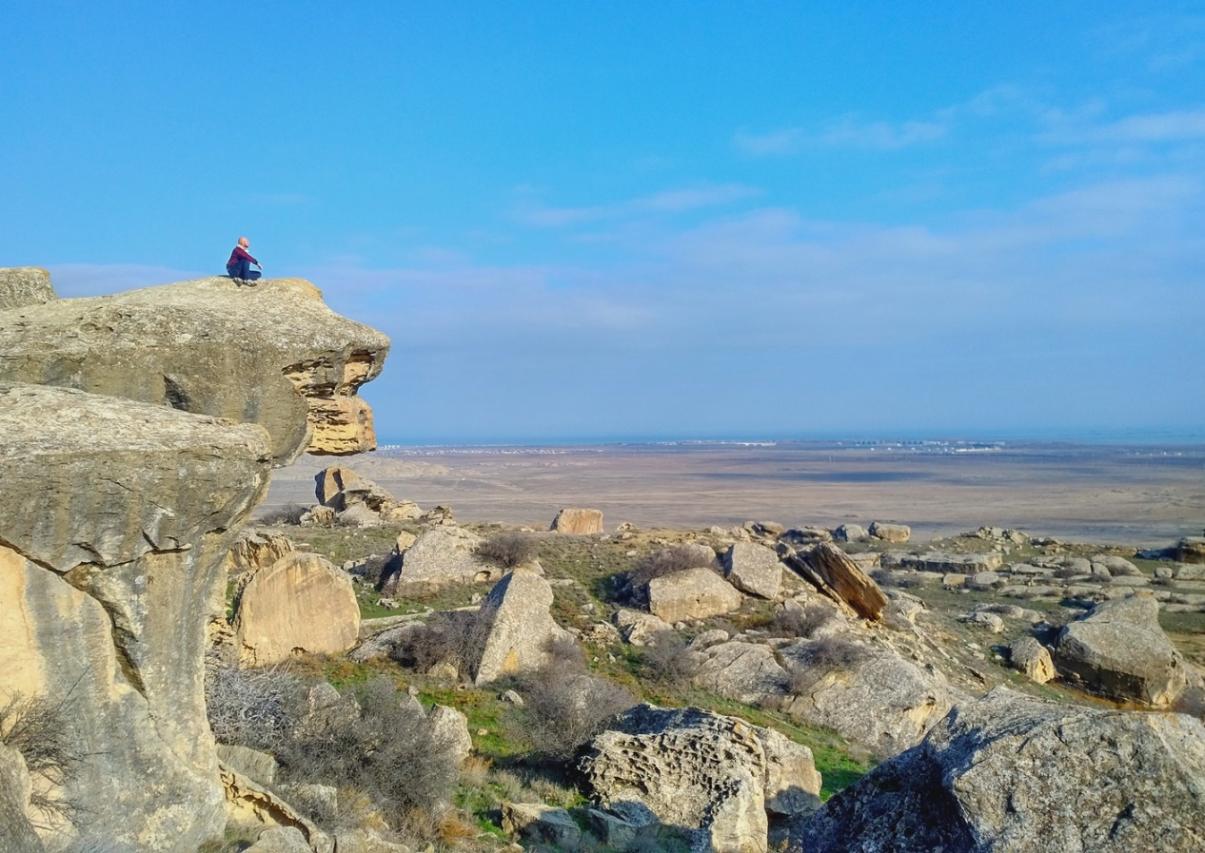
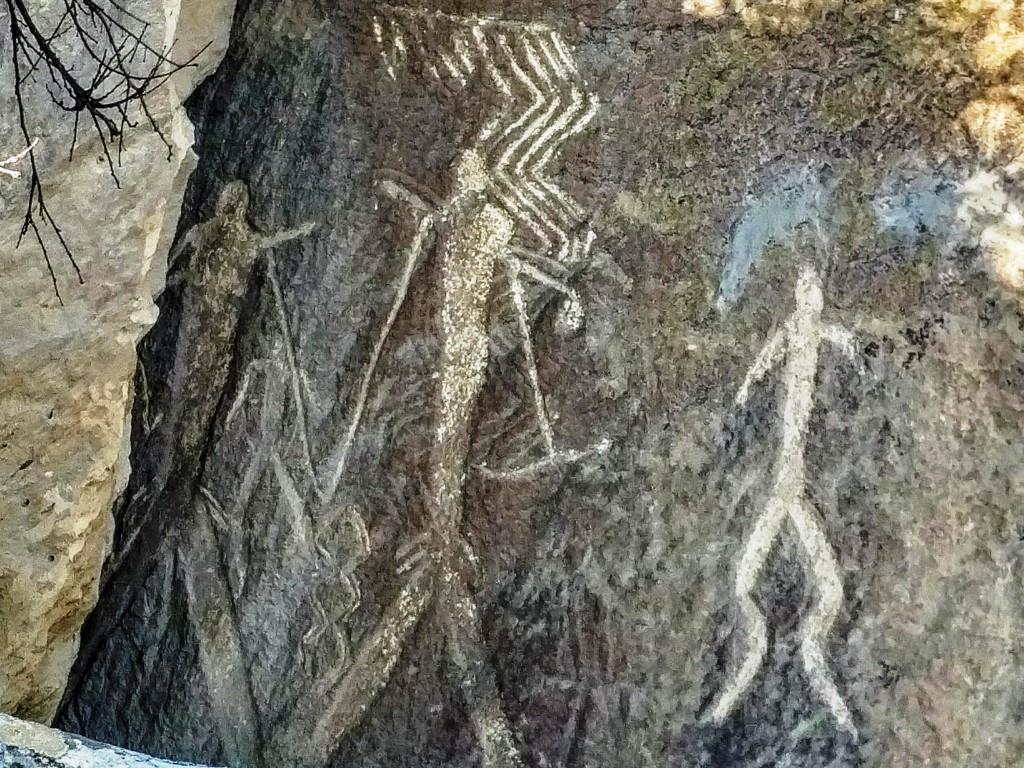

Overlooking a flat Gobustan landscape from the boulder-tastic National Park, part of the Greater Caucasus Mountain Range. Right: Petroglyph carvings dated 10,000 BC.
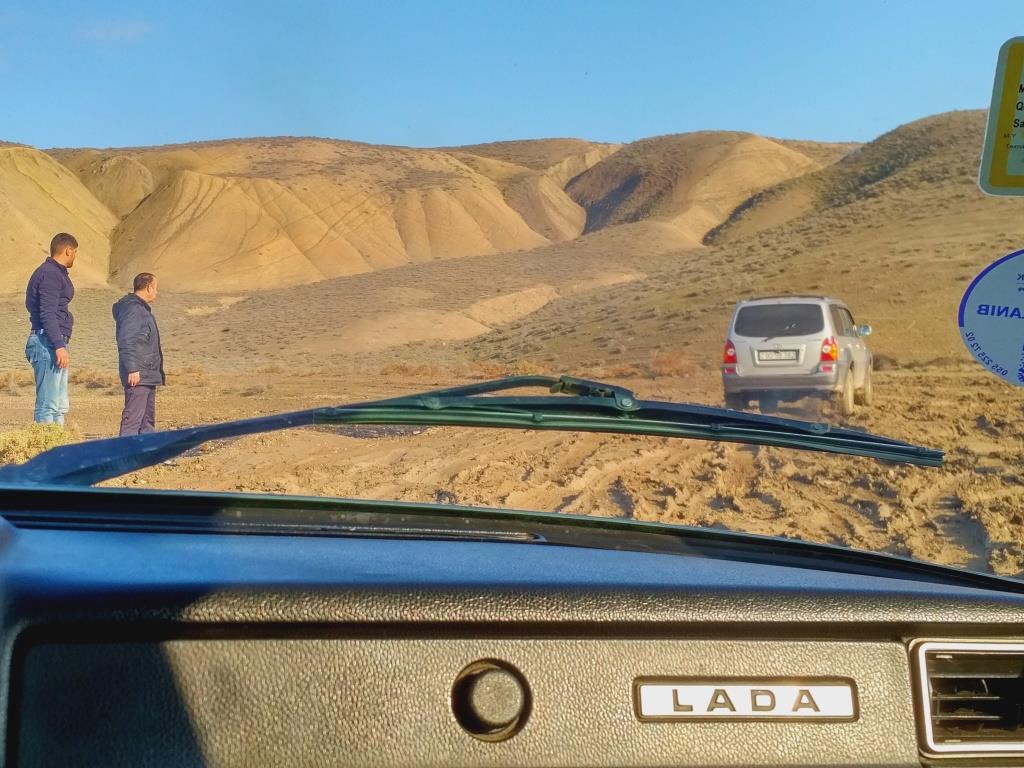
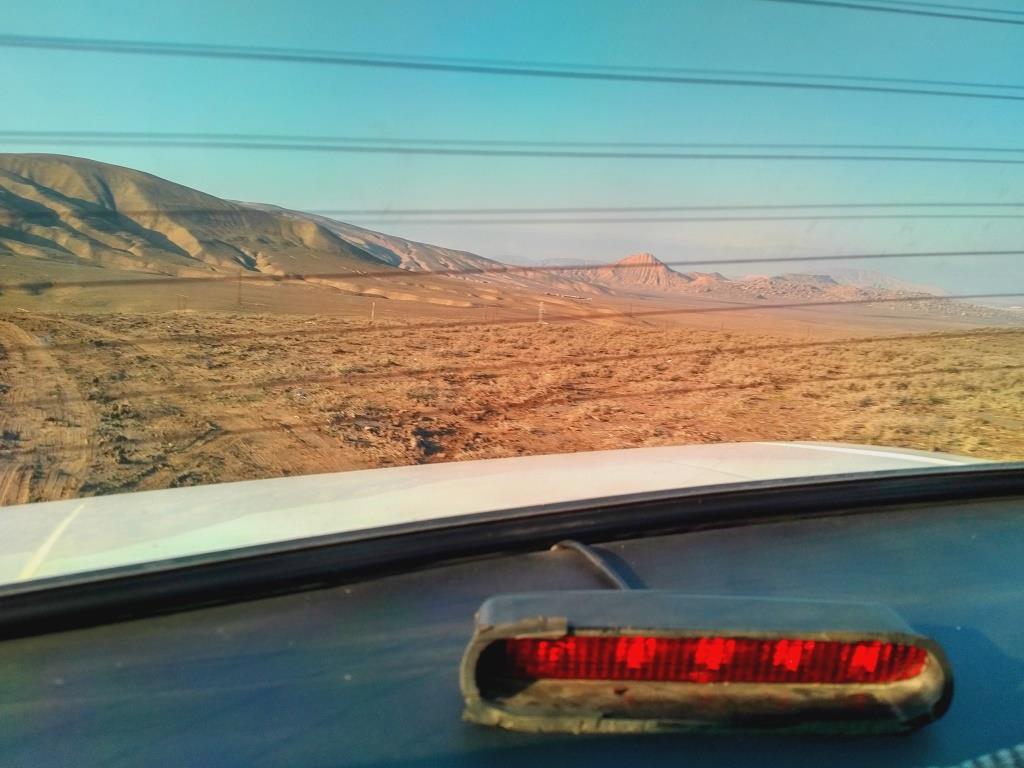
Memorable adventures in a Lada: the Gentle Giant and Driver Number One get out of the Lada to assist another motorist who is stuck fast in the mud; The striking view out of our Lada's rear window - that's adventure travel! Somehow our Lada has taken us to the moon.
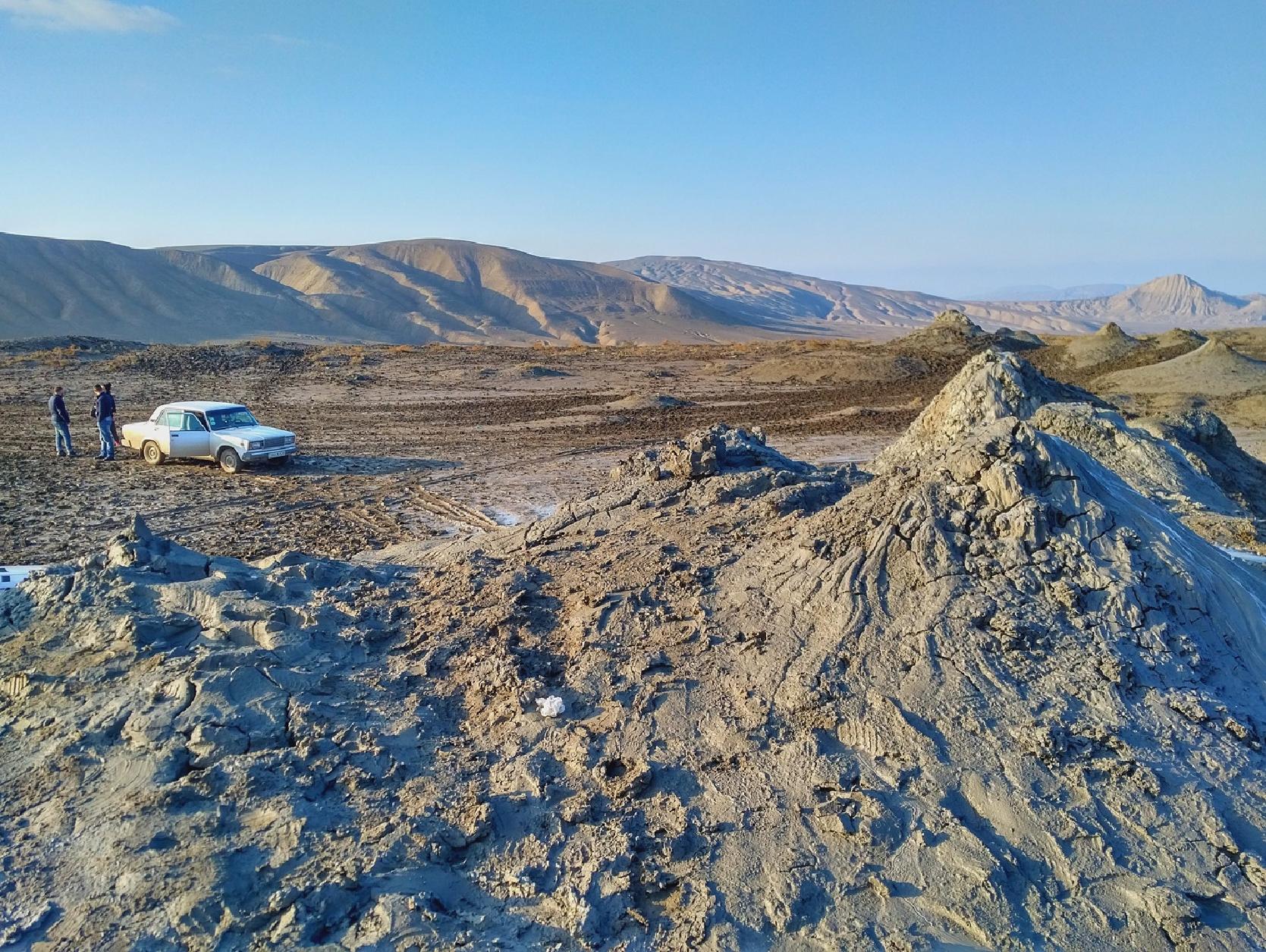
Lunar landscape [1]: a climb to the top of a mud mound afforded me an incredible view across the mountain range. I wasn't expecting this.
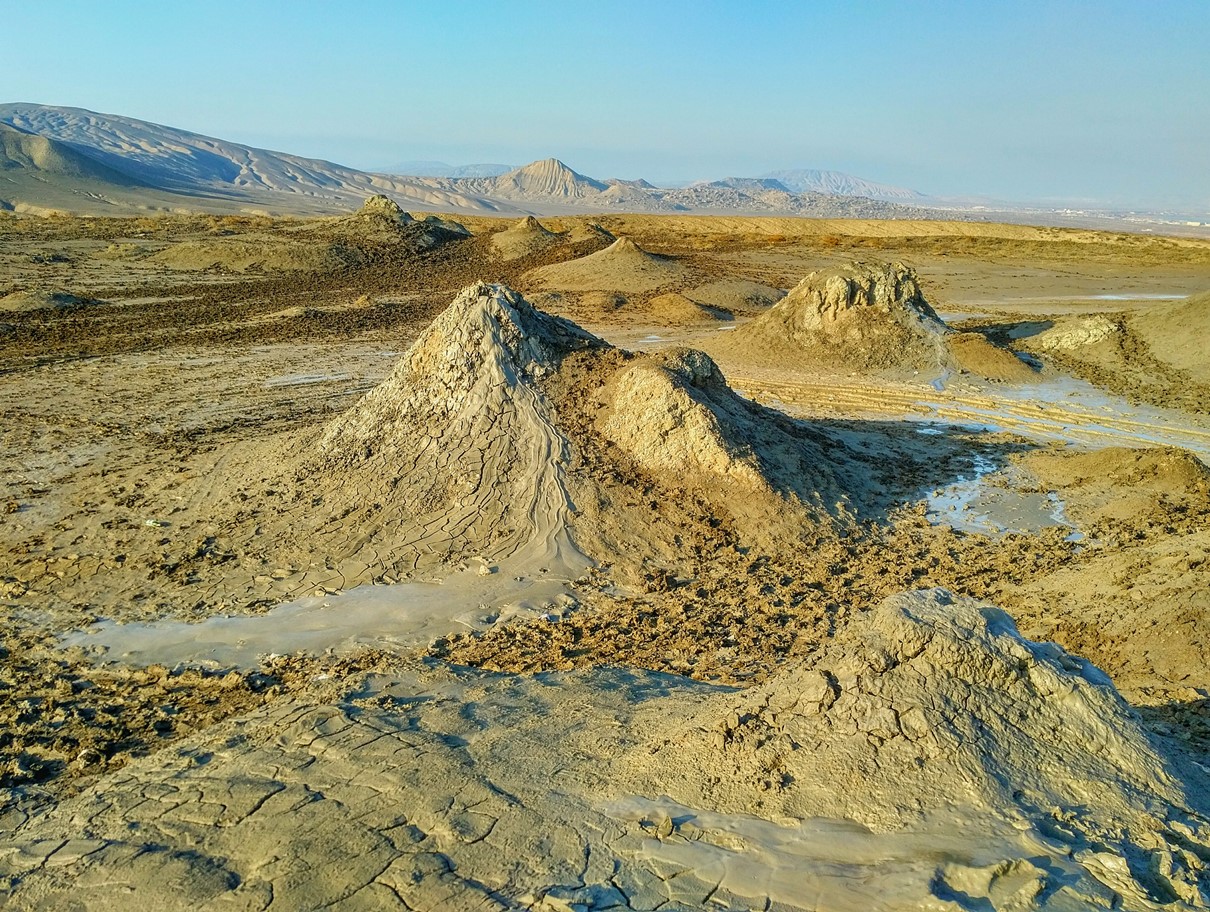
Lunar landscape [2]: mud bubbles to the top of a mud volcano amid a landscape straight out of central casting for a Science Fiction film.
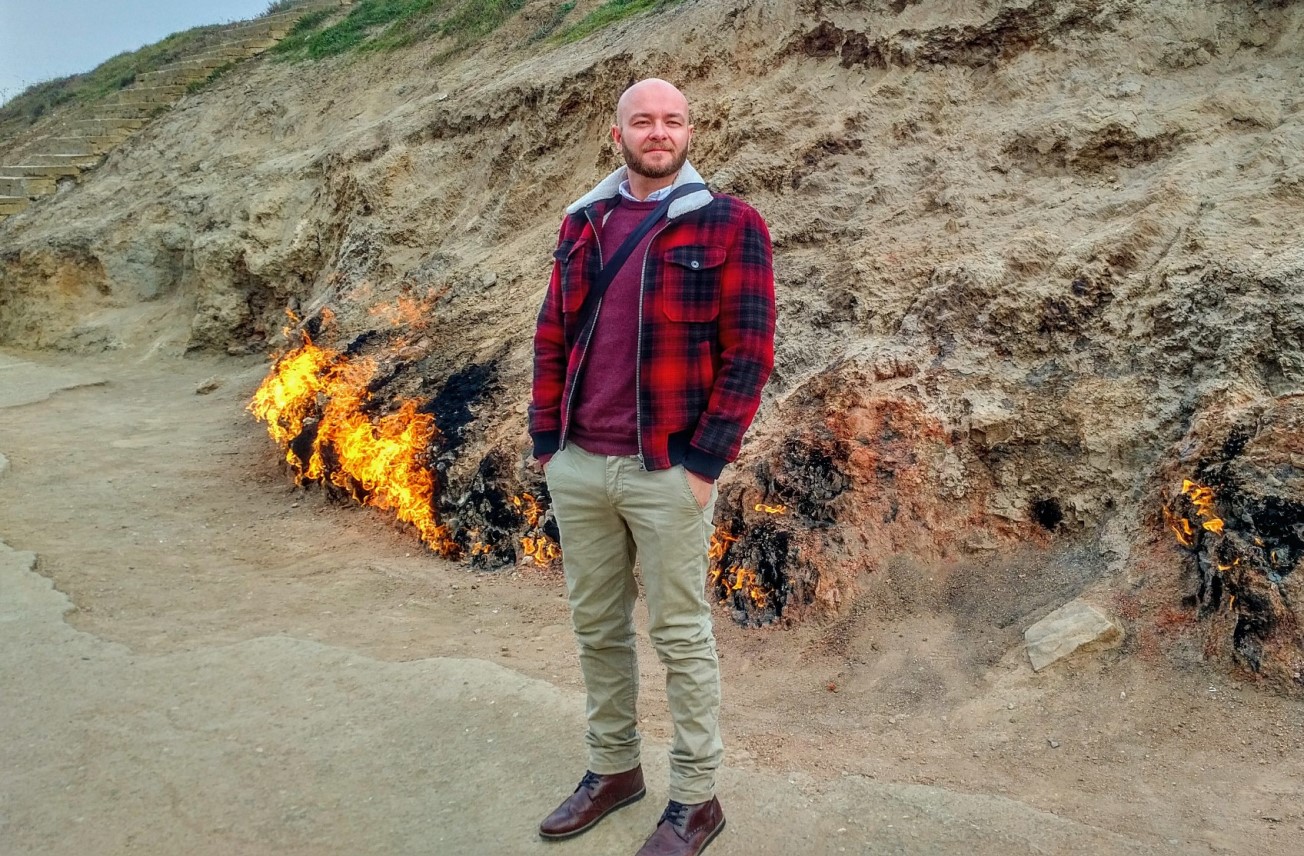
In Azerbaijan even the ground is on fire! Absheron's Yanar Dag (Fire Mountain) is the result of natural gas and a shepherd who threw a lit cigarette on the ground back in the 1950s. This mountainside has been burning ever since. The heat was intense and the smell overpowering.
china
Iconic Adventures in the Chinese Capital
China's profile looms increasingly large on the international stage. A giant country in east Asia, one with more than its fair share iconic sights and world wonders, China positively demands that you visit her. Superficially speaking, if you consider yourself a kosher, dedicated traveller, you need to have China in your travel backstory somewhere - especially if you're engaged in a personal quest to visit all (new) Seven Wonders of the World. Alongside countries such as the United States, Russia and India, China is a place that simply must be experienced first hand. At least once. China was the least-researched country of the trio of countries on our trip eastward from Europe to Oceania. Aside from the obvious landmarks and icons most of us are familiar with, I touched down in China, my 79th country, under-prepared and not really sure what to expect.
Admittedly our visit to China could have been several weeks long but, alas, was far shorter than I would have liked. I'm not of the frame of mind to claim I've "done China" when I barely left Beijing. Sure there was a lot left undone and unseen but the fact is that in travel you have to take the opportunity to experience a new country when the chance presents itself no matter how limited; a visit to Azerbaijan left us with few onward options to travel eastward and, whichever country that was to be, it needed to have a (preferably direct) airline connection down to Australia. China was the obvious choice, even though we had earmarked it to be part of bigger adventures in the future: the Trans-Siberian Express or a double country trip with Mongolia. As it was China tantalised us with her sights and teased us with her culture during our limited four-day stay in her capital Beijing.
When seen from above, Beijing is an unremarkable, even depressing, city to behold. No single building dominates; surprisingly Beijing doesn't have a dramatic skyline to speak of, almost expected of major capital cities these days. A trip up to the top of the old China Central Television Tower in the city's west confirmed that, from a distance at least, Beijing was not exactly photogenic. In the biting winds and sub-zero temperatures of the exposed observation deck hundreds of metres above the city, and seemingly risking frost bite on my hands in doing so, I did in fact take a couple of photographs of Beijing from above - not because it was beautiful but only because I'd paid around £10 to get up there in the first place. I realised there was a reason that, when news programmes feature a story about the Chinese economy, they default to stock footage of a glitzy Shanghai skyline and not the Chinese capital. That's because Beijing doesn't really have one.
It's just as well then that I've always found glass tower-dominated skylines a little vacuous and soul-sapping anyway; initially dramatic, they are devoid of culture, character and a sense of people and place. And, as I was to find, Beijing, whilst vast, is a low-level city on a more human scale, one which needs to be experienced at street level with, perhaps, the vulgar excesses of corporations and capitalists to build skyward reserved for other unluckier Chinese cities. Beijing is a city of small alleyways selling unidentified fried creatures on sticks; a city with small open air stages for local opera mime artists to perform when they fancy; it's the city of the Hutong and city of the bicycle. Beijing is a city whose character is to be found at street level only. Dramatic cityscape enthusiasts need not apply.
After a much-needed four hour daytime sleep on arrival in Beijing to stave off the worst of the jet-lag from our flight from Baku on Azerbaijan Airways, we found ourselves hot-footing it in the dying winter daylight to what is the world's largest, and certainly its most notorious, public square. I challenge you to hear the words "Tiananmen Square" uttered and to not have the shocking footage from 1989 of 'Tank Man' standing in front of a line of rolling army tanks playing over in your mind . Tank Man's identity, and indeed fate, remain unknown. This enduring image is etched into the minds of Westerners who refer to this as the "Tiananmen Square Massacre" but also in the minds of the Chinese themselves who refer to this more ambiguously as the "June Fourth Incident". This 'incident' goes a long way to explaining the unpalatable level of security we experienced in and around Tiananmen Square. What is the world's largest expanse of public square has been carved up with the use of seemingly kilometres of metal fencing which is designed to restrict access and slow down the flow of people to a snail's pace. Airport-style security, complete with passport check, bag scanners and rub downs make a visit to Tiananmen a thoroughly frustrating, and anger-inducing, experience. Giant lampposts in the square house speakers, flood lights and at least a dozen CCTV cameras each. The over-zealous security staff, some undertaking their duties with a robotic sadism, show that this is no light-hearted security effort. It's also difficult not to notice mobile police vans and checkpoints on approach to the square itself, as well as soldiers goose-stepping in their fives or sixes, nor the police with riot shields and gas canisters. On several occasions I noticed that, as foreigners proffering their British passports, we were treated more leniently than what I presume were local people; indeed, at one point we were positively waved through blasé fashion. It was clear, then, what these security measures were all about: controlling Chinese citizens. I've been to police states and countries run by the military before but, I have to say, I found the whole experience truly confronting. And this, my introductory experience of China, was to leave a lasting impression, one which tainted my perception of everything else from thereon in.
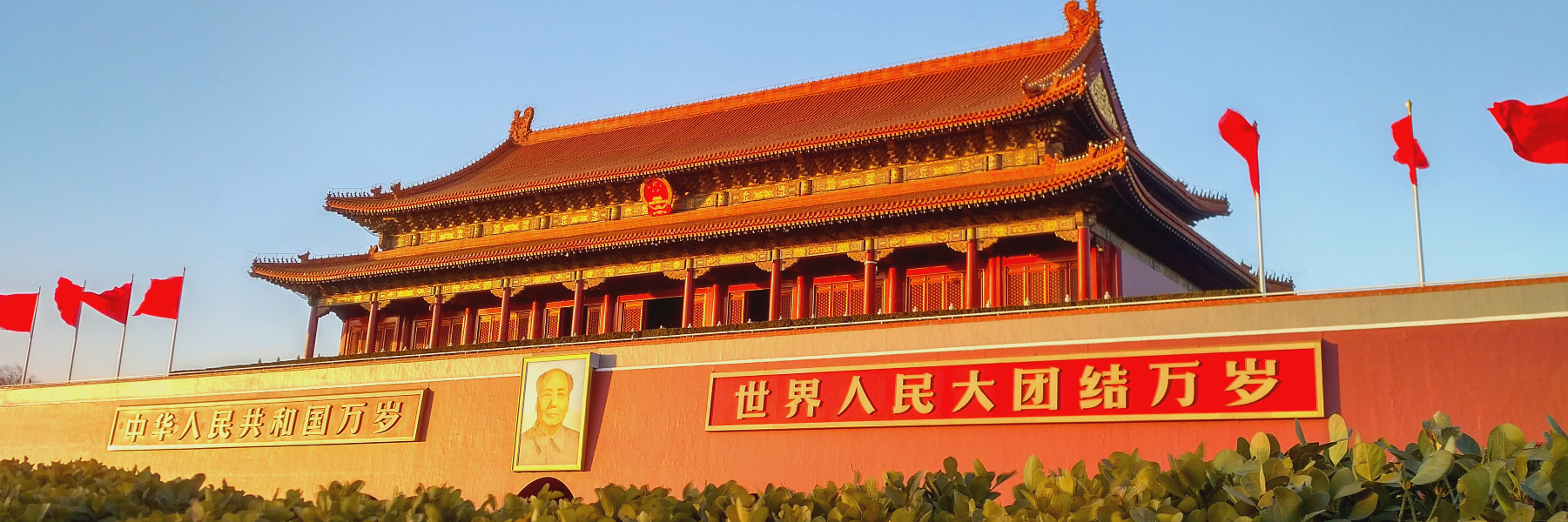
Having gained access to this most infamous of squares we were faced with another icy chill, although this one was purely meteorological; the square's vast open space provided the perfect conditions for the icy wind to gather strength. As the sun began to set, the temperature plummeted and thus, our experience in the world's most infamous of places was short-lived - just long enough for me to photograph the iconic portrait of Chairman Mao above the Gate of Heavenly Peace lit in the orangey gold of a winter sunset.
From the largest public square in the world to the largest palace complex in the world, the next day we set off for the glorious Forbidden City built by a million labourers and home to the Emperor until as late as 1924. Confusion about how and where to purchase entry tickets meant that this most popular of Beijing sights absorbed a significant portion of our day. Just north of The Forbidden City, a further ticket purchase permitted us entry to Jingshan Park from which we could survey the giant palace in all its glory from a high vantage point. There was just enough daylight left to head to the Bell and Drum Towers and the Hutong in the central Dongcheng district where, as luck would have it, we also discovered a great coffee chain called Caffè Bene into which we positively threw ourselves for a much needed hot drink and cake out of the ferocious biting cold.
A trip to Beijing is a golden opportunity to walk along the famous Great Wall of China and, from Beijing, there are two main options: Badaling (at 80 kilometres north of the city it is the nearest but also most visited and therefore the most commercialised section) and Mutianyu (further outside of the city with less visitors). I am very glad we ended up at Mutianyu (by default rather than by design) because, off season and harder to get to, there were times when we had entire stretches of the wall, between its 26 Ming-era watchtowers, entirely to ourselves. Aside from a group of Americans, an Italian couple and, bizarrely, a stray cat, we walked the 3 kilometre stretch of Mutianyu without much human traffic to spoil the experience. The beige blocks of the wall snake up the taupe-coloured scrub of the mountainside and, set against the deep purples of the wider mountain range in the distance, cut a dramatic sight; this stretch of the Great Wall in winter is a travel photographer's dream. Mutianyu is a rare chance to photograph an iconic wonder of the world without half of humanity being there with you. Of course, I never expect to have such places like this to myself when travelling - it's just great when luck goes your way and it's just you + camera + world wonder.
Having had my bones frozen from the outside in while travelling around Belarus and Azerbaijan, my stamina for more cold had long run out. With daytime temperatures now hovering around -3°, and with the wearing of multiple layers just plain ineffectual at keeping out the Beijing cold, our choice to hire a driver for a day was, in my opinion, clearly the safest one - especially so because taxi drivers in Beijing, we discovered the hard way, are extremely reluctant to stop for Western visitors. The thought of being stranded in an unknown part of Beijing in sub-zero temperatures trying to see the sights and unable to get a taxi back to the warmth of the hotel was a worrying one. So, for the princely sum of 700CNY (around £80) we saw the Chinese capital's musts the easy way and, more importantly, the warm way. First stop was the Summer Palace perched on the banks of a very frozen Kunming Lake, then Tibetan Buddhist Lama Temple complete with Monk asleep in the corner and wafting incense, the aforementioned CCTV Tower with views across Beijing and the bizarre CCTV headquarters known locally as 'Trouser Tower'. Our last and final stop was Caffè Bene for a coffee and an obligatory, and rather Chinese, Cinnamon Honey Bread. We'd seen everything we had wanted and avoided frost bite in the process.
It's a sad fact that the glorious and the notorious coexist uncomfortably in the Chinese capital. I struggled to reconcile the beautifully ornate lakeside palaces and technicolour pavilions and temples with the overt militarism and oppressive security enforced by the communist state. Beijing is indeed a city with a split personality. China - country number 79: complete.
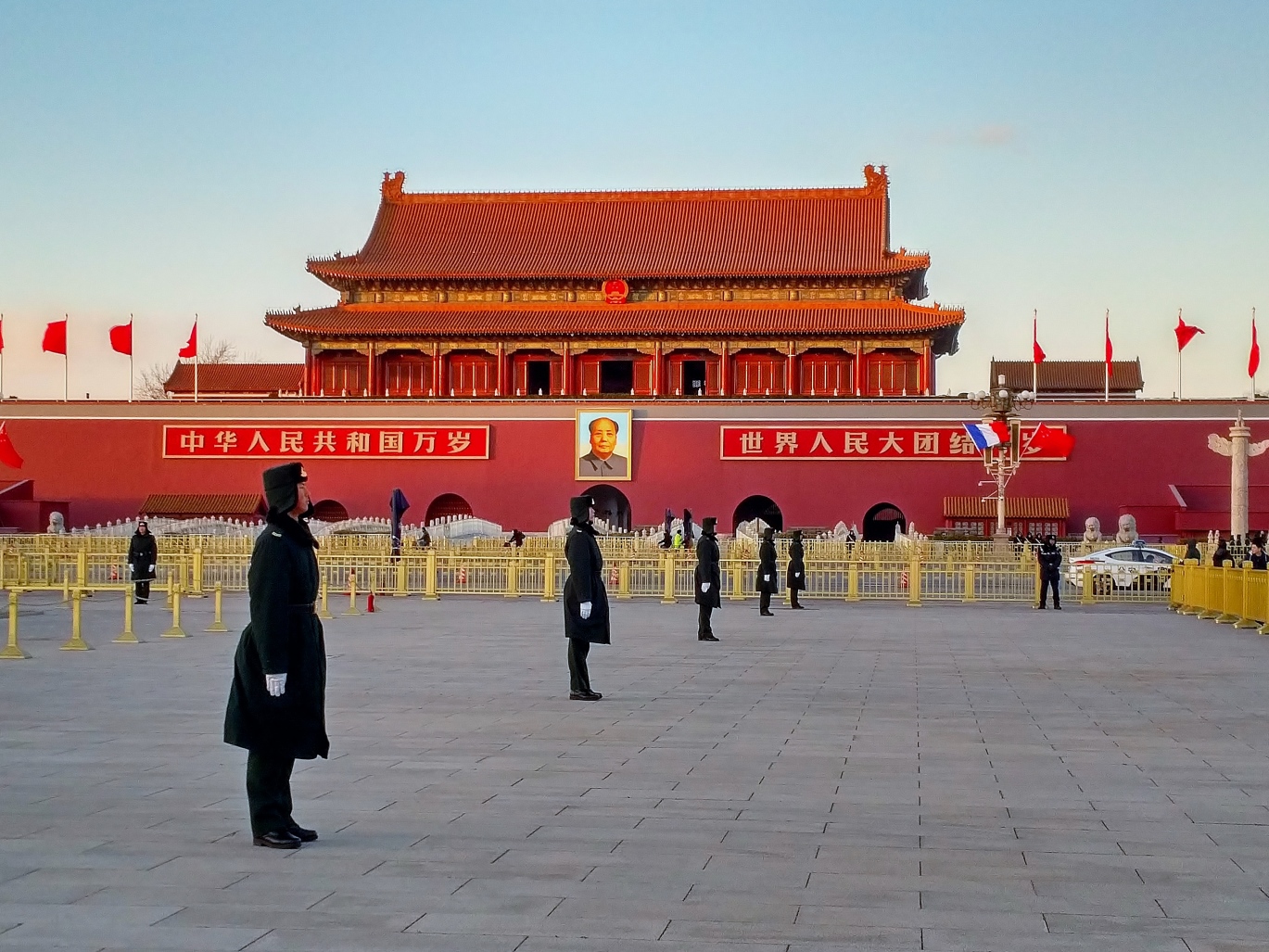
Soldiers stand guard outside the Gate of Heavenly Peace in Tiananmen Square featuring the iconic portrait of Chairman Mao.
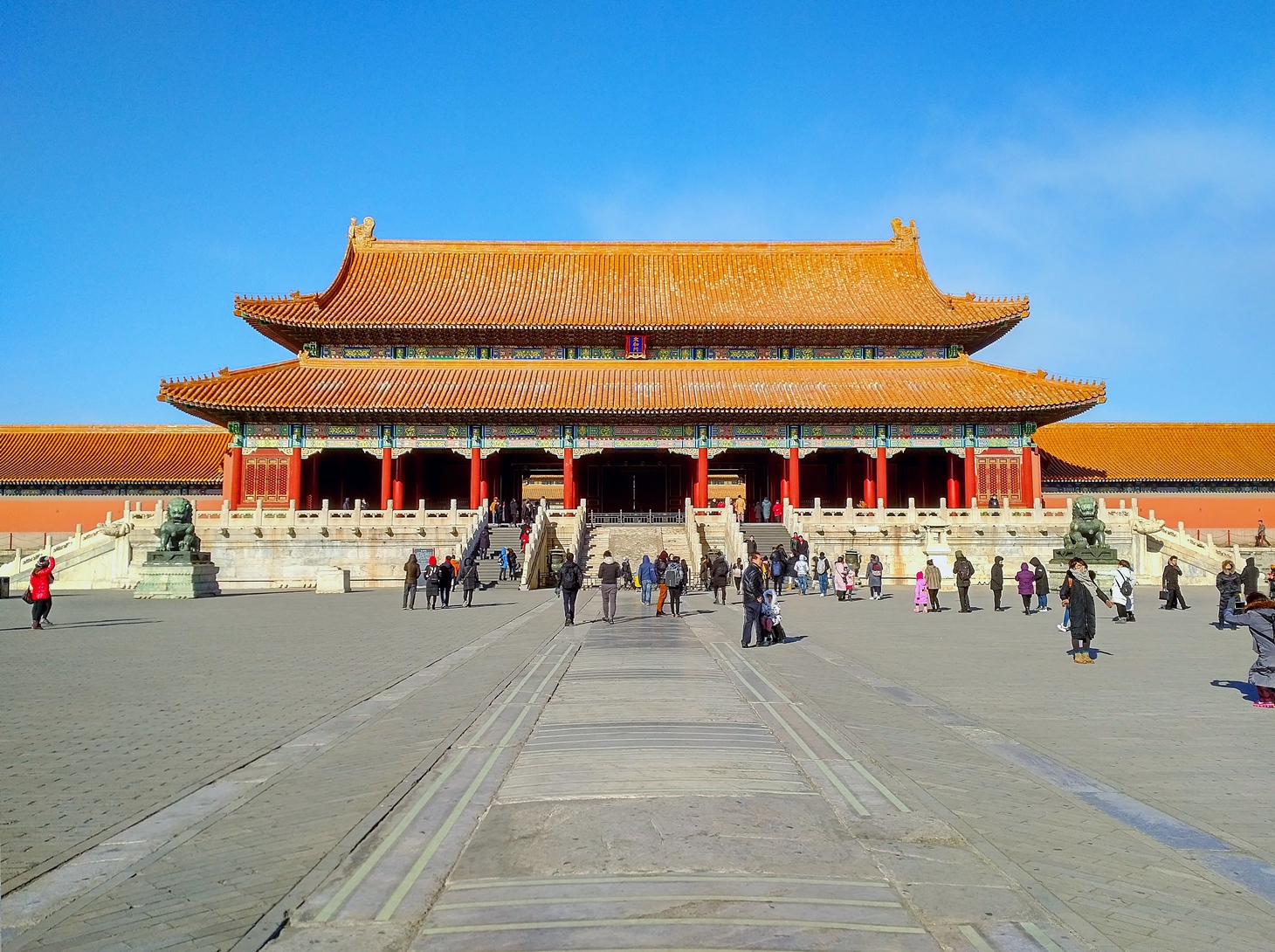
Inside The Forbidden City: The Gate of Supreme Harmony.
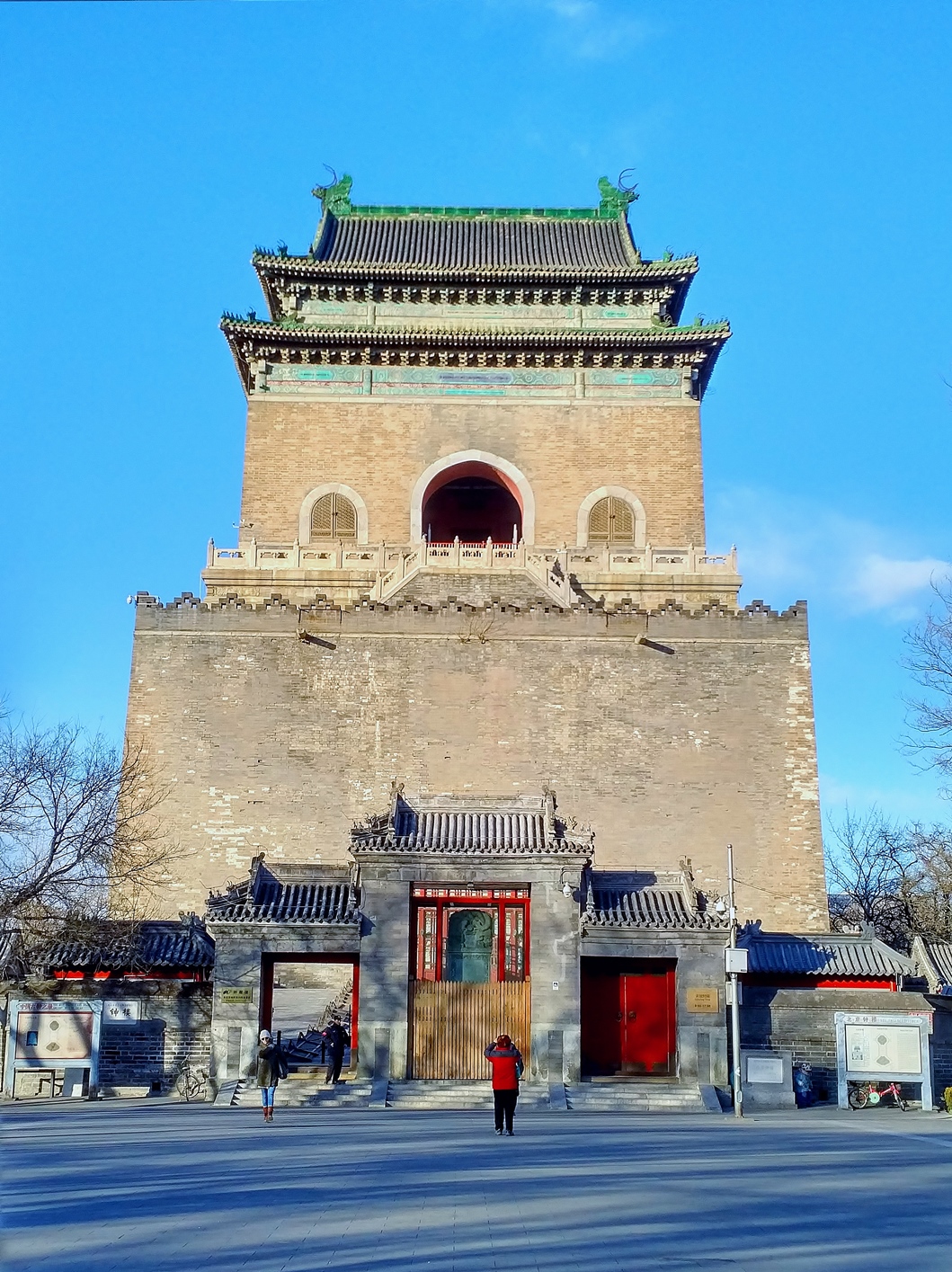
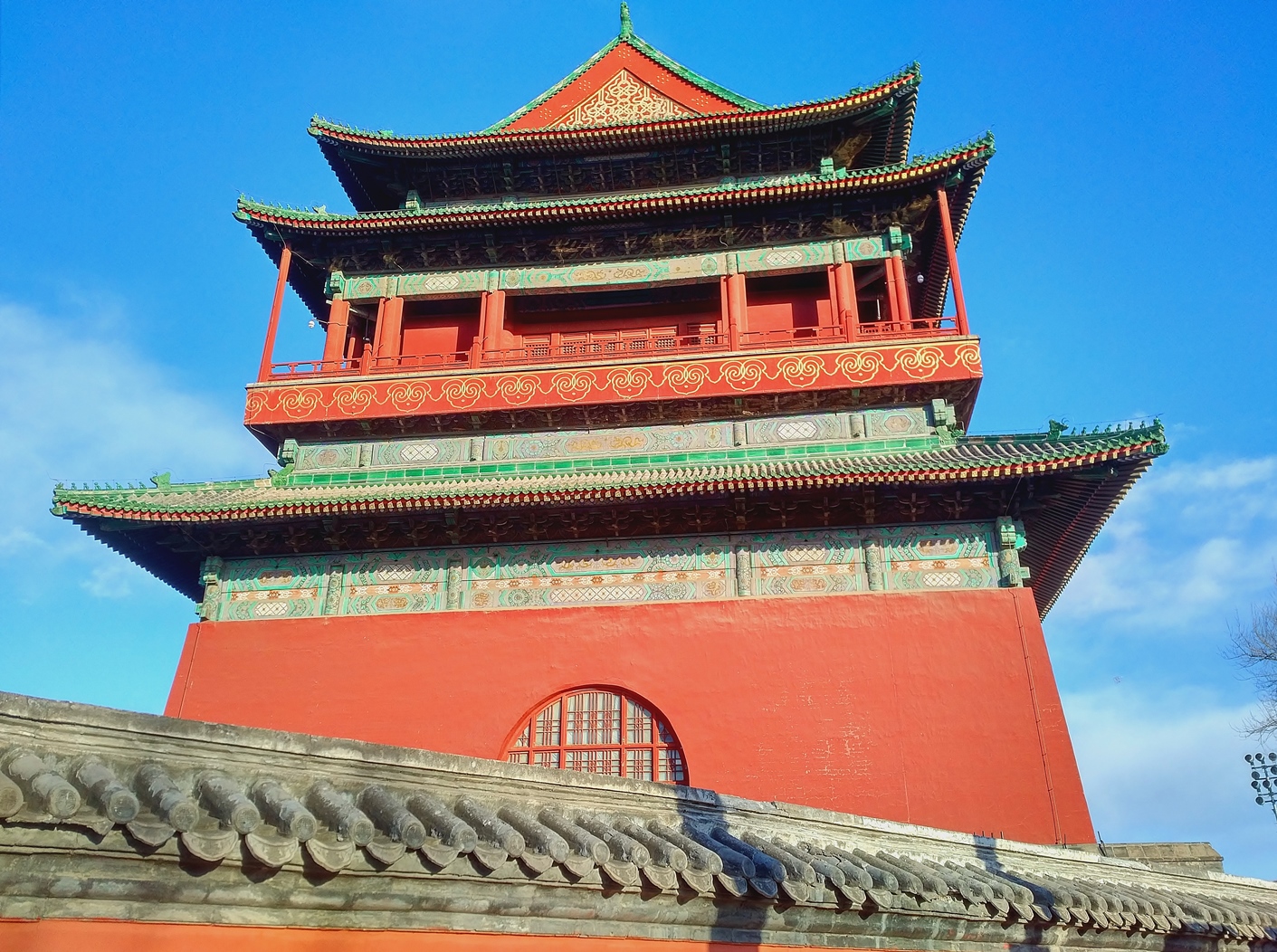
The Bell Tower dates back to 1420; The Drum Tower was used to announce the time (the drum was played at night and the bell at daytime).
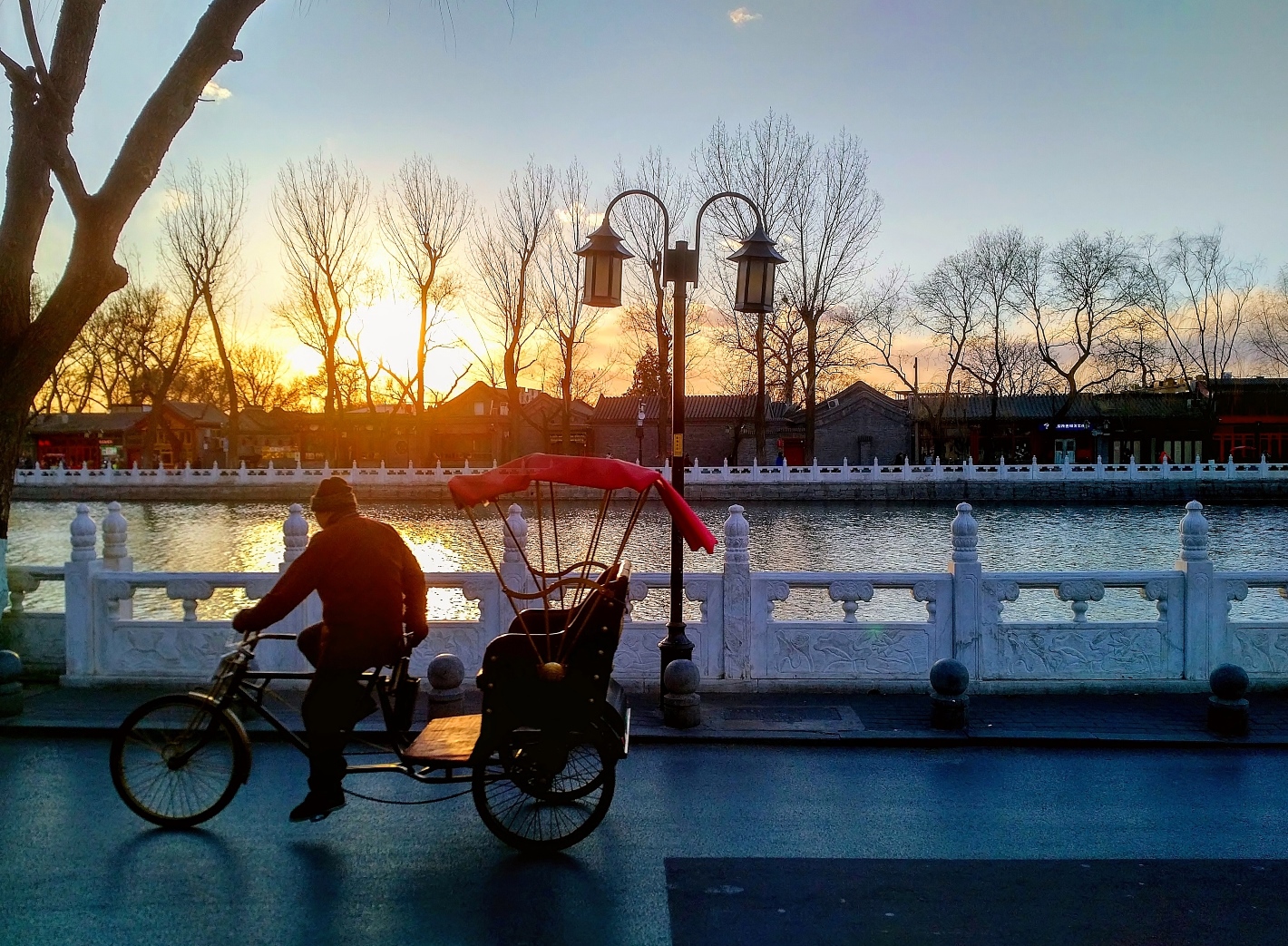
A rickshaw driver is silhouetted in the sunset in the traditional Hutong district of Beijing. The river here is completely frozen.
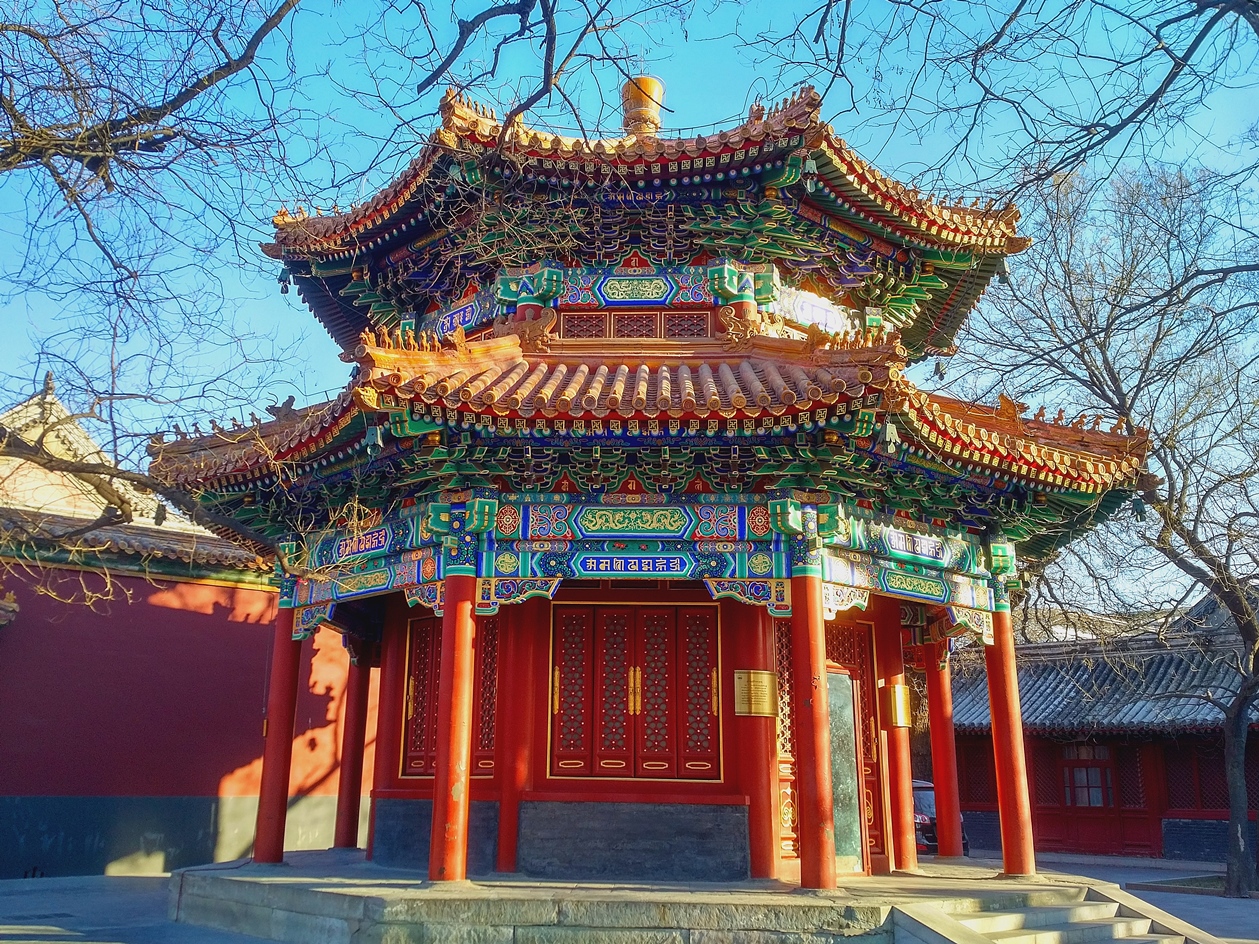
The West Tablet Pavilion at the entrance to the Lama Temple.
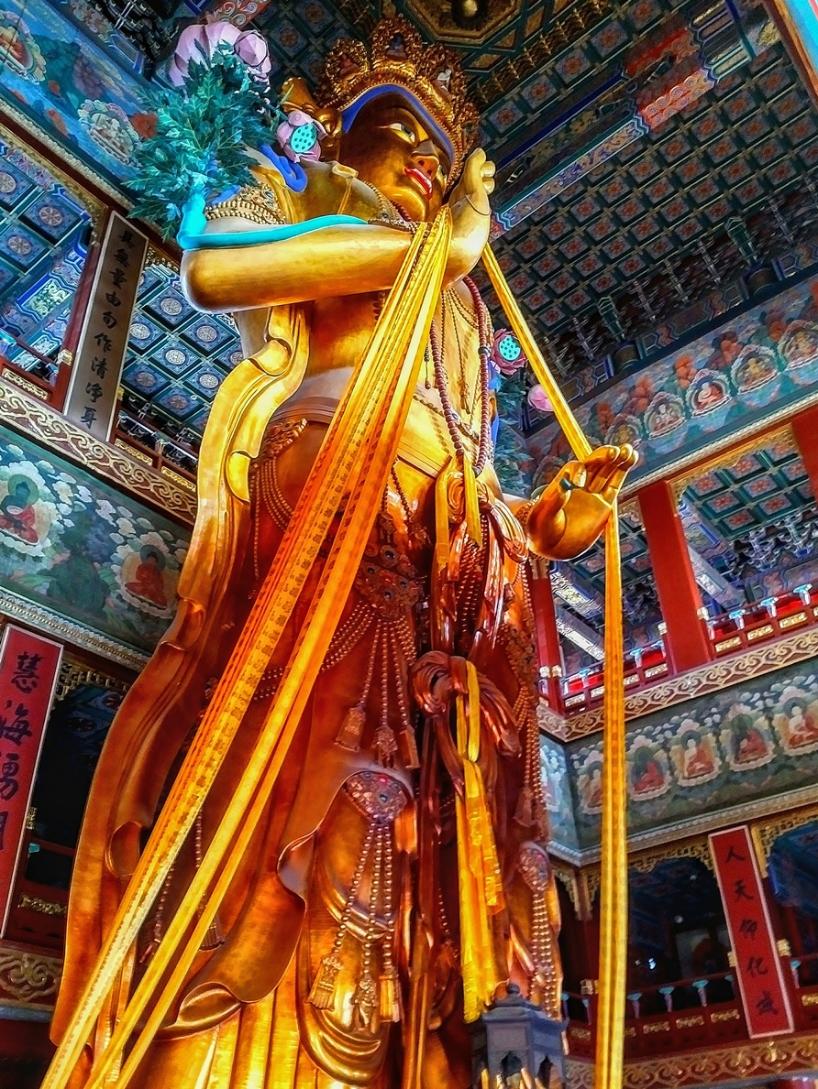
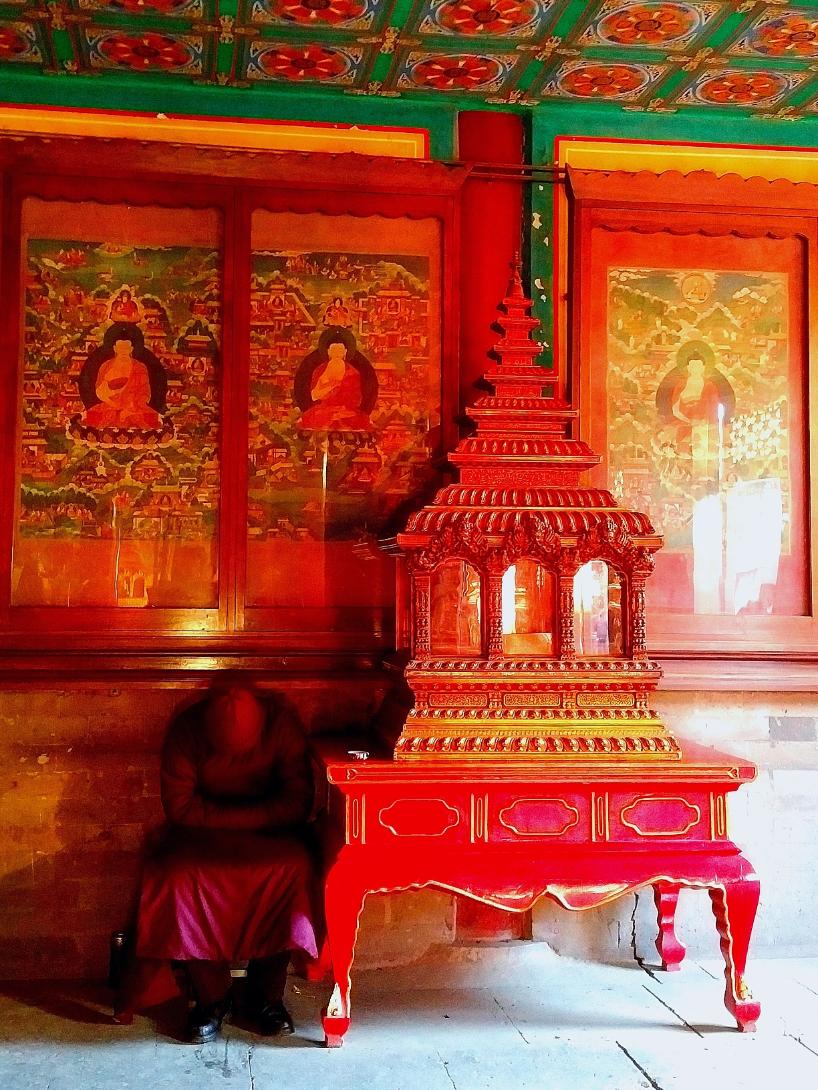
The Lama Temple's giant gold Buddha carved from the trunk of a single Sandalwood tree; A monk takes a break in the Lama Temple.
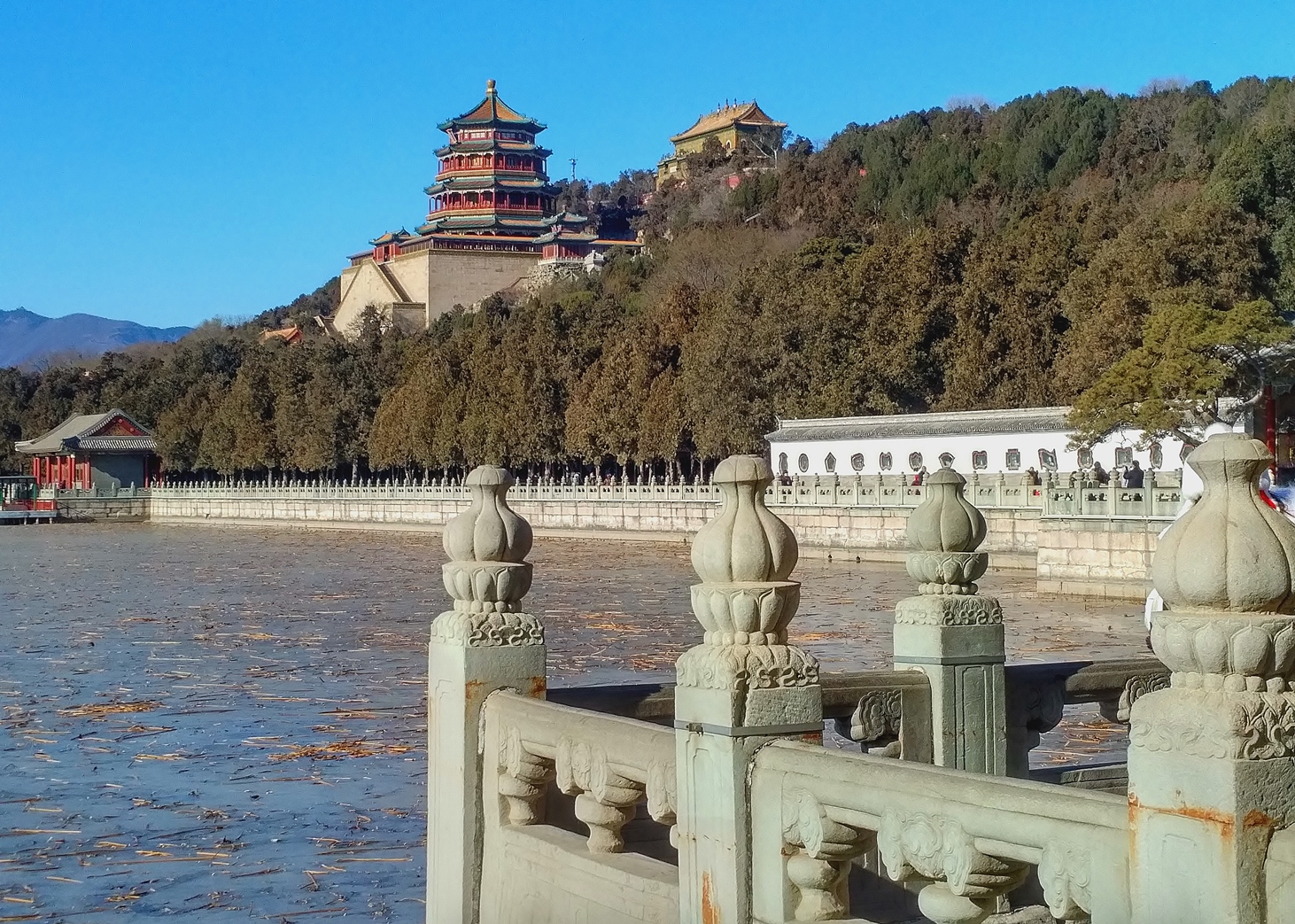
The Tower of Buddhist Incense of the Summer Palace surveys a frozen Kunming Lake. Temperatures rarely got above freezing during our time there.
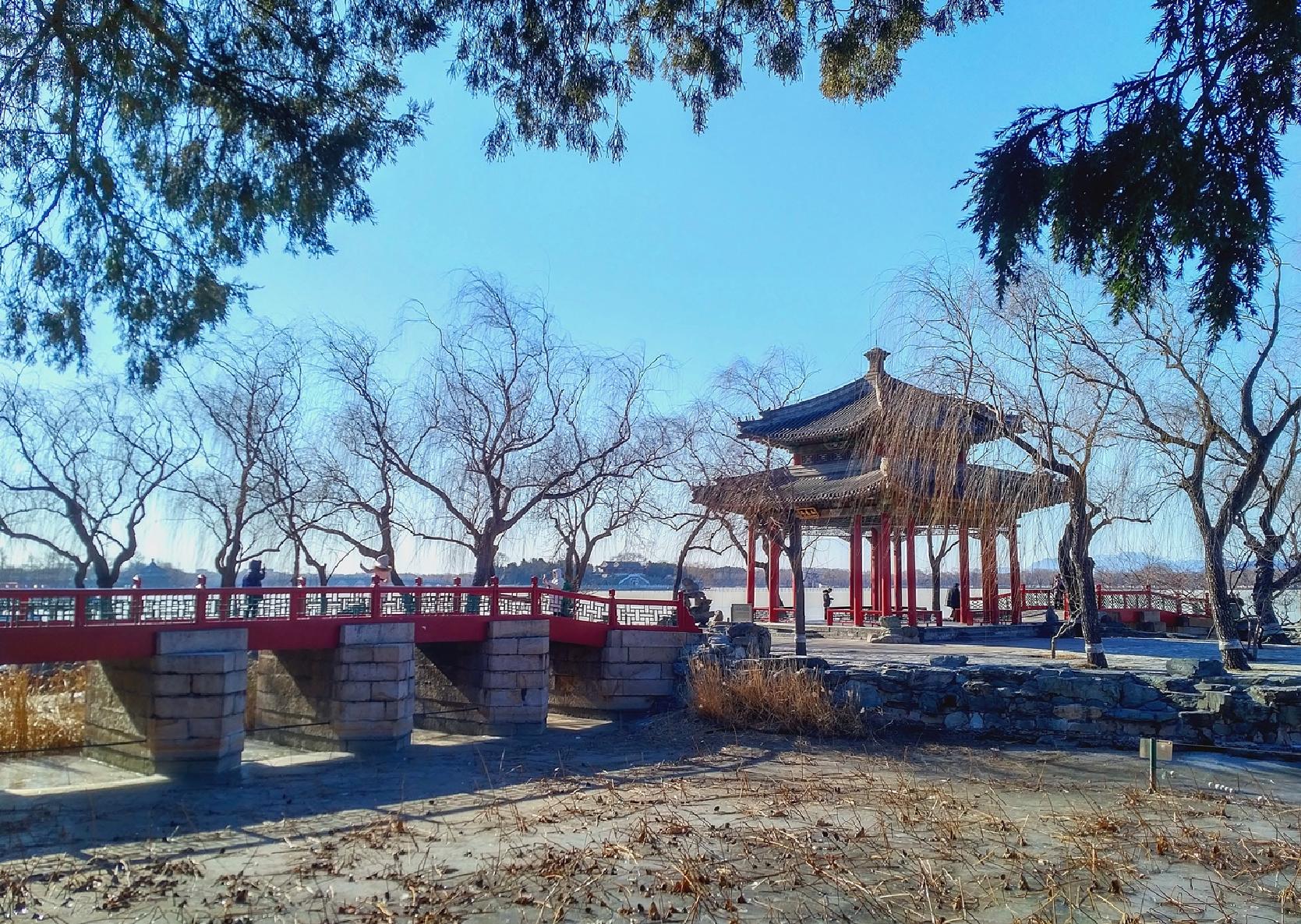
A decidedly wintry Summer Palace: a small bridge surrounded by a frozen Kunming Lake.
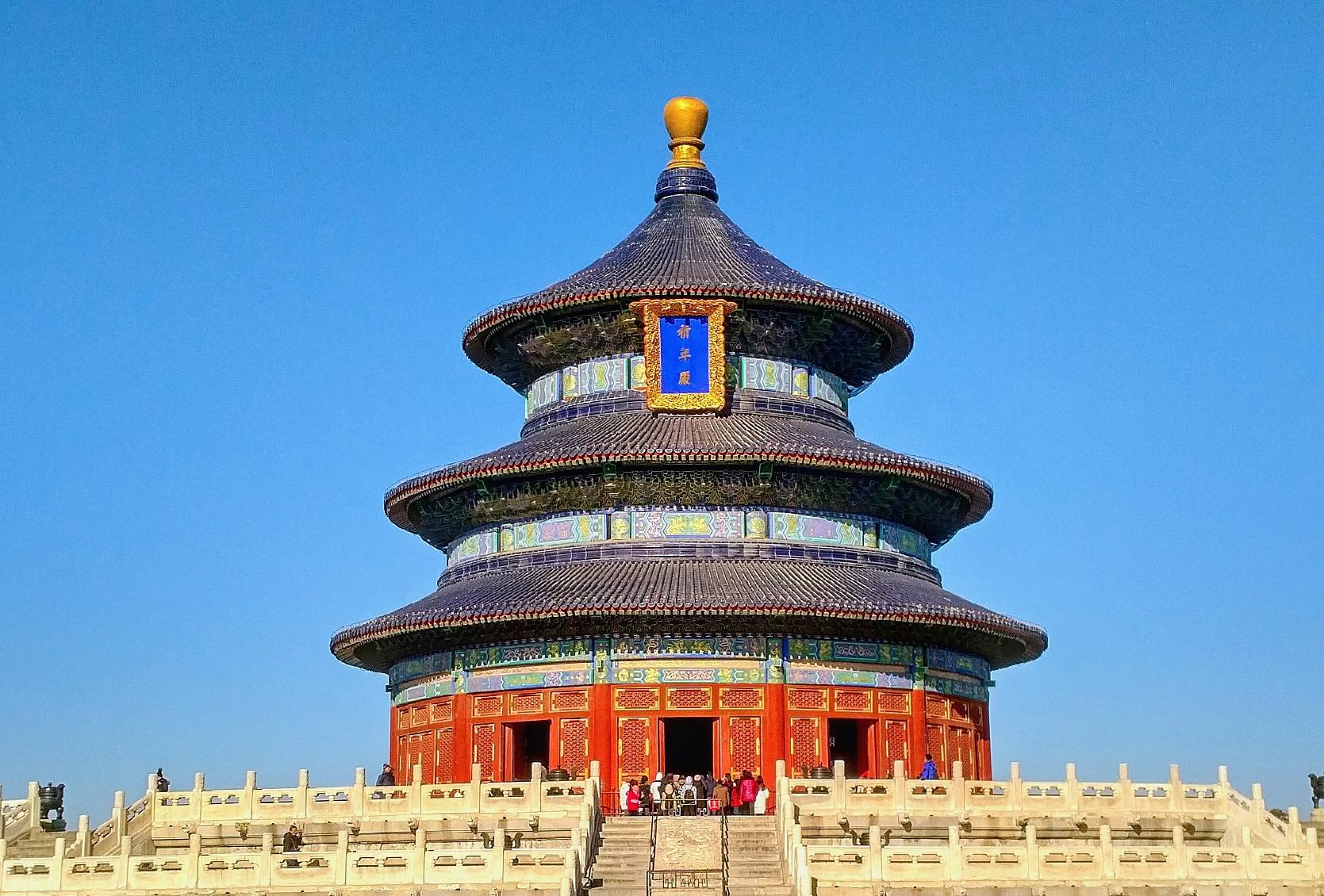
The Hall of Prayer for Good Harvests at the Temple of Heaven. A cold blast from Siberia meant that the infamous Beijing smog was blown out to the East China Sea blessing us with these deep blue skies.
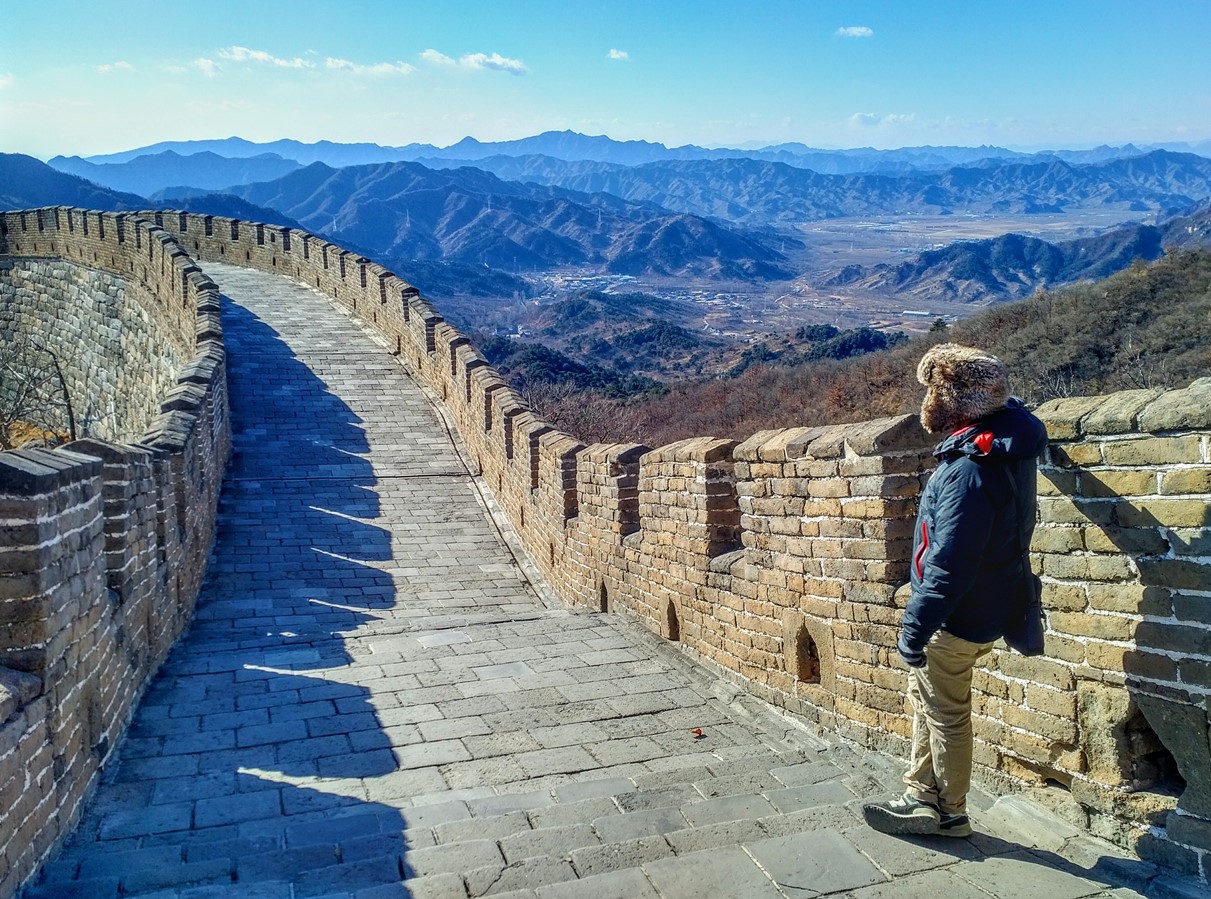
Walking over two kilometers of the Great Wall of China at Mutianyu.
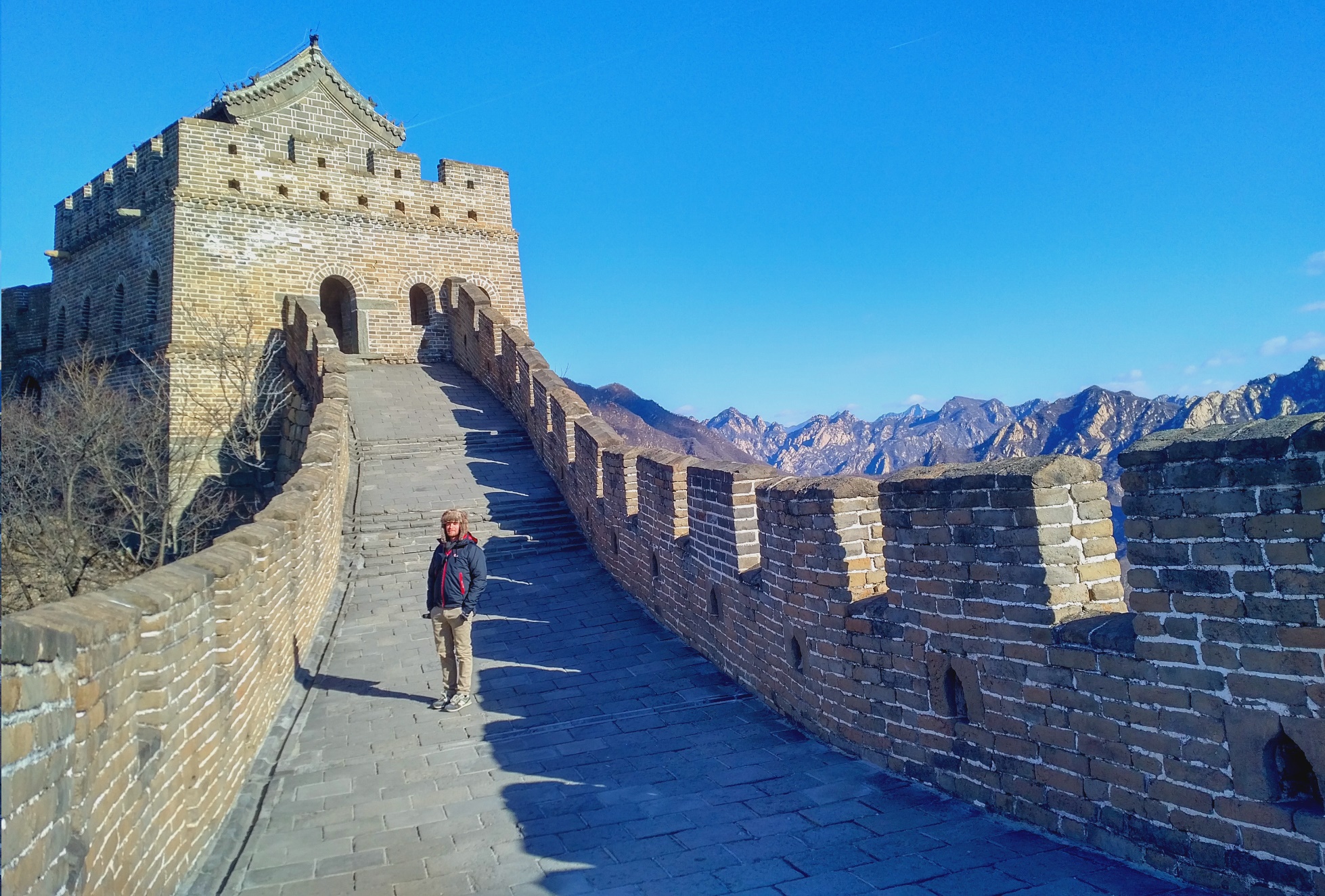
Walking over two kilometers of the Great Wall of China at Mutianyu. It's -5° and I'm wearing everything I own.
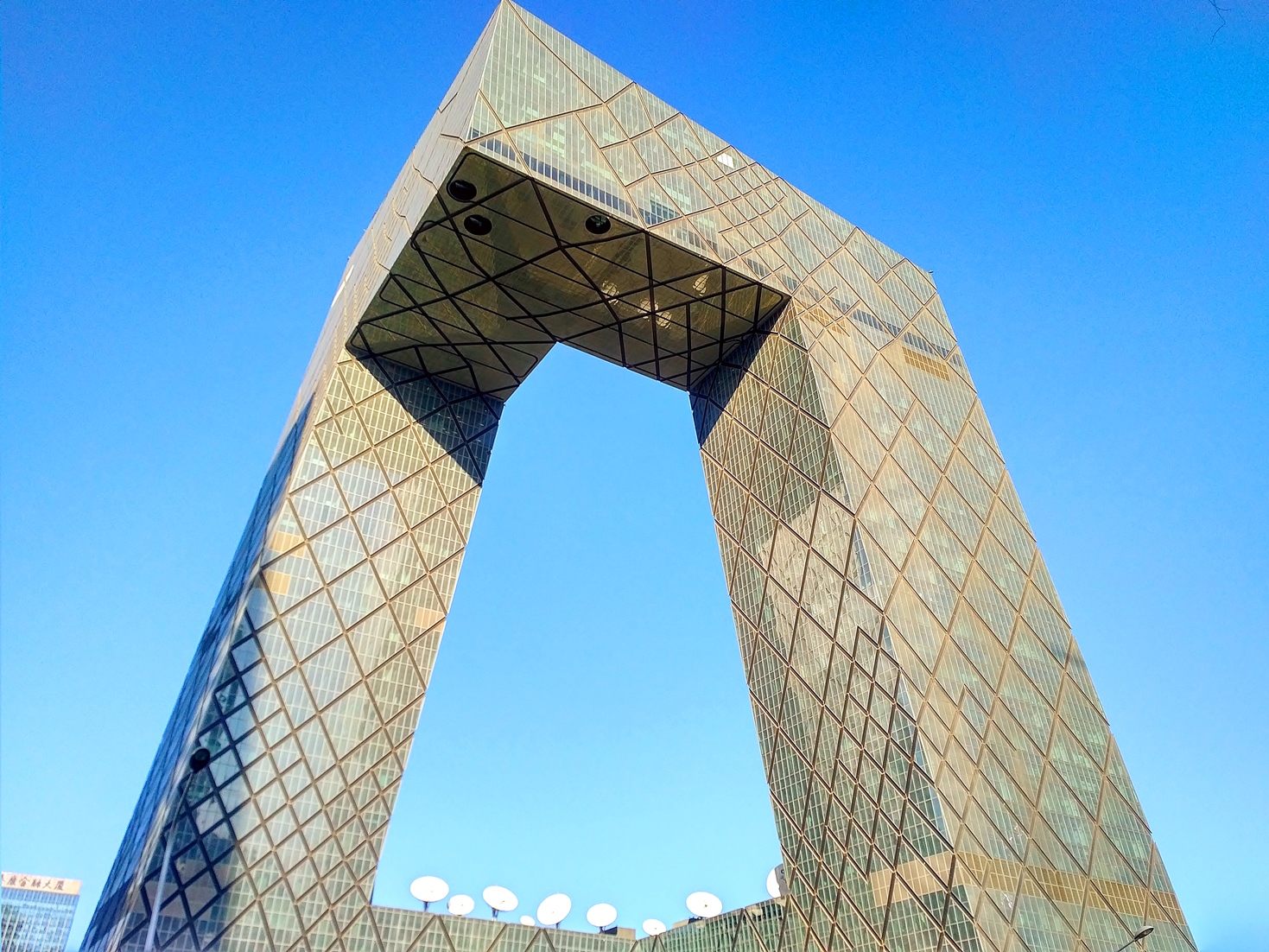
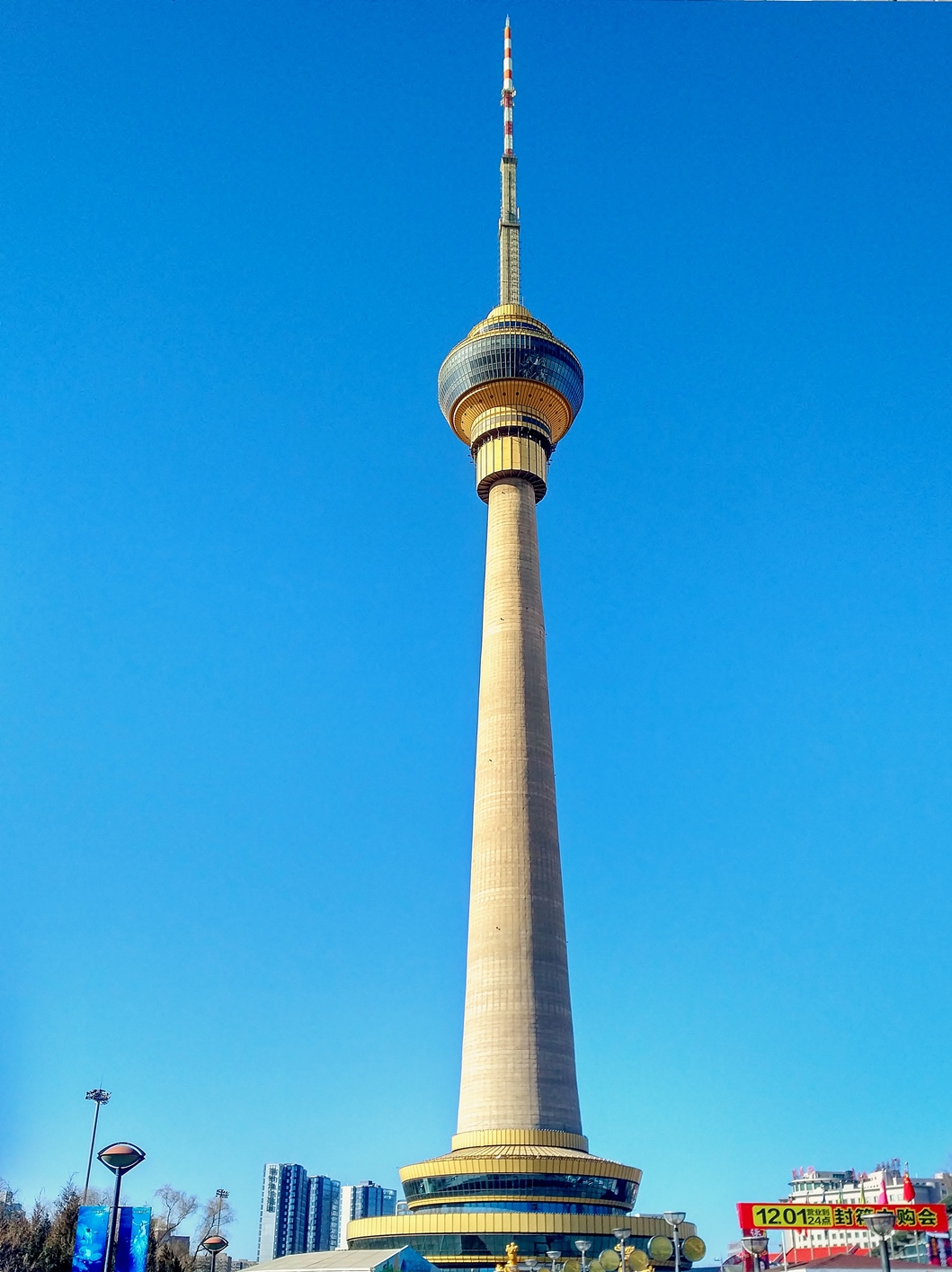
China Central Television: the Trouser Tower. For a state where freedom of speech is tightly controlled, the Chinese broadcaster has the apt acronym of 'CCTV'; The Central Radio and TV Tower on the western edge of Beijing.
travel tips, links & resources
- Changes to Belarusian visa entry requirements can change overnight. It's important to keep an eye on any changes after you've booked your flights. Whilst swift changes benefited me, it does, however, suggest that negative changes can happen just as swiftly.
- Belarus is a dictatorship. It is therefore advisable that you are careful about what you say and where you say it. It would be worthwhile saving your political rants, online or off, about freedom and democracy for when you get back home. Rumours abound that hotel rooms used by foreigners are routinely bugged.
- Gay and Lesbian travellers should tread carefully, too. Belarus is intensely homophobic and to this end it would be advisable to leave the rainbow flag at home during your Minsk city break.
- It’s obvious but being able to speak a few basic Russian words is the only way you'll up your chances of receiving a smile in Belarus. Knowing 'good morning', 'good evening' and 'thank you very much' goes a very long way in Belarus and will help to break the ice with sometimes suspicious locals.
- It is vital you take evidence of comprehensive medical insurance with you and that documents show the level of cover and the name of the traveller. Whilst Belarus wants to increase its number of tourists it does not want to pay if you fall ill. If your paperwork does not satisfy the airport clerks checking your docs and passport then you'll be sent to a corner of the airport to buy insurance from a state-owned company - and you can be guaranteed that the queue will be a long one.
- You will be given a small tear-off slip from your Belarus landing card. You need this in order to leave Belarus. Guard it with your life (I sellotaped it to the back of my passport).
- If visiting in the Belarusian winter keep in mind that sightseeing time is limited due to a late sunrise and early sunset: when I was there it was around 10:00 - 16:00. Outside of these times photography was problematic.
- Minsk has very few city guides written about it. However, the ever useful In Your Pocket series has one: you can download it from here. Also, there is a rather useful tourist map available from Minsk Airport 2 when you arrive. Be sure to look out for your copy.
- In a place like Minsk, you might expect to be forbidden from taking photographs of certain buildings for security reasons. However, perhaps surprisingly, I was not told to stop photographing at any point during my visit - and I photographed most things.
- The Belarus government recently changed its currency, knocking off several zeros. The old Belarusian currency's code of BYR has been changed to the new BYN. If you're using a currency converter app like XE, it will give you both options. Don't be confused, select BYN.
- In January 2017 visitors from a list of countries were allowed to secure, for a nominal fee, an online e-visa in three simple steps through Azerbaijan's new ASAN Visa system. Our visas arrived by email a few days later. Check your country against the list of ASAN countries on the official government website. As with all visa systems, this list can change regularly.
- Ensure you keep the printed pdf of your Azerbaijan 'e-visa'. Even though it's electronic I was asked for my hard copy both on entry and exit to the country. Keep it somewhere safe to avoid a sticky situation on departure.
- Your ability to see the Mud Volcanoes at Gobustan will ultimately be decided by the weather not just your desire. Rain in the area quickly makes the mud track completely impassable.
- Always a good source of travel help, head to the nearest five-star hotel and their concierge service. They often have the means to arrange transfers and tours which your cheaper hotel may not. They also don't mind too much if you're not staying at the hotel and wish to use their services, particularly if there are capacity and availability - and an opportunity for them to take a cut. It's only money, right?
- Carry your passport with you if you want to enter Tiananmen Square. The square has airport-style security and guards will want to check your identity before permitting you access to this most controversial of places.
- A good Western-style coffee shop we found during our time in Beijing was Caffé Bene. You can be assured of a quality coffee and great cakes.
- All Western social media, including YouTube, WhatsApp, Instagram, Pinterest, Facebook and Twitter are blocked in China. You'll also be forced to use Bing instead of Google; search results were therefore limited. Do your research before you leave.
- We were blessed with clear blue skies during our time in Beijing. However, Beijing is renowned for dangerous levels of smog. If you suffer with breathing-related ailments, ensure you take any medication and a quality breathing mask with you.
- Beijing's international airport is big and busy. Make sure you set aside plenty of extra time to get through check-in and security for your departure. You may need to take a train from the departures area out to your gate like I did, adding extra time.
- Hailing down a taxi in Beijing was nigh-on impossible. The sad fact is that, because of the language barrier (which is significant in China), drivers are extremely reluctant to pull over knowing, perhaps, the communication difficulties which lie ahead. Therefore, don't rely on taxis to get you back to the hotel - have a plan B. This is even more important in the freezing temperatures of a Beijing winter. For the same reason, carry your hotel's bilingual business card so that, if you do manage to hail a taxi, they know where they're going.
- When bored, like standing in a queue, keep an eye out for signage translated into English. Often the translations are rather hilarious and may just help you to while away the trapped minutes.
you may also like