
 Journey origin
timor-leste
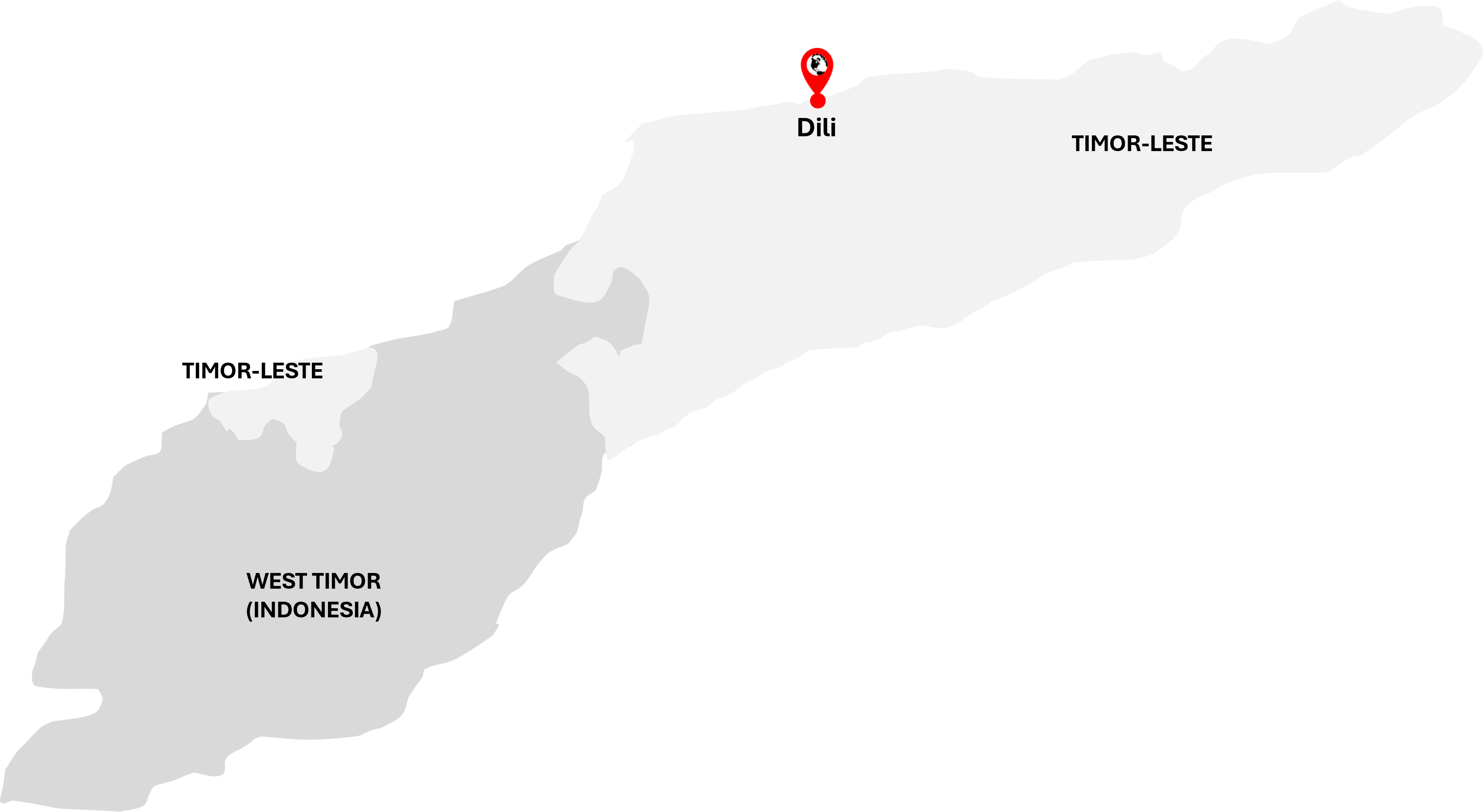
Where: Dili. Timor-Leste, Asia.
When: July 2026
What: Basar Ai-Fuan Fruit Market, Cristo Rei statue, Areia Branca beach, Timorese Resistance Museum and Archives, Dili fishermen, An-Nur Mosque, Letefofo Specialty Coffee Roasters, Tais Market, Santa Cruz Cemetery, Taibesi Market, Immaculate Conception Cathedral, Timorese heroes graffiti, Portuguese colonial architecture.
How: Domestic flight, international flight, transfer, Microlet public minibuses, taxi.
Country counter: No.101
Illnesses or mishaps: Getting scammed out of $10US by a member of hotel staff on checkout.
Timor-Leste, sometimes still referred to as East Timor by some, lies on the fringes of Southeast Asia, a mere one hour and twenty minute flight from Darwin in Australia's "Top End". It is one of the youngest countries in the world, having gained formal recognition from the United Nations in May 2002 following a brutal occupation by Indonesia which lasted a quarter of a century. This 24-year-old country is a thrilling weaving together of seemingly different threads: it has the US Dollar as its currency, people speak Tetun and Portuguese (with Indonesian and English operating as the lingua franca), it is prone to earthquakes, is surrounded by crocodiles, its population is almost entirely Christian, and it is famed for its people being the smallest on the planet.
Admittedly my road to Timor-Leste had been a long one; I was due to visit three months earlier but was forced to cancel at the last minute. I immediately re-booked my flights and accommodation on my day of cancellation; I was determined to get to Timor-Leste! Thankfully this postponement came with something of a silver lining; it meant that I would be visiting during the dry season (May to October) rather than the wet season (November to April). This resulted in guaranteed blue skies and bright sunshine throughout the duration of my stay. After a five hour domestic flight from Sydney to Darwin and a connecting international flight onto the capital Dili, I finally made it to the land of the Timorese - a rather strenuous and not insignificant 12-hour journey door to door. Visiting this small island nation means that I have now been to every one of the 11 countries comprising Southeast Asia. Timor-Leste is the 16th least-visited country in the world, the third least-visited in Asia, and the least visited in the sub region of Southeast Asia by far. Timor-Leste was also my 101st country.
In an age of over-tourism, Timor-Leste offers the increasingly rare chance to wander around a country and feel like you're the only foreigner there - chances are you probably will be. In my eyes this makes a visit here worthwhile in and of itself. A trip to Timor-Leste is an opportunity to feel adventurous and intrepid by heading to a country most would never consider visiting - and this accounts for the way the Timorese will respond to you: there will be quizzical looks from some, stares from others, a pregnant hesitation followed by a brief smile from a few or, more commonly, a verbal welcome like "Bom dia" or "Hello mister". Fewer still will enthusiastically call after you, sometimes followed by a thumbs up or a wave.
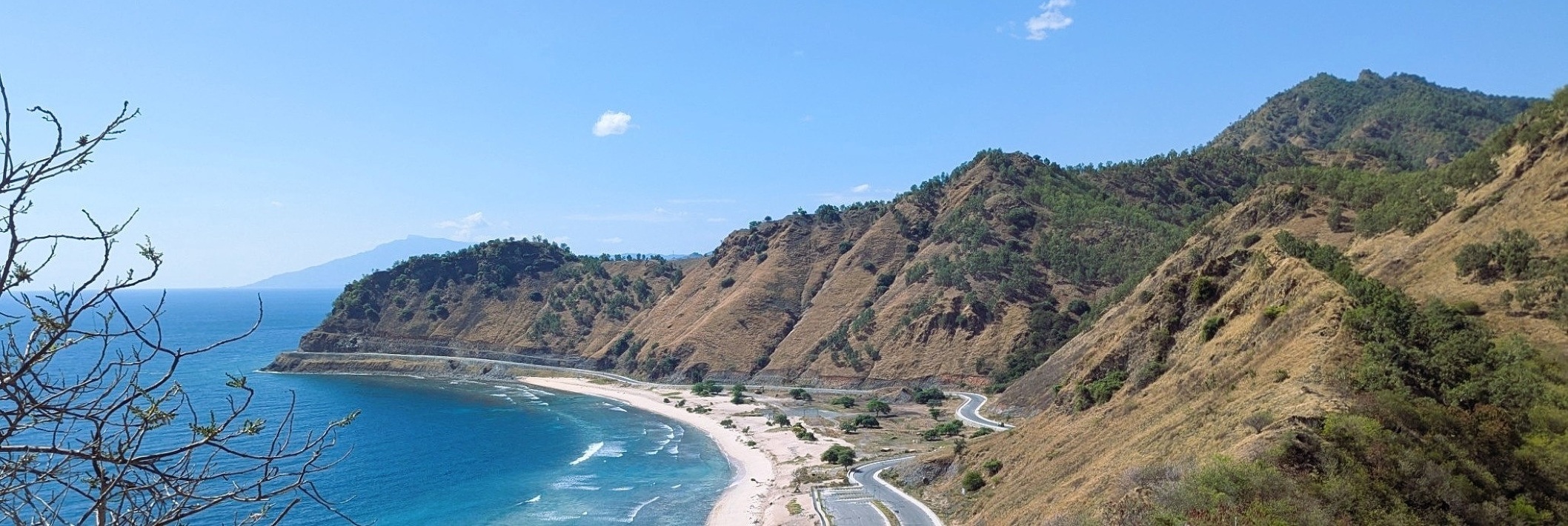
As the plane makes its approach, the topography of this nation is striking and clear to see from the air: rugged, scorched brown mountains drive the lion's share of little colourful corrugated homes to the very fringes of the island's coastline, with the road pushed even further to the very limit of what the land can hold before it gives way to a narrow beach line and, ultimately, the Banda Sea. Viewed from the north, Timor-Leste looks like a country living on the edge. Indeed, as a developing country which had most of its infrastructure destroyed by retreating Indonesian militia at the start of the millennium, it more metaphorically is. It is just possible to make out the giant Cristo Rei statue perched high upon Cape Fatucama as it looks out into the waters of Wetar Strait. Yes, even Jesus Christ, with his arms outstretched, appears to welcome you as you descend into this most devout of Catholic nations.
I arrived in Timor-Leste late afternoon. There was just enough time to shower off a day's travel grime and head down to the beach to catch what turned out to be a completely spectacular sunset and to buy a few items from a local supermarket so that I could cook a healthy meal back at the hotel. Restaurant options are limited in Dili and so I resorted to my usual trick of booking accommodation with cooking facilities.
I awoke to my first morning in the Timorese capital, my head was banging but I was determined to do all I could to shake it off; delaying sight-seeing around Dili until later on in the day, when temperatures predictably top 30°C or more, isn't advisable. In Dili, the morning is peak citysploring time. And so, by 8am I was pounding Dili's broken, rubbish-strewn sidewalks towards the wonderful Basar Ai-Fuan Fruit Market with its array of tropical-looking fruits artistically displayed on wooden stalls topped by roofs of dried palm leaves. I purchased a pink banana, more out of curiosity than hunger and, by the time I'd eaten it and dropped the skin into the bin, a Microlet number 12 came along. I knew from research that this Microlet would take me eastwards to the undisputed icon of the country: Cristo Rei. Unfortunately for me I disembarked far too early and then passed by the entrance to the approximately 570 steps up to Jesus. Such miscalculations resulted in an approximate two kilometre increase in my trek out to see the world's second tallest statue of Christ, beaten only by Brazil's Christ the Redeemer. Photographing Cristo Rei was a little frustrating as there seemed to be no one place from which to capture the perfect shot (many photographs featured online appear to have been taken using a drone) but I did manage to procure wonderful photographs of the surrounding coastline at Areia Branca beach. This distinctive stretch of coastline is almost as iconic as the statue itself.
Now dripping in sweat, I set off back down the mountain towards central Dili, resuming my Microlet journeys but choosing a hop-on, hop-off approach so that I could spend time soaking up the sights and sounds of Timorese coastal life rather than just simply whizzing past everything in an unnecessary hurry. There were shacks made of palm leaves, casts of Fiddler crabs scuttling for cover on my approach, traditional wooden fishing boats with bundles of entangled nets in their hulls, tumbledown ramshackle huts made of clanking tin... I increasingly take simple pleasure in just being able to wander around an unfamiliar country surrounded by its noise, its smells, its culture and detecting the differences - large and small. Just being somewhere else is sometimes more than enough to make a trip meaningful and worthwhile.
Hopping on Dili's Microlet network is an extremely fun and, more importantly, authentic way to get around the capital. A regular taxi with windows and doors is functional transport, but boarding a Microlet with locals is an adventure! The experience is multisensory; you smell, hear and viscerally feel the place you're travelling through, unfiltered and real. In a Microlet you become part of the place itself, albeit for a short time, but you become part of the population - a transient Dilian of sorts. You're now one of them, squashed cheek by jowl and tapping your Centivos coin on the overhead bar to request a stop and exchanging rueful, awkward glances at your sardine-like companions just like everybody else. You experienced Timor-Leste - smelt it, breathed it deep into your lungs. You were in Dili - and you conquered it on your own and by Microlet! On one occasion I got the last viable seat - the steps of the Microlet, hanging out into the open air as the van swerved past evocative sights which speak so much of this place, all unfurling melodically to an uplifting Timorese-reggae soundtrack. I'd observed locals sitting on the stoop like this on previous occasions and was secretly thrilled that the van was full therefore making it my turn to sit on the stoop!
Having spent my first full day travelling east, my second, logically enough, had me travelling west. I set off from my hotel on foot, delighting in the glorious blues of the sky and sea; silhouetted boats of various shapes, sizes and sea-worthiness dotted the bluest of horizons with fishermen lining the broken promenade pavements. I made it as far as the striking An-Nur Mosque and only because my walk down on the beach was interrupted by an open sewer flowing into the sea, forcing me back up onto the road and in sight the mosque's giant green domes and minaret. The Letefofo Specialty Coffee Roasters cafe was nearby, my chance, then, for a well-earned break from walking in the heat and an opportunity to try the famous coffee from this oft-billed cafe. Having sufficiently cooled down I jumped onto another Microlet, tracking my journey on my phone and alighting at an intersection with the Timorese Resistance Museum and Archives which, as the grimly functional name attests, tells the dark story of Indonesia's occupation and Timor-Leste's journey towards becoming an independent country, free from the Portuguese colonial rule of the past and free from the Indonesian occupation of the recent past. What this museum holds in modesty it more than makes up for in powerful storytelling. Incredibly, the museum contains the first ever Timor-Leste flag, which can be seen carefully laid out in a protective glass cabinet. There is also an option to make an entry into the visitors' book which, after being encouraged by a museum worker, I did (you can read my entry here). And, as with every other day in Dili, I retired to my hotel room to wait out the most ferocious and unforgiving heat of the day, resuming my exploring of the city with a sweaty foray out to the cute little Tais Market late afternoon.
Having explored first east then west, my final full day in Dili was spent heading south to experience the traditional Timorese market that is Taibesi. I decided to walk rather than Microlet the journey so that I could explore more of the city on foot (you never know what you might see) but also to visit the infamous Santa Cruz Cemetery, which was enroute to Taibesi. My two-kilometre walk took me along wide roads characterised only by building works, piles of rubble and dust which was whipped up into choking eddies. The walk was in no way pleasurable but it did earn me extra intrepid points if nothing else; travel shouldn't always be easy if it is to be rewarding. Taibese market itself was disappointing but the streets leading to it were every bit the life and soul of Dili I was hoping for, with characterful faces looking earnestly on as I trudged through laneways of mud with rivulets of water cutting their way down the middle, past tethered cockerels cock-a-doodle-dooing, down darkened alleyways with families living either side, past semi-naked children playing in the dust - and all the while streetside barbecues billowed fatty smoke into the air and small flags of Timor-Leste fluttered. Such scenes rekindled memories of my time walking through Langa Township in Cape Town, South Africa. I passed by a small barber shop outside of which sat a woman who had bright red teeth from chewing beetle nut. She encouraged me in, wafting her arm towards the barber's door, only for me to theatrically lift my cap to reveal my bald head. She burst out laughing as I gesticulated with my arms as if to say, "What am I to do?" The woman continued to belly laugh as I pressed on through the dusty labyrinth. It was a shared moment of fun and laughter across innumerable divides (cultural, economic, linguistic) and testament to the fact that, despite being from different worlds, we can still find instant common ground through humour; laughter can transcend so much to unite us all. We need more laughter in the world, don't you think? Encouraged by this interaction I set about asking other locals if I could take their photograph. I like to take some portrait photos of local people and the warren of mud streets and corrugated shacks around Taibesi yielded a few wonderful ones; a woman at her sewing machine, a young man playing his guitar surrounded by bananas, a woman rotating meat amid a smoky streetside barbecue scene.
And with that I hopped aboard my last Microlet back to the Dili coast, during which I was shuffled to the front passenger seat by the driver as the van filled up with locals: two school kids, an elderly woman who I noticed silently crossed her heart as we passed by the Immaculate Conception Cathedral, a woman boarding whilst munching on an unidentifiable fried object... This last journey brought my solo adventure around Timor-Leste to a satisfying denouement - one smaller journey to finish a bigger one. I challenge you to visit Timor-Leste for a few days and not think highly of the Timorese in general and to not return home with your travel heart glowing. Obrigadu Timor-Leste, you were wonderful.
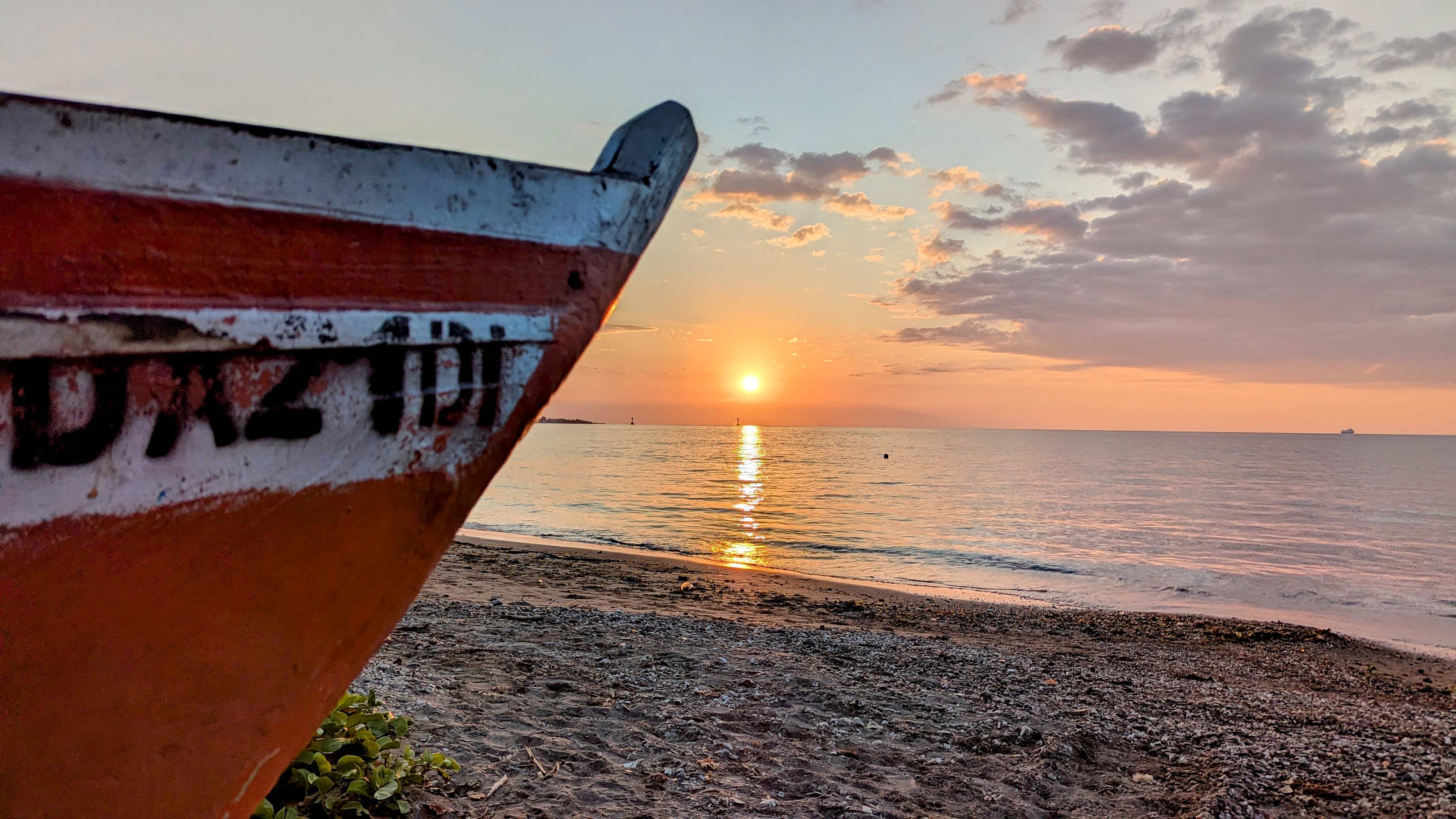
Catching the sunset down at Dili waterfront.
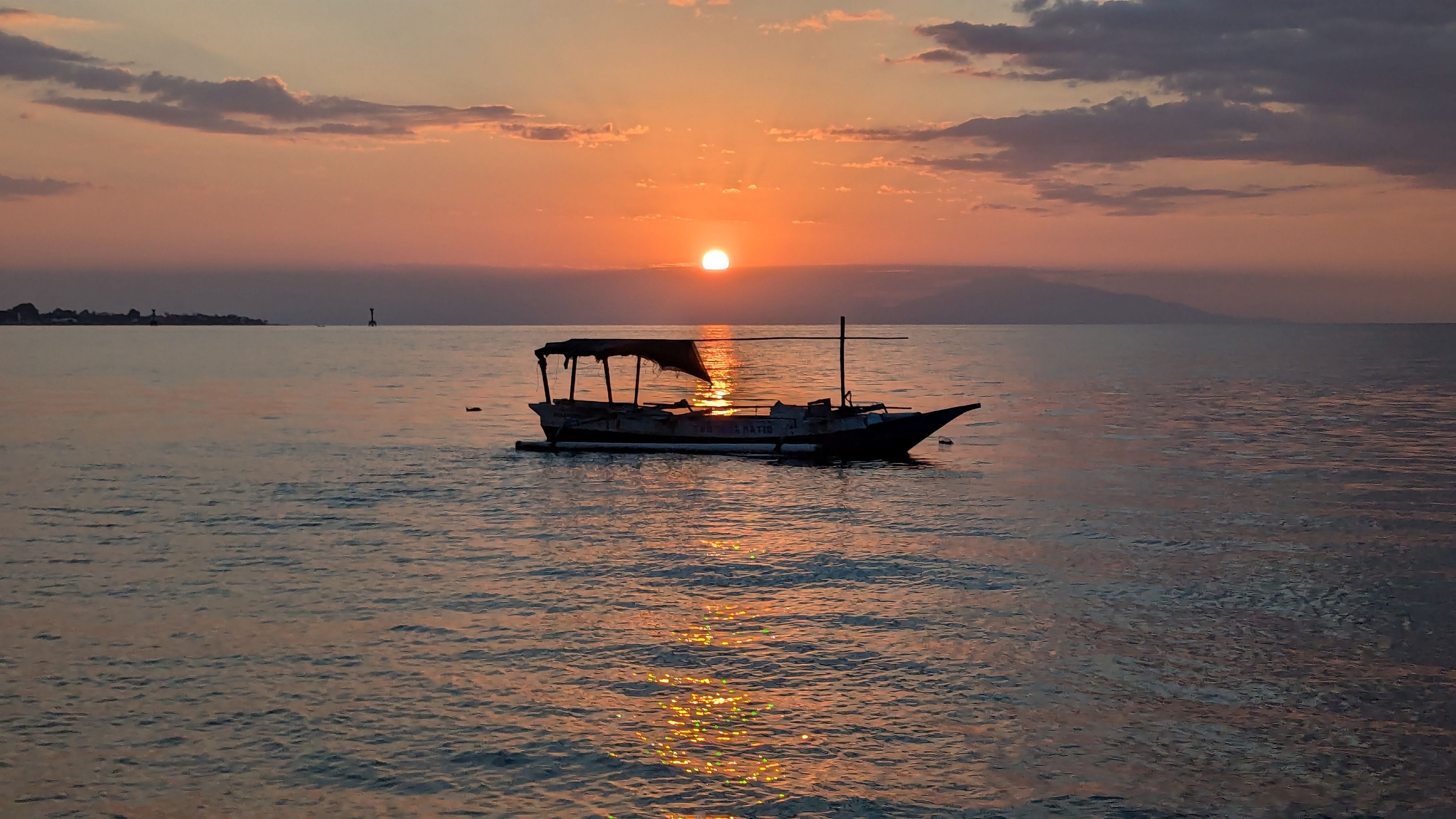
A traditional boat is rendered silhouette against the dropping of the sun at Dili waterfront.
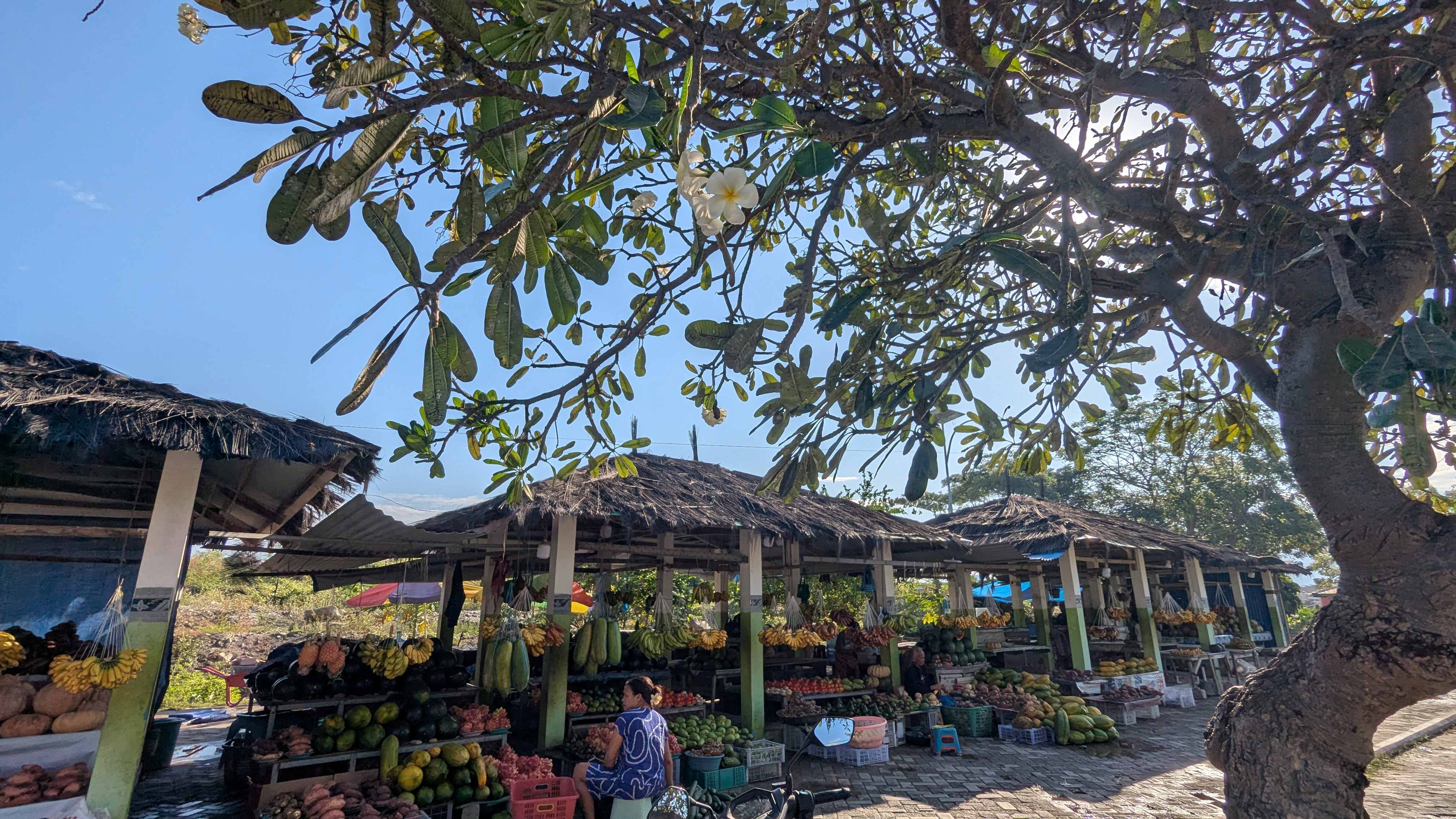
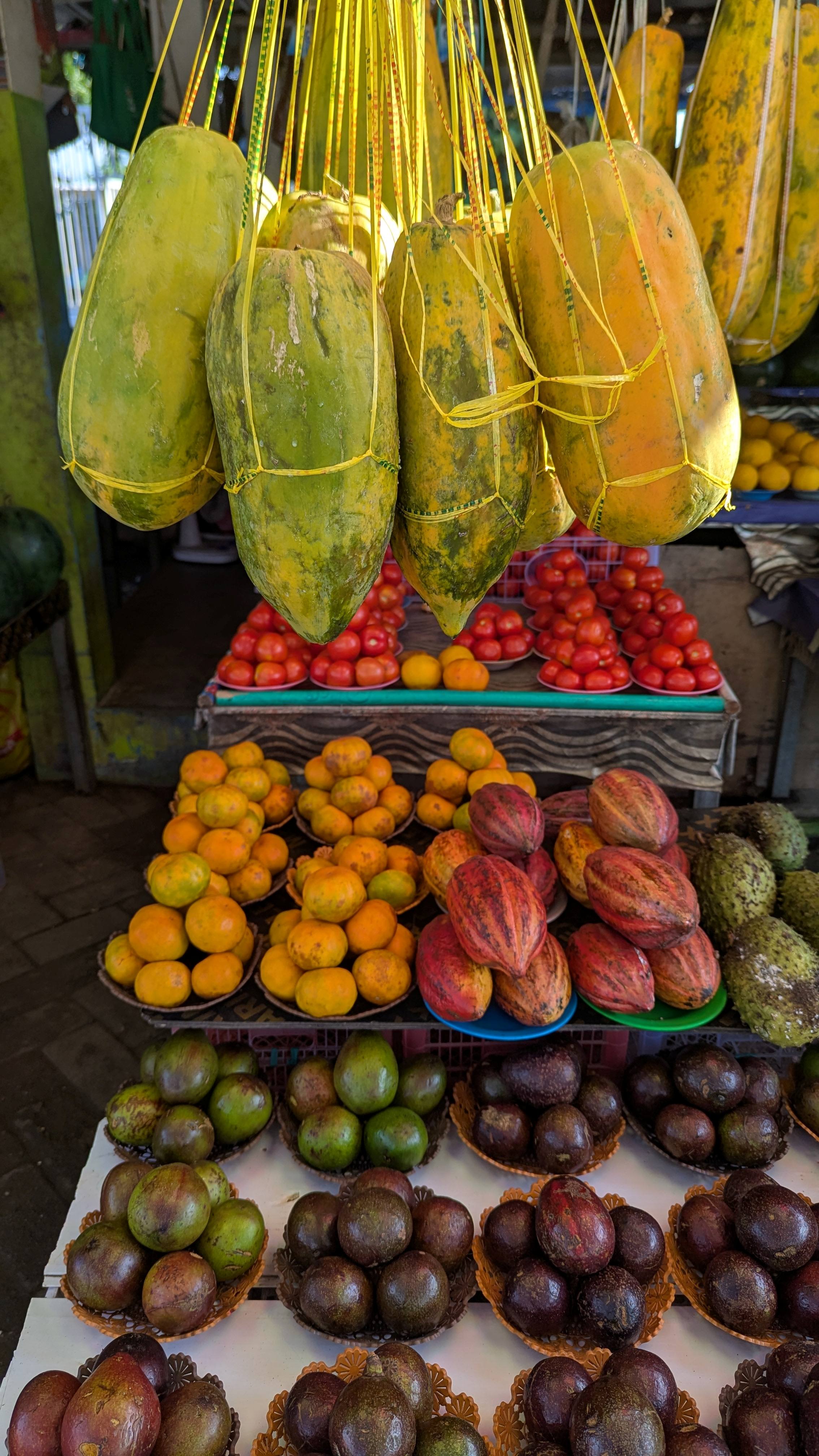
The wonderful little Basar Ai-Fuan Fruit Market.
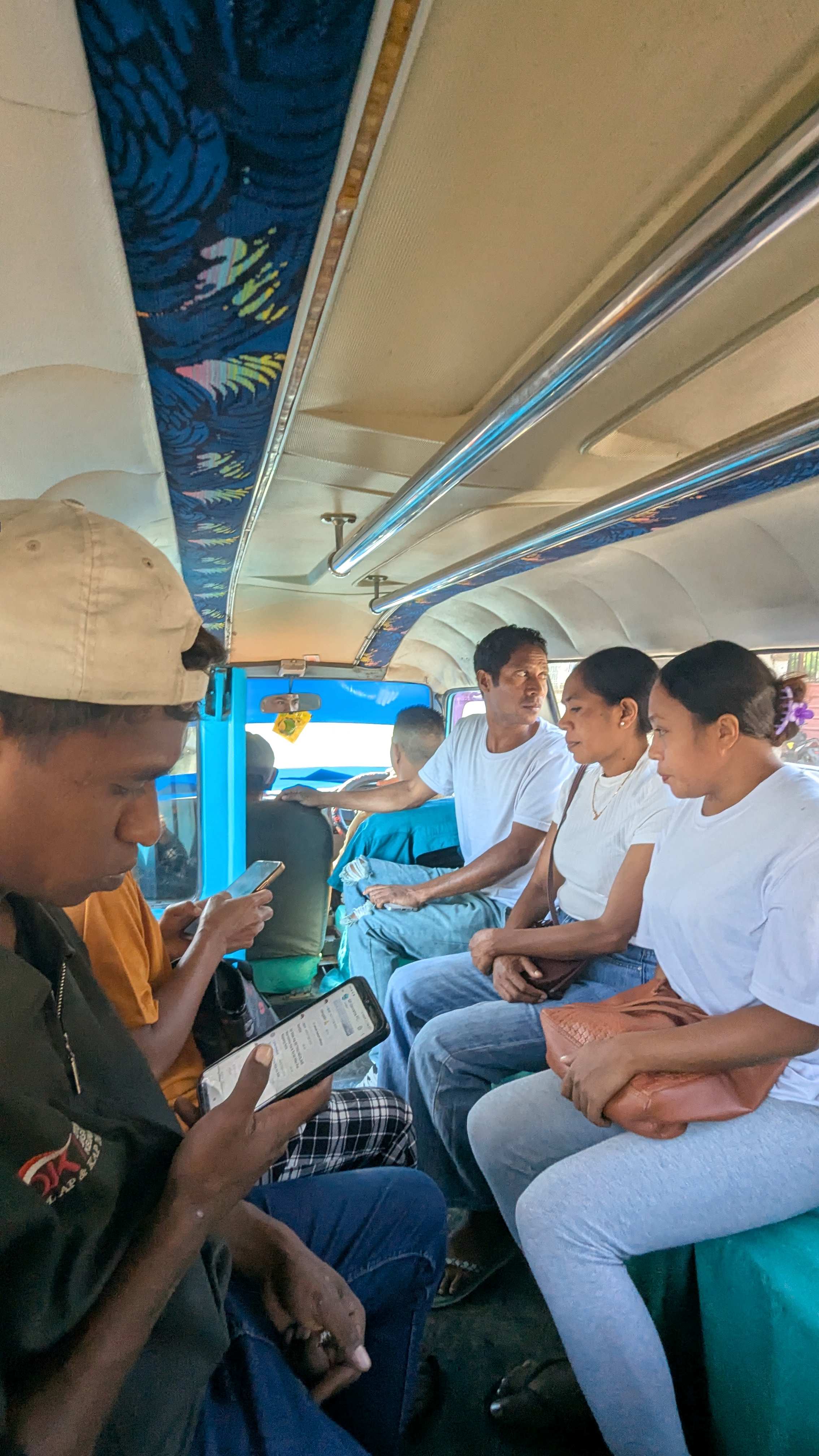
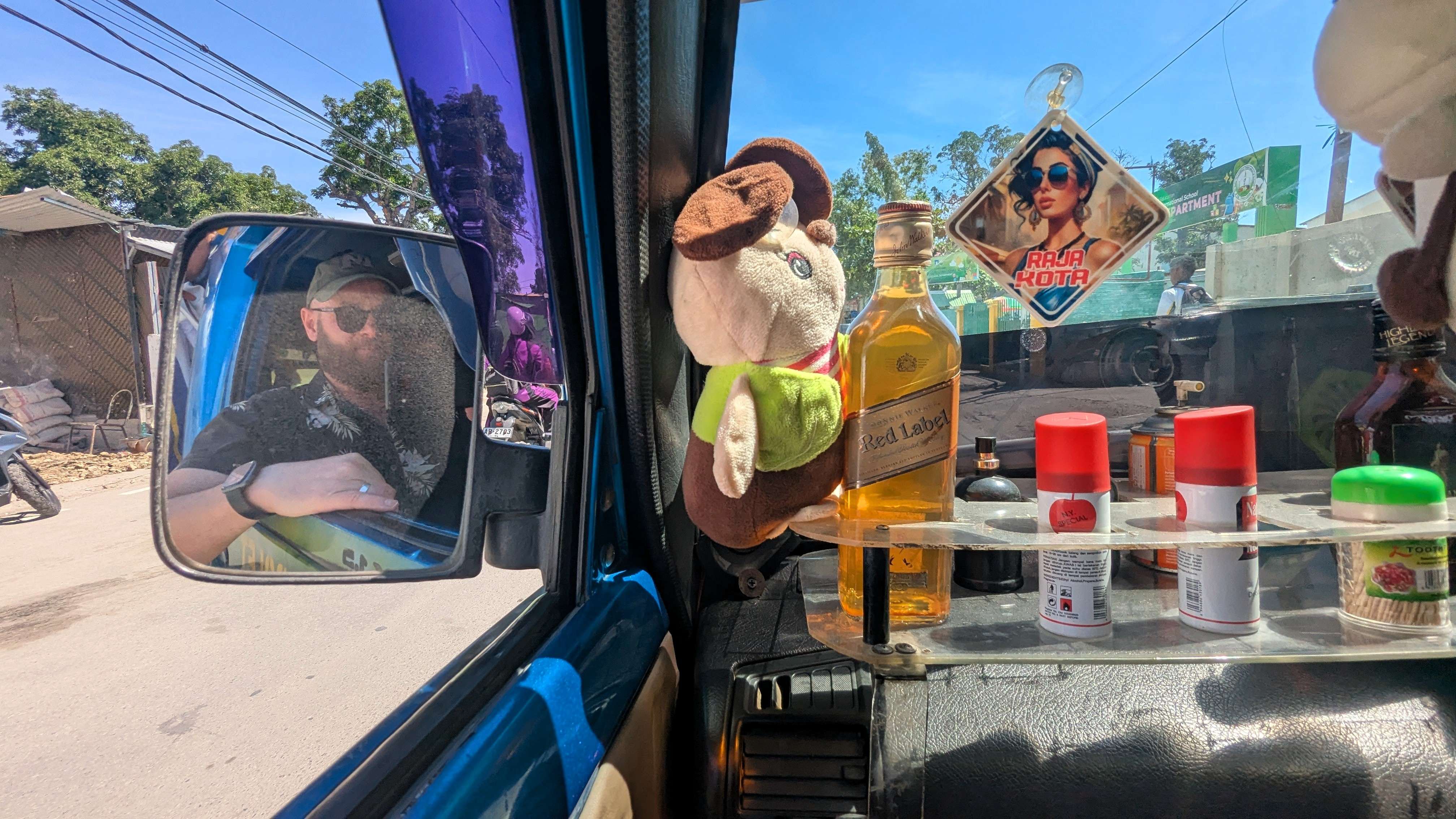
In the front seat: exploring the Timorese capital by Microlet! Oftentimes it was a bit of a crush!
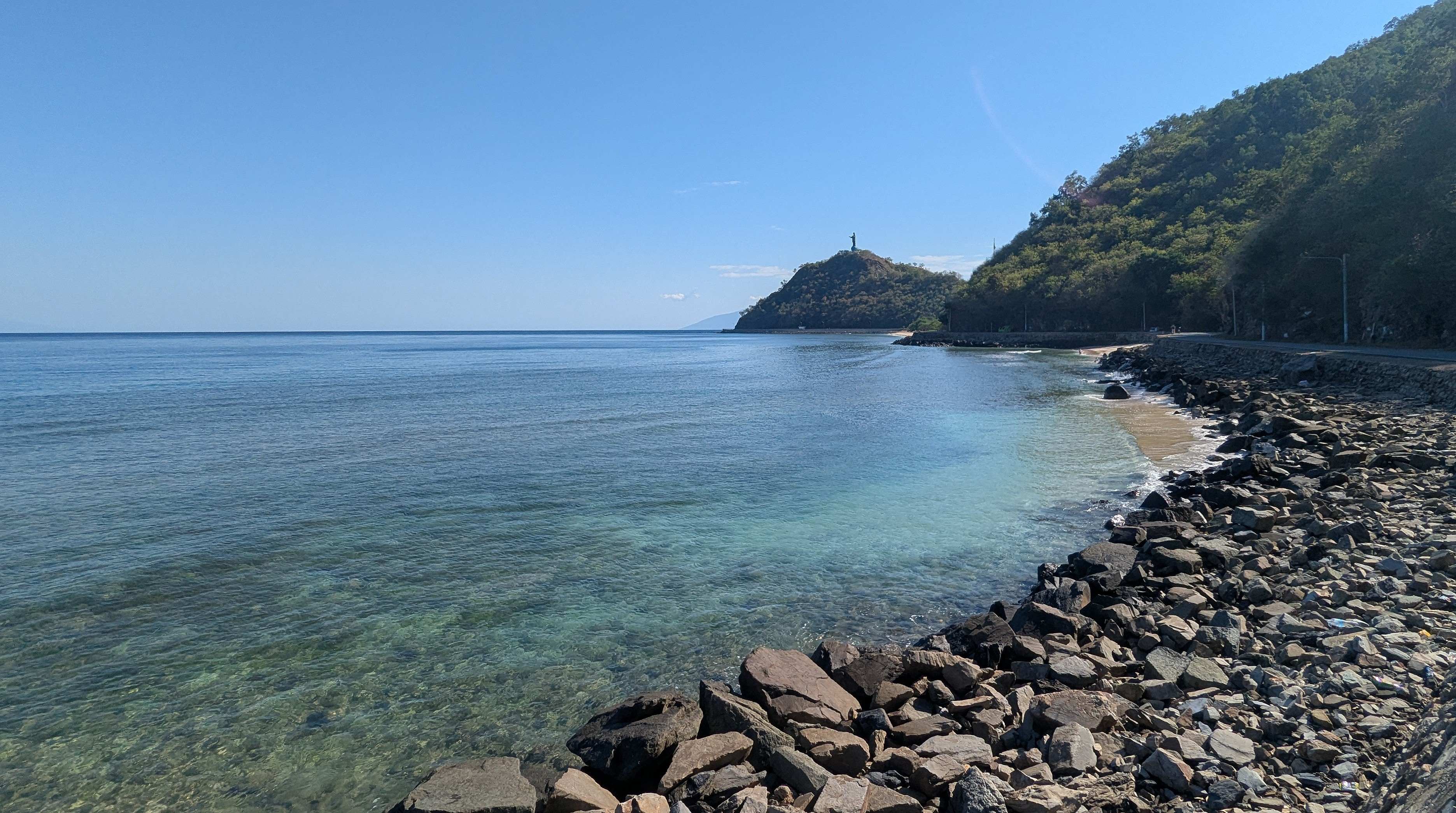
The long road to Cristo Rei. It's even longer when you get lost. Twice.
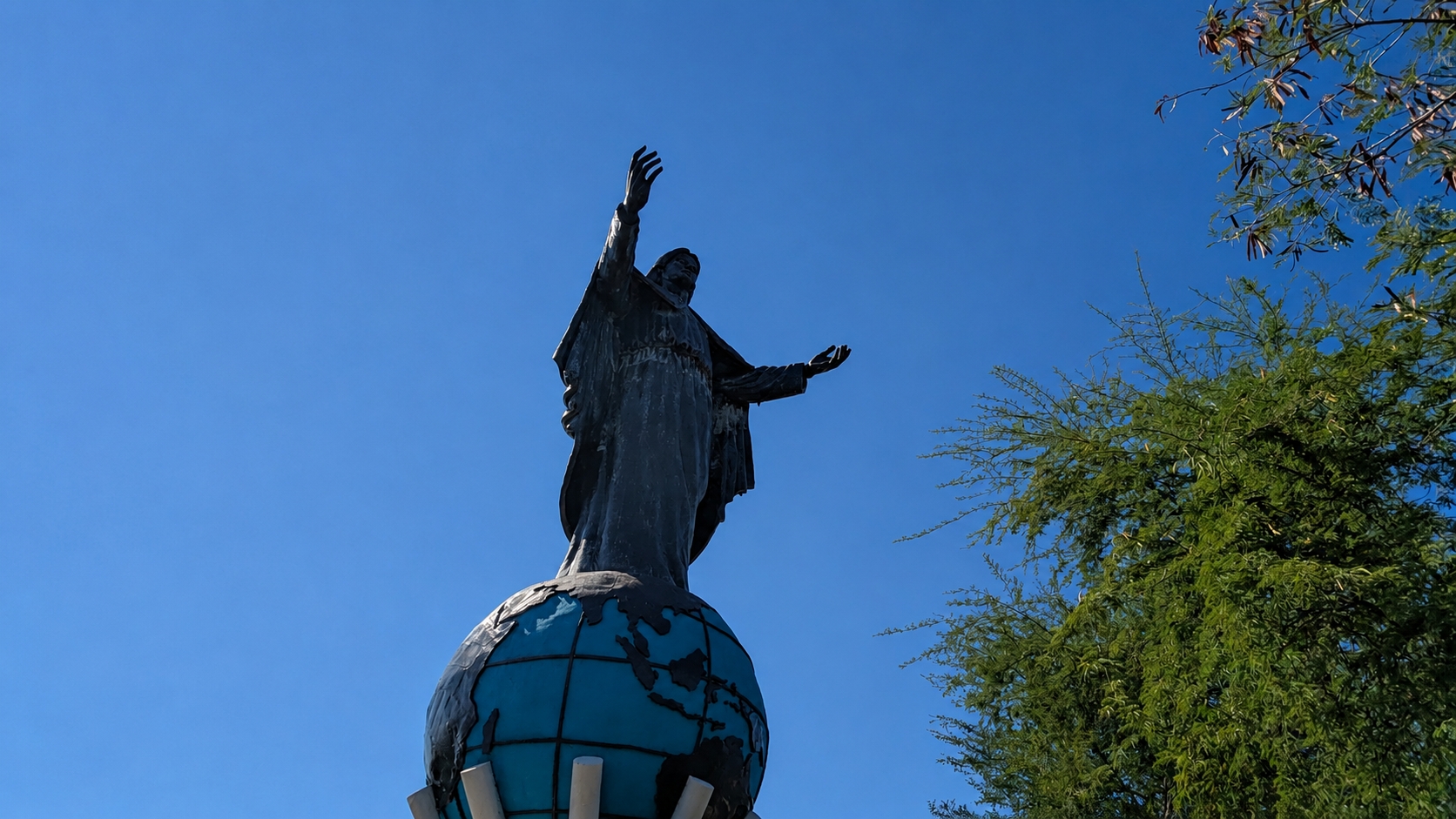
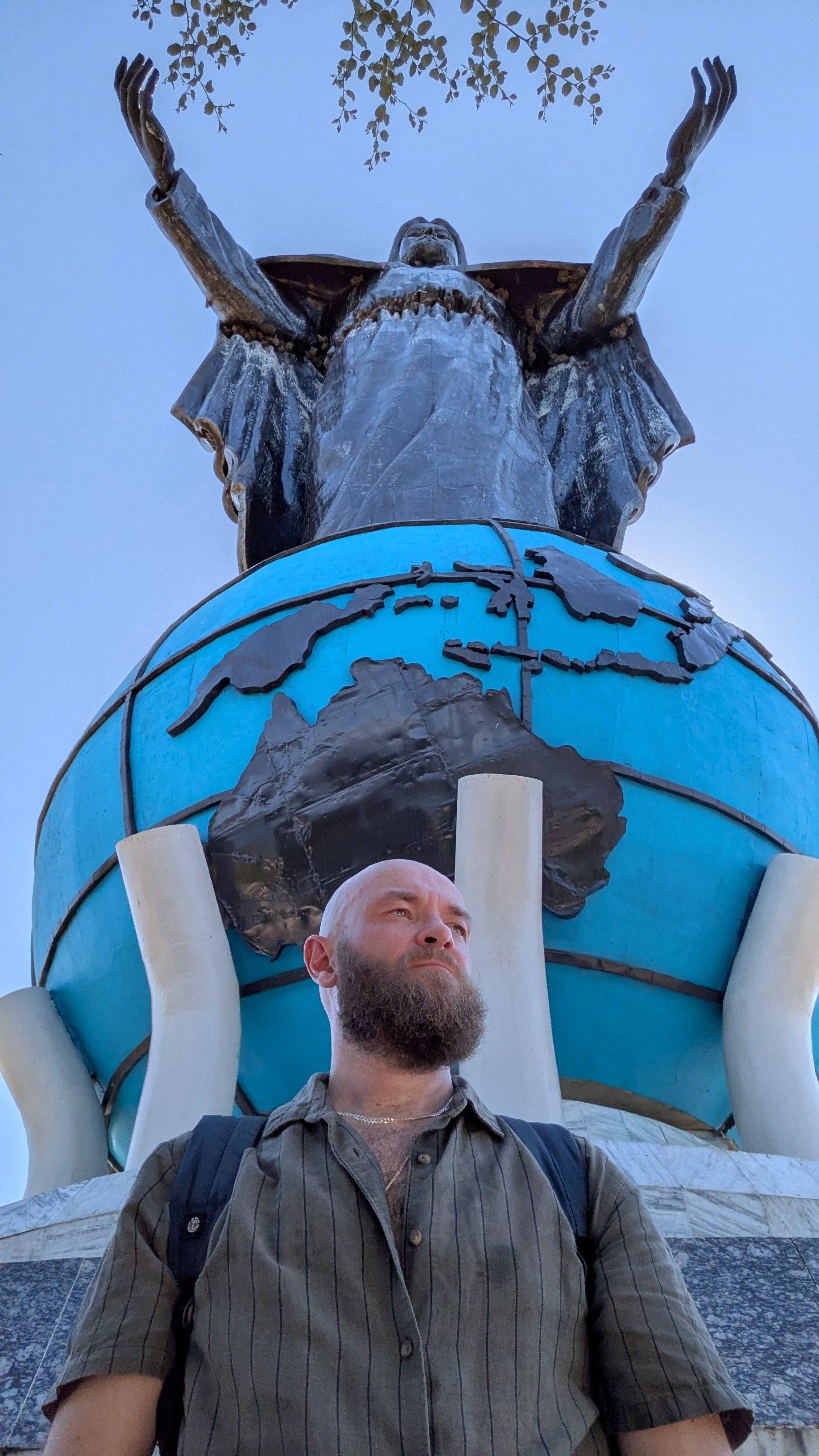
The giant Cristo Rei statue, the undisputed icon of this, Southeast Asia's youngest country.
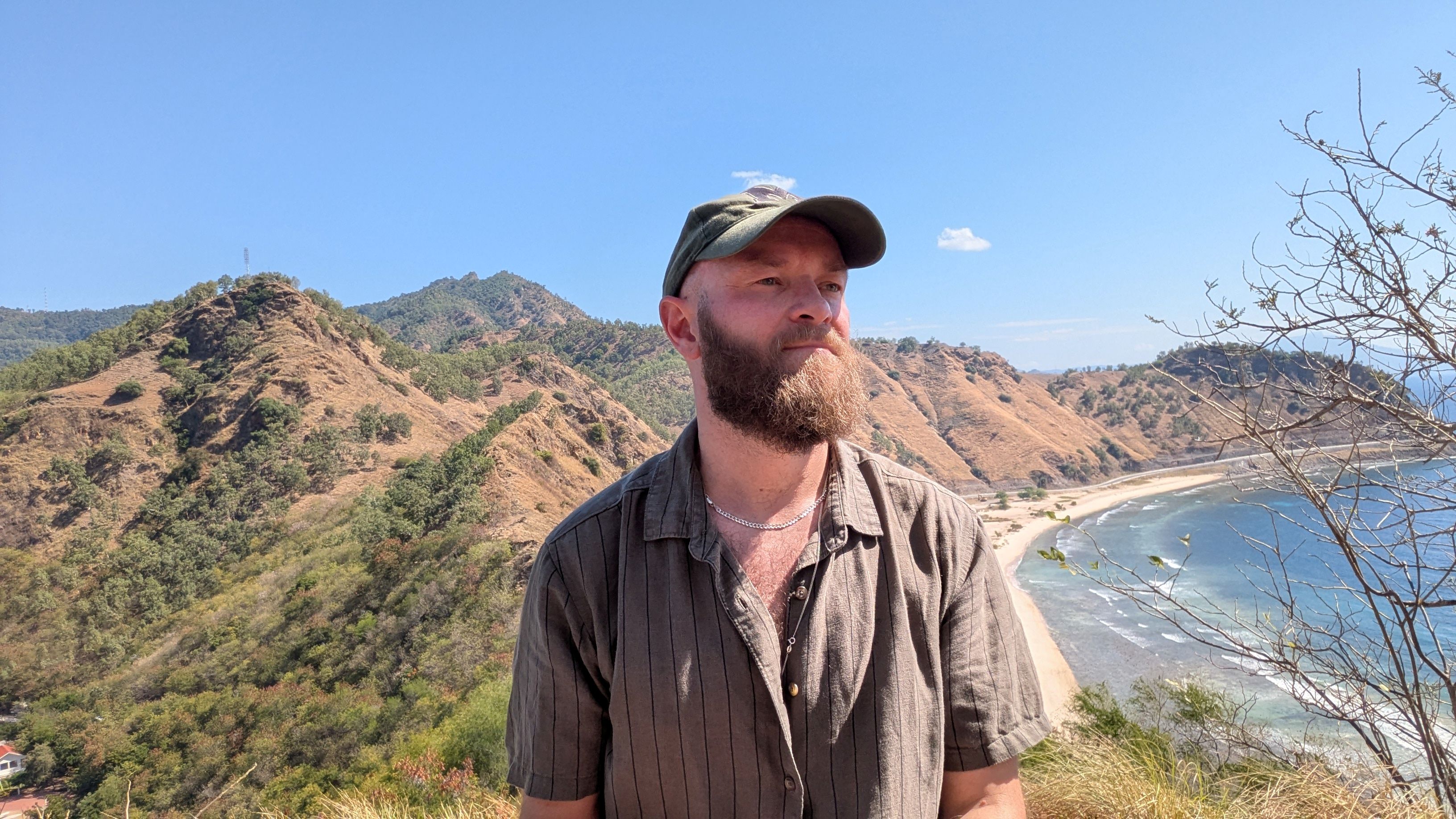
The iconic Areia Branca beach coastline. This distinctive stretch of coastline is almost as iconic as the Cristo Rei statue itself.
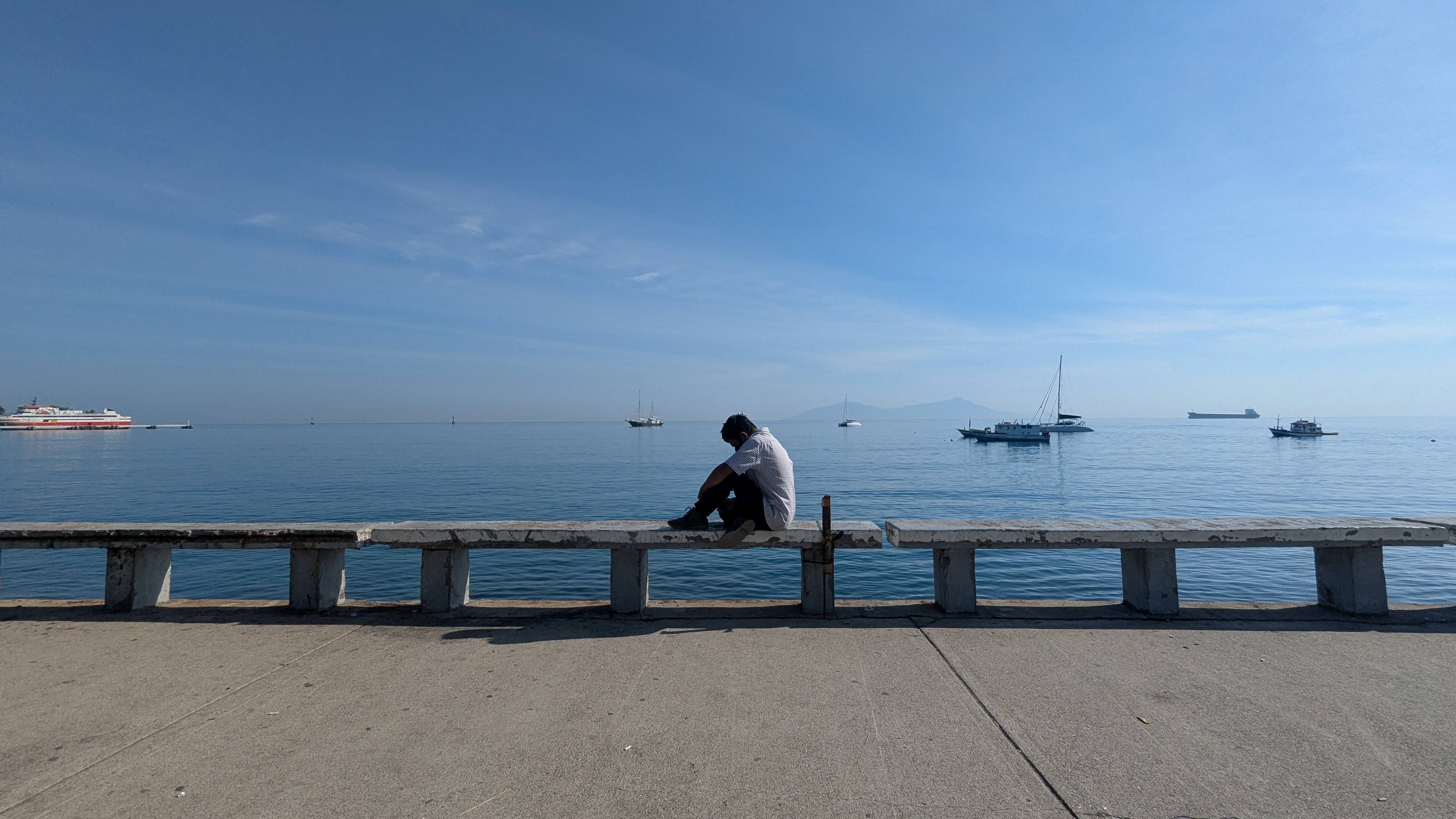
A local takes time out along Dili's sparkling-blue waterfront.
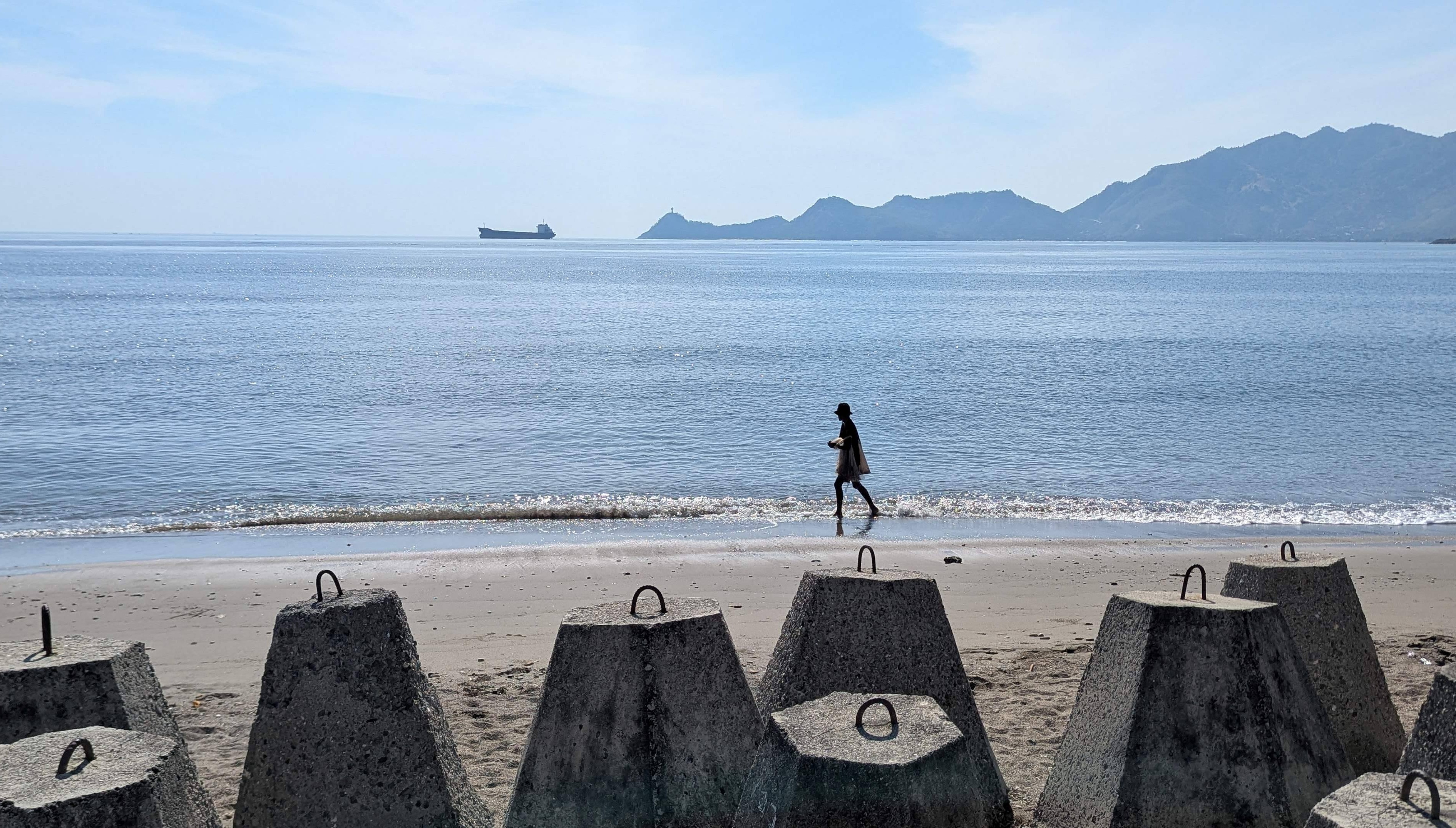
A fisherman walks along Dili Beach, foregrounded by striking breakwater blocks.
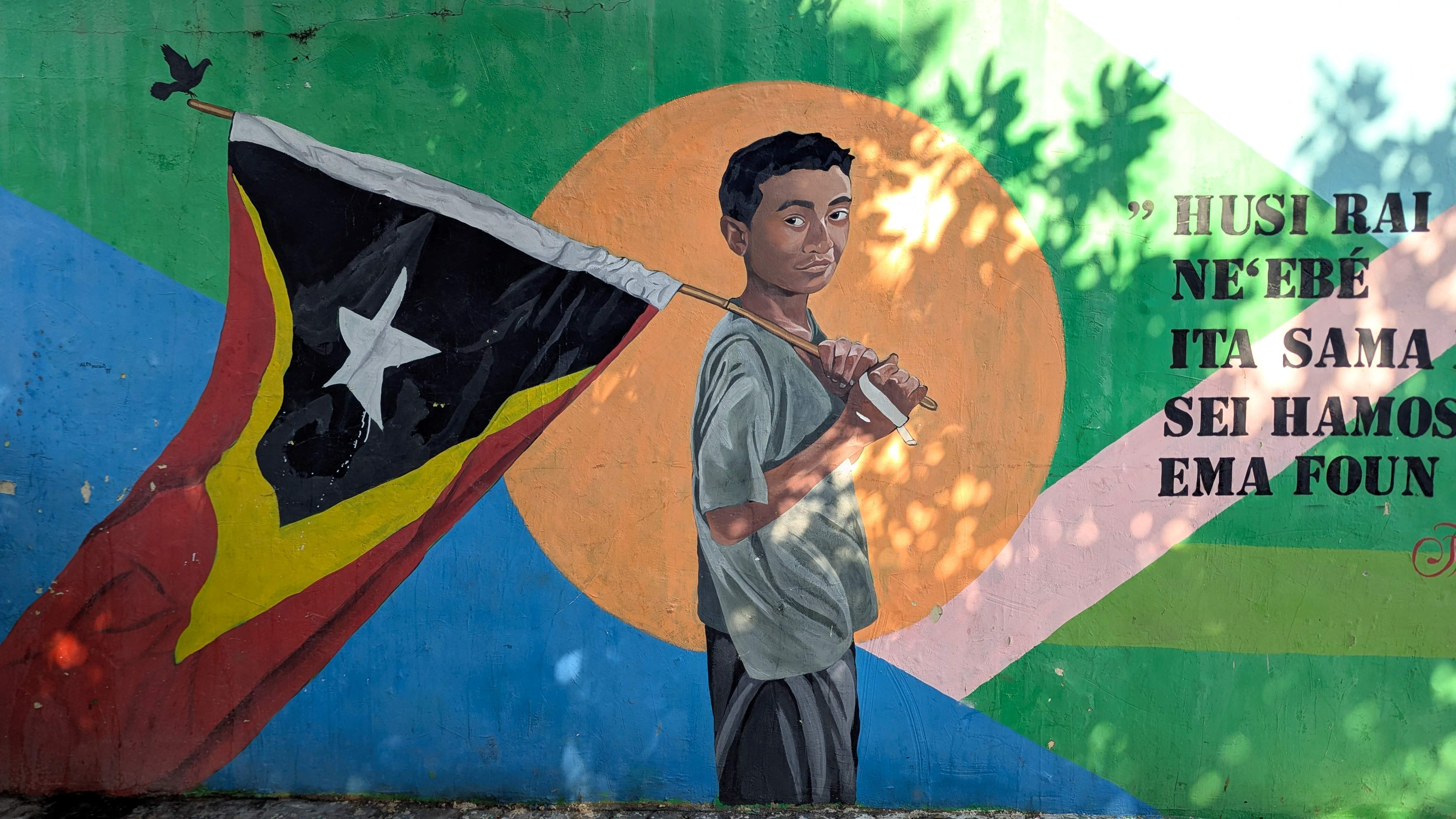
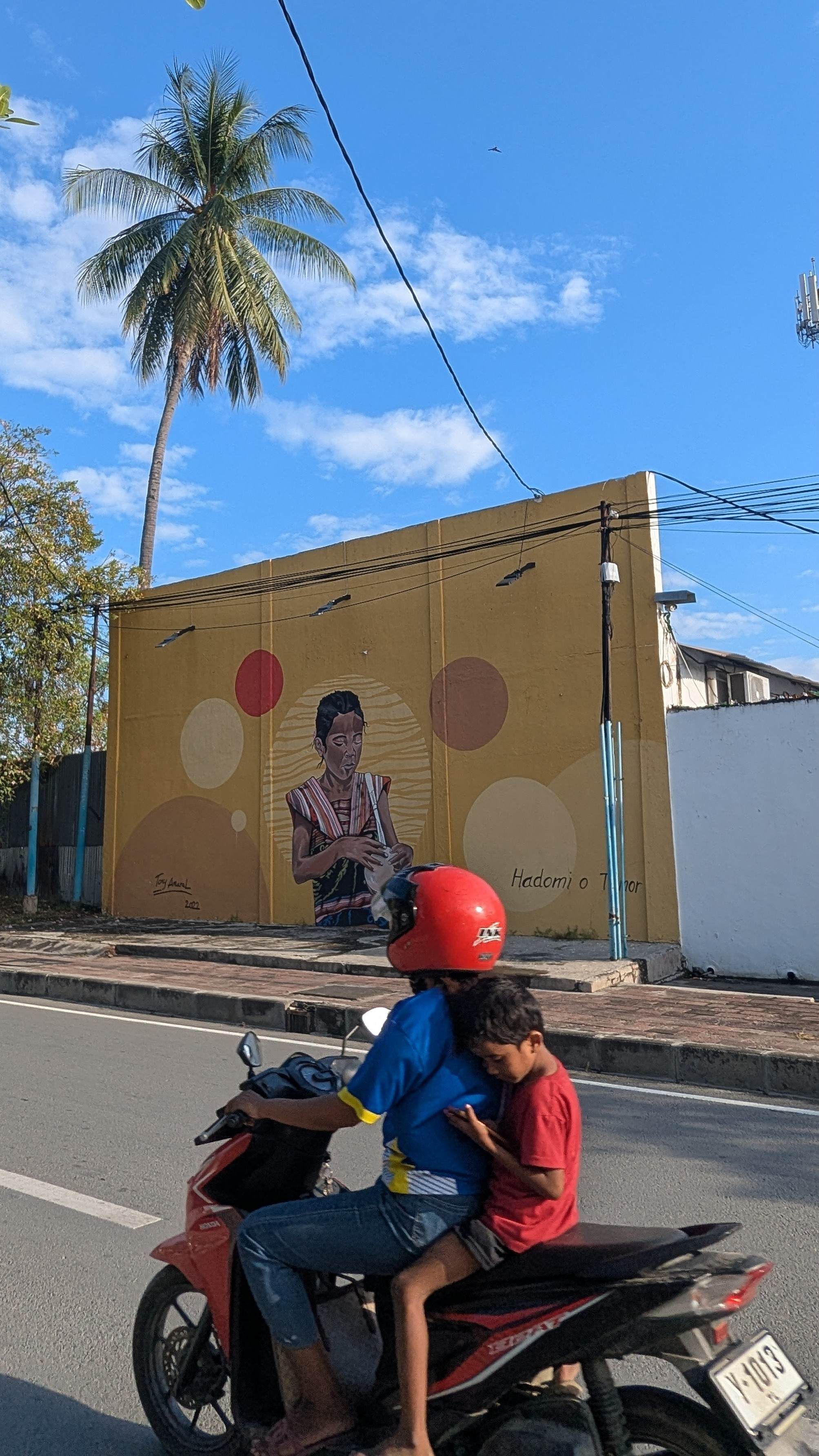
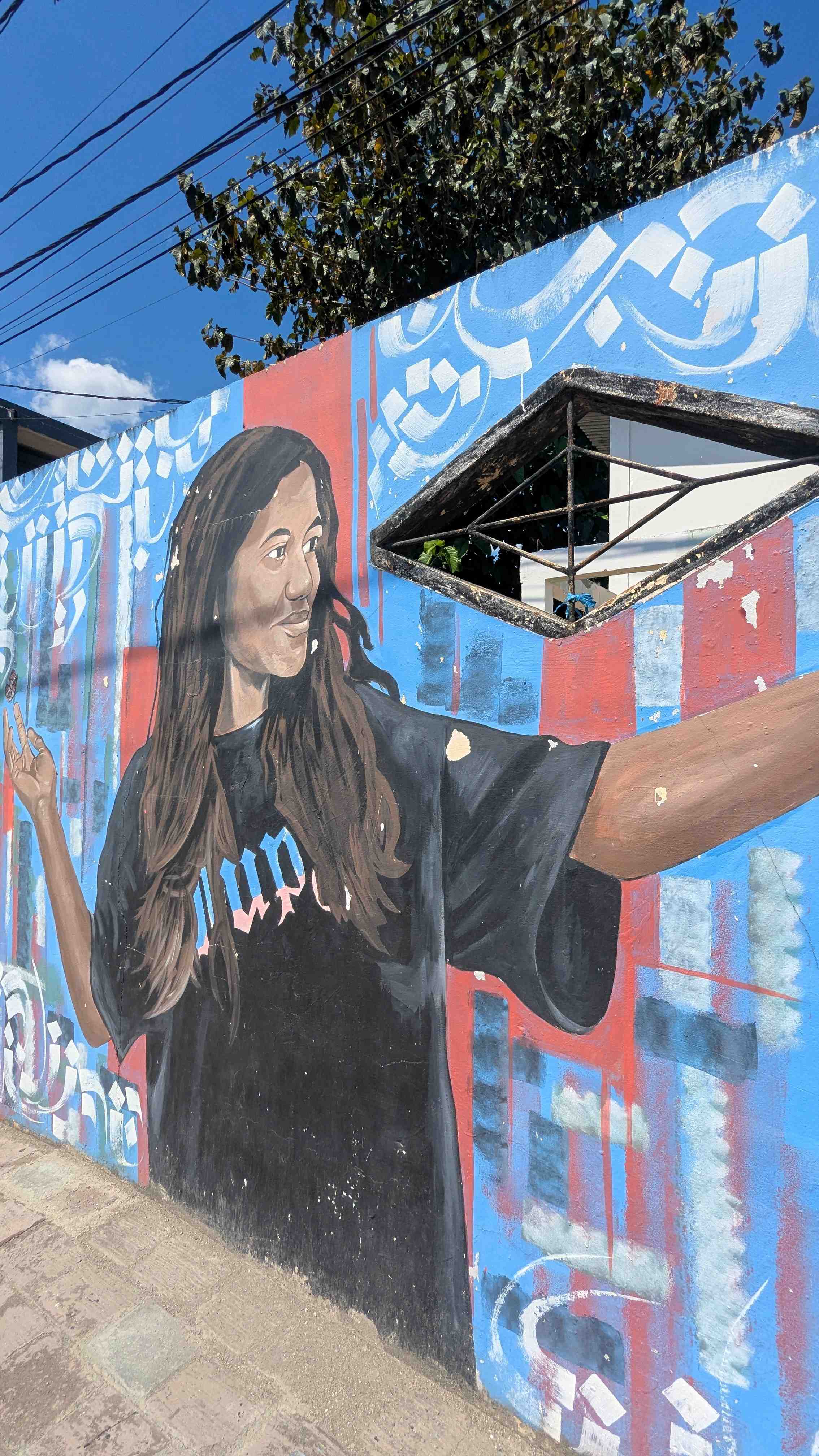
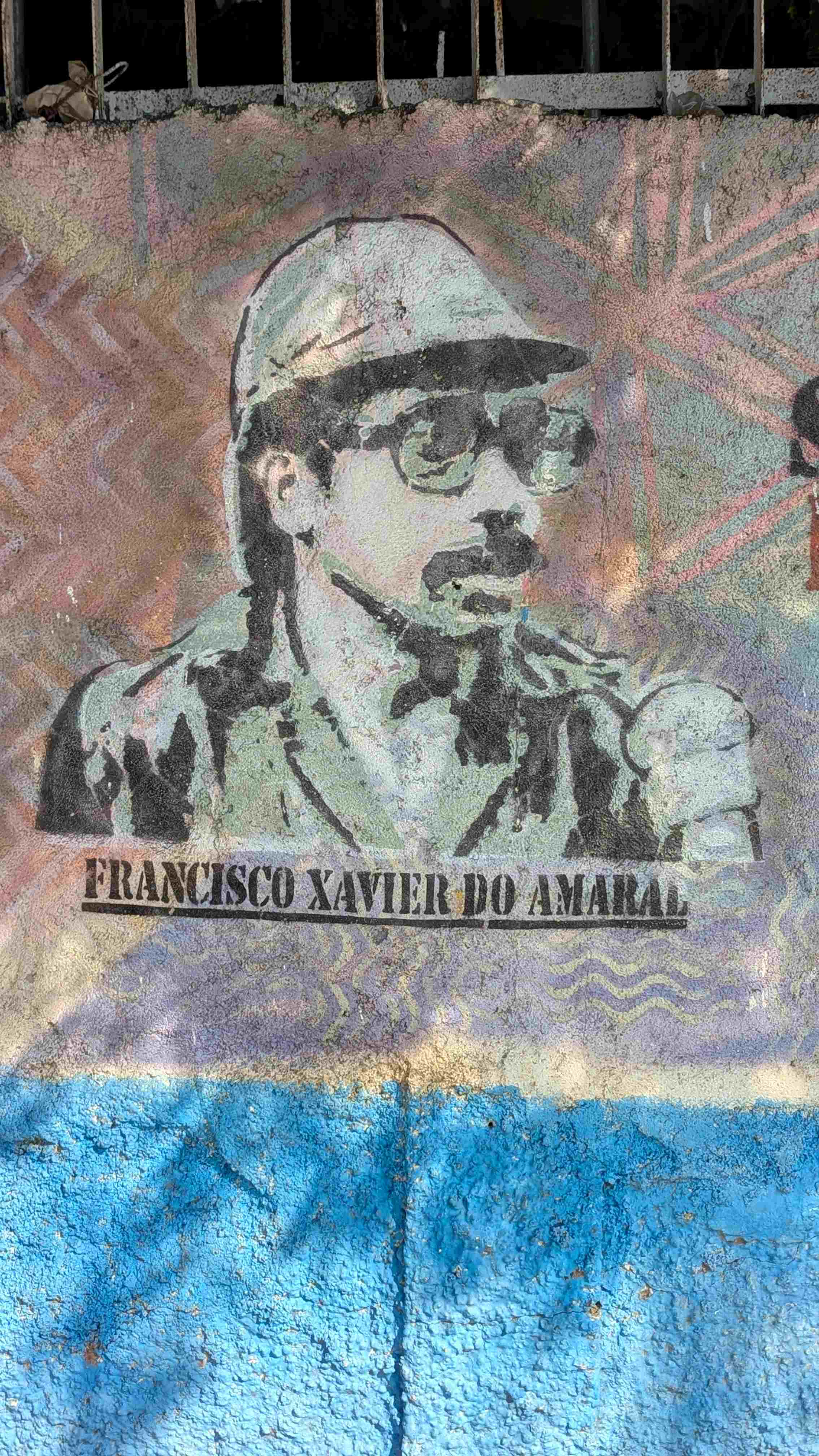
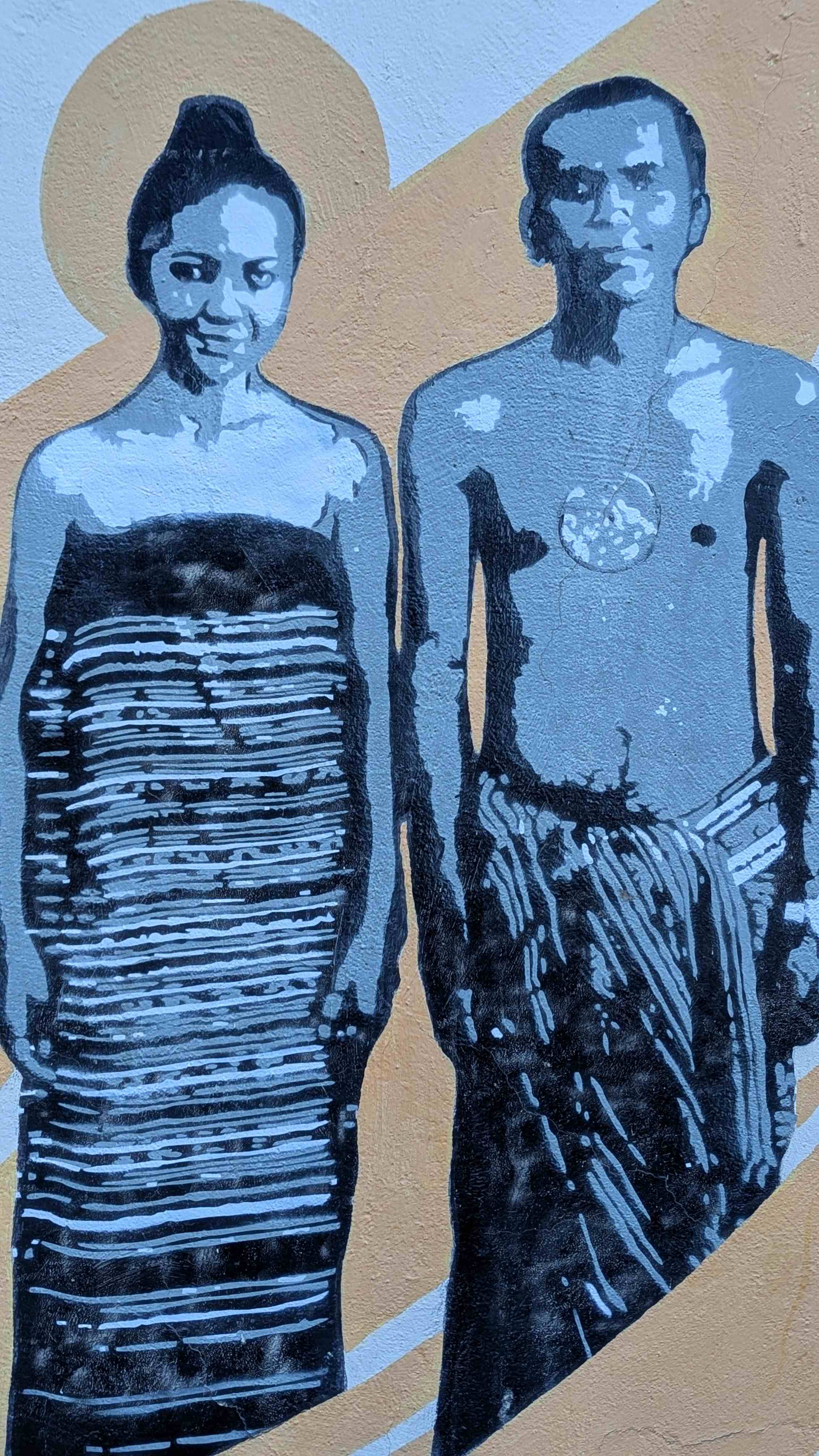
Murals and graffiti in Dili feature independence heroes, resistance fighters and cultural representations of the Timorese people.
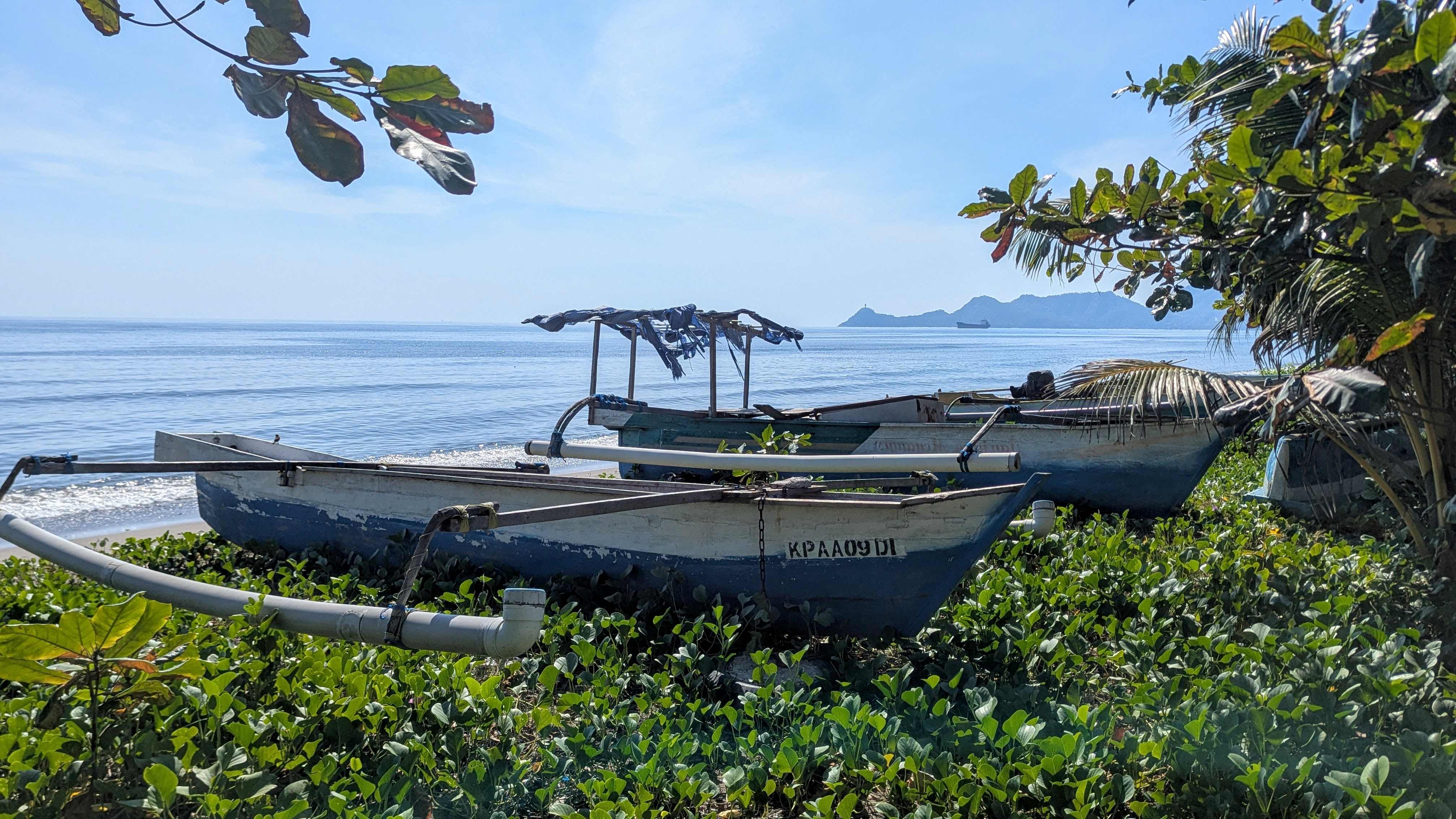
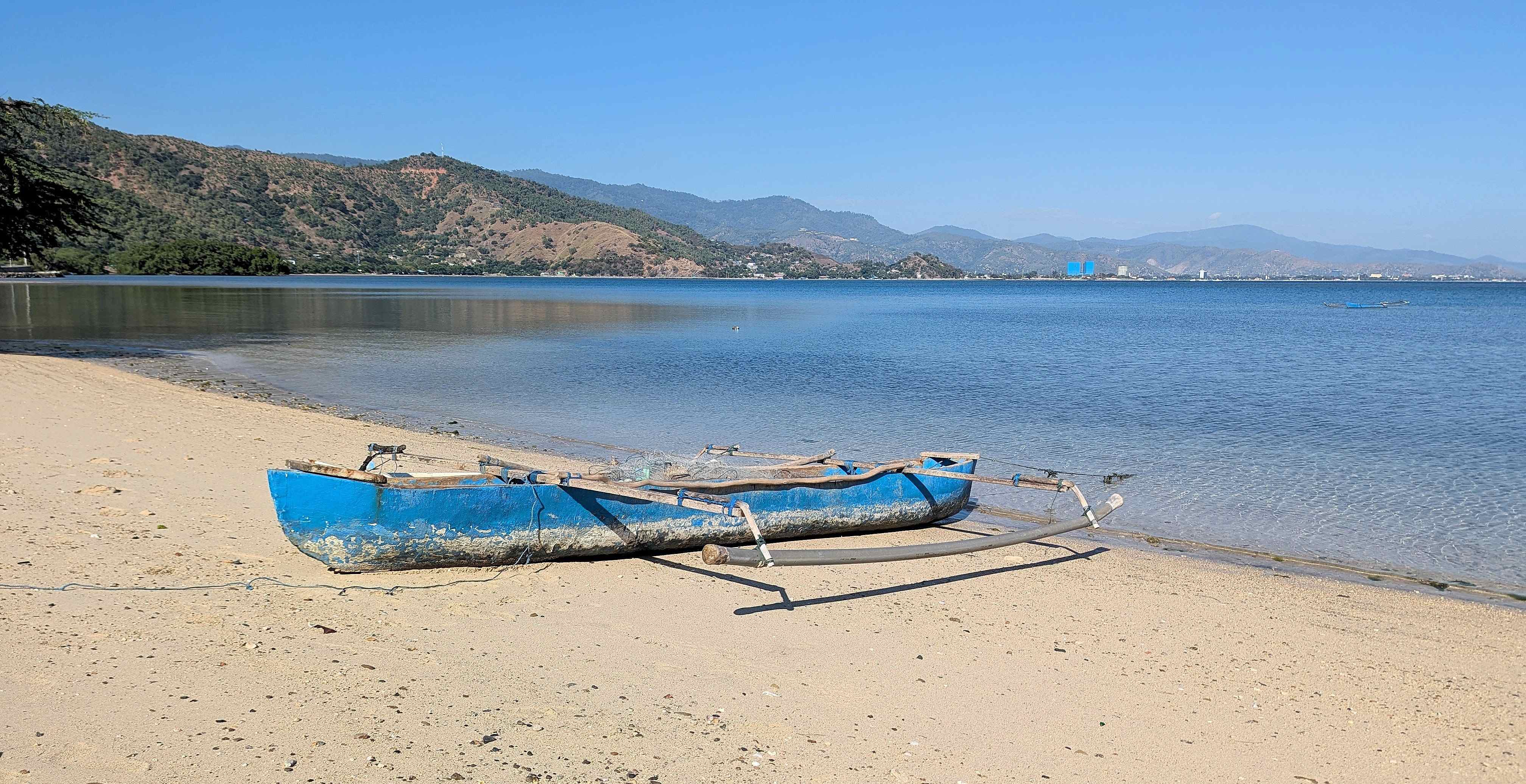
Outrigger canoes line the Dili coastline. In the far distance atop the hill you can just make out the silhouette of Cristo Rei.
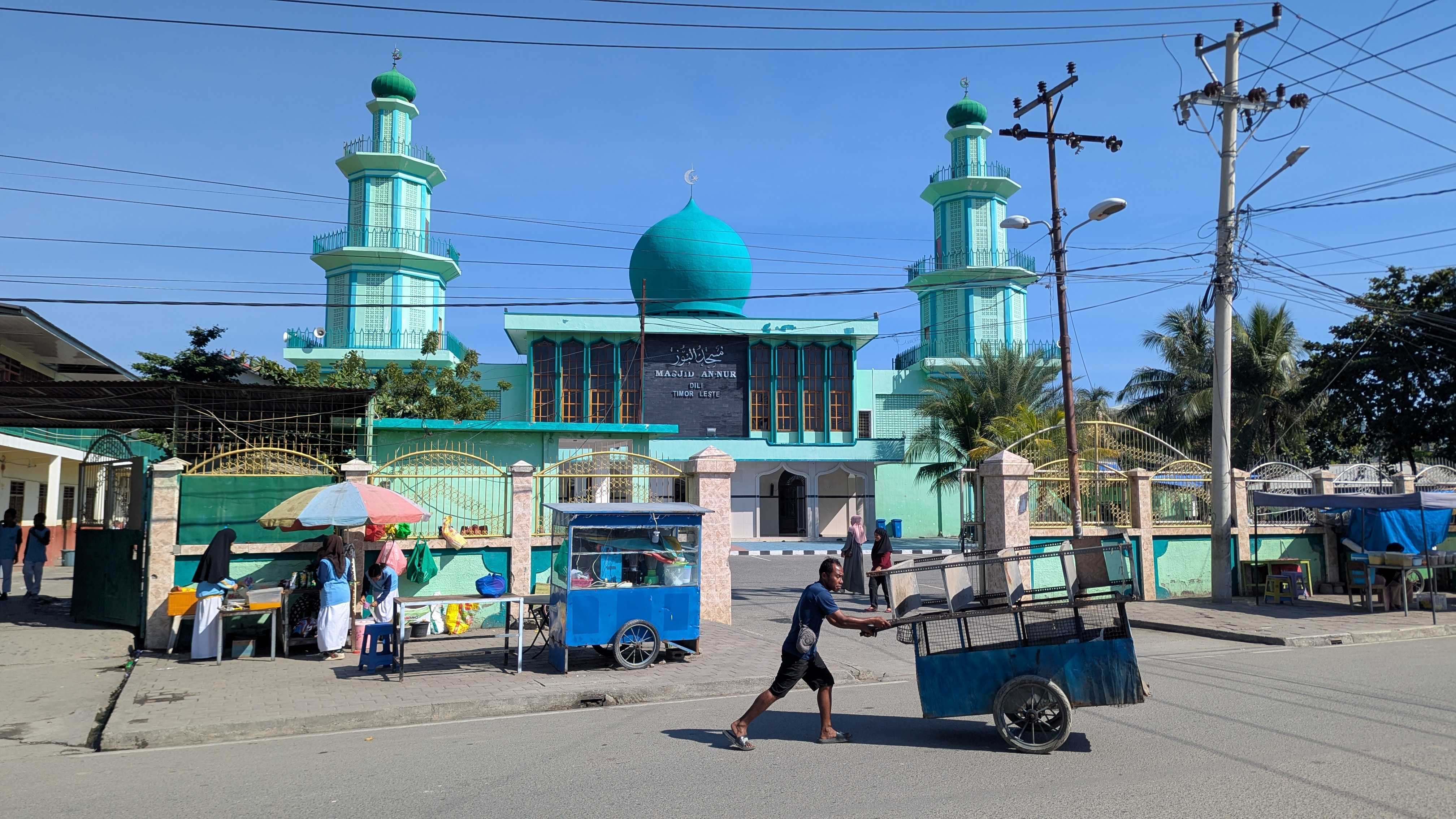
The strikingly green An-Nur Mosque in Alor Village in western Dili. 98% of Timorese are Catholic.
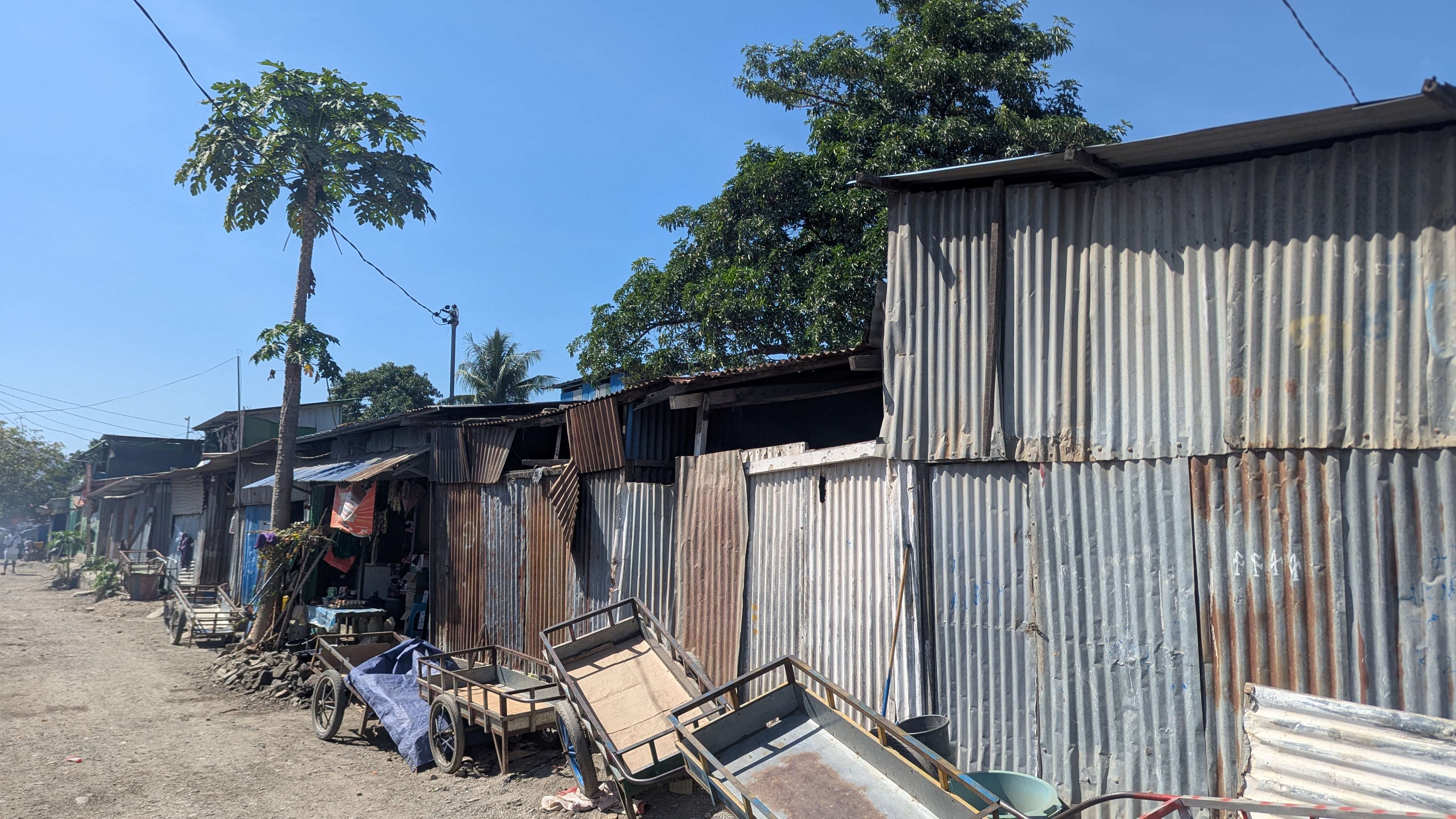
A street scene from the traditional Timorese market that is Taibesi.
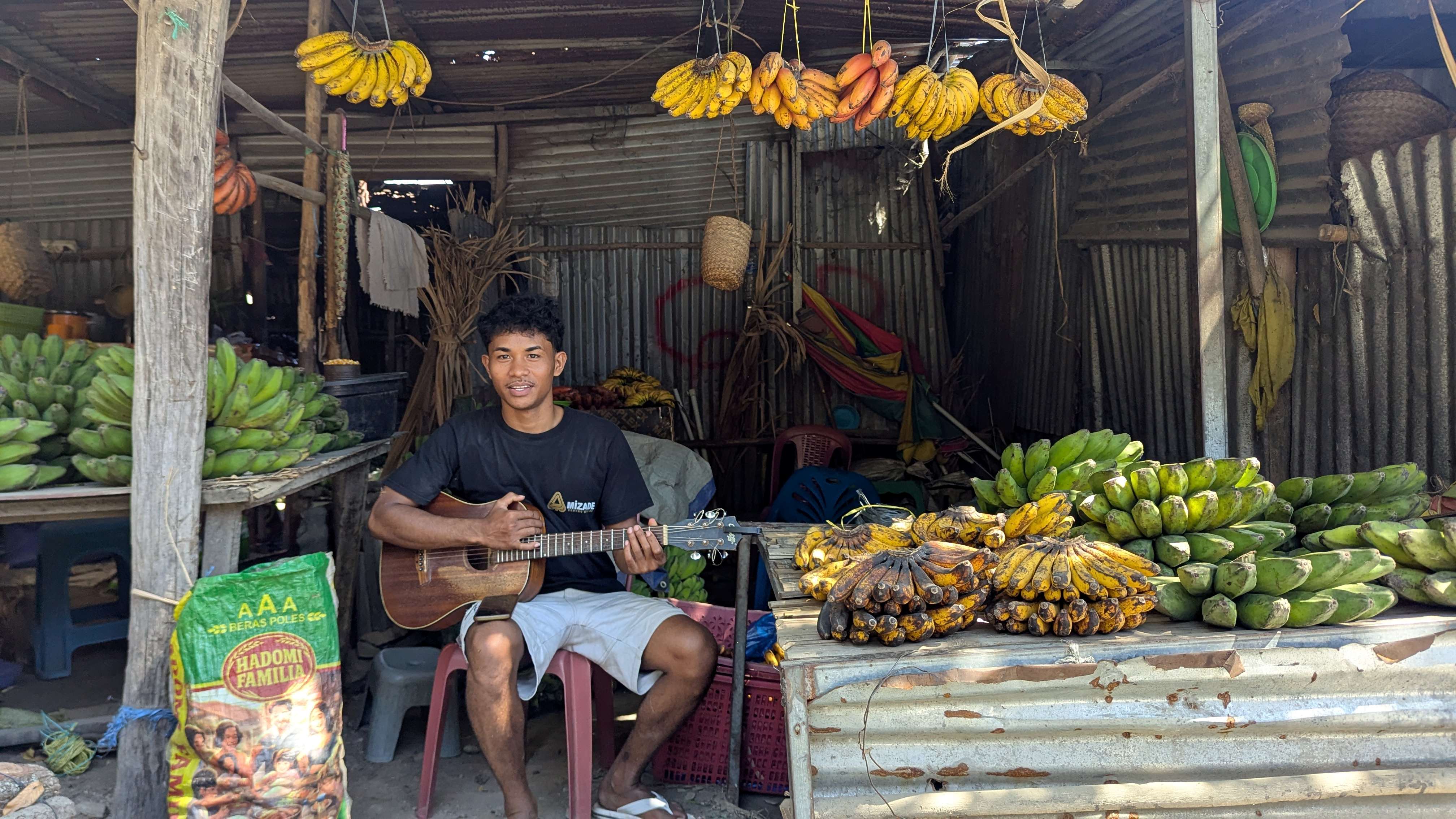
The wonderful people of Taibesi: a young man whiles away the time in his banana shop by playing the guitar.
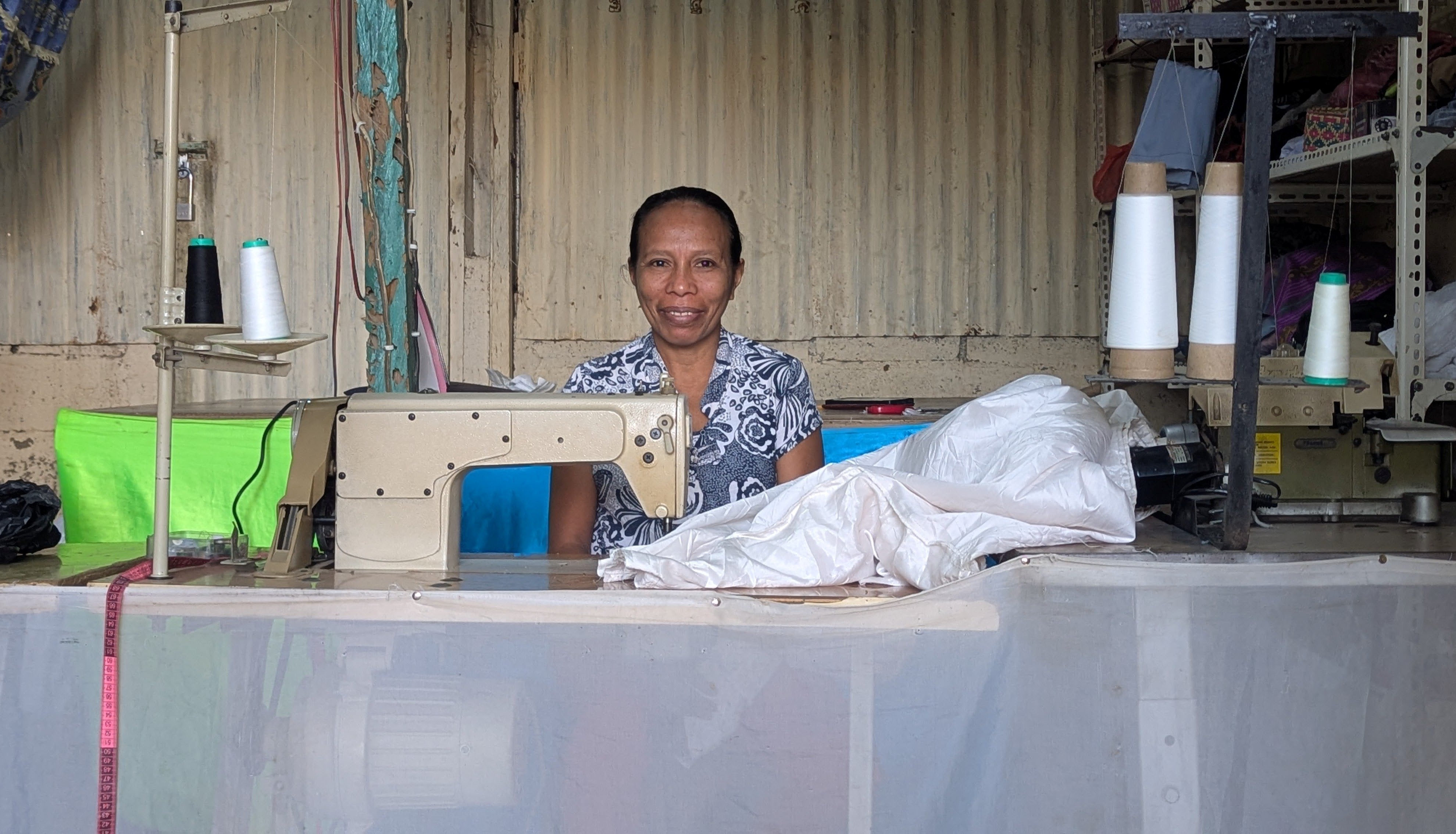
The wonderful people of Taibesi: a woman mends a dress at her sewing machine.
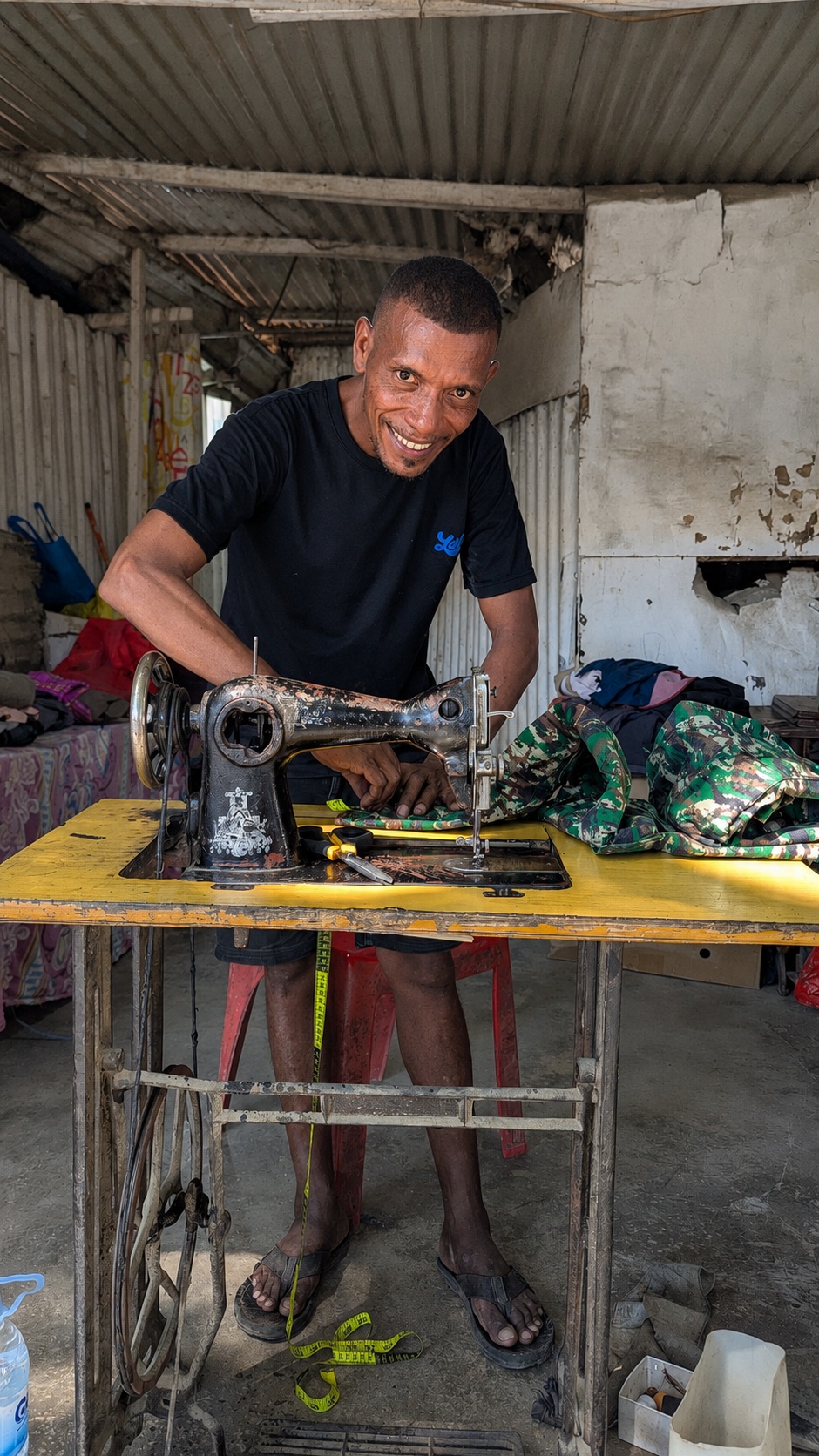
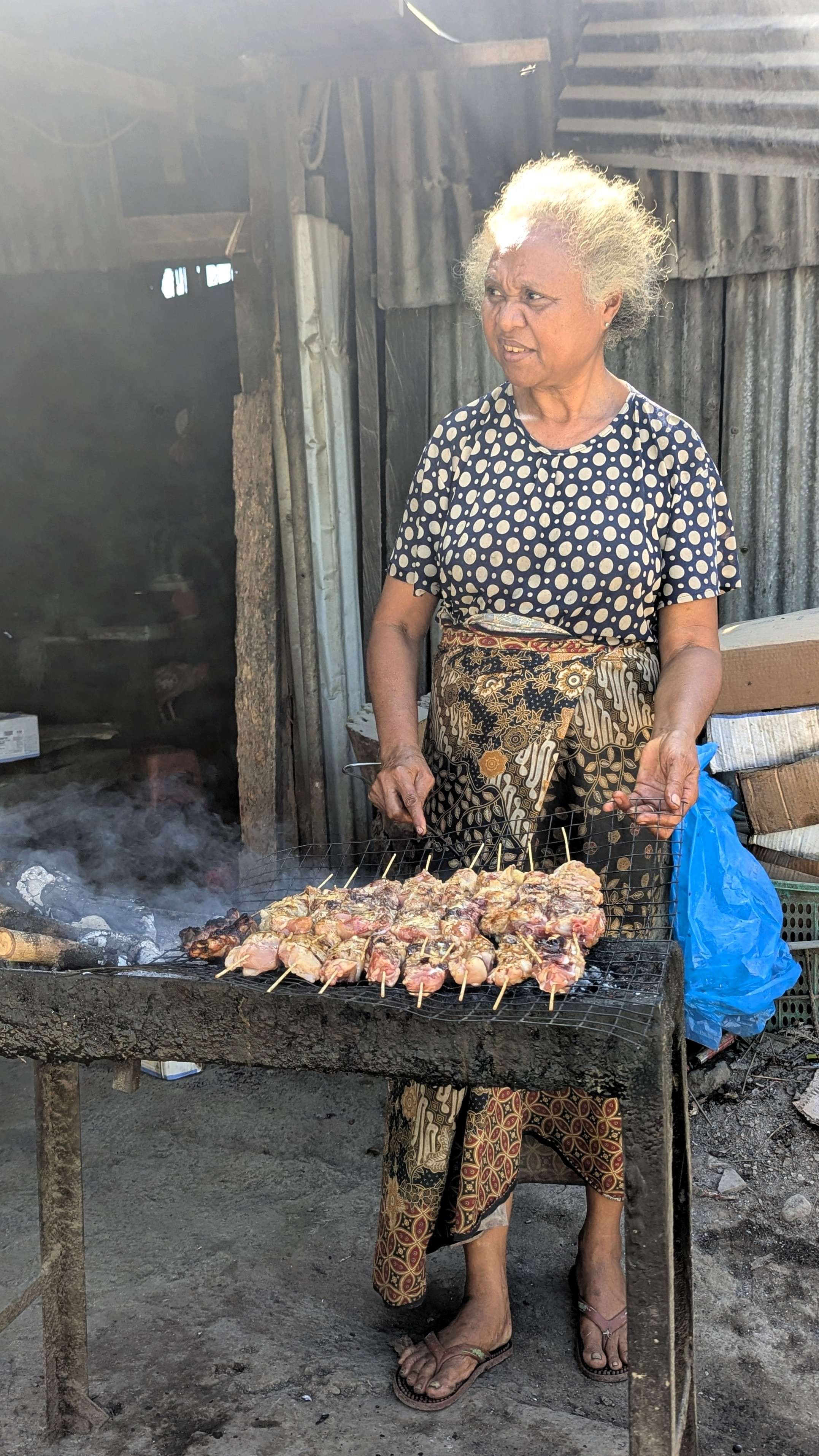
The wonderful people of Taibesi: a man makes alterations to clothing and as he does so gives me the biggest smile, and a woman rotates meat amid a smoky streetside barbecue scene.
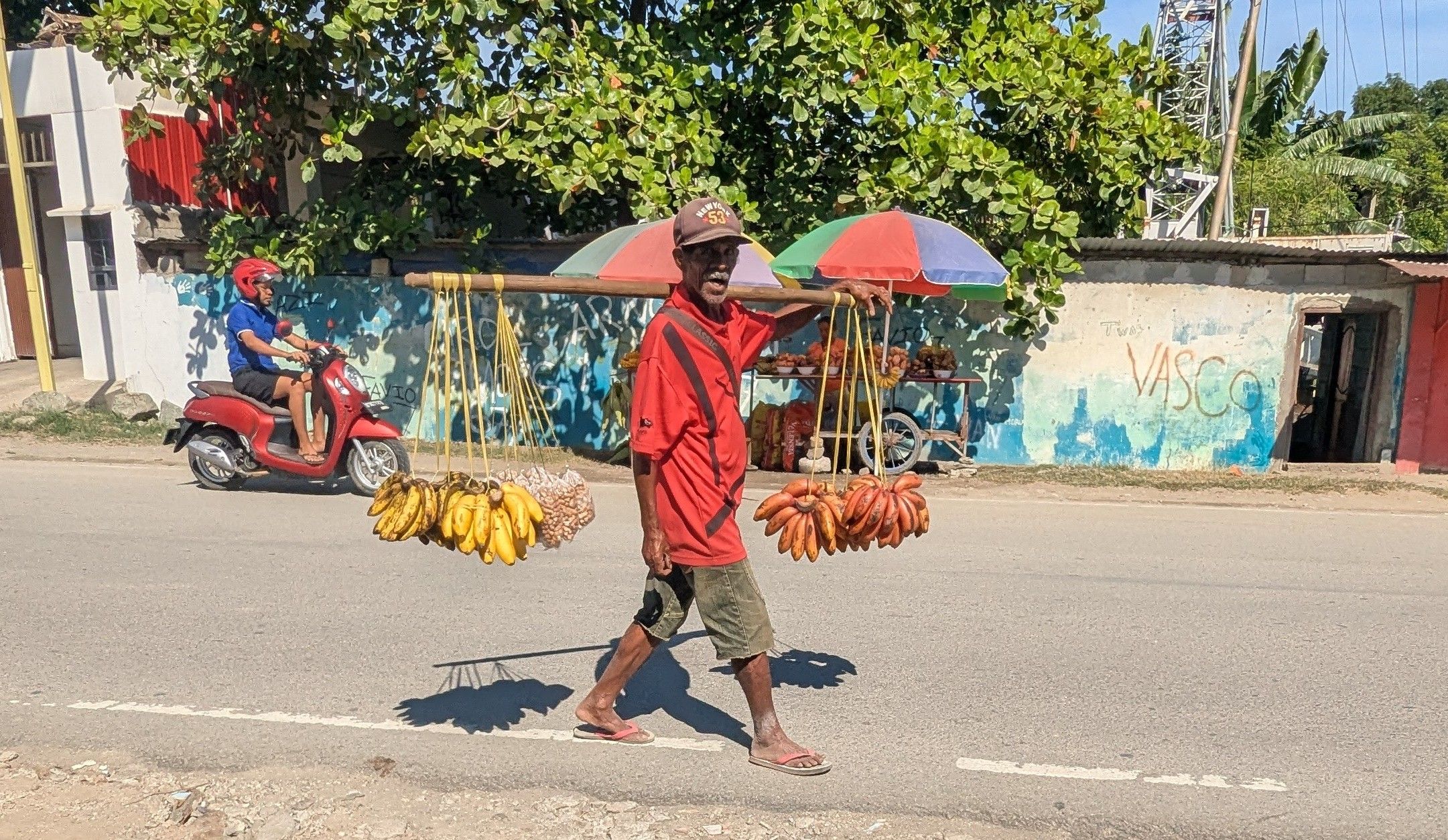
A fruit hawker balances red and yellow bananas on his shoulder pole. Sellers like this can be seen all over Dili - including with fish. They are known locally as "porta-cargas".
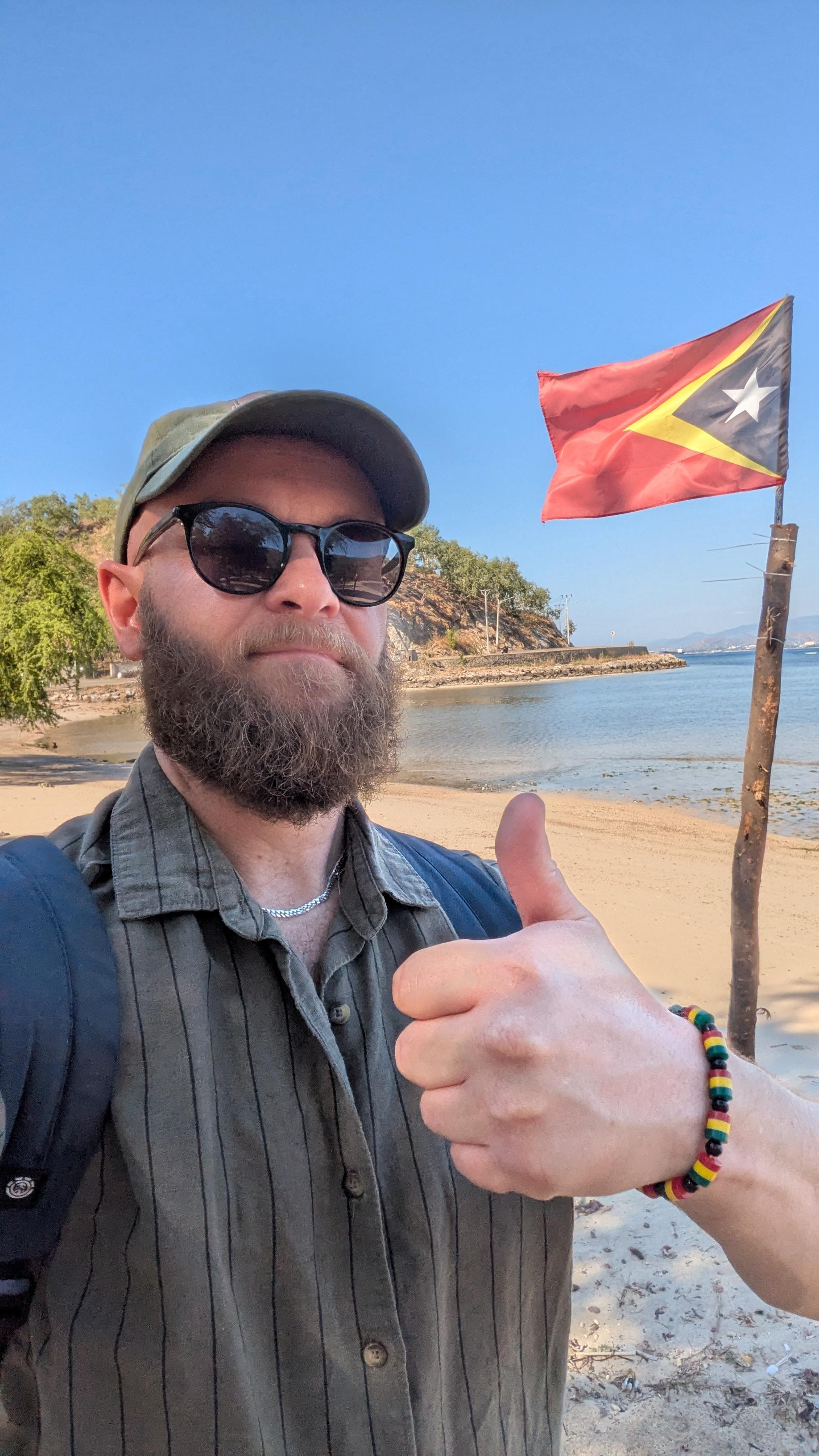
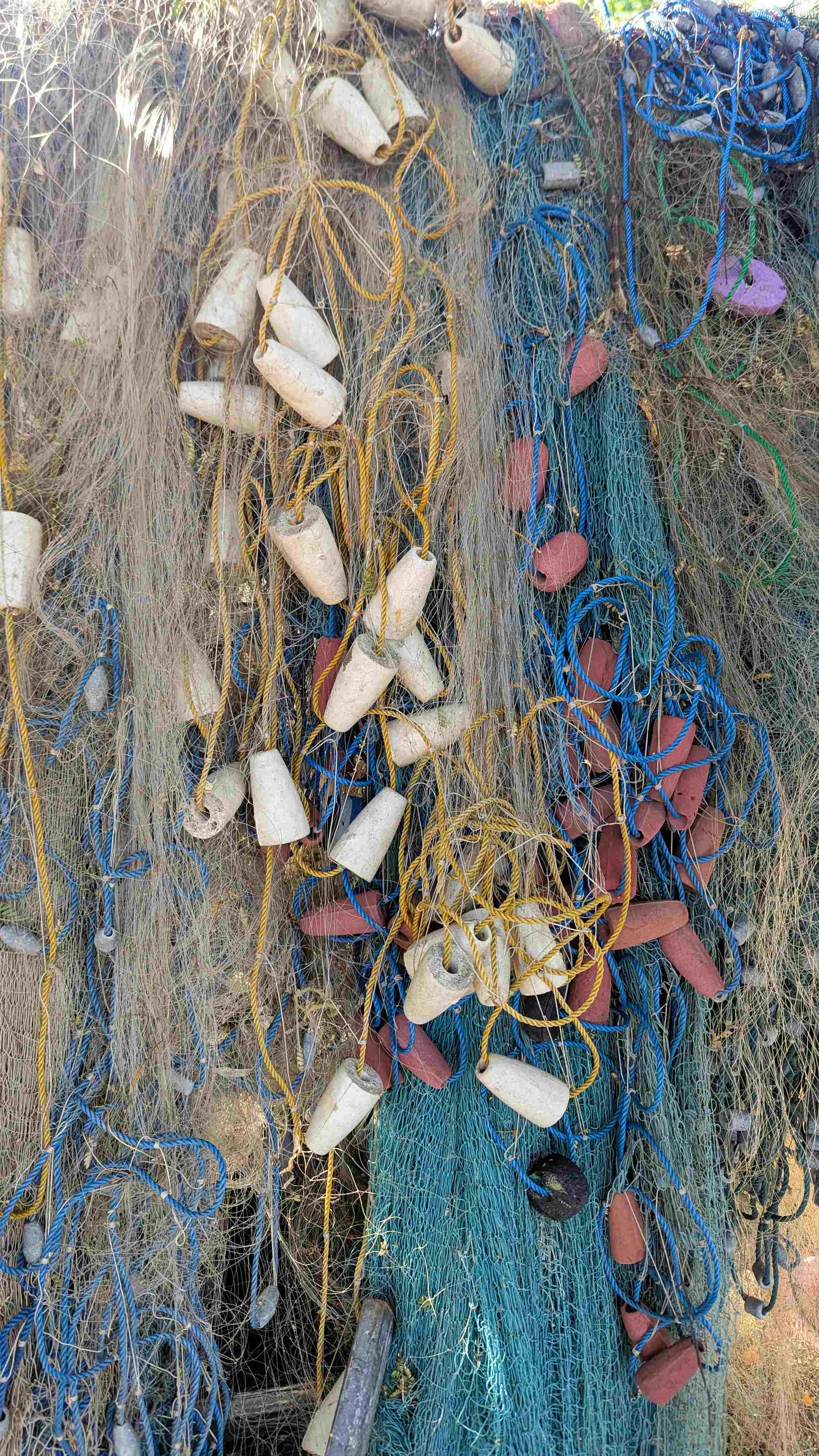
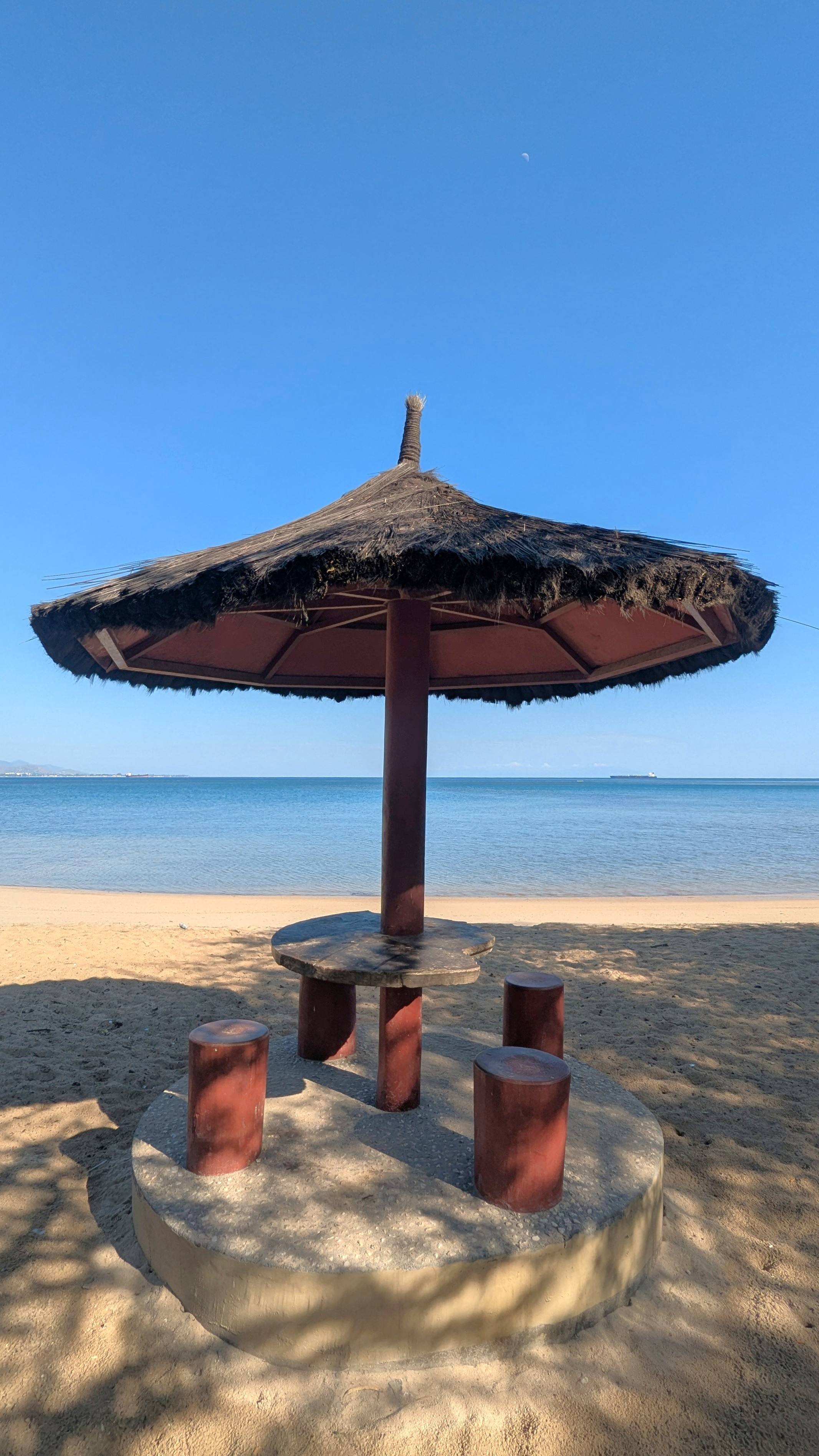
I decided to hop-on and hop-off the Microlets just so that I could see Timorese coastal life up close: a Timor-Leste flag flutters on the beach, fishing nets hang on a tree, a thatched umbrella shelter and table. Just remember to keep an eye out for crocodiles!
travel tips, links & resources
- At time of travel the Timorese Visa on Arrival at the international airport cost $30USD. Make sure you have cash to pay for it otherwise you'll be escorted by a border guard to the nearest unreliable ATM.
- Microlets provide Dili's only public transport option. Work out which number route you need for your destination (1-13) and hop aboard. Each ride, no matter how long, costs 25 Centivos. Make sure you have plenty of coins on you. Just hail these as you would a taxi, and when you want to alight tap a coin on the metal handrail above your head. There are no formal stops. It took me several days to realise that the Microlets are colour-coded according to the route number. The Dilimicroletroutes website provides a useful digital map of the Microlets' routes in and around Dili.
- Timor-Leste uses the US Dollar as its official currency. Make sure you arrive with plenty of crisp notes in your wallet. $1 notes are not accepted in Timor-Leste, only $5, $10, $20 and $50. Save any $100 bills for larger expenses like hotel accommodation or shopping in larger supermarkets, otherwise these could be difficult to spend. Prices less than $1 are covered by the Centivo coin. These coins are useful little things for hopping on Microlets or using public toilets.
- The "Basic" supermarket store in downtown Dili is a modern, clean affair with everything you're likely to need during your stay. Prices are equivalent to those in Australia.
- Timor-Leste's poor internet provision - slow speeds, dropouts - is well documented, although the situation has improved in the last few years. Nevertheless, expect slow speeds and troublesome buffering as part of your visit.
- It is not safe to drink water from the tap anywhere in Timor-Leste. It is strongly advised that you do not use it to brush your teeth either. Buy bottled water or boil any tap water for several minutes. I boiled tap water twice first before adding a water purification tablet even though I was just using it for washing up and brushing my teeth.
- Timor-Leste is crocodile country. Indeed, the saltwater crocodile is revered in Timorese culture; they are believed to be an ancestors of the Timorese people and therefore this merciless creature isn't officially culled or controlled. Be careful whenever you're near water. Local people do get 'taken' by crocodiles, and there is an annual statistic for this eventuality.
you may also like