
australia
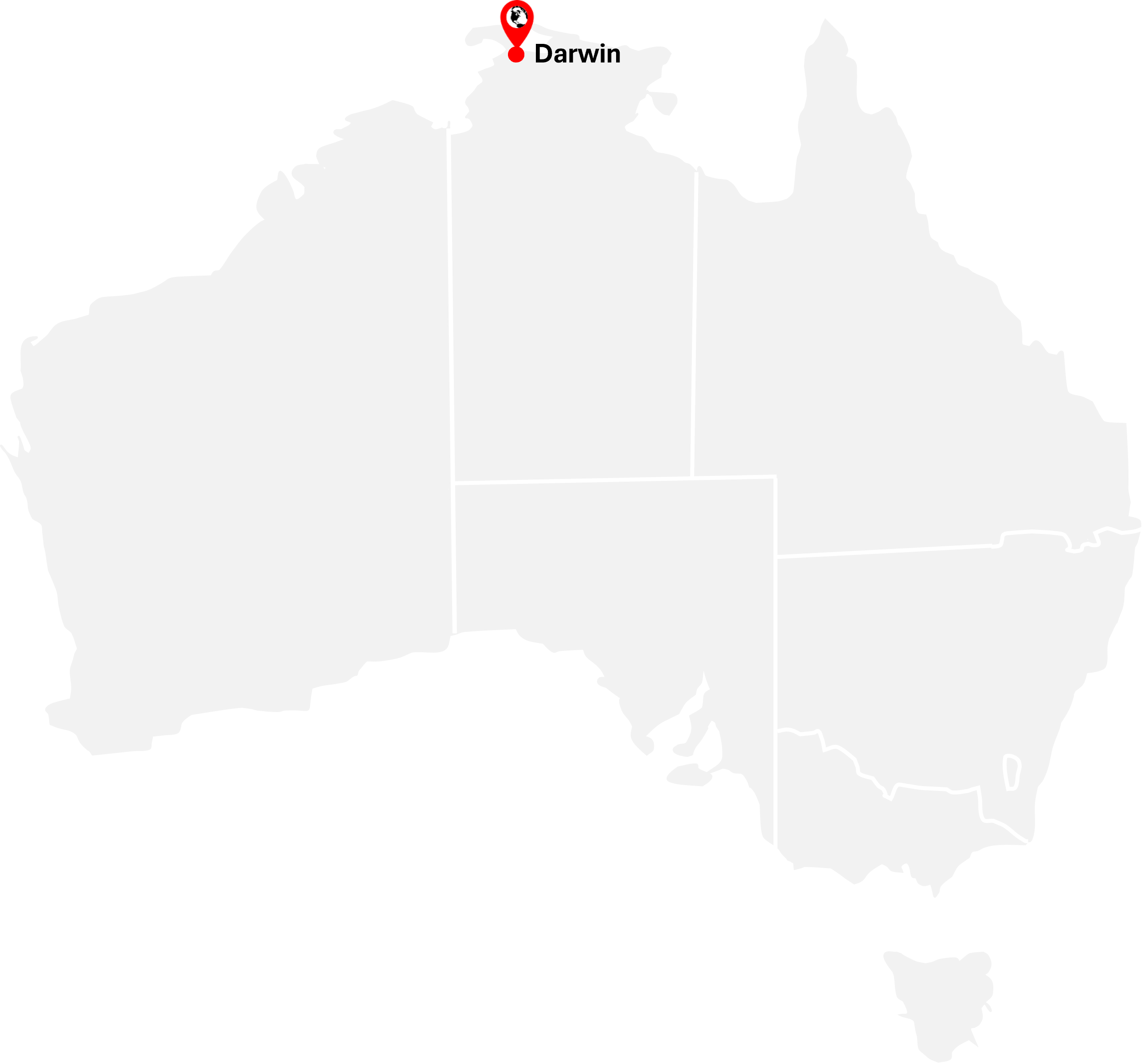
My visit to Darwin, the state capital of Australia's Northern Territory, came about solely because of some frustratingly ill-aligned Qantas flight times between Dili in Timor-Leste and domestic flights back to Sydney, which connected through Darwin. Ultimately, rather than wait eight hours for the next flight down to Sydney, which departed at 01:00am in the morning, I decided to spend just shy of 48 hours in Darwin instead by booking two nights in a hotel along Darwin's sparkling waterfront precinct. My trip to Timor-Leste, transiting through Darwin, was an opportunity to tick off the last remaining Australian state capital I had left to visit, penultimately also completing a trip to the Queenslander capital Brisbane earlier this year. I had visited all Australian States and Territories long before now but not the state capitals and so, as I was coming to within days of my tenth anniversary of living in Oz, it felt something of an appropriate milestone to have reached.
Despite its unashamedly colonial name (the city is named after Charles Darwin the Victorian Naturalist and Geologist), Darwin appears modern enough; the Waterfront Precinct presents with the kind of bland, boxy, functional architecture that is characteristic of many Australian cities, with only a few colonial-era buildings to disrupt the soul-destroying banality of it. I arrived late afternoon and just in time to see an awesome sunset across the Timor Sea, part of the Indian Ocean, and amid bustling scenes in Bicentennial Park as part of the Garramilla International Food Fair. More raucous scenes awaited me on the main tourist strip. It's fair to say that Darwin on a Saturday night is quite wild and, as Australians would say, "loose"...
On a Sunday morning, in search of a decent coffee and some "brekkie", by contrast, Darwin is the Mary Celeste of cities. I happened upon the idea of zooming around the city's hot and empty streets on an e-scooter; a far more comfortable way of seeing Darwin's famous murals. Indeed, the city bills itself as the mural capital of Australia - and admittedly there are some incredible ones, most notable of all the giant mural depicting the moment the then Australian Prime Minister Gough Whitlam poured red earth into the hands of Indigenous man Vincent Lingiari - one of the most powerful and defining moments of the Australian 20th Century and a symbolic act which sought to address the vagaries and injustices of colonial Australia. Having taught this iconic Australian moment to students through Noel Pearson's speech 'Eulogy for Gough Whitlam', seeing this mural in downtown Darwin felt extra relevant and special.
My time in Darwin amounted to less than two full days and yet I saw and spoke to more Indigenous people in this time than I have in the entirety of my ten years of living in Australia. Indeed, a trip to Darwin is at times unpalatable; the disparity between black and white is unavoidable and confronting. I don't understand everything about this issue, and I'm certain trying to resolve intergenerational trauma and hundreds of years of dispossession and inequality is profoundly complex. I've also met many Australians like me who see what I see and feel what I feel. There are countless Aussies doing what they can to make a change, many acts are symbolic, others less so. And yet not much seems to change, materially, for the folk who called this immense continent their home first. Two moments struck me as particularly poignant and moving in this respect. On my second morning I noticed a large gathering of Aboriginal people in Bicentennial Park. From a distance I conceived approximately 200 people may be listening to a speech or be involved in a rally or other community gathering. I quickened my pace to see what was going on. As I got nearer, I could see that this was not a crowd but, in fact, a line of Aboriginal people. My eyes followed their gaze straight ahead. A man was serving hot dogs from a small trestle table in the car park whilst people lined along the fence that separated the park from a tumble down the cliff's edges. These people were queuing patiently and orderly. For food. I chastised myself for being so naive. Community event indeed. From various details I concluded that the food was likely provided by a local church. Of course, there is poverty in every city the world over. However, this was poverty undeniably and exclusively along racial lines and it was writ large in the city's principal park, as white Australians jogged, walked or sauntered past seemingly without a care in the world.
A second experience, or more accurately, experiences, I found to be quite unsettling. I began to notice that Indigenous folk would apologise to me as I passed by. This happened on no less than three occasions in quick succession - too often for it to be mere coincidence: different people, different reasons but the same apologising nonetheless. The unnecessary apology quickly became a motif in my brief but frequent interactions with Aboriginal folk and could only come from a community of people who feel like unwanted guests in their own land, from an ingrained colonial dynamic inexorably forged in the fires of racial inequality over generations. Each time I was the recipient of an unnecessary apology I replied, "all good" and "no worries". Ultimately, I felt the Aboriginal people of Australia should be the last ones to apologise for anything...
Darwin, and by extension the Territory, likes to trade on its fearsome reputation as the home of hard men who wrestle crocs for fun, eat kangaroo burgers for breakfast and drinks schooner upon schooner of lager at night. It revels in being the home of the archetypal Aussie male, the kind depicted in the 'Crocodile Dundee' films: boorish, thong-wearing, Akubra hat-wearing, "mate"-saying, carnivorous and unquestionably heterosexual. This may be a lazy stereotype but it is one embraced and promulgated by Territorians themselves. Proof of this point comes in the form of the official tourism slogan for the Northern Territory: "CU inthe NT".
A visit to Darwin therefore proffers the visitor the potential to be more than just a city break if you want it to be. It's an opportunity to witness first hand the coexistence of multiple Australias: Aboriginal Australia, White Australia, Asian Australia - all coexisting, although not quite integrating, perhaps, in a relatively small city amid bland, boxy architecture.
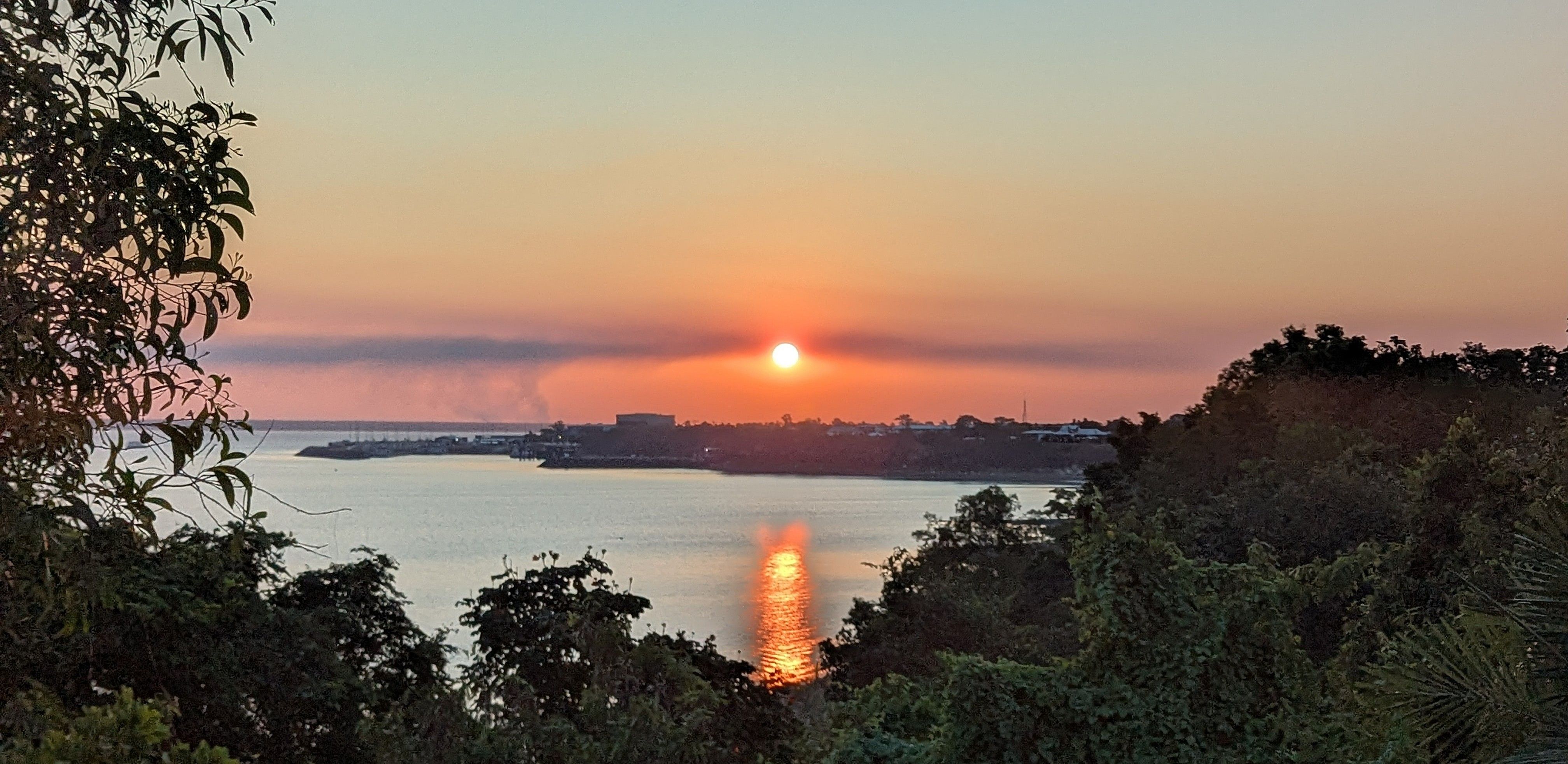
I arrived late afternoon and just in time to see an awesome sunset across the Timor Sea, part of the Indian Ocean. You can see the smoke from backburning discolouring the horizon.
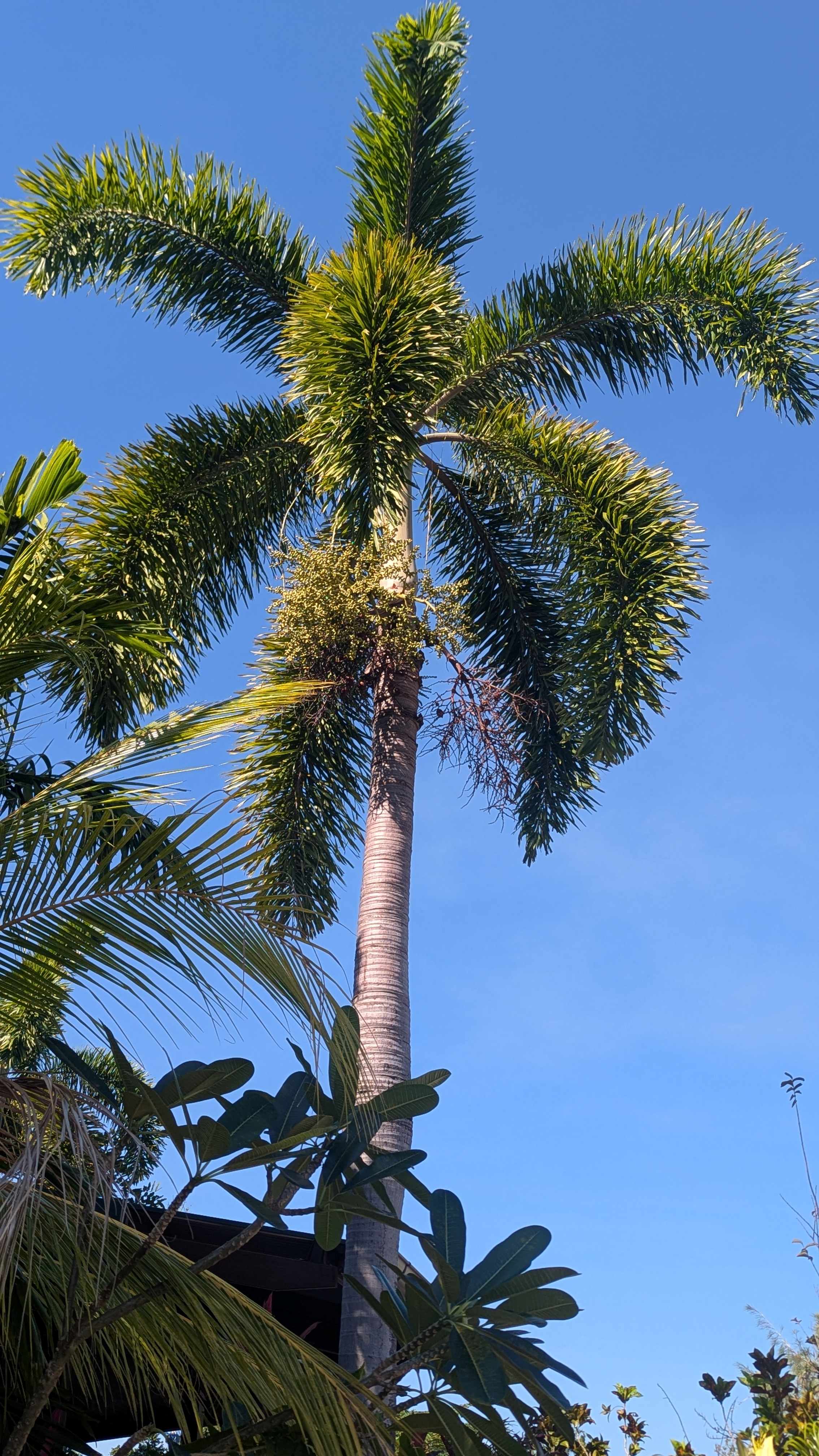
My favourite Palm tree: a Foxtail, native to northeast Queensland.
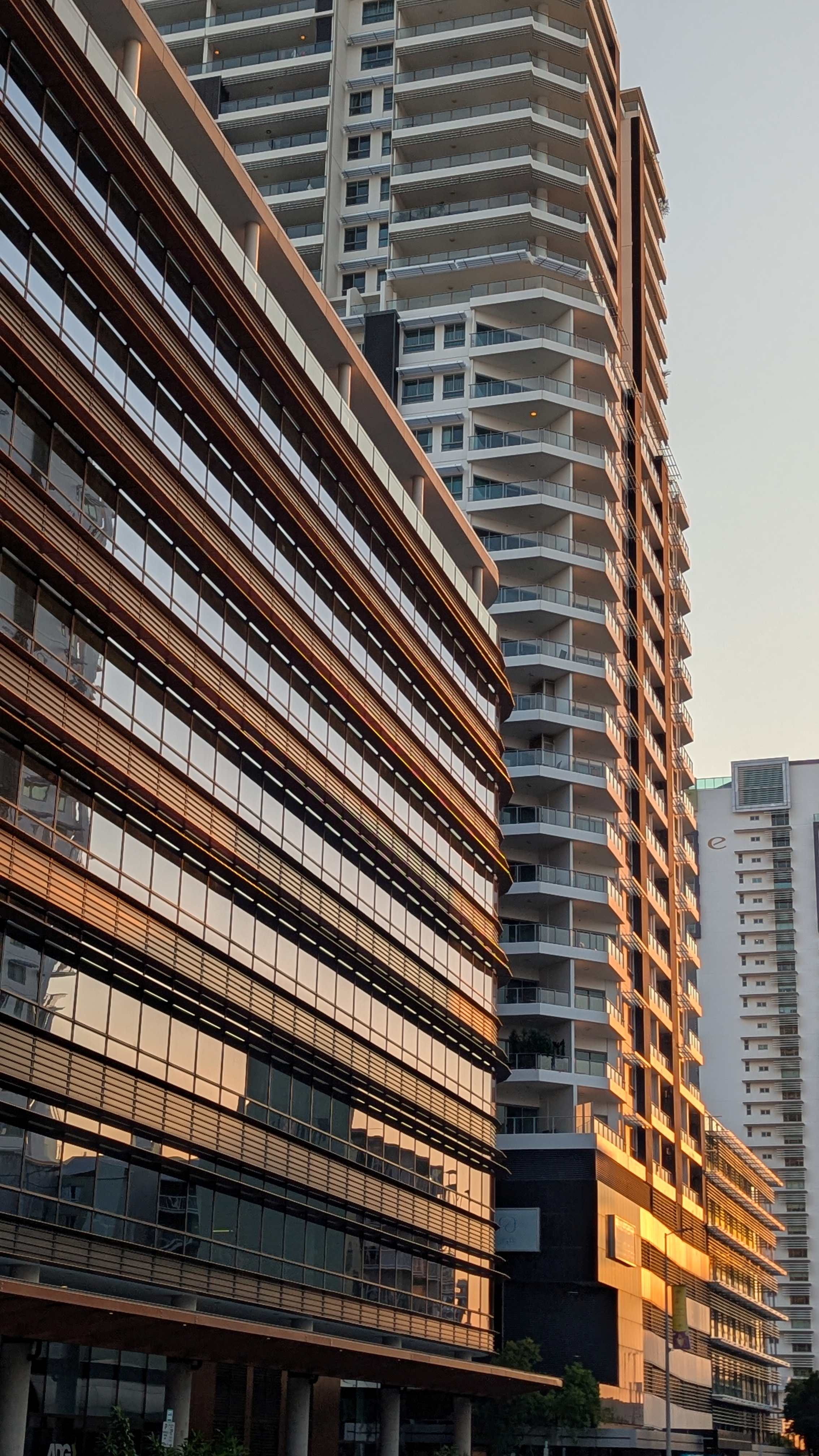
Darwin's functional architecture: a boxy nightmare in glass and steel.
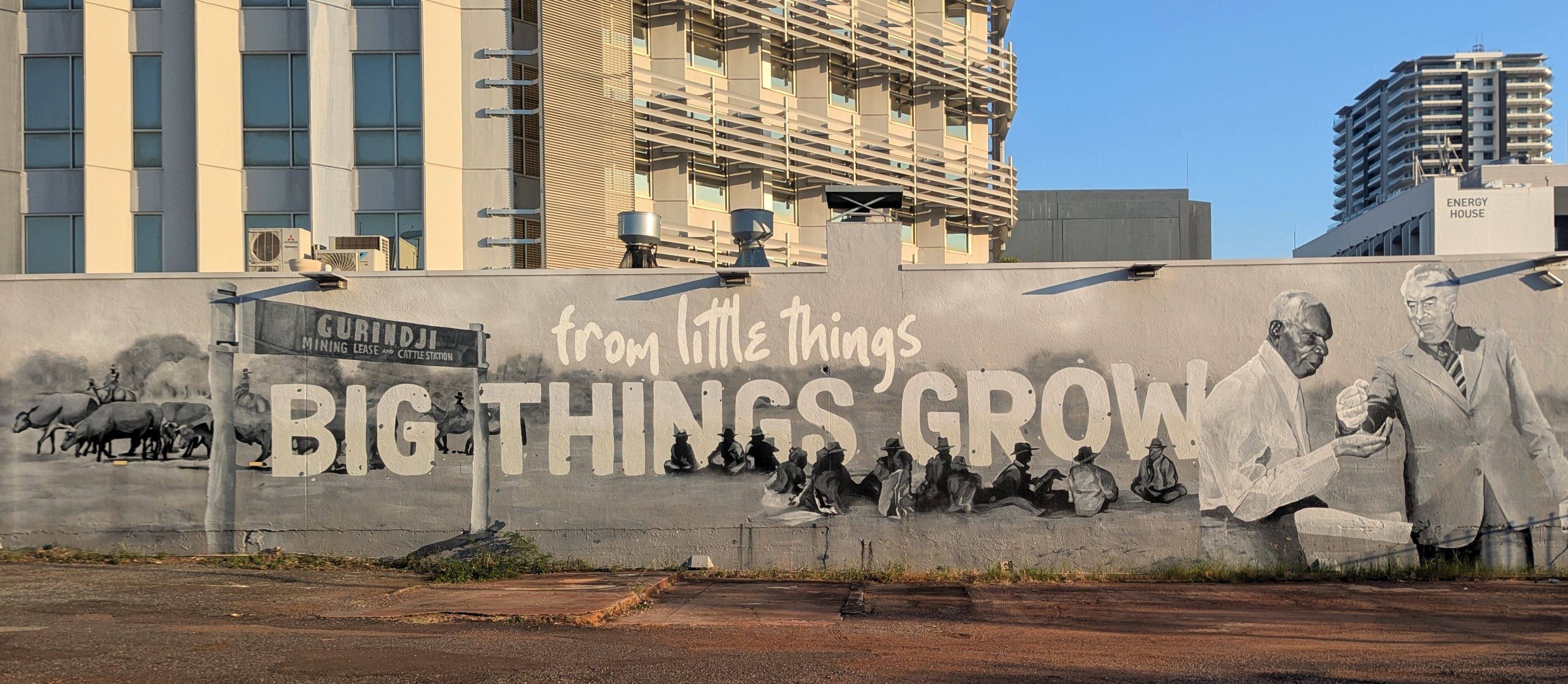
The mural depicting the iconic moment in Australian history when Gough Whitlam poured red earth into the hands of traditional land owner Vincent Lingiari. Located opposite ABC Darwin.
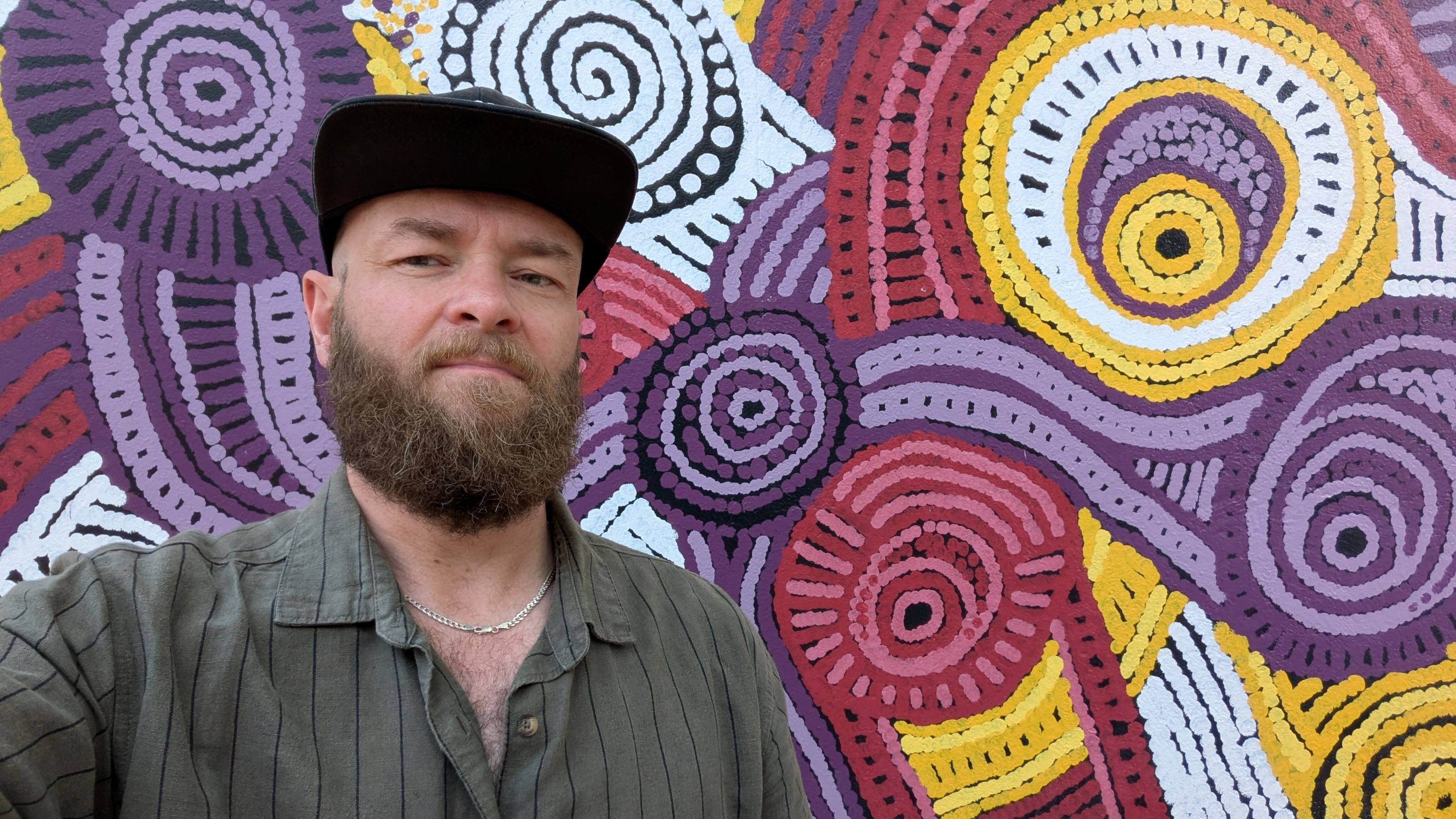
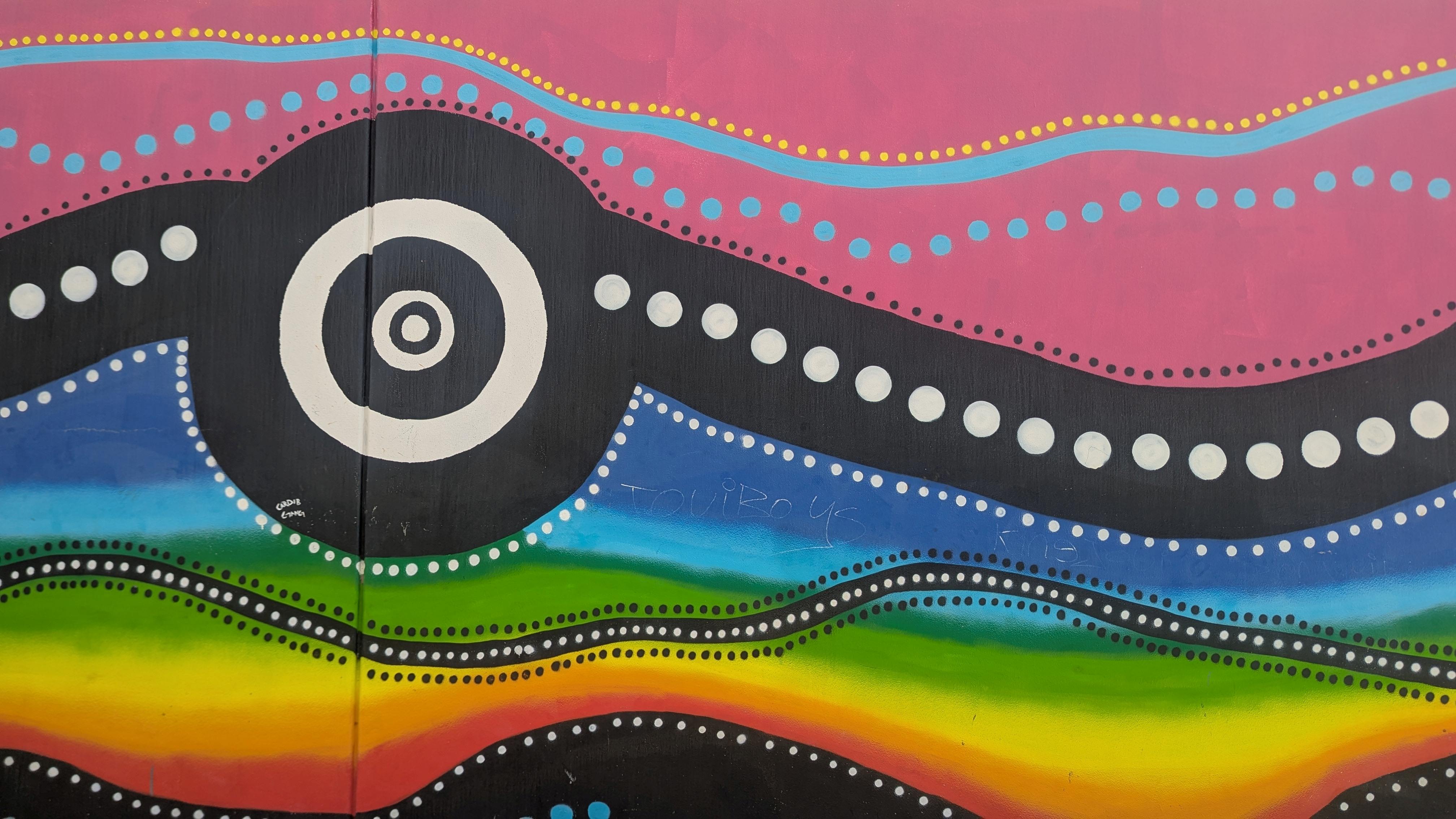
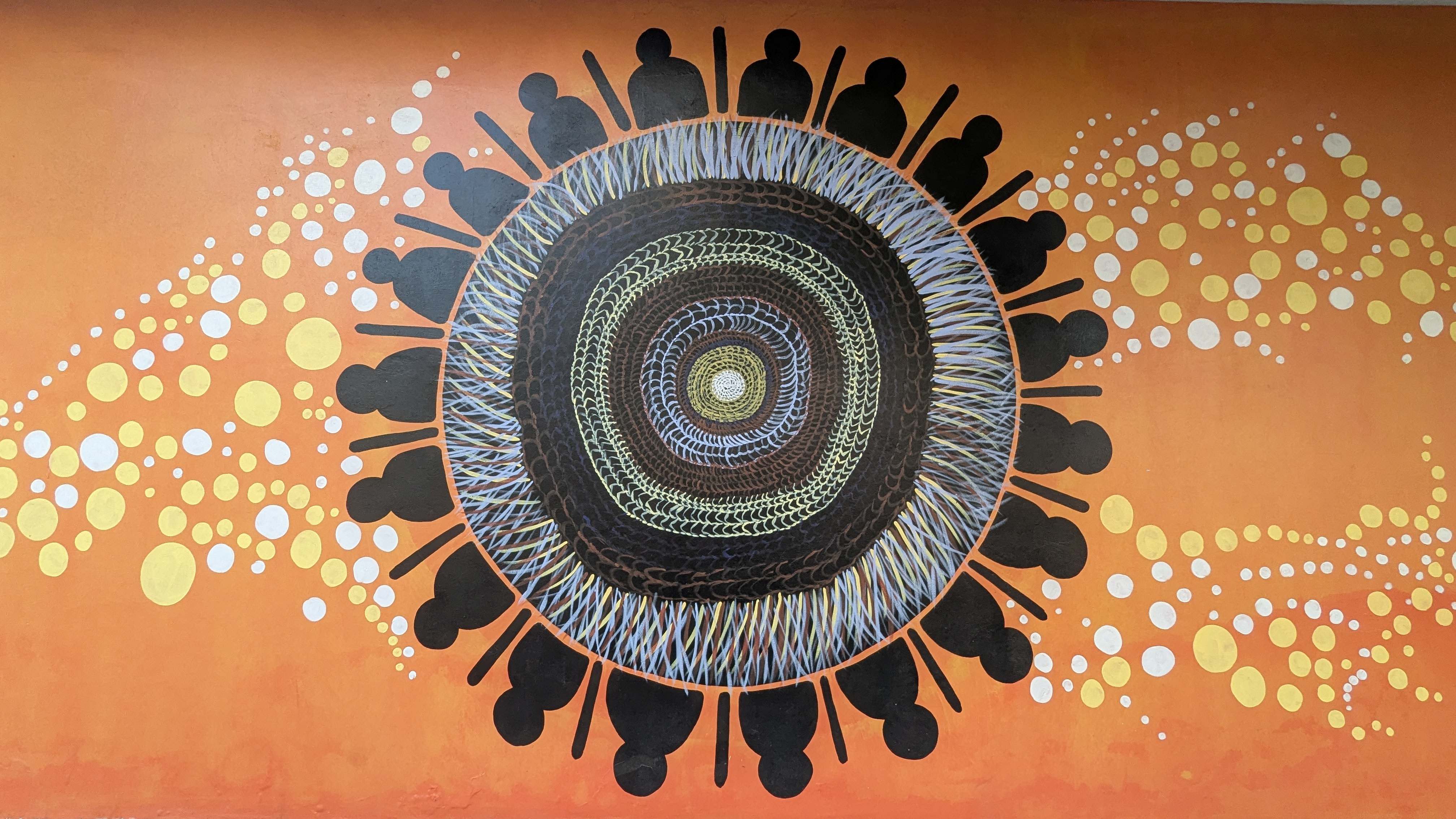
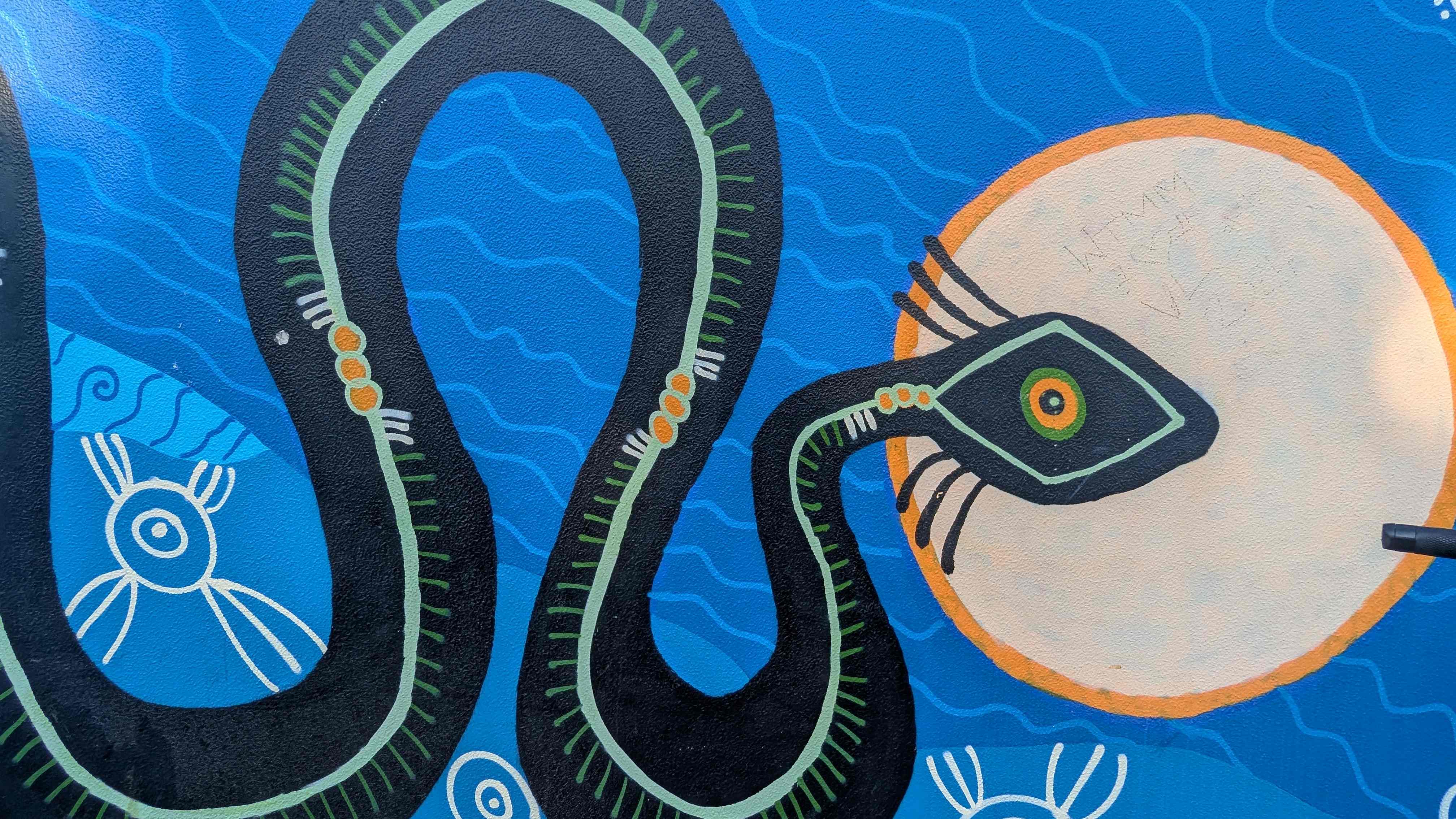
Exquisite murals in downtown Darwin featuring a range of Indigenous totems and designs.
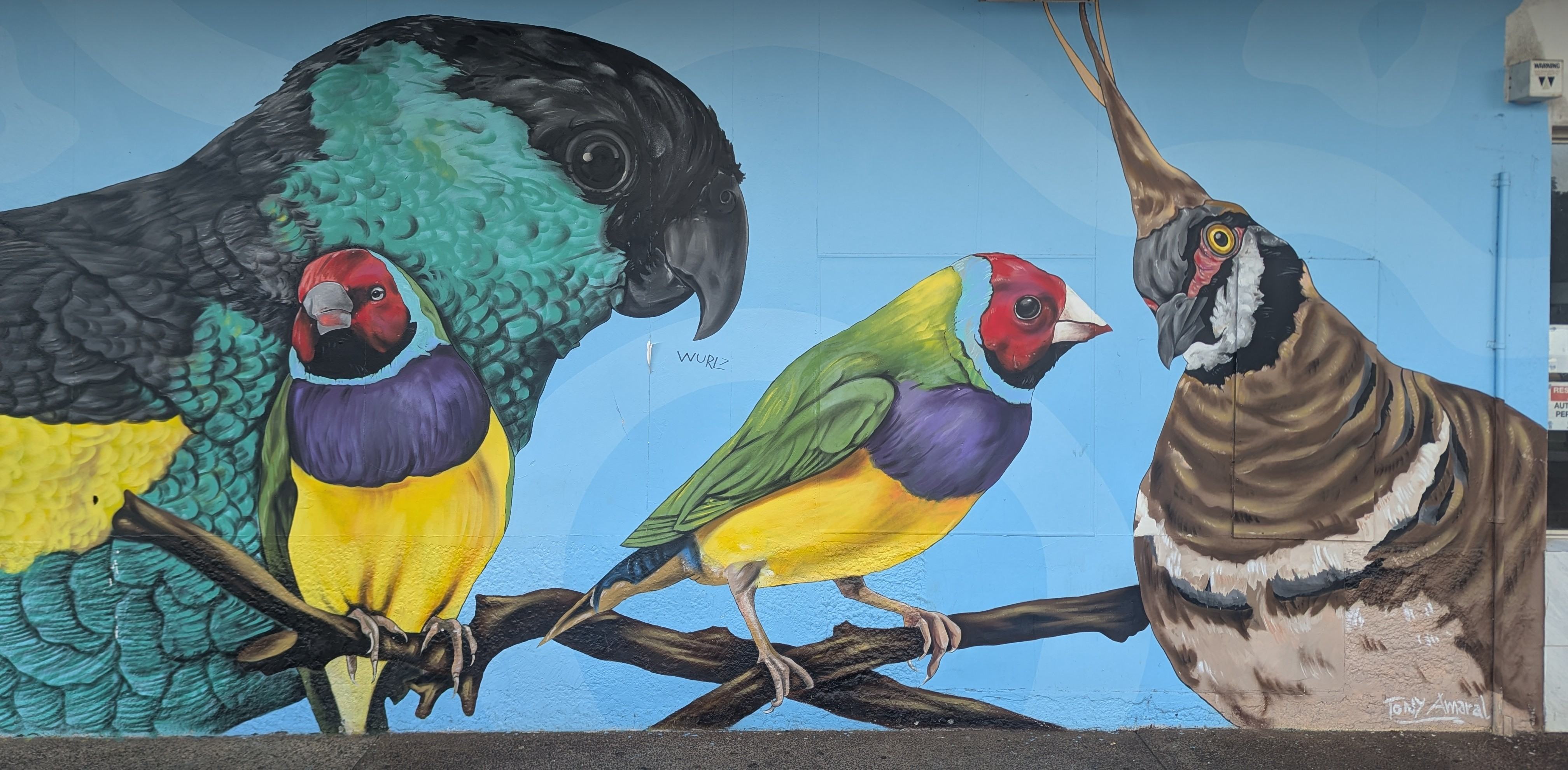
Darwin murals featuring a range of Australian wildlife.
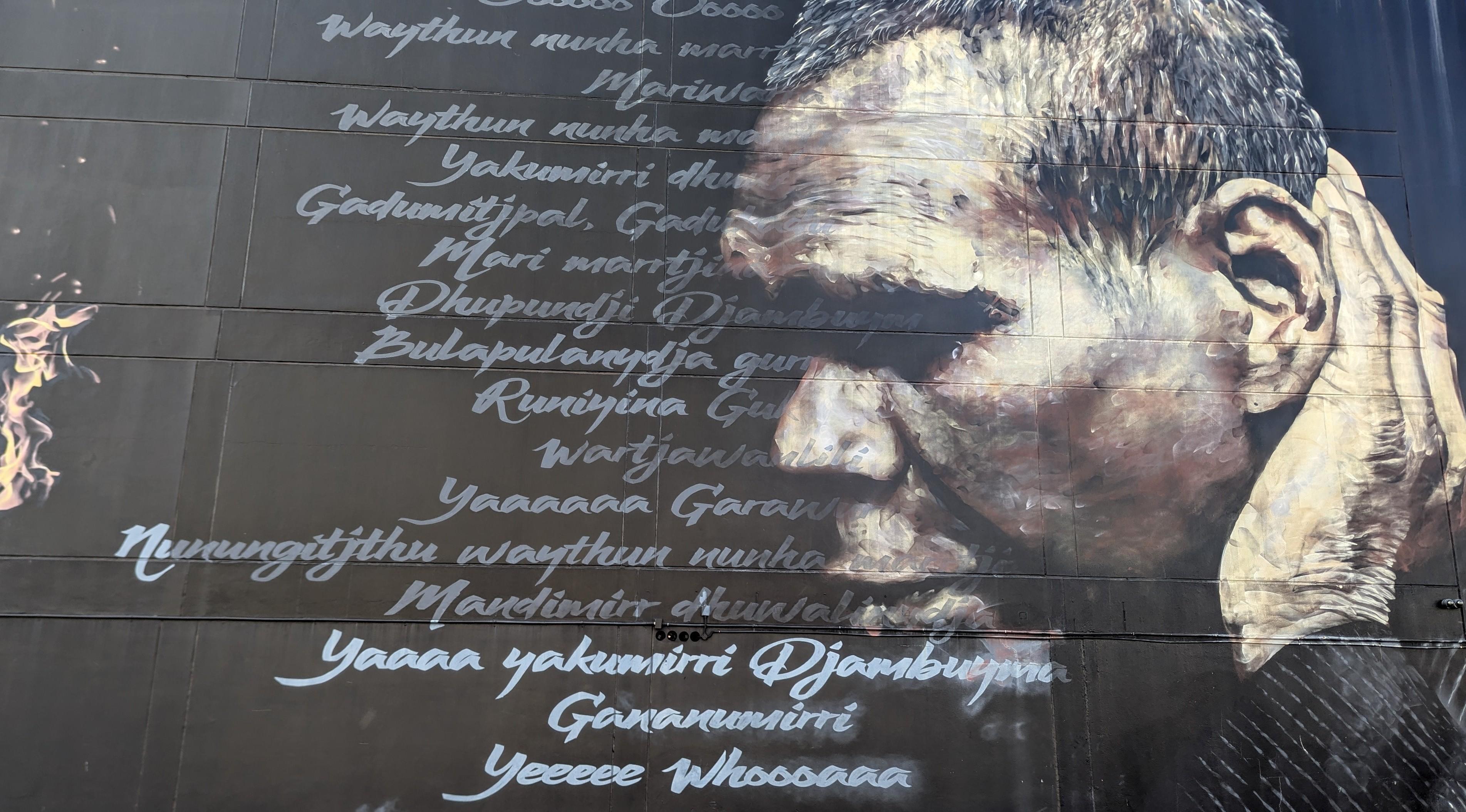
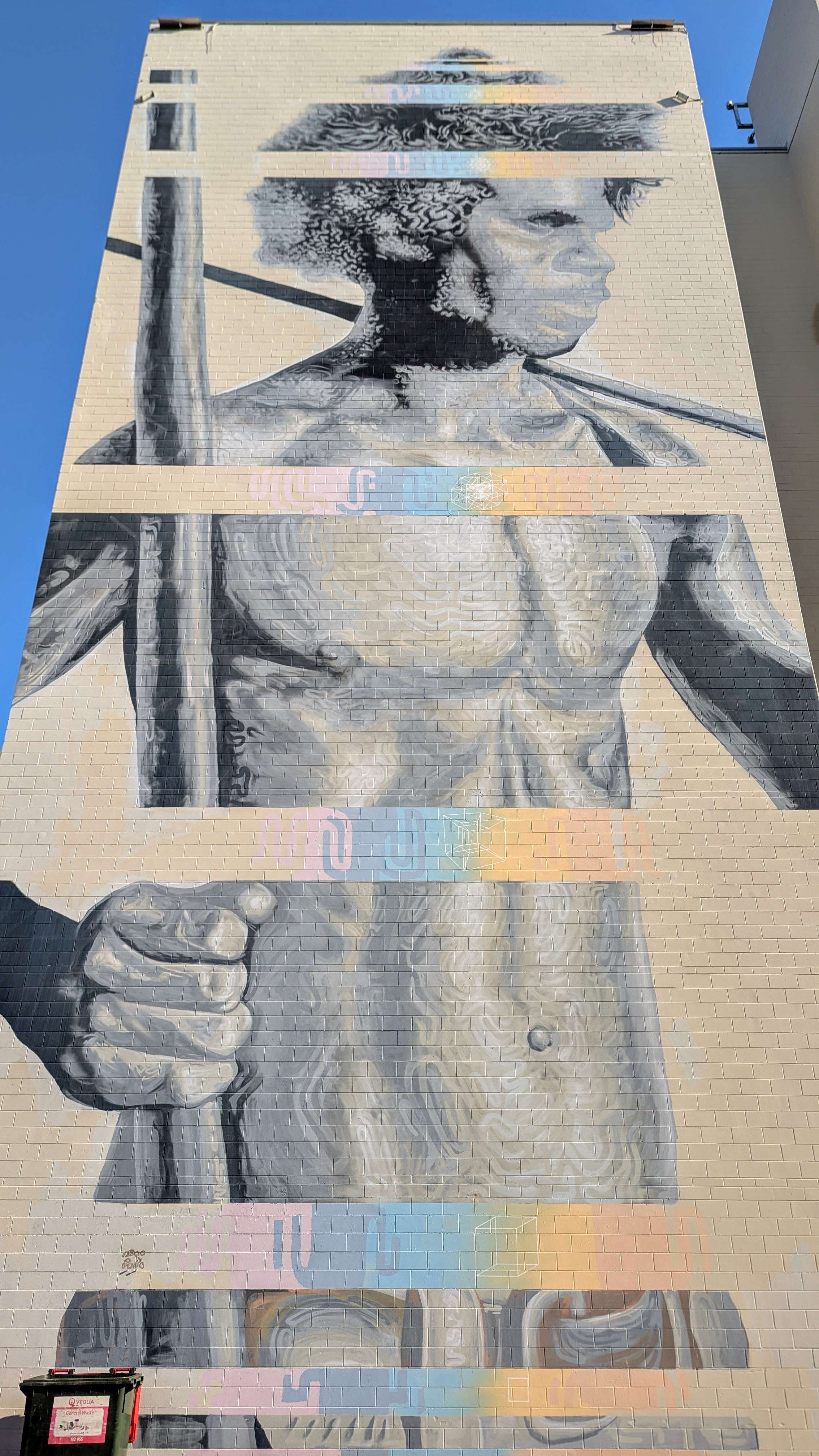
Striking large-scale murals about the Indigenous experience in Australia. First, lyrics from the song Baru dress the famous Dr G (Geoffrey Gurrumul Yunupingu) and, right, an Indigenous warrior's form is intentionally fragmented by horizontal bands contrasting ancient culture withthe modern world.
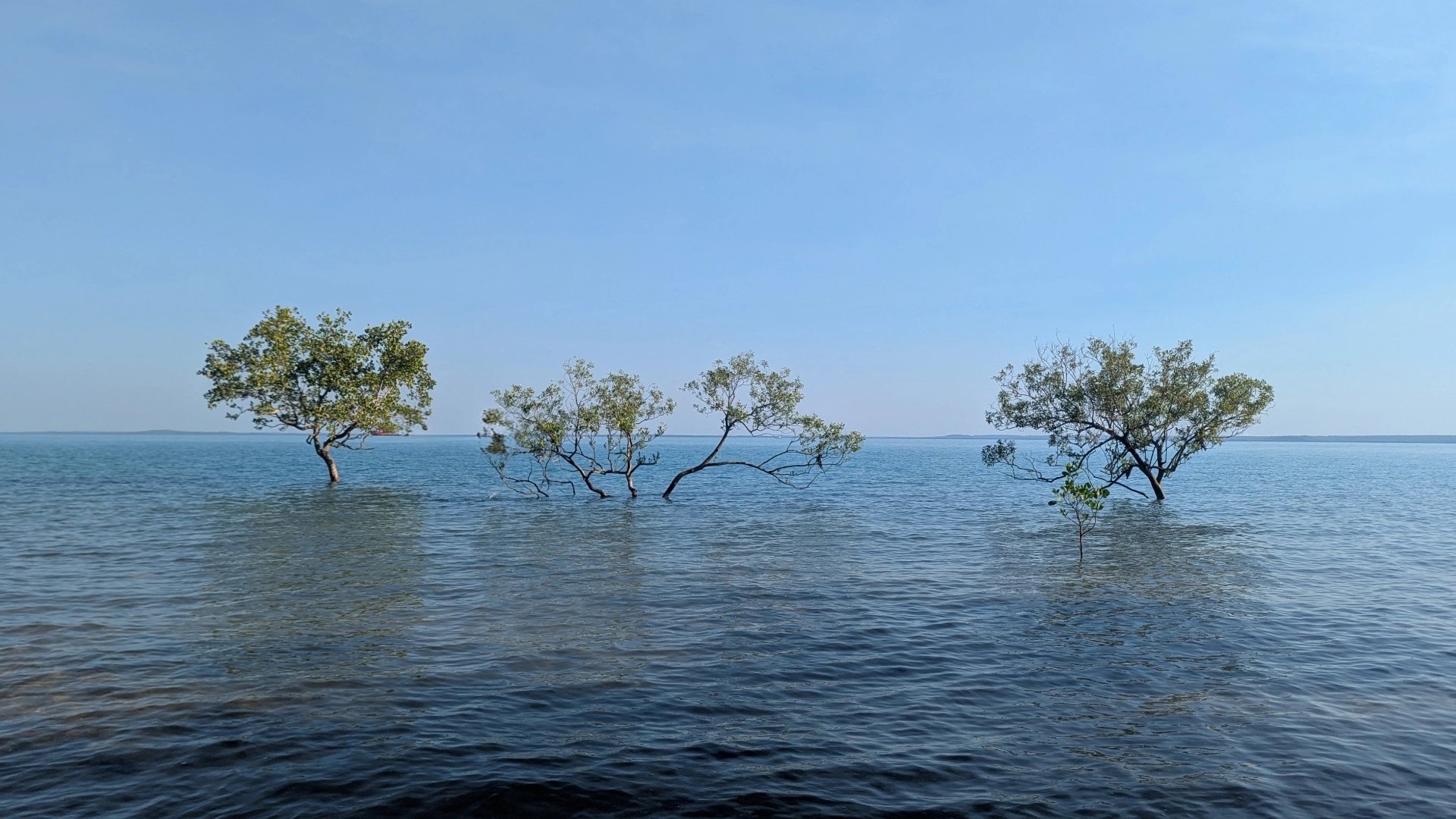
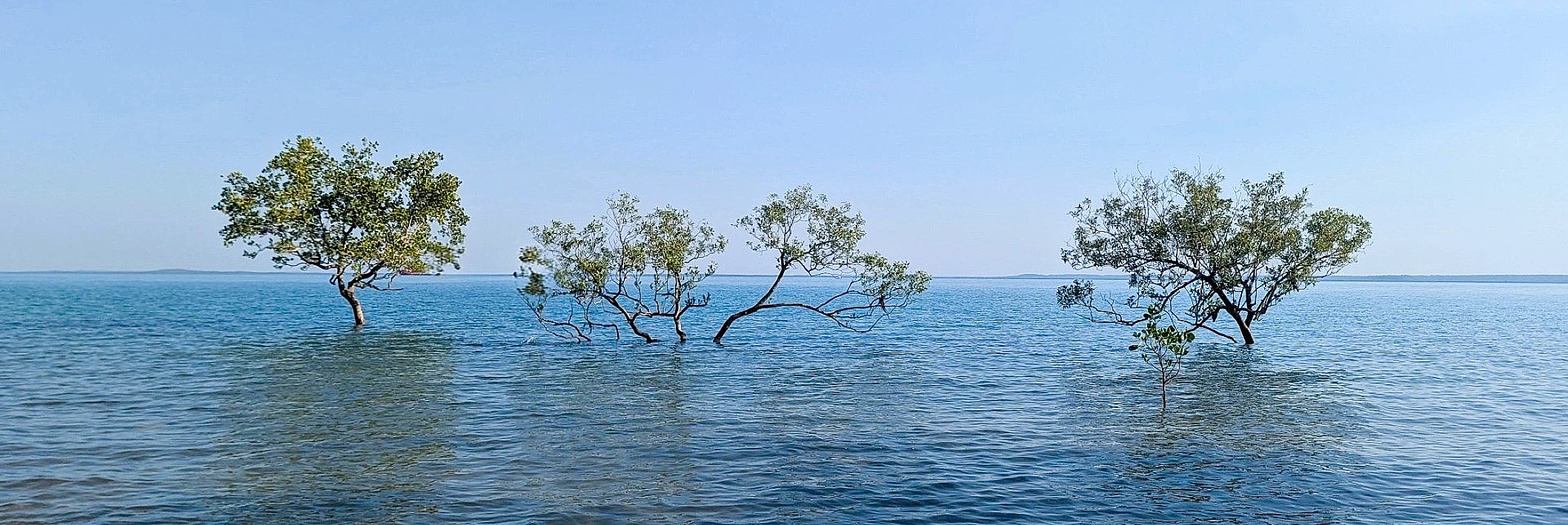
Three mangrove trees line up in the Timor Sea, Indian Ocean, at Lamaroo Beach.
travel tips, links & resources
- Darwin isn't the kind of place you spend any more than a couple of days in, unless you're taking day trips out from the city. There are few landmarks to speak of and only a handful of touristy activities of which to avail yourself. I have been to all Australian state capitals and so arrived in downtown Darwin with my expectations aligned accordingly so it wasn't a problem. Ultimately, I was only in the city because my flight connected through Darwin airport.
- Darwin is the only Australian airport offering direct international flights to Timor-Leste, the tiny country in Southeast Asia. The 1 hour 20-minute route is served by both AirNorth and Qantas and flight costs are relatively stomachable by Australian standards. At time of writing, Qantas was flying daily to Dili, the Timorese capital. If you're in Darwin and you suffer from wanderlust, a trip north to Timor-Leste is worthwhile as there are only a tiny handful of countries in the world flying into Timor-Leste. Being in Darwin is a golden opportunity in my opinion.
- Accommodation in Darwin is relatively limited and, at busier times like weekends, is ridiculously and frustratingly expensive. Despite the cost standards are almost always unfailingly clean but basic and poor value for money by international standards. Like many hotels and overnight accommodation in Australia, breakfast is rarely included in the room rate and provided at an additional cost only. Check-out times are almost always a painful 10am.
- Rumours abound that the crocodile population is increasing around Darwin because of a change in attitudes and culling policy. Read up on local advice regarding any waterways or beaches you're intending to visit.
- E-scooters in the city are operated by Beam and are a convenient way of traversing the city quickly. In total I spent about $60 across three trips. Not inexpensive but the best way to traverse Darwin's blank, long and stifling streets.
you may also like